
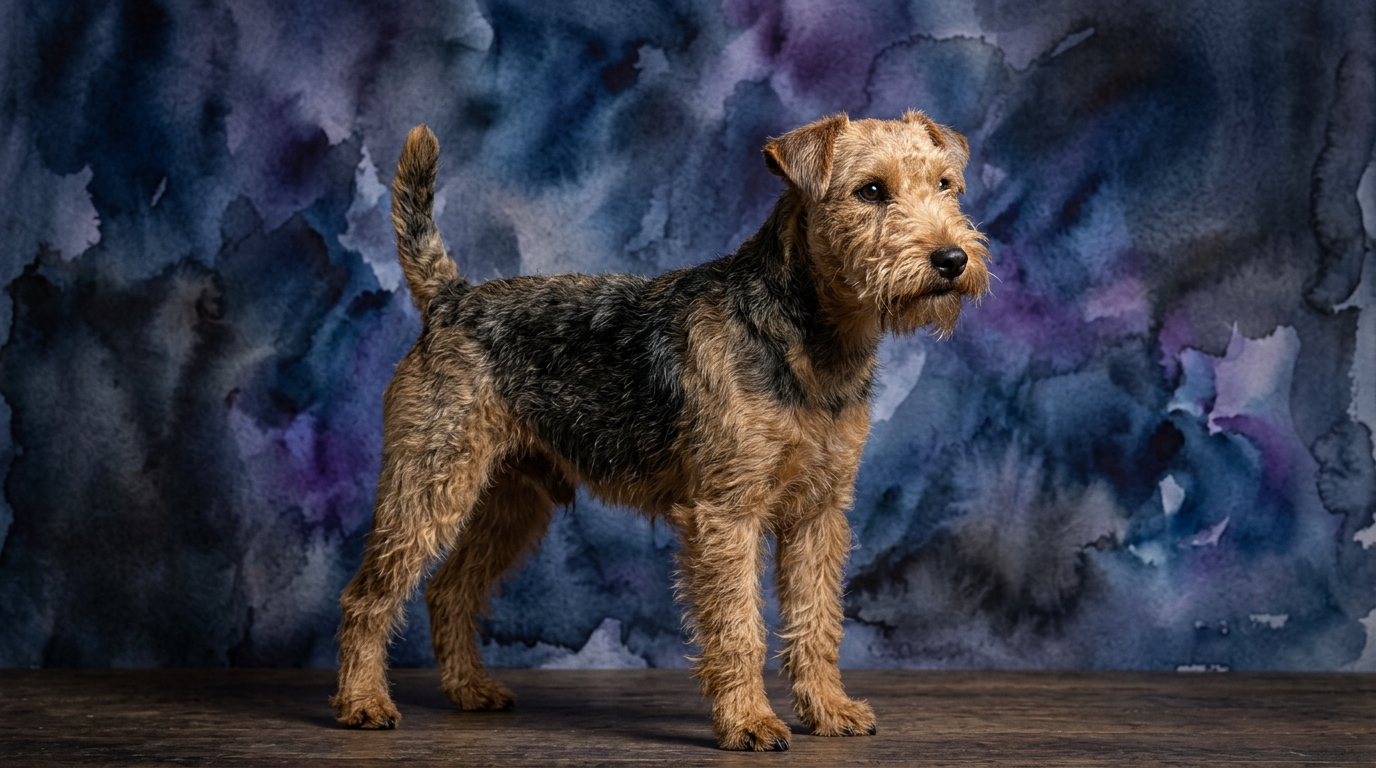
Side-by-Side IQ Profile: German Wirehaired Pointer vs. Lakeland Terrier
The Cosmic Pet Pet IQ Lab provides a structured way to assess canine cognition across five key dimensions. For the German Wirehaired Pointer, a Sporting Group dog with a Coren ranking of #28, its profile reflects its demanding role as a versatile hunter: Problem Solving 4/5, Training Speed 4/5, Social Intelligence 3/5, Instinctive Drive 3/5, and Memory 4/5. This suggests a dog capable of complex learning and retaining information effectively for its tasks.
In contrast, the Lakeland Terrier, a member of the Terrier Group and not Coren-ranked, presents a profile more aligned with its independent, vermin-hunting heritage: Problem Solving 3/5, Training Speed 3/5, Social Intelligence 3/5, Instinctive Drive 3/5, and Memory 3/5. While these scores are generally lower than the GWP, they don't indicate a lack of wit, but rather a different prioritization of cognitive strengths, emphasizing self-reliance over human-directed cooperation in many instances.
Delving into Problem Solving, the GWP's 4/5 indicates a strong capacity for navigating novel situations and devising solutions, crucial for tracking and retrieving in varied environments. The Lakeland Terrier's 3/5 suggests it can solve problems effectively within its typical scope, such as finding prey or navigating tight spaces, but might be less inclined to engage with human-designed puzzles.
Training Speed at 4/5 for the GWP highlights its readiness and eagerness to absorb new commands and routines quickly, a vital trait for a working dog requiring precise direction in the field. The Lakeland Terrier's 3/5 in this area points to a dog that learns, but perhaps at a more deliberate pace, often weighing human instructions against its own innate motivations.
Both breeds share a 3/5 for Social Intelligence, meaning they possess a moderate ability to interpret human cues and intentions. While they can form strong bonds and understand social structures, neither is noted for the profound human-empathy or subtle communication often seen in some highly people-focused companion breeds. Their interactions are often direct and purposeful.
Instinctive Drive is 3/5 for both, manifesting differently. For the GWP, this drive fuels its desire to hunt, point, and retrieve, making it a tireless partner in the field. For the Lakeland Terrier, this drive is channeled into its persistent pursuit of quarry, marked by digging, barking, and a resolute determination to fulfill its original purpose. While the numerical score is the same, the *expression* of that drive is vastly different.
Finally, Memory at 4/5 for the GWP means it excels at recalling commands, learned routes, and the location of game or fallen birds over time. The Lakeland Terrier's 3/5 memory is perfectly adequate for remembering its routine, its people, and its territory, but perhaps doesn't extend to the same level of complex sequential recall required for intricate field work.
Where the German Wirehaired Pointer Wins Cognitively
The German Wirehaired Pointer clearly demonstrates cognitive advantages in areas requiring structured learning and adaptive application. Its 4/5 Problem Solving score means it can more readily assess complex scenarios in the field, like navigating dense cover or tracking elusive game, and adjust its approach effectively. This isn't just about raw intellect, but a capacity for flexible thinking that allows it to excel in varied hunting conditions.
Furthermore, the GWP's 4/5 Training Speed and 4/5 Memory combine to make it a more efficient learner of intricate commands and multi-step tasks. This breed is built to absorb and retain a vast repertoire of signals and behaviors, making it highly responsive to detailed instructions. Its cognitive architecture supports rapid acquisition of skills necessary for a versatile hunting partner, remembering complex sequences and associations over extended periods, a crucial trait for successful retrieving and pointing.
Where the Lakeland Terrier Wins Cognitively
While the Lakeland Terrier's scores might appear lower, its cognitive strengths lie in areas distinct from the GWP's. Its 3/5 Problem Solving, combined with its tenacious Instinctive Drive (3/5), indicates a formidable ability to independently pursue its goals, often with a singular focus that can be remarkably effective. This isn't about solving complex human-devised puzzles, but about persistent, goal-oriented action in challenging, often confined, environments.
The Lakeland Terrier's cognitive advantage manifests as a resilient, independent intelligence, particularly suited for its original purpose of hunting vermin in rugged terrain. Its ability to work autonomously, making quick decisions based on instinct and immediate sensory input, allows it to succeed where a more handler-dependent dog might falter. This self-reliance and unwavering determination, even if it translates to a lower Training Speed score in human-centric obedience, is a cognitive triumph in its own right, reflecting a dog that trusts its own judgment implicitly.
Which is Easier to Train and Why
Based on their IQ profiles, the German Wirehaired Pointer is generally easier to train for obedience and complex tasks. Its 4/5 Training Speed indicates a strong willingness and capacity to learn new commands quickly, often eager to please its handler. This is supported by its 4/5 Problem Solving, allowing it to grasp the 'why' behind instructions and adapt its behavior, and its 4/5 Memory ensures these lessons are retained. Behavioral differences stem from its sporting heritage, where cooperation and responsiveness to human direction are paramount for success in the field, leading to a dog that thrives on structured learning and consistent engagement.
The Lakeland Terrier, with its 3/5 Training Speed, requires a more patient and nuanced approach. Its inherent terrier tenacity and independence mean it may question commands or prioritize its own instincts, particularly when a strong prey drive is engaged. While capable of learning, the Lakeland often requires more creative motivation and a deeper understanding of its independent spirit. Its cognitive makeup is less about immediate compliance and more about thoughtful, if sometimes stubborn, engagement, which can make training a longer, more challenging, but ultimately rewarding process for the dedicated owner.
Which Suits Active Owners vs. Relaxed Owners
The German Wirehaired Pointer is an ideal match for active owners who seek a dedicated partner for outdoor adventures and mental engagement. Its high Problem Solving (4/5) and Instinctive Drive (3/5) mean it thrives on having a job, whether that's hunting, advanced obedience, agility, or extensive hiking. Owners who enjoy structured training, consistent exercise, and involving their dog in a variety of activities will find the GWP's mental and physical needs align perfectly with their lifestyle. A GWP requires significant daily activity and mental stimulation to prevent boredom and channel its considerable energy and intelligence constructively.
The Lakeland Terrier, while possessing a strong Instinctive Drive (3/5) and requiring regular exercise, is somewhat more adaptable to owners who might not be looking for an intense working partner, though 'relaxed' is a relative term for any terrier. Owners who appreciate a spirited, independent companion and are prepared for consistent, engaging training and moderate daily activity will find a good fit. They are excellent for owners who enjoy brisk walks, exploring new environments, and are prepared to manage a strong prey drive and the occasional independent streak. While they need exercise, their mental stimulation often comes from exploring and investigating rather than complex human-directed tasks, making them suitable for active owners who enjoy less formal activities.
The Verdict: When to Choose Each
Choosing between these two distinct breeds hinges on an owner's lifestyle, training philosophy, and expectations for their canine companion's cognitive engagement. Both offer unique rewards, but their inherent mental architectures guide them towards different forms of partnership.
The German Wirehaired Pointer, with its superior Problem Solving, Training Speed, and Memory, is the clear choice for owners seeking a highly biddable, intelligent, and versatile working partner. If you envision a dog that excels in structured training, participates eagerly in field activities, or masters complex commands for dog sports, and you can provide ample mental and physical stimulation, the GWP will thrive as your devoted and capable collaborator.
Conversely, the Lakeland Terrier, with its independent Problem Solving and persistent Instinctive Drive, is best suited for owners who appreciate a spirited, tenacious, and self-reliant companion. If you value a dog with a robust personality, enjoy engaging in less formal but consistent training, and are prepared for a dog that sometimes follows its own clever instincts, the Lakeland Terrier will be a loyal and engaging, albeit sometimes headstrong, companion.
The Verdict
Choose the German Wirehaired Pointer if you desire a highly trainable, versatile working partner eager to engage in complex tasks and structured activities, requiring significant mental and physical engagement.
Choose the Lakeland Terrier if you appreciate an independent, tenacious companion with a strong personality, valuing self-reliance and a clever, spirited approach to life, and are prepared for consistent, patient training.
🧠 Find Your Pet's IQ Score
Our Pet IQ Lab assessment covers 25+ tests across 5 cognitive dimensions — personalized to your breed.
Take the Full IQ Test →Frequently Asked Questions
Is the German Wirehaired Pointer truly more intelligent than the Lakeland Terrier?
The GWP's higher scores in Problem Solving, Training Speed, and Memory suggest a greater aptitude for human-directed learning and complex tasks, aligning with conventional measures of canine intelligence. However, the Lakeland Terrier possesses a distinct, self-reliant intelligence crucial for its original purpose, which may not always be reflected in these specific metrics.
How does the 'Instinctive Drive' score of 3/5 differ between these two breeds?
For the German Wirehaired Pointer, its 3/5 Instinctive Drive manifests as a strong desire to hunt, point, and retrieve game, making it a tireless field companion. For the Lakeland Terrier, the same 3/5 score translates into a powerful prey drive, tenacity, and a persistent urge to dig and pursue quarry, characteristic of its vermin-hunting heritage.
Can a Lakeland Terrier be trained for complex tasks like a German Wirehaired Pointer?
While a Lakeland Terrier can certainly learn complex tasks, its 3/5 Training Speed and independent nature mean it will likely require more patience, creativity, and motivation than a German Wirehaired Pointer. The GWP's 4/5 Training Speed and Problem Solving make it inherently more inclined to absorb and execute intricate commands for human-directed work.