Side-by-Side Cognitive Profiles: Decoding Canine Minds
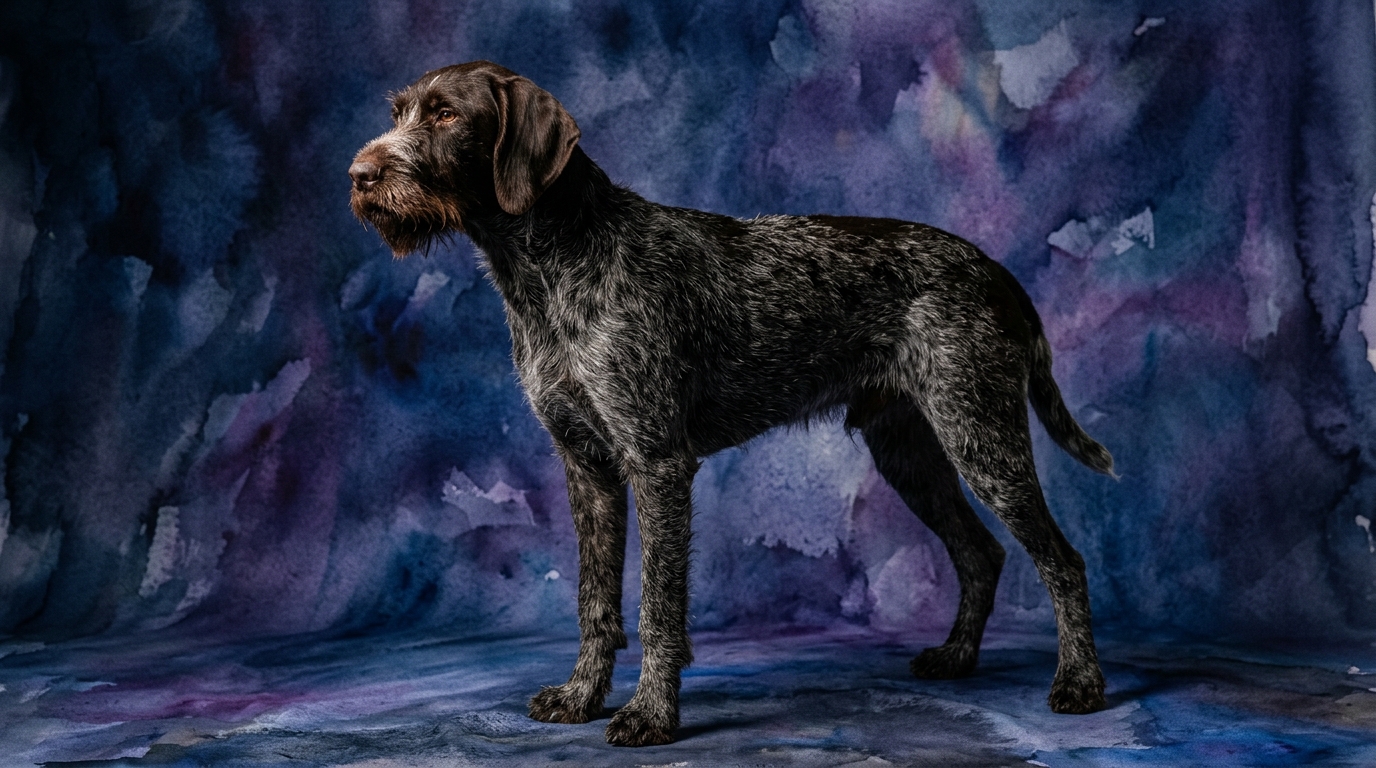
The German Wirehaired Pointer (GWP), a Sporting group member, consistently ranks high in working intelligence, reflecting its centuries-long development as a versatile hunting companion. Our metrics unpack this further: Problem Solving at 4/5, Training Speed at 4/5, Social Intelligence at 3/5, Instinctive Drive at 3/5, and Memory at 4/5. These scores paint a picture of a capable, cooperative, and purpose-driven canine.
A Problem Solving score of 4/5 indicates the GWP's aptitude for navigating complex environments, like tracking game through varied terrain or figuring out how to retrieve objects from challenging spots. Their 4/5 Training Speed highlights their eagerness and capacity to learn new commands and routines with fewer repetitions, often displaying an intuitive understanding of handler cues. A 3/5 in Social Intelligence reflects their strong bond with their primary handler and cooperative nature in a working context, though they might be more focused on tasks than broad social interactions. Their 3/5 Instinctive Drive manifests as a pronounced prey drive, particularly for birds, driven by a keen sense of smell and desire to point and retrieve. Finally, a Memory score of 4/5 means GWPs excel at recalling vast amounts of information, from complex command sequences to the layout of a hunting ground or the location of hidden toys.
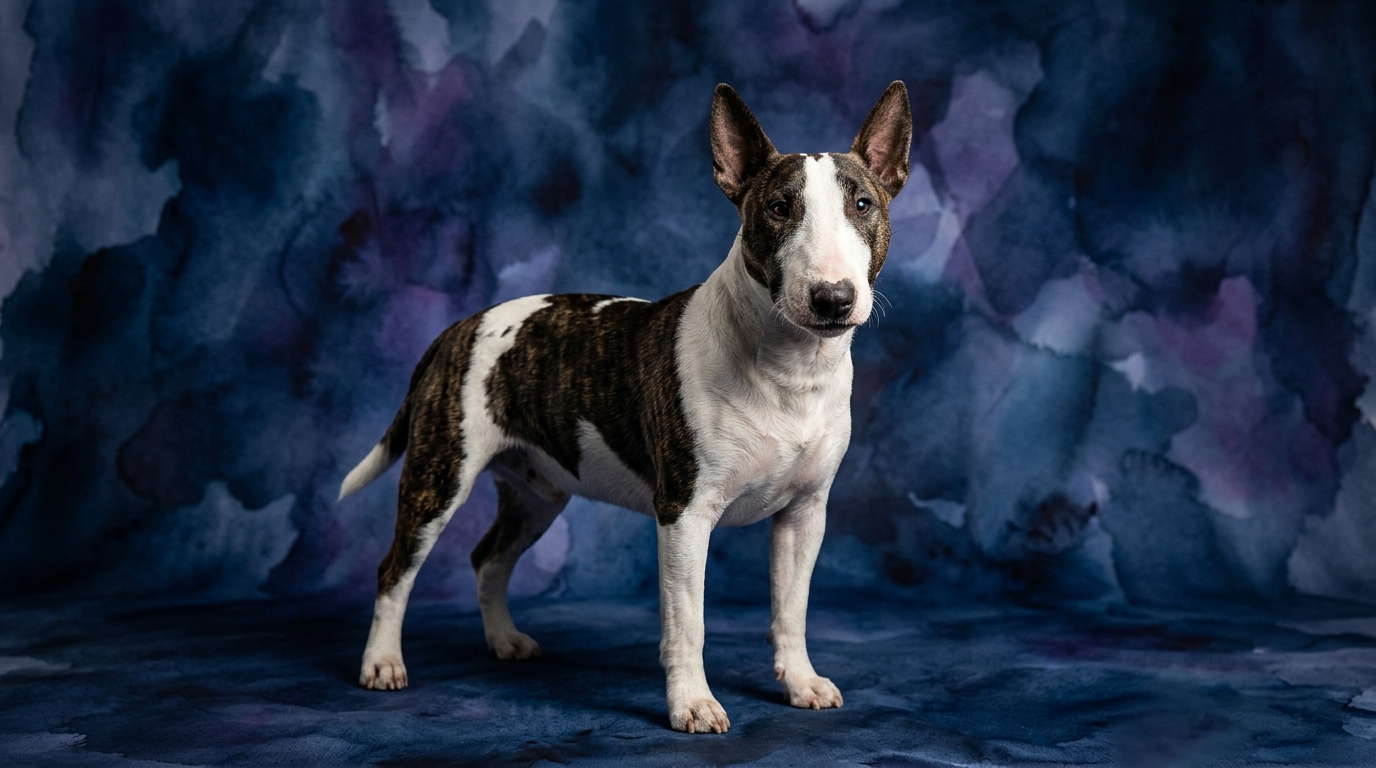
The Miniature Bull Terrier (MBT), a tenacious Terrier group member, presents a different cognitive landscape, often characterized by its independence and spirited personality. While not Coren-ranked, The Cosmic Pet Pet IQ Lab provides specific insights: Problem Solving at 3/5, Training Speed at 3/5, Social Intelligence at 3/5, Instinctive Drive at 3/5, and Memory at 3/5. These uniform scores suggest a balanced but distinct approach to cognition compared to the GWP.
The MBT's 3/5 Problem Solving score indicates they can navigate challenges, though perhaps with less immediate focus on handler collaboration, often finding solutions through persistence or their own unique methods. A 3/5 Training Speed means they are capable of learning, but might require more patience, consistency, and creative motivation, sometimes displaying a "what's in it for me?" attitude characteristic of many terriers. Their 3/5 Social Intelligence suggests they can form deep, affectionate bonds with their family, but might also exhibit selective sociability, sometimes preferring their chosen human companions over broader social circles. The 3/5 Instinctive Drive in MBTs often translates to a strong desire to chase small prey, dig, and explore, driven by their terrier heritage, though it might be less specialized than a pointer's. Lastly, a Memory score of 3/5 indicates they retain essential commands and routines, but might not store the same depth of complex information as a breed specifically designed for intricate work.
Where the German Wirehaired Pointer Excels Cognitively
The German Wirehaired Pointer's cognitive strengths are most apparent in areas demanding rapid learning, precise execution, and detailed recall, all geared towards cooperative work. Their 4/5 in Problem Solving allows them to adeptly interpret environmental cues and adapt strategies on the fly, crucial for effective hunting or complex scent work. For instance, a GWP can quickly assess a new obstacle in a field and find the most efficient path around it to reach a scent, demonstrating a flexible and goal-oriented thought process.
The GWP's superior Training Speed (4/5) and Memory (4/5) combine to create a highly receptive learner. They absorb new commands and multi-step tasks with remarkable efficiency, often generalizing learned behaviors to novel situations faster than many other breeds. This means they can master complex sequences, like navigating an agility course or performing intricate field retrieves, with fewer repetitions and retain that knowledge over long periods, making them exceptional partners in performance sports or demanding working roles. Their cooperative social intelligence (3/5), while not the highest, is perfectly aligned with their role, ensuring they are attentive to handler direction even amidst strong environmental distractions.
Unpacking the Miniature Bull Terrier's Unique Cognitive Strengths
While the Miniature Bull Terrier's scores are consistently 3/5 across the board, their cognitive profile represents a distinct set of strengths, particularly in independent thought and resilient problem-solving. Their 3/5 Problem Solving isn't about rapid, cooperative task mastery, but often about persistent, self-directed exploration and overcoming challenges on their own terms. This might manifest as figuring out how to open a child-proof gate or extracting a hidden toy from a complex puzzle, driven by their own curiosity and tenacity.
The MBT's "terrier-ness" imbues their 3/5 Instinctive Drive with a focused determination to pursue small prey or engage in digging, demonstrating a cognitive persistence that, while not always handler-directed, is undeniably effective for their original purpose. Their 3/5 Social Intelligence, while not indicating broad gregariousness, points to a capacity for deep, loyal bonds with their chosen humans, often expressed through endearing antics and a unique sense of humor. They might not be as overtly cooperative as a pointer, but their cognitive resilience and ability to entertain themselves or focus intently on a self-chosen task are valuable traits for owners who appreciate an independent spirit.
Ease of Training: German Wirehaired Pointer vs. Miniature Bull Terrier
When it comes to ease of training, the German Wirehaired Pointer generally offers a more straightforward experience due to its higher scores in Training Speed (4/5), Problem Solving (4/5), and Memory (4/5), coupled with its inherent desire to work collaboratively. GWPs are bred to take direction and perform tasks in partnership with a human, making them highly responsive to positive reinforcement and clear commands. Their quick grasp of new concepts means they progress rapidly through training stages, easily mastering basic obedience and advancing to more complex skills like advanced scent work or field trials.
The Miniature Bull Terrier, with consistent 3/5 scores, presents a different training challenge. Their independence and sometimes stubborn nature, characteristic of the terrier group, mean they often require more patience, consistency, and creative motivation. While they are capable of learning, their Training Speed (3/5) indicates they might need more repetitions, and their Problem Solving (3/5) is often applied to figuring out how to achieve their own goals rather than strictly following handler instructions. Owners must employ engaging, reward-based methods and maintain a sense of humor, understanding that an MBT might assess whether a command is "worth it" before complying. Their strong instinctive drive (3/5) towards chasing or digging can also be a significant distraction in training if not properly managed.
Which Breed Suits Active vs. Relaxed Owners
For active owners seeking a true partner in outdoor adventures and structured activities, the German Wirehaired Pointer is an excellent match. Their high Problem Solving, Training Speed, and Memory scores, combined with a strong instinctive drive (3/5) and a cooperative social intelligence (3/5), mean they thrive on mental and physical engagement. They excel in demanding sports like hunting, agility, obedience, and tracking, requiring owners who can provide consistent, rigorous exercise and stimulating training sessions. A GWP left under-stimulated can become bored and potentially destructive, channeling its energy and cognitive abilities into less desirable outlets.
The Miniature Bull Terrier, while certainly not a couch potato, can adapt to a slightly less demanding activity schedule than a GWP, making them suitable for active owners who appreciate intensity over endurance. Their consistent 3/5 scores across cognitive dimensions suggest they benefit from regular, focused bursts of exercise, like vigorous play sessions or brisk walks, coupled with engaging mental puzzles. While they have an instinctive drive (3/5) and can be playful, their independence means they might not constantly demand interaction in the same way a GWP might. Owners who appreciate a dog with character, who can be content with moderate daily activity and mental challenges, and who understand the need for consistent boundaries, will find the MBT a rewarding companion.
The Verdict
Choose the German Wirehaired Pointer if you are an active, experienced owner seeking a highly trainable, cooperative partner for demanding outdoor activities, performance sports, or field work. Their superior cognitive capabilities in problem-solving, rapid learning, and memory make them excel in structured environments requiring precision and handler collaboration.
Opt for the Miniature Bull Terrier if you appreciate a tenacious, independent canine with a unique personality, and are prepared for a more patient, creative training approach. They suit owners who can provide moderate, engaging exercise and mental stimulation, valuing a companion that offers both affection and spirited self-reliance.
🧠 Find Your Pet's IQ Score
Our Pet IQ Lab assessment covers 25+ tests across 5 cognitive dimensions — personalized to your breed.
Take the Full IQ Test →Frequently Asked Questions
Does the GWP's high memory score mean they never forget anything?
A GWP's 4/5 memory score indicates an exceptional capacity for retaining commands, routines, and environmental details, crucial for their working roles. While they won't remember every single moment, they demonstrate superior recall for learned tasks and spatial information compared to many breeds.
How does the MBT's "terrier stubbornness" relate to its training speed score?
The MBT's 3/5 training speed score reflects that while they are capable of learning, their innate terrier independence and self-directed nature can be perceived as stubbornness. They require consistent, positive reinforcement and engaging methods to motivate them, rather than simply complying for compliance's sake.
Are either of these breeds good for first-time dog owners?
The German Wirehaired Pointer's cooperative nature and trainability make them a possibility for dedicated first-time owners willing to commit to significant exercise and training. The Miniature Bull Terrier's independent spirit and unique training requirements generally make them a better fit for owners with prior dog experience who understand terrier traits.