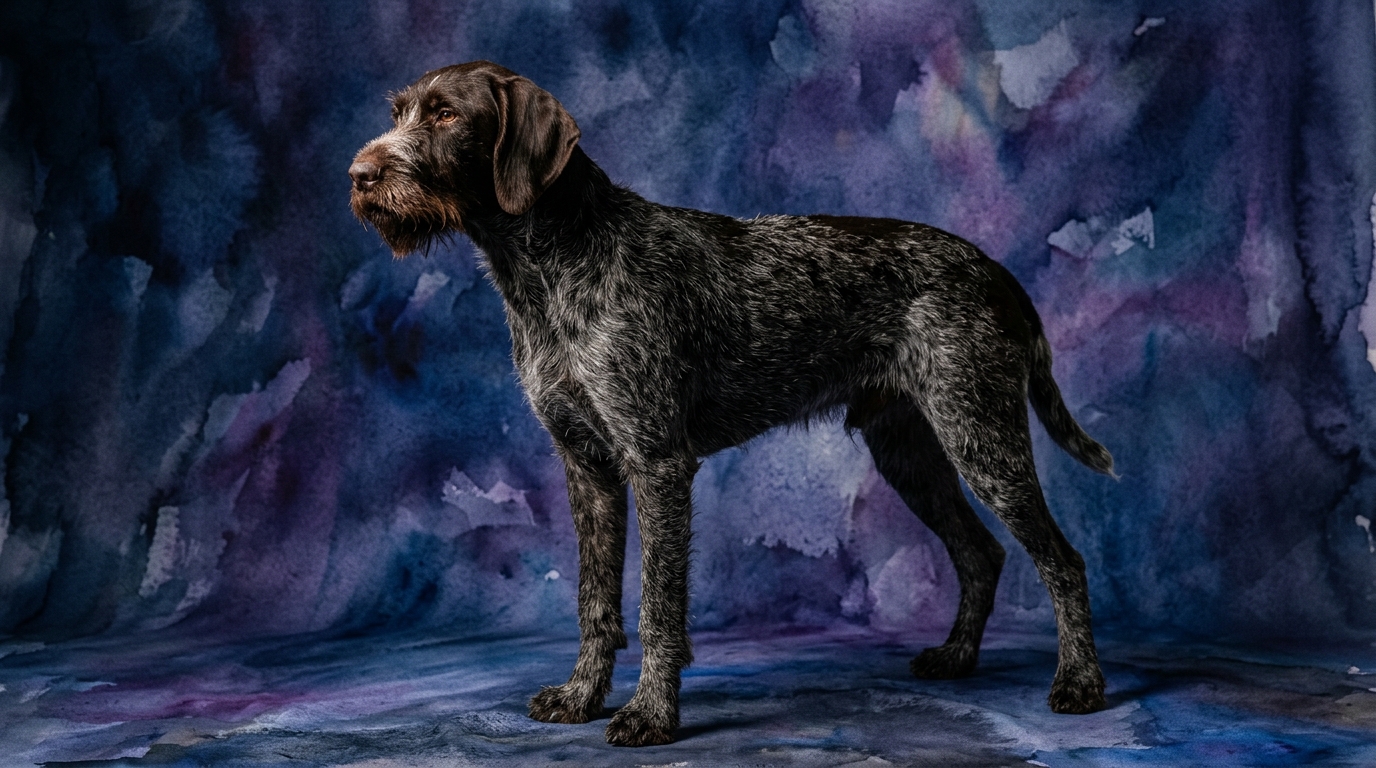

Side-by-Side IQ Profile: GWP vs. Rat Terrier
At The Cosmic Pet Pet IQ Lab, we evaluate canine intelligence across five critical dimensions. For the German Wirehaired Pointer (GWP), a Sporting breed with a Coren rank of #28, we observe Problem Solving at 4/5, Training Speed at 4/5, Social Intelligence at 3/5, Instinctive Drive at 3/5, and Memory at 4/5. These scores reflect a breed engineered for complex, cooperative hunting tasks.
In contrast, the Rat Terrier, a Terrier breed not Coren-ranked, presents a different cognitive profile: Problem Solving at 3/5, Training Speed at 3/5, Social Intelligence at 3/5, Instinctive Drive at 3/5, and Memory at 3/5. This breed's intelligence is often characterized by its independent, tenacious approach to challenges.
Breaking down the GWP’s scores: its 4/5 in Problem Solving indicates a strong capacity for multi-step tasks, strategizing during retrieves, and adapting to varied hunting scenarios, reflecting a methodical approach to challenges. A 4/5 in Training Speed highlights a ready willingness to learn and retain commands, often grasping new concepts with fewer repetitions, indicating a high level of focus and a cooperative nature. The 3/5 in Social Intelligence means they understand and respond well to human cues within a working partnership, demonstrating an ability to cooperate and align its actions with handler expectations in the field. Their Instinctive Drive at 3/5 displays a focused prey drive specifically for birds, manifesting as pointing, flushing, and retrieving, which is typically channeled and managed in cooperation with a hunter. Lastly, a 4/5 in Memory means they retain complex sequences of commands, learned routes, and past experiences with remarkable accuracy, contributing to reliable performance in demanding field situations over time.
For the Rat Terrier: its 3/5 in Problem Solving exhibits cleverness in immediate, practical situations, often employing ingenuity to navigate confined spaces or outsmart small prey independently, showcasing quick, reactive thinking. A 3/5 in Training Speed suggests it possesses the mental capacity to learn but can be more independent, sometimes requiring varied approaches and consistent motivation to maintain engagement and solidify new behaviors. The 3/5 in Social Intelligence shows it observes human behavior intently, forms strong, perceptive bonds with its family, and can be discerning with strangers, indicating a keen awareness of social dynamics within its core group. The 3/5 in Instinctive Drive means it possesses an intense, independent prey drive geared towards small vermin, characterized by persistent searching, digging, and quick pursuit, often acting without direct human command. Finally, a 3/5 in Memory signifies it remembers routines, familiar environments, and established social interactions well, but may not retain lengthy, abstract command sequences with the same ease as the German Wirehaired Pointer.
Where the German Wirehaired Pointer Wins Cognitively
The German Wirehaired Pointer’s cognitive strengths are evident in its superior scores for Problem Solving (4/5), Training Speed (4/5), and Memory (4/5). This breed excels in executing sequential tasks, such as navigating a complex field to locate, point, and retrieve game, consistently applying learned behaviors across varying conditions. Their capacity to process multi-step instructions for diverse hunting scenarios, coupled with the ability to maintain focus over extended periods, showcases a refined cognitive flexibility and sustained attention span.
This breed's aptitude for intricate work is a testament to its specialized breeding. The GWP's robust memory further underpins their rapid skill acquisition and reliable recall of intricate obedience routines or specialized field techniques, making them particularly adept at mastering demanding roles that require consistent, precise action. Their ability to remember specific commands, locations of fallen game, and complex patterns of movement over time gives them a significant edge in roles demanding sustained cognitive effort and detail orientation.
Where the Rat Terrier Wins Cognitively
While the Rat Terrier’s overall cognitive scores may not reach the German Wirehaired Pointer’s peak in certain metrics, their intelligence shines brightly in areas demanding independent problem-solving and adaptive agility. With a Problem Solving score of 3/5, the Rat Terrier demonstrates a cleverness that manifests in immediate, practical applications, particularly within environments requiring quick, decisive action without constant human direction.
Their tenacious instinctive drive for vermin control translates into exceptional environmental awareness, rapid decision-making during pursuit, and resourceful navigation of confined or complex spaces. This breed employs ingenuity to outsmart small prey or access difficult areas, showcasing a unique, self-reliant form of cognition that emphasizes quick wits and practical application over multi-step strategic planning. Their cognitive strength lies in their ability to assess and react to dynamic, small-scale challenges with agility and a self-directed approach.
Which is Easier to Train and Why
In the realm of trainability, the German Wirehaired Pointer generally offers a more straightforward experience, reflected in its higher Training Speed score of 4/5. This breed’s inherent desire to cooperate with its handler, combined with a quick grasp of new commands and excellent memory for sequences, means they often learn complex tasks with fewer repetitions. Their focus in the field translates effectively into structured training sessions, making them responsive to guidance and eager to perform, particularly when the training aligns with their natural working drives.
The GWP's cooperative nature and strong working ethic mean they are typically motivated by pleasing their handler and engaging in purposeful activities. This makes them highly receptive to positive reinforcement and consistent instruction, allowing for rapid progression through various levels of obedience and specialized training. Their ability to retain information and apply it consistently reduces the need for constant reteaching.
In contrast, the Rat Terrier, with a Training Speed score of 3/5, while certainly capable of learning, presents a different dynamic. Their independent terrier spirit and strong instinctive drives can make them more challenging to motivate with traditional methods. While they understand concepts, their preference for self-directed activity means trainers must be engaging, consistent, and patient, often employing reward-based techniques to channel their cleverness effectively. Their 3/5 training speed suggests they might take longer to solidify commands or require more varied approaches to maintain interest, especially when their prey drive is stimulated, which can lead to distractions. Training a Rat Terrier often requires creative problem-solving from the handler to keep the dog engaged and prevent boredom.
Which Suits Active Owners vs. Relaxed Owners
Owners seeking a canine companion for extensive outdoor adventures and demanding activities will find the German Wirehaired Pointer an ideal match. This breed thrives on structured work, long runs, challenging hikes, and participation in dog sports like agility or field trials, aligning perfectly with active lifestyles. Their need for both physical exertion and mental engagement means they perform best when given a 'job' and consistent opportunities to use their intellect and athleticism. A GWP left without sufficient mental and physical outlets can become restless or destructive, underscoring their requirement for a highly engaged owner.
Conversely, the Rat Terrier, while energetic, can be a better fit for owners who appreciate a dog with bursts of activity rather than sustained, high-intensity demands. They are adaptable to various living situations, including apartments, provided they receive daily walks, playtime, and mental enrichment to satisfy their curious minds. While they enjoy outdoor excursions and can excel in agility, their physical requirements are generally less exhaustive than the GWP, making them suitable for owners who prefer a more moderate pace but still commit to regular engagement. A Rat Terrier needs its intelligence stimulated with puzzles and training games, even if its physical exercise isn't as marathon-like.
The Verdict
Choose the German Wirehaired Pointer if you are an active, experienced owner seeking a highly trainable, cooperative working partner for demanding outdoor pursuits or competitive dog sports requiring complex multi-step tasks and strong recall.
Opt for the Rat Terrier if you appreciate an independent, clever, and adaptable companion, perhaps in a smaller package, thriving with consistent, engaging training and moderate daily activity, potentially for specific vermin control needs.
🧠 Find Your Pet's IQ Score
Our Pet IQ Lab assessment covers 25+ tests across 5 cognitive dimensions — personalized to your breed.
Take the Full IQ Test →Frequently Asked Questions
Are German Wirehaired Pointers good family dogs?
Yes, German Wirehaired Pointers are generally loyal and affectionate with their families, but their high energy and need for mental stimulation mean they thrive in active households that can provide ample exercise and training. They usually get along well with children and other pets if socialized early and appropriately.
Do Rat Terriers bark a lot?
Rat Terriers can be quite vocal, often using barks to alert their owners to new sounds or perceived threats, reflecting their inherent terrier vigilance. Consistent training from a young age can help manage excessive barking, but their natural inclination to communicate vocally should be an expected trait.
What is the main difference in their hunting styles?
German Wirehaired Pointers are versatile gundogs primarily bred to point and retrieve birds, working closely with a hunter in open fields and water. Rat Terriers were developed for independent vermin control, excelling at flushing out and dispatching small rodents and pests in barns and homes, often operating autonomously.