Side-by-Side Cognitive Profiles
At The Cosmic Pet Pet IQ Lab, we evaluate canine cognition across five critical dimensions: problem solving, training speed, social intelligence, instinctive drive, and memory. These scores offer a nuanced view of how each breed processes information and interacts with their world, revealing more than just a general label of 'smart.'
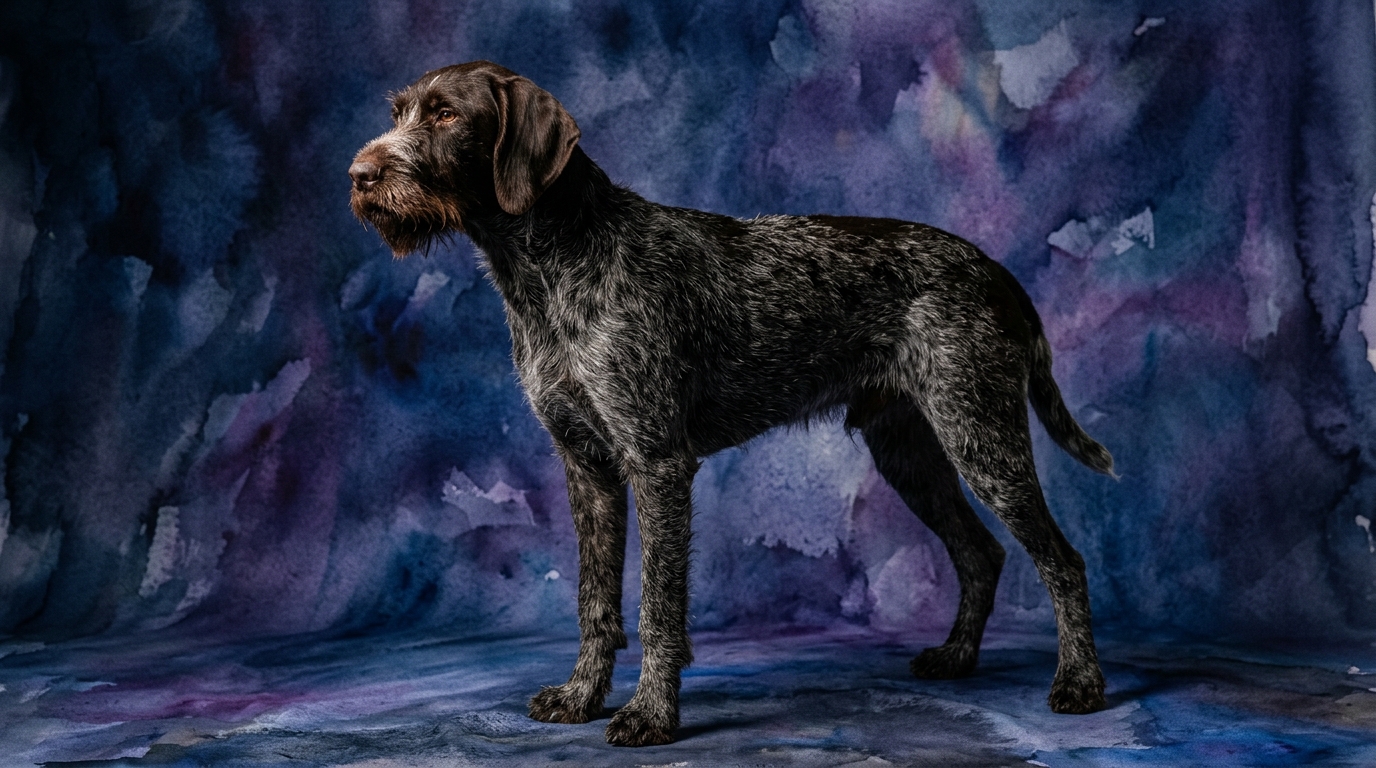
The German Wirehaired Pointer, a dedicated member of the Sporting Group, exhibits a robust cognitive profile befitting its working heritage. Its problem-solving ability scores an impressive 4/5, indicating a capacity for complex thought and finding solutions to novel challenges, often in pursuit of a goal. Training speed is also a high 4/5, reflecting a quick grasp of commands and routines. Social intelligence sits at a balanced 3/5, suggesting an awareness of pack dynamics and human cues without being overly dependent or aloof. Instinctive drive, crucial for a hunting dog, is a solid 3/5, demonstrating a natural inclination for tasks like tracking and retrieving. Finally, its memory is a strong 4/5, allowing it to retain learned behaviors and recall past experiences efficiently.
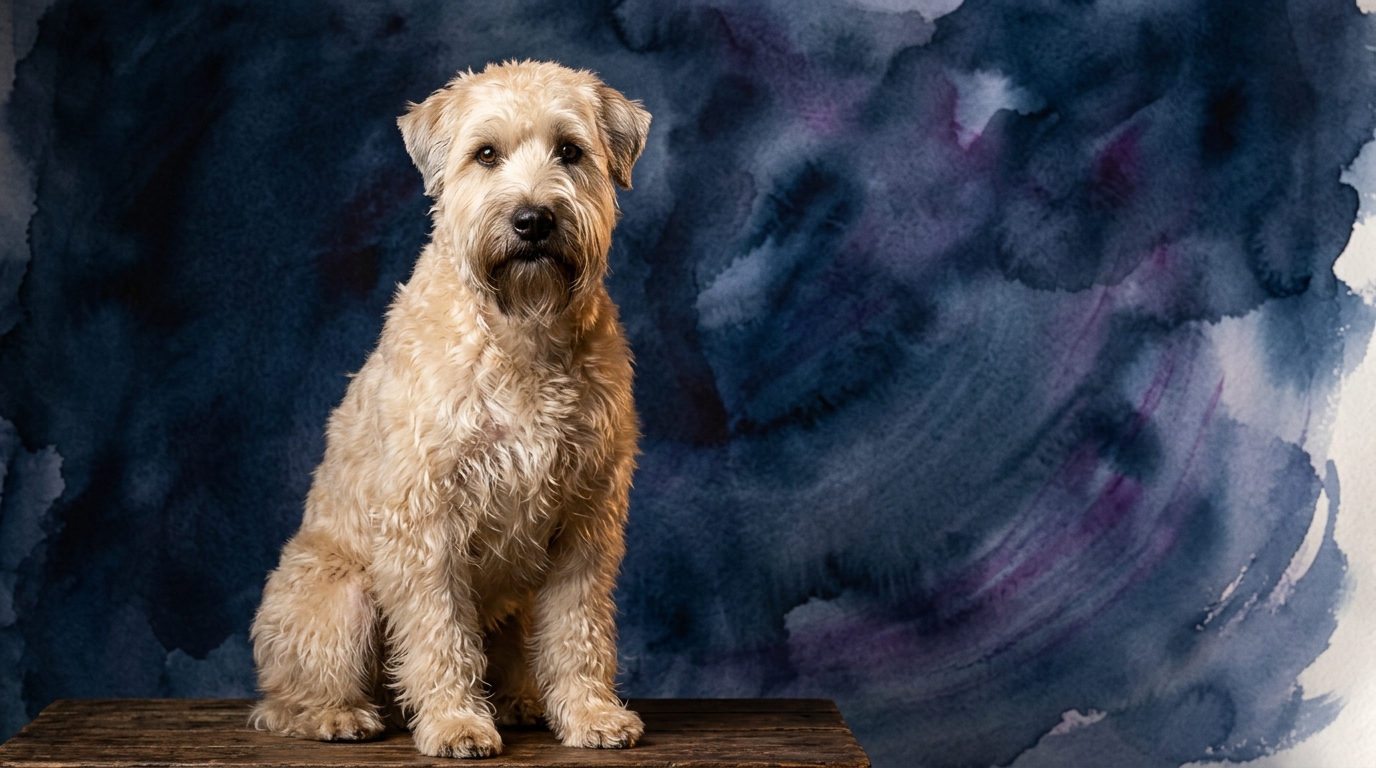
In contrast, the Soft Coated Wheaten Terrier, a spirited representative of the Terrier Group, presents a consistent cognitive blueprint. Its problem-solving capacity registers at 3/5, meaning it can tackle moderate challenges but might not independently devise intricate strategies. Training speed is also 3/5, indicating a steady, albeit not lightning-fast, pace of learning. Social intelligence matches at 3/5, showing an ability to connect with its human family and other dogs, fostering companionship. Its instinctive drive, typical of a terrier, is a 3/5, manifested as a desire to explore and sometimes an independent pursuit of small game. Memory also scores 3/5, sufficient for retaining common commands and routines, though perhaps less for highly complex, multi-step sequences.
Where the German Wirehaired Pointer Excels Cognitively
The German Wirehaired Pointer's cognitive strengths are particularly evident in its superior problem-solving, training speed, and memory. Its 4/5 in problem-solving means this breed isn't just following commands; it's actively processing situations and adapting. For instance, in a complex scent trail scenario, a GWP can logically deduce the path, navigating obstacles or changes in terrain to achieve its objective. This isn't brute force, but a calculated application of its cognitive resources.
The GWP's 4/5 training speed is a direct reflection of its eagerness to engage and its capacity for rapid assimilation of new information. This breed can learn a new command or a complex sequence of actions in fewer repetitions than many other breeds. This quick uptake is not solely about compliance; it speaks to an attentiveness and a structured way of processing instructions that makes it highly receptive to consistent guidance. Coupled with a 4/5 memory, a GWP will not only learn quickly but also retain that knowledge over extended periods, making advanced training and skill building a more fluid and rewarding experience.
Furthermore, its Coren rank of #28 among working and obedience intelligence underscores this breed's capability to consistently perform and apply learned behaviors under varying conditions. This ranking is a testament to its cognitive reliability and its potential for high-level performance in structured environments, from competitive obedience to field trials. The combination of its cognitive strengths makes the GWP a formidable and adaptable partner for demanding tasks.
Where the Soft Coated Wheaten Terrier Shines Cognitively
While the Soft Coated Wheaten Terrier's IQ scores of 3/5 across the board might seem modest compared to the GWP's peaks, they represent a balanced and functional intelligence that shines in different contexts. The Wheaten's 3/5 problem-solving ability, for example, is often characterized by a terrier's cleverness and resourcefulness in everyday situations. They might figure out how to open a cabinet for a desired treat or navigate a household obstacle course with a practical, rather than strategic, approach. This is an intelligence geared towards immediate environmental interaction and personal gain, rather than complex, multi-stage tasks.
The Wheaten's 3/5 social intelligence is a key aspect of its charm and adaptability as a family companion. They are adept at reading human emotions and intentions, often responding with affectionate gestures or playful nudges. This social acumen allows them to integrate seamlessly into family life, forming strong bonds and understanding the unspoken cues of their human pack. It’s a different facet of intelligence than a hunting dog's focus, emphasizing connection and interaction over task-oriented cooperation.
Their consistent 3/5 scores also speak to a robust resilience and adaptability. Wheatens are often described as spirited and joyful, traits that require a certain cognitive fortitude to maintain a positive outlook and recover quickly from minor setbacks. This consistent cognitive baseline ensures they are capable of learning, interacting, and adapting to various home environments, making them engaging and lively companions even if they aren't destined for competitive obedience championships.
Ease of Training: A Comparative Look
When it comes to training, the German Wirehaired Pointer's cognitive profile inherently positions it as an easier breed to guide. Its 4/5 training speed means it picks up commands quickly, often with fewer repetitions. This efficiency stems from a strong desire to cooperate and a focused attention on the handler, which is critical for a dog bred to work closely with humans. Their impressive 4/5 memory ensures that once a behavior is learned, it is retained, reducing the need for constant re-teaching. A GWP's moderate instinctive drive (3/5) can be effectively channeled into training exercises, making them highly motivated to perform tasks that engage their natural abilities, such as retrieving or scent work.
The Soft Coated Wheaten Terrier, with its 3/5 training speed, can present a different set of challenges. Terriers are often characterized by their independent spirit and a 'what's in it for me?' attitude, which means they might require more consistent motivation and a greater variety of training methods to stay engaged. Their problem-solving (3/5) is often applied to figuring out how to get their way, rather than strictly adhering to commands, potentially leading to moments of selective hearing. While they possess a good memory (3/5), their independent nature might sometimes override their recall of a command if something more interesting captures their attention. Training a Wheaten often requires patience, creativity, and a strong understanding of positive reinforcement to harness their spirited energy effectively.
Matching Cognitive Style to Lifestyle
For active owners seeking a true partner in demanding endeavors, the German Wirehaired Pointer is often an ideal match. Its 4/5 problem-solving ability, coupled with a 4/5 training speed and memory, means this breed thrives on complex mental and physical challenges. Owners who engage in advanced obedience, agility, field trials, or actual hunting will find the GWP's cognitive makeup perfectly suited to these pursuits. They require consistent mental engagement to prevent boredom, and their capacity for learning allows owners to continually introduce new skills and challenges, fostering a deep, working relationship. The GWP's social intelligence (3/5) ensures they are cooperative team players, focused on their handler's cues during activities.
Conversely, the Soft Coated Wheaten Terrier's cognitive profile, with its consistent 3/5 across all dimensions, aligns well with owners who appreciate a lively, affectionate companion without necessarily seeking a high-level competitive athlete. While still requiring regular exercise and mental stimulation, the Wheaten is often more content with engaging play, varied walks, and interactive puzzle toys rather than intricate, multi-stage tasks. Their 3/5 social intelligence makes them excellent family dogs, thriving on human interaction and companionship. Owners who enjoy teaching fun tricks, engaging in moderate dog sports, or simply having a spirited, adaptable presence in their home will find the Wheaten's balanced intelligence and joyful disposition a rewarding fit. Their independence means they can entertain themselves for periods, but still crave connection.
The Verdict
Choose the German Wirehaired Pointer if you seek a highly trainable, focused, and intelligent partner for demanding activities, capable of intricate tasks and rapid skill acquisition.
Opt for the Soft Coated Wheaten Terrier if you desire a spirited, adaptable, and charming companion who thrives on social interaction and moderate engagement, valuing companionship over advanced competitive pursuits.
🧠 Find Your Pet's IQ Score
Our Pet IQ Lab assessment covers 25+ tests across 5 cognitive dimensions — personalized to your breed.
Take the Full IQ Test →Frequently Asked Questions
Is the German Wirehaired Pointer a good choice for first-time dog owners?
The GWP's high trainability and eagerness to please can make it a rewarding choice for a first-time owner willing to commit to its significant exercise and mental stimulation needs. Its intelligence requires consistent guidance and engagement to prevent boredom and undesirable behaviors.
What kind of mental stimulation does a Soft Coated Wheaten Terrier need?
Soft Coated Wheaten Terriers benefit from varied mental stimulation, including puzzle toys, interactive games, trick training, and regular exploration of new environments. Their spirited nature means they enjoy activities that engage their curiosity and provide opportunities for joyful interaction.
How does the Coren rank reflect the German Wirehaired Pointer's intelligence?
The Coren rank, which places the German Wirehaired Pointer at #28, primarily measures working and obedience intelligence, reflecting a breed's ability to understand and consistently execute commands. This aligns with the GWP's 4/5 scores in training speed and memory, indicating a strong capacity for learning and retaining structured tasks.