Side-by-Side Cognitive Profile: Giant Schnauzer vs. Basset Hound
At The Cosmic Pet Pet IQ Lab, we analyze canine intelligence across five key dimensions: Problem Solving, Training Speed, Social Intelligence, Instinctive Drive, and Memory. This framework allows us to move beyond broad labels and delve into the specific cognitive strengths and inclinations that define each breed. Understanding these nuances is crucial for prospective owners to select a companion whose innate cognitive style aligns with their lifestyle and expectations.
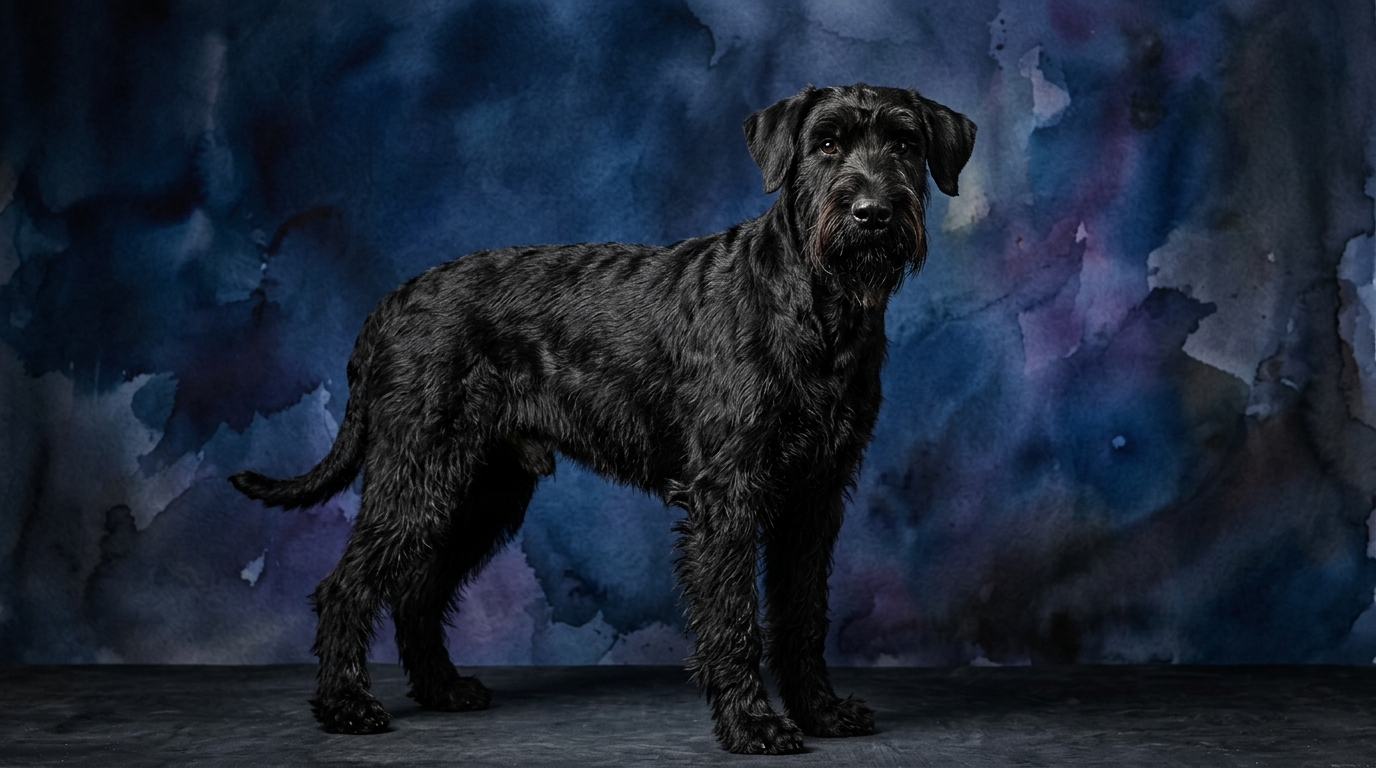
The Giant Schnauzer, a member of the Working Group, registers a Coren rank of #28, indicating its capacity for quickly grasping new commands and performing complex tasks. Its IQ scores are impressive: Problem Solving 4/5, Training Speed 4/5, Social Intelligence 3/5, Instinctive Drive 3/5, and Memory 4/5. This profile suggests a dog built for active engagement, capable of analytical thought and efficient retention of learned behaviors, reflecting its heritage as a versatile working and guarding breed.
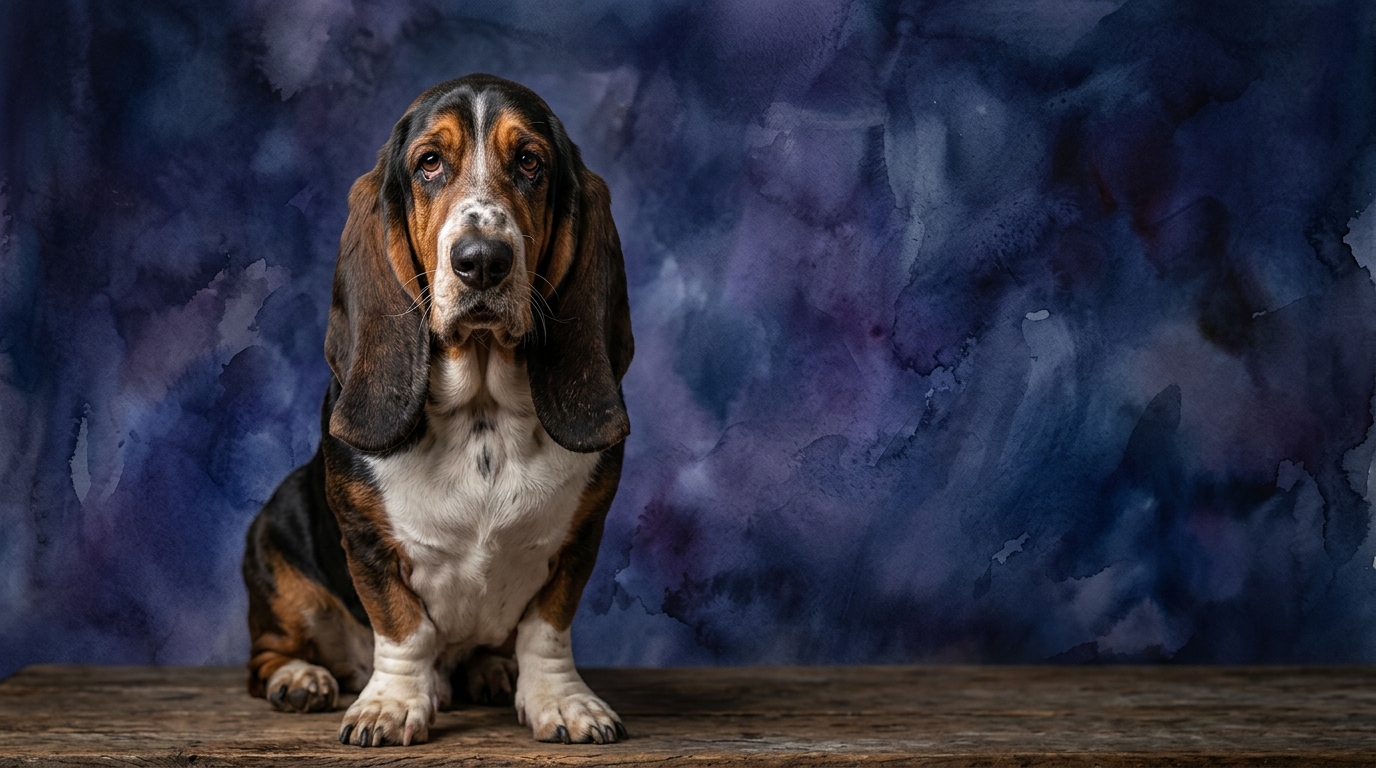
In contrast, the Basset Hound, from the Hound Group, holds a Coren rank of #71. Its IQ scores are generally lower in traditional metrics, but reflect a specialized intelligence: Problem Solving 3/5, Training Speed 3/5, Social Intelligence 3/5, Instinctive Drive 3/5, and Memory 3/5. This breed's cognitive architecture is profoundly shaped by its primary function: scent tracking. While its overall scores suggest a slower pace in conventional learning, its intelligence is deeply rooted in sensory perception and methodical, persistent exploration of its environment through its powerful nose.
Where the Giant Schnauzer Wins Cognitively
The Giant Schnauzer's cognitive strengths are most apparent in its superior Problem Solving (4/5) and Training Speed (4/5). This breed demonstrates a remarkable capacity for analytical thought and efficient data processing, allowing it to quickly grasp novel concepts and apply them to new situations. They are adept at figuring out solutions to environmental challenges or understanding multi-step commands, making them highly adaptable and capable learners.
Its Memory score of 4/5 is a significant advantage, enabling Giant Schnauzers to retain extensive repertoires of commands, routines, and experiences with exceptional fidelity. This contributes directly to their reliability in performing complex, multi-stage tasks or generalizing learned behaviors across slightly varied contexts. They remember what they've learned and can apply it effectively over time, making them consistent performers.
Ultimately, the Giant Schnauzer's cognitive triumphs lie in its ability to synthesize information rapidly, learn from consequences, and execute actions with precision. This makes them apt candidates for roles requiring quick thinking and consistent performance, such as competitive obedience, agility, or protection work, where understanding intricate sequences and responding promptly are paramount. Their mental agility allows them to thrive in structured, challenging environments.
Where the Basset Hound Wins Cognitively
While its numerical scores might appear lower in traditional cognitive metrics, the Basset Hound's true cognitive prowess lies in its specialized sensory intelligence and unparalleled persistence. Its Instinctive Drive (3/5) is almost entirely dedicated to olfaction, driving a sophisticated form of problem-solving centered on scent discrimination and unwavering trailing. This isn't a generalist's intelligence, but a highly refined, singular focus.
The Basset Hound's Problem Solving (3/5) and Memory (3/5) are intimately linked to its extraordinary nose. They excel at deciphering intricate scent puzzles, remembering specific scent profiles, and following a trail with unwavering focus, often for extended periods. This requires a unique cognitive endurance and a highly specialized form of memory that registers, categorizes, and interprets a vast, complex library of olfactory information, a feat many other breeds cannot replicate.
Their Social Intelligence (3/5), while not outwardly effusive, supports their role as a cooperative tracker, working methodically with a handler rather than seeking overt approval. The Basset Hound's cognitive 'wins' are found in its quiet, profound dedication to a scent, demonstrating a deep, singular intellectual focus that few other breeds can match. They aren't solving problems by abstract reasoning, but by meticulous, sensory-driven investigation.
Which Is Easier to Train and Why
The Giant Schnauzer generally presents as the more straightforward breed to train in conventional obedience. Their high Training Speed (4/5) means they absorb new commands and routines with fewer repetitions. They possess a working dog's inherent desire for purpose and structure, often eager to engage with their handler in learning sessions and respond positively to clear direction.
Their Problem Solving (4/5) allows them to understand the 'why' behind commands or to generalize learned behaviors across different contexts, making them highly adaptable. This cognitive flexibility, combined with their strong Memory (4/5), makes them highly responsive to consistent, positive reinforcement methods, quickly building a reliable repertoire of behaviors that they retain over time.
The Basset Hound, conversely, requires a different approach to training and is often perceived as more challenging in traditional obedience. Their Training Speed (3/5) is slower, and their dominant Instinctive Drive (3/5) for scent can be a significant 'distraction' from human-centric commands. A Basset Hound's problem-solving often defaults to 'how do I follow that fascinating scent?' rather than 'how do I earn that treat by sitting?'
Training a Basset demands exceptional patience, high-value rewards, and a deep understanding that their primary cognitive focus is often directed outward, toward the olfactory world, rather than solely on the immediate interaction. While capable of learning, their progress is often slower and more subject to environmental olfactory stimuli, which can make them appear 'stubborn' when they are simply prioritizing their inherent sensory mission.
Which Suits Active Owners vs. Relaxed Owners
For owners who lead active lifestyles and seek an engaged canine partner, the Giant Schnauzer is an ideal match. Their robust cognitive profile, particularly their Problem Solving and Training Speed, means they thrive on consistent mental stimulation, structured training, and ample opportunities to apply their intelligence in varied tasks. These dogs excel in activities like agility, advanced obedience, or protection sports, demanding an owner who can commit to regular, challenging engagement.
Conversely, owners who prefer a more relaxed pace will find a better companion in the Basset Hound. While they do require regular, moderate exercise, their cognitive satisfaction comes less from high-speed problem-solving and more from methodical, sensory exploration. A Basset Hound is content with leisurely strolls where they can thoroughly investigate the olfactory landscape, rather than a brisk jog or complex obstacle course, fulfilling their inherent drives through sniffing.
The Basset's calm demeanor and lower demand for intense mental 'work' make them suitable for individuals or families who appreciate a placid presence. Their contentment often stems from comfort and the ability to indulge their natural scenting behaviors, requiring an owner who understands and accommodates this unique cognitive preference rather than expecting constant, rapid responses to commands or high-energy antics.
The Verdict
Choose a Giant Schnauzer if you are an owner seeking an intellectually engaged companion eager for consistent training, mental challenges, and a reliable partner in structured activities or dog sports. This breed thrives with purposeful interaction and an owner dedicated to harnessing its impressive capacity for rapid learning and problem-solving.
Opt for a Basset Hound if you appreciate a calm, amiable companion whose world is primarily explored through its extraordinary sense of smell, and you possess the patience to accommodate its methodical pace and deep-seated instinctive drives. This breed is perfect for relaxed owners who enjoy sensory-rich walks and a placid presence at home.
🧠 Find Your Pet's IQ Score
Our Pet IQ Lab assessment covers 25+ tests across 5 cognitive dimensions — personalized to your breed.
Take the Full IQ Test →Frequently Asked Questions
Are Giant Schnauzers good family dogs?
Giant Schnauzers, with their solid social intelligence and strong memory, can integrate well into family life, especially when properly socialized and trained from a young age. Their protective instincts and need for engagement mean they thrive in environments where they have a clear role and consistent interaction.
Do Basset Hounds need a lot of exercise?
Basset Hounds require moderate, consistent exercise, but it often looks different from high-intensity activity. They benefit most from leisurely walks where they can explore scents, which provides crucial mental stimulation for their strong instinctive drive.
Can Basset Hounds be trained for complex tasks?
While Basset Hounds have a slower training speed for conventional obedience, they excel in complex tasks related to scent work, demonstrating remarkable problem-solving and memory within that domain. Training them for non-scent tasks requires exceptional patience and understanding of their unique cognitive focus.