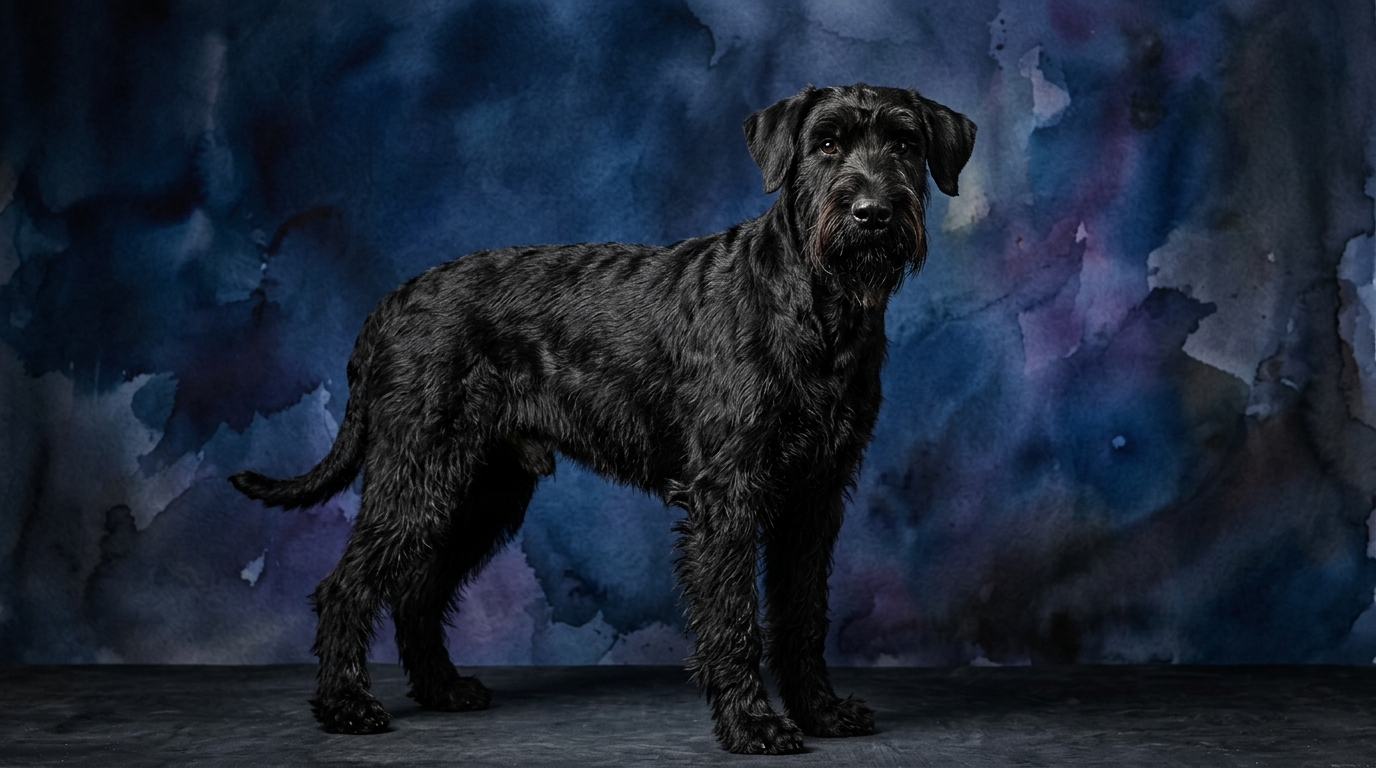
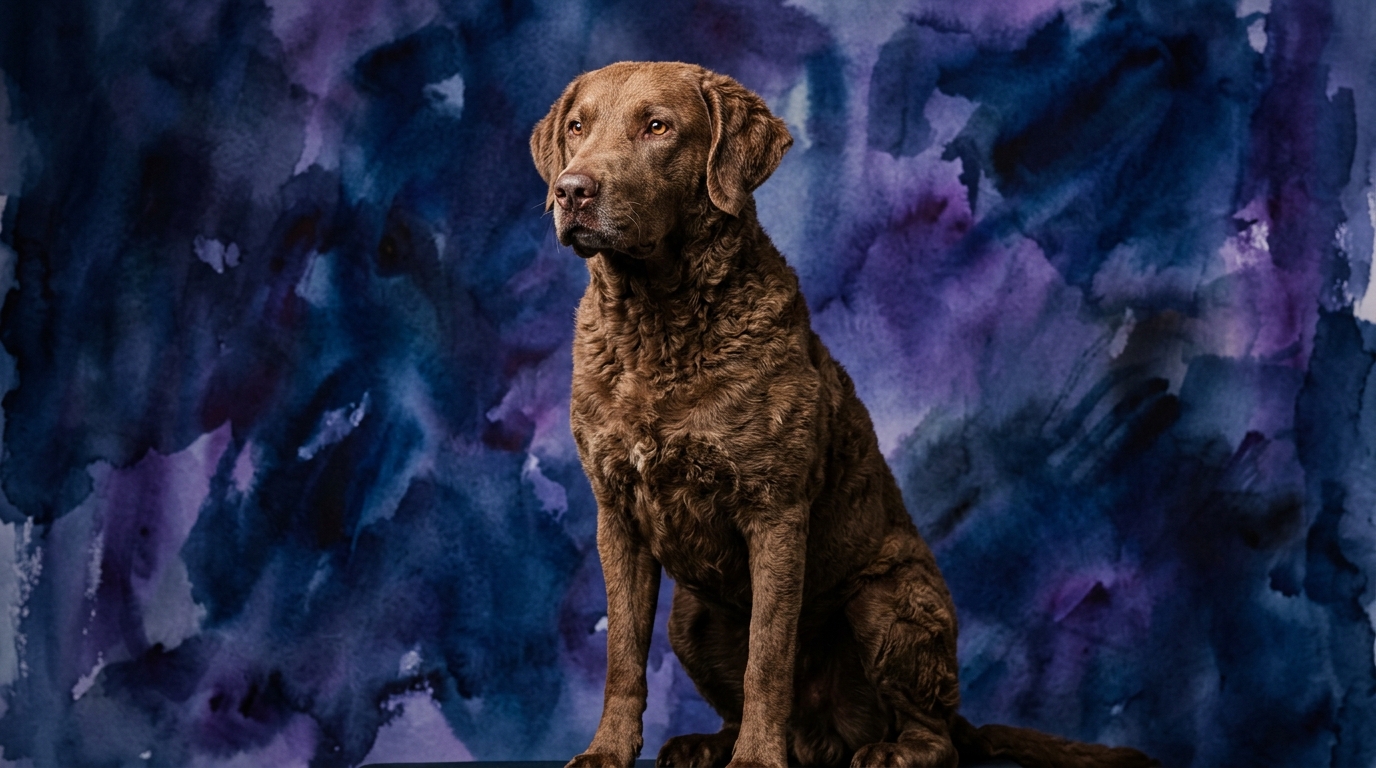
Side-by-Side Cognitive Profiles: Giant Schnauzer vs. Chesapeake Bay Retriever
At first glance, the cognitive assessments for the Giant Schnauzer (Working Group, Coren rank #28) and the Chesapeake Bay Retriever (Sporting Group, Coren rank #27) appear strikingly similar, underscoring a shared foundation of robust mental capabilities. Both breeds register a Problem Solving score of 4/5, indicating a strong capacity to analyze situations and devise effective solutions. Their Training Speed also stands at 4/5, suggesting a quick grasp of new commands and routines, making them responsive pupils.
When it comes to social interactions, both breeds carry a Social Intelligence rating of 3/5, pointing to a moderate level of discernment in social contexts. Their Instinctive Drive is also rated 3/5, signifying a notable, yet not overwhelming, internal motivation tied to their historical roles. Finally, Memory for both breeds is a strong 4/5, highlighting their ability to retain complex information, sequences, and experiences over time. While the numerical scores align, the practical application and behavioral expression of these cognitive traits are where their distinct breed purposes truly shine through.
Where the Giant Schnauzer Excels Cognitively
The Giant Schnauzer’s cognitive strengths are particularly evident in scenarios demanding strategic thinking, vigilance, and precise execution within a structured environment, aligning with its Working Group heritage. Their 4/5 Problem Solving manifests as an aptitude for assessing and neutralizing perceived threats, navigating complex multi-stage obedience routines, and understanding intricate protective work patterns. This isn't just about following commands; it's about making intelligent, context-specific decisions within a defined framework, such as discerning between a friendly visitor and an intruder.
Their 4/5 Memory serves them exceptionally well in retaining extensive command sequences, handler expectations, and established routines, which are critical for roles like police work, tracking, or advanced obedience. A Giant Schnauzer can recall specific scent trails, intricate agility courses, or the precise timing required for protection exercises, demonstrating a memory geared towards detail and operational consistency. This breed thrives on mental engagement that challenges their capacity for logical progression and disciplined application of learned behaviors.
Where the Chesapeake Bay Retriever Excels Cognitively
The Chesapeake Bay Retriever, a stalwart of the Sporting Group, showcases its cognitive prowess in dynamic, often unpredictable natural environments, where independence and adaptability are paramount. Their 4/5 Problem Solving ability is best observed when navigating challenging terrains – dense cover, icy waters, or varied shorelines – to retrieve game. They excel at strategizing the most efficient path to a 'fall,' even if it requires overcoming physical obstacles or assessing current conditions like water currents or wind direction.
The Chessie’s impressive 4/5 Memory is crucial for marking multiple fall locations over significant distances and remembering the sequence of retrieves, even when distractions are high. This isn't rote memorization but a spatial and situational memory that allows them to recall precise points in a vast landscape. Their cognitive edge lies in their capacity for independent decision-making in the field, often making judgment calls without direct handler instruction, demonstrating a practical intelligence geared towards successful execution of their retrieving duties amidst environmental variables.
Training Dynamics: Giant Schnauzer vs. Chesapeake Bay Retriever
With identical Training Speed scores of 4/5, both breeds are quick learners, but the 'why' behind their training ease and the optimal approach differ due to their inherent drives and social nuances. The Giant Schnauzer generally responds well to structured, consistent training delivered by a confident leader. Their 3/5 Social Intelligence means they are often discerning and devoted to their primary family members, making them eager to please a respected handler. They thrive on clear expectations, pattern repetition, and the satisfaction of mastering a task, making them excellent candidates for advanced obedience and precision-based dog sports.
The Chesapeake Bay Retriever, while equally swift in learning, presents a different training dynamic shaped by its robust 3/5 Instinctive Drive for retrieving and water. Their focus can be intense, and initial training might require more creativity to channel this drive constructively rather than letting it become a distraction. Training for a Chessie often needs to be engaging, game-like, and directly harness their natural working inclinations. Their 3/5 Social Intelligence means they form strong, often independent, bonds with their handler, and thrive when training is a collaborative activity that respects their tenacious spirit and love for outdoor work.
Matching Breeds to Lifestyles: Active vs. Engaged Owners
Neither the Giant Schnauzer nor the Chesapeake Bay Retriever are suited for purely 'relaxed' ownership, as both require significant engagement, but the nature of that engagement differs. The Giant Schnauzer thrives with owners who can provide consistent structure, mental challenges, and a sense of purpose. They need more than just physical exercise; they need a 'job' – whether it's advanced obedience, protection training, tracking, or agility. This breed suits owners who enjoy a thinking partner, are committed to ongoing training, and appreciate a discerning companion who values routine and clear leadership.
The Chesapeake Bay Retriever demands an owner with an equally robust and active lifestyle, particularly one that embraces the outdoors and water. Their powerful drive and stamina necessitate extensive physical activity, often involving swimming, retrieving games, long hikes, or hunting. They are ideal for individuals or families passionate about outdoor sports, who are prepared to provide daily, vigorous exercise that fulfills their deep-seated urge to work. Owners who prefer gentle strolls or minimal engagement may find the Chessie's energy and drive overwhelming, as it requires consistent outlets to prevent boredom and frustration.
The Verdict
The Giant Schnauzer is an ideal companion for owners who appreciate a discerning, task-oriented canine partner, excelling in structured training and dedicated protection or obedience roles. Choose this breed if you seek a vigilant family member who thrives on mental challenges and consistent leadership.
Opt for the Chesapeake Bay Retriever if your lifestyle embraces extensive outdoor activity, particularly water sports or hunting, and you desire a robust, independent retriever with formidable stamina and problem-solving abilities in natural environments. This breed suits those ready to engage their dog's powerful retrieving drive and physical needs daily.
🧠 Find Your Pet's IQ Score
Our Pet IQ Lab assessment covers 25+ tests across 5 cognitive dimensions — personalized to your breed.
Take the Full IQ Test →Frequently Asked Questions
Do Giant Schnauzers and Chesapeake Bay Retrievers have similar temperaments?
While both breeds exhibit loyalty, their temperaments differ in expression. Giant Schnauzers are often described as vigilant and reserved with strangers, forming deep bonds within their family. Chesapeake Bay Retrievers tend to be more independent and robust, possessing a tenacious drive for their work and sometimes displaying a more stoic demeanor.
How do their social intelligence scores of 3/5 manifest differently?
For the Giant Schnauzer, a 3/5 social intelligence often means they are highly attentive to their family but can be aloof or suspicious of outsiders, requiring careful socialization. The Chesapeake Bay Retriever's 3/5 score typically indicates a strong focus on their primary handler or 'pack,' with a reserved or independent attitude towards others, prioritizing their task over broad social interaction in many contexts.
Can a Giant Schnauzer retrieve like a Chesapeake Bay Retriever?
While a Giant Schnauzer can certainly be trained to retrieve, it will not possess the innate, powerful, water-loving retrieving drive that defines the Chesapeake Bay Retriever. The Chessie's instinctive drive (3/5) is specifically channeled towards retrieving, swimming, and scenting game, a natural aptitude that a Schnauzer, despite its similar 3/5 instinctive drive score, does not share in the same context.