Side-by-Side IQ Profile: Giant Schnauzer vs. Komondor
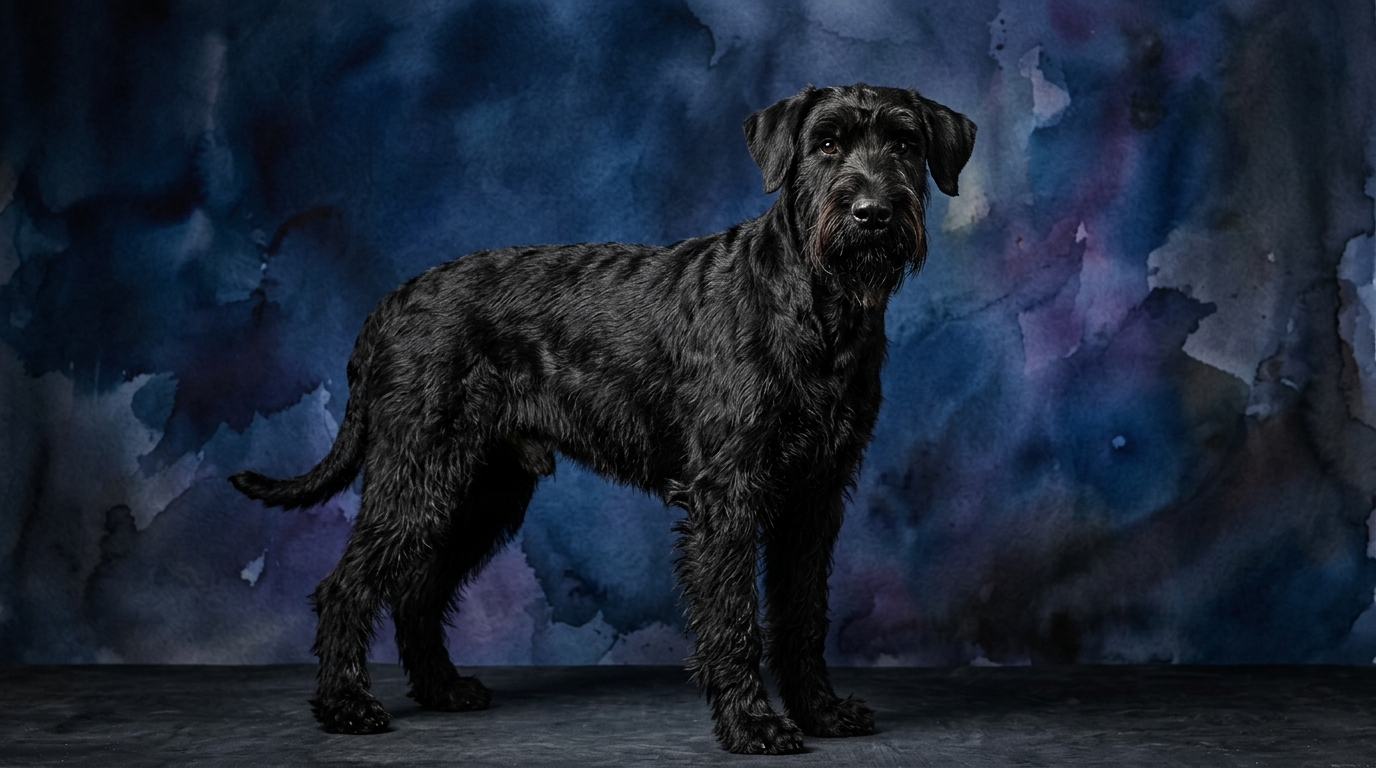
The Giant Schnauzer, a robust member of the Working Group, registers at Coren rank #28. Its cognitive strengths are evident across several dimensions: Problem Solving at 4/5, indicating a strong capacity for navigating complex situations and adapting to new challenges; Training Speed at 4/5, reflecting an eagerness and aptitude for learning new commands and routines efficiently; Social Intelligence at 3/5, suggesting a moderate ability to understand and respond to social cues from humans and other animals; Instinctive Drive at 3/5, pointing to a balanced but present inclination towards inherent breed-specific behaviors like guarding or herding; and Memory at 4/5, signifying an excellent ability to retain learned information and experiences over time. This profile paints a picture of a capable, adaptable, and highly trainable companion.
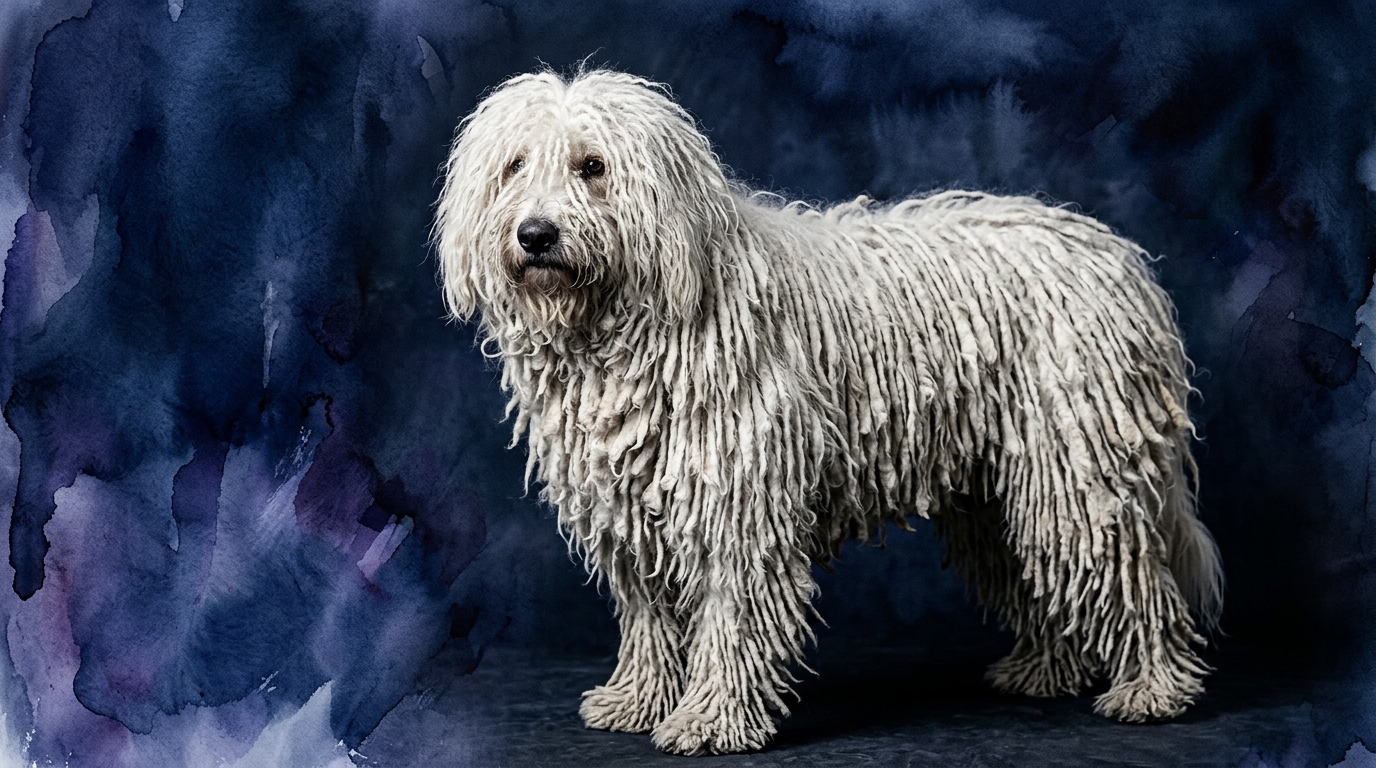
In contrast, the Komondor, also a powerful Working Group dog, holds a Coren rank of #67. Its IQ profile, while solid, leans towards a more specialized application of intelligence: Problem Solving scores 3/5, indicating a competent but perhaps less flexible approach to novel situations, often relying on established patterns; Training Speed at 3/5, suggesting a steady but not rapid learning curve, often requiring consistent and patient instruction; Social Intelligence at 3/5, similar to the Giant Schnauzer, implies a reasonable understanding of social dynamics, though often expressed with a characteristic independence; Instinctive Drive at 3/5, reflecting a strong inherent predisposition for its traditional role as a livestock guardian; and Memory at 3/5, showing a good capacity for recall, though perhaps not as acutely as the Giant Schnauzer. The Komondor’s intelligence is deeply rooted in its ancestral purpose, favoring self-reliance and protective instincts.
Where the Giant Schnauzer Wins Cognitively
The Giant Schnauzer distinctly surpasses the Komondor in several key cognitive areas. Its Problem Solving score of 4/5 compared to the Komondor's 3/5 highlights a greater mental agility and capacity for strategic thinking. This means a Giant Schnauzer is more likely to independently figure out how to open a gate, retrieve a toy from a difficult spot, or adapt to a sudden change in a training exercise without significant human intervention. Their superior Training Speed (4/5 versus 3/5) translates directly into a more efficient learning process; they grasp new commands and complex sequences with fewer repetitions. This breed often exhibits an eagerness to engage in learning, viewing it as a collaborative effort. Furthermore, a Memory score of 4/5 for the Giant Schnauzer suggests a more robust retention of past experiences and learned behaviors, making them less prone to forgetting commands or routines even after a break, and better at recalling specific scenarios or people.
Where the Komondor's Cognitive Profile Excels for Specific Roles
While the Komondor's raw scores might appear lower in some metrics, its cognitive profile is exquisitely tailored for its historical role. Its 3/5 Instinctive Drive, while matching the Schnauzer's numerically, manifests differently. For the Komondor, this drive is profoundly channeled into independent guardianship, making them unparalleled at assessing threats and protecting their charges without direct human command. Their problem-solving, though rated 3/5, is often applied to vigilance and territory management, evaluating environmental cues for potential dangers rather than solving abstract puzzles. This independent thinking, combined with their 3/5 Social Intelligence, means they can form strong bonds with their family and charges, but maintain a discerning distance from strangers, making them naturally excellent, self-sufficient protectors. Their memory, at 3/5, is reliable for remembering their flock and territory, demonstrating a steadfast commitment to their core responsibilities.
Which is Easier to Train and Why
Based on The Cosmic Pet Pet IQ Lab data, the Giant Schnauzer is generally easier to train than the Komondor. The Giant Schnauzer’s Training Speed of 4/5 indicates a natural aptitude and desire to learn, often thriving on mental stimulation and positive reinforcement. They tend to be highly responsive to commands, eager to please their handler, and quick to form associations between actions and consequences. This makes them suitable for a wide range of advanced obedience, dog sports, and working roles where precise execution of commands is crucial. Their 4/5 Problem Solving also aids in training, as they can often generalize learned behaviors to new contexts more readily.
The Komondor, with a Training Speed of 3/5, requires a more patient and consistent approach. Their training is often characterized by an independent streak; they are capable of learning, but their strong self-reliance means they need to be convinced of the purpose of a command rather than simply complying to please. Repetitive, harsh, or inconsistent training methods are likely to be counterproductive, leading to stubbornness. While they will learn, their progress might be slower, and their obedience might be more nuanced, reflecting their history of making independent decisions in their guarding duties rather than blindly following human directives. Early and consistent socialization and positive reinforcement are critical for shaping a well-adjusted Komondor.
Which Suits Active Owners vs. Relaxed Owners
The Giant Schnauzer, with its robust cognitive profile and historical background as a versatile working dog, is an ideal fit for active owners. Their 4/5 Problem Solving and 4/5 Training Speed mean they thrive on mental engagement through activities like agility, obedience trials, search and rescue, or even complex puzzle toys. They require consistent physical exercise and mental challenges to prevent boredom and channel their energy constructively. Owners who enjoy structured activities and can dedicate time to advanced training and regular outings will find a highly rewarding partnership with a Giant Schnauzer, as their intelligence needs a job.
The Komondor, while requiring exercise, is better suited for owners who appreciate a more independent and watchful companion, perhaps those with a relaxed but consistent approach to daily life. Their intelligence is geared towards observation and protection, not necessarily constant interaction or high-octane activities. While they need space to roam and a secure perimeter to satisfy their instinctive drive, they are less likely to demand constant mental tasks or intricate training sessions. Owners who understand and respect their inherent guarding nature, providing a stable environment and clear boundaries, will find the Komondor a devoted, albeit reserved, protector. They are not a dog for casual obedience or constant 'go-go-go' activities, but rather a steadfast presence.
The Verdict
Choose the Giant Schnauzer if you seek a highly trainable, versatile, and mentally agile companion eager for diverse activities and structured learning. They thrive with active owners who can provide consistent mental and physical challenges.
Opt for the Komondor if you need an independent, steadfast guardian with a strong protective instinct, and you are prepared for a dog whose intelligence is geared towards vigilance over eager compliance. They suit owners who appreciate their self-reliant nature and can manage their specific needs.
🧠 Find Your Pet's IQ Score
Our Pet IQ Lab assessment covers 25+ tests across 5 cognitive dimensions — personalized to your breed.
Take the Full IQ Test →Frequently Asked Questions
Are Giant Schnauzers good family dogs?
Yes, Giant Schnauzers can be excellent family dogs, forming strong bonds with their human companions. Their 3/5 social intelligence means they are generally responsive to family dynamics, but consistent training and early socialization are vital to ensure they are well-mannered around children and other pets.
Do Komondors require a lot of grooming?
Komondors require significant and specific grooming due to their unique corded coat. While they don't shed much once cords are formed, the cords need regular separation and cleaning to prevent matting and maintain hygiene, which is a substantial time commitment for owners.
Which breed is better for first-time dog owners?
Given its higher Training Speed and Problem Solving scores, the Giant Schnauzer is generally more approachable for committed first-time owners willing to invest heavily in training and socialization. The Komondor's independent nature and specific guarding instincts make it better suited for experienced owners who understand working dog temperaments.