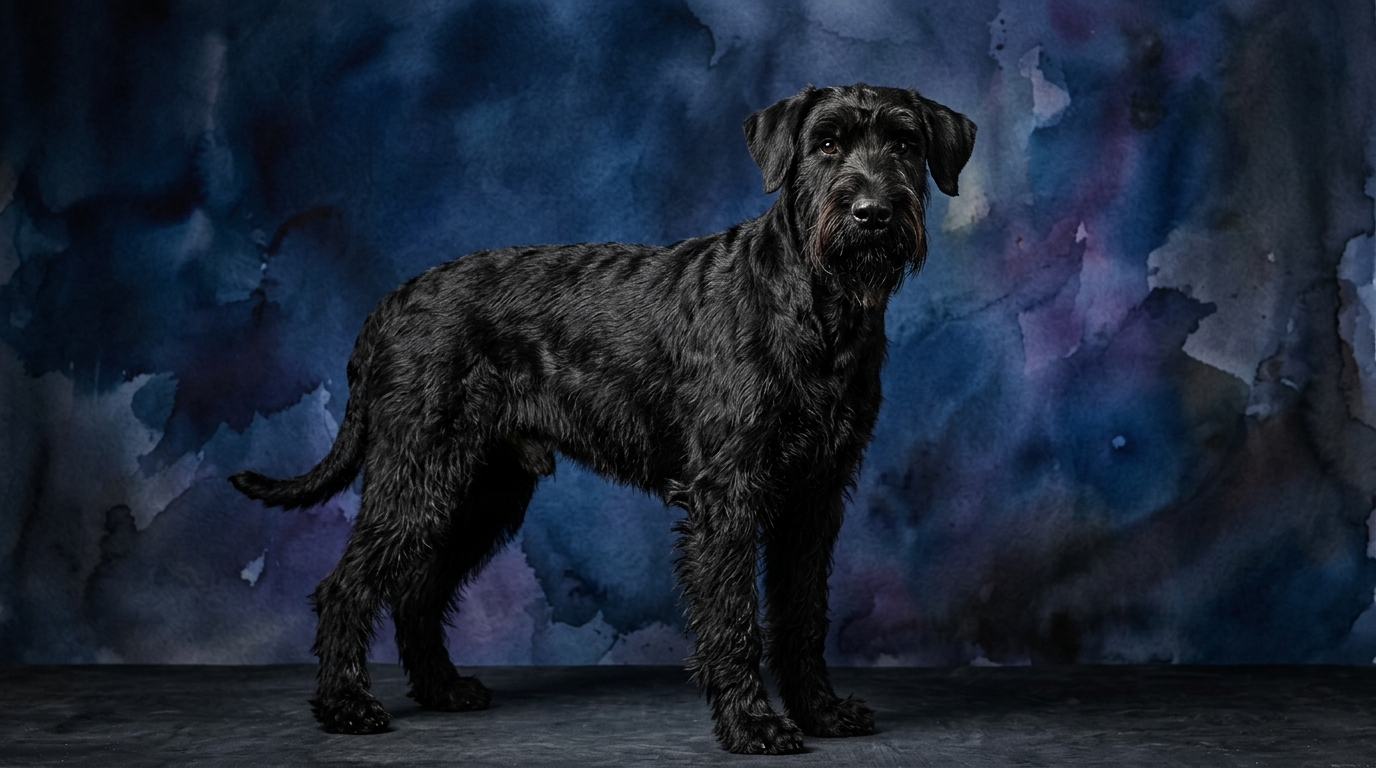
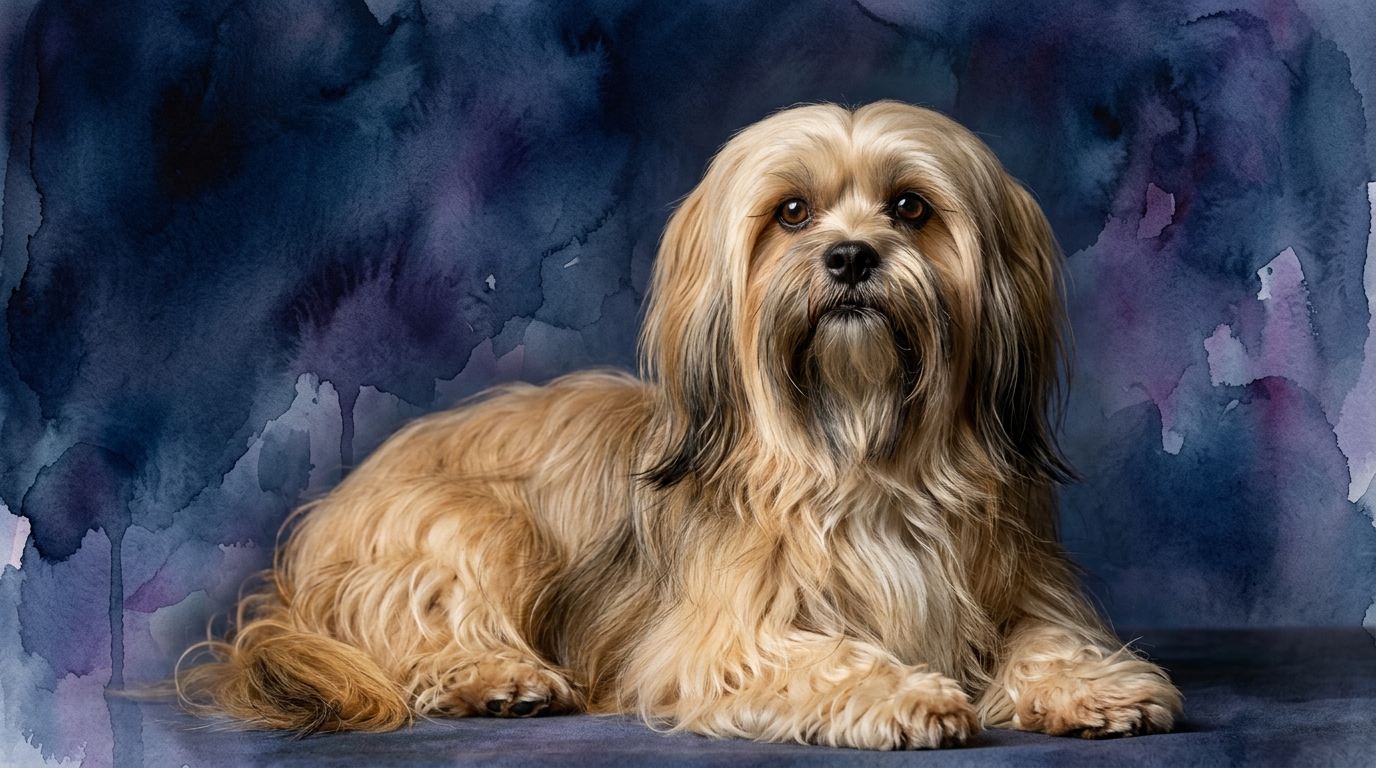
Side-by-Side IQ Profile: Giant Schnauzer vs. Lhasa Apso
The Cosmic Pet Pet IQ Lab employs a five-dimensional framework to assess canine intelligence, offering a nuanced view of how different breeds process information and interact with their world. For the Giant Schnauzer, a Working breed ranked #28 by Coren, their profile reflects a heritage of demanding tasks. Their Problem Solving is rated 4/5, indicating a strong capacity to analyze novel situations and devise effective solutions, often involving complex sequences. Training Speed also stands at 4/5, showcasing a rapid assimilation of new commands and routines, crucial for their historical working roles. Social Intelligence is 3/5, suggesting a good understanding of human cues and pack dynamics, though they can be discerning in their interactions. Instinctive Drive is 3/5, channeled into focused protection and vigilance rather than scattered urges. Finally, Memory is 4/5, allowing for excellent recall of learned behaviors, people, and places, ensuring consistent performance over time.
In contrast, the Lhasa Apso, a Non-Sporting breed with a Coren rank of #68, presents a cognitive profile suited to its role as a steadfast companion and sentinel. Their Problem Solving is 3/5, meaning they can navigate challenges, especially those related to their immediate environment or resource acquisition, often relying on persistence. Training Speed is 3/5, indicating a steady learning pace that requires consistent and patient instruction. Social Intelligence is also 3/5, manifesting as a deep perceptiveness regarding their human companions and a strong, discerning bond within their family unit. Instinctive Drive is 3/5, expressed as a moderate guardian instinct and an independent, tenacious streak. Their Memory is 3/5, allowing them to reliably retain information, routines, and boundaries, reinforcing their established daily life and relationships.
Where the Giant Schnauzer Excels Cognitively
The Giant Schnauzer's cognitive profile distinctly outperforms the Lhasa Apso in areas demanding complex analytical thought and rapid acquisition of new skills. With a Problem Solving score of 4/5, these dogs exhibit a remarkable capacity to dissect novel situations, often devising multi-step solutions to achieve a goal. This isn't merely about brute force; it's about evaluating environmental cues and adapting strategies, a trait honed by generations of guarding livestock or property. For instance, a Giant Schnauzer might independently figure out how to open a complex gate or navigate an obstacle course with minimal prior instruction, demonstrating an intuitive understanding of mechanics and sequence. Their 4/5 Training Speed further solidifies this advantage, meaning they absorb and apply new commands with impressive efficiency. This quick learning isn't just about repetition; it reflects an inherent drive to understand and cooperate in structured tasks, making them exceptionally responsive to advanced obedience, agility, or protection work. They don't just learn *what* to do; they often seem to grasp the *why*, allowing for quicker generalization of skills across different contexts. This cognitive edge makes them prime candidates for roles requiring continuous learning and adaptive behavior, such as search and rescue or competitive dog sports.
Where the Lhasa Apso Shows Unique Cognitive Strengths
While the Giant Schnauzer excels in task-oriented cognition, the Lhasa Apso demonstrates a unique blend of perceptual acuity and steadfast resolve that, in certain contexts, offers a distinct cognitive advantage. Although their Problem Solving and Training Speed scores are 3/5, implying a more measured approach, their cognitive strengths are often expressed through their profound environmental awareness and a persistent, independent streak. A Lhasa Apso, with its heritage as a sentinel in Tibetan monasteries, possesses an exceptional ability to discern subtle changes in its surroundings, often noticing and reacting to anomalies long before a human. This isn't just an instinctive bark; it's a sophisticated processing of sensory input, allowing them to act as highly effective, early warning systems. Their Social Intelligence, also rated 3/5, manifests as a deep, discerning bond with their chosen family, enabling them to pick up on nuanced emotional cues and routines with remarkable accuracy. They may not be quick to learn complex multi-step commands, but they are incredibly adept at understanding household dynamics and individual preferences, often anticipating needs or moods. Their Instinctive Drive, also 3/5, is channeled into unwavering vigilance and a tenacious hold on their personal boundaries. This translates into a steadfastness of purpose; once a Lhasa Apso decides on a course of action or a preferred routine, they exhibit a cognitive stubbornness that can be interpreted as less flexible but also as remarkably consistent and dedicated to their perceived role, whether that's guarding the home or simply demanding attention.
Training Dynamics: Giant Schnauzer vs. Lhasa Apso
When evaluating ease of training, the Giant Schnauzer clearly holds an advantage due to its higher scores in both Problem Solving (4/5) and Training Speed (4/5). These dogs exhibit a strong desire to engage in structured learning and possess the mental agility to quickly grasp complex commands and sequences. Their working dog heritage means they are generally eager to please and find satisfaction in performing tasks, making them highly responsive to positive reinforcement and clear directives. A Giant Schnauzer is more likely to generalize learned behaviors, applying a command like 'stay' effectively in various environments after fewer repetitions. For example, teaching a Giant Schnauzer to perform an intricate agility course or a multi-part obedience routine often proceeds with remarkable fluidity because they connect actions to outcomes swiftly and remember the sequence accurately (Memory 4/5).
In contrast, the Lhasa Apso, with 3/5 in both Problem Solving and Training Speed, requires a more patient and consistent approach. Their training journey is not about lack of capacity, but rather a different cognitive style. Lhasa Apsos possess an independent streak, a legacy of their sentinel role where self-reliance was paramount. This means they might question the 'why' behind a command or decide if a task is worth their effort. While they are fully capable of learning, their progress can be slower, and they often require more repetition and motivation to solidify new behaviors. For instance, house-training a Lhasa Apso might demand more vigilance and consistent routine establishment due to their discerning nature, whereas a Giant Schnauzer might pick up the pattern more rapidly. Their training isn't about brute force or dominance; it's about building a strong, trusting relationship where the Lhasa Apso chooses to cooperate rather than merely comply, highlighting their distinct social intelligence and memory for established routines.
Matching Breeds to Owner Lifestyles
The choice between a Giant Schnauzer and a Lhasa Apso largely hinges on an owner's lifestyle and their capacity to meet a breed's cognitive and physical engagement needs. Active owners, those who enjoy consistent outdoor activities, dog sports, or who are willing to dedicate significant time to advanced training, will find the Giant Schnauzer an ideal match. Their robust Problem Solving (4/5) and Training Speed (4/5) mean they thrive on mental challenges, requiring structured activities like obedience trials, agility, or even protection work to feel fulfilled. Without sufficient mental and physical engagement, a Giant Schnauzer might channel their substantial energy and cognitive capacity into less desirable behaviors, demonstrating their Instinctive Drive (3/5) in ways that can be challenging to manage. They are not content to be mere couch potatoes; their minds need to be worked as much as their bodies.
Conversely, the Lhasa Apso, while not a sedentary breed, is better suited for more relaxed owners who appreciate a steadfast companion and are prepared for a different kind of mental engagement. Their cognitive profile, with 3/5 across most dimensions, suggests they don't demand the same high-intensity mental workouts. They are content with consistent routines, thoughtful interactions, and opportunities to exercise their keen observational skills as household guardians. A Lhasa Apso will enjoy regular walks and playtime but doesn't require the same endurance or complex task engagement as a Giant Schnauzer. Their engagement is often more about companionship and shared presence, valuing their quiet vigilance and discerning social bonds (Social Intelligence 3/5) within their established family unit.
The Verdict
Opt for a Giant Schnauzer if you're an experienced, active owner seeking a highly trainable partner for advanced activities and consistent mental challenges. Their capacity for complex learning and task execution makes them suitable for demanding roles and competitive sports.
Select a Lhasa Apso if you desire a perceptive, steadfast companion dog who thrives on strong bonds and consistent routines, offering alert companionship without requiring intense, structured mental exertion.
🧠 Find Your Pet's IQ Score
Our Pet IQ Lab assessment covers 25+ tests across 5 cognitive dimensions — personalized to your breed.
Take the Full IQ Test →Frequently Asked Questions
Are Giant Schnauzers good family dogs?
Yes, Giant Schnauzers can be excellent family dogs with proper socialization and training from a young age. Their protective instincts and loyalty make them devoted companions, though they require consistent boundaries and leadership.
Do Lhasa Apsos bark a lot?
Lhasa Apsos are known for their vigilant nature and can be quite vocal, using their barks to alert owners to anything they perceive as unusual. Consistent training can help manage excessive barking, but their guardian instinct is strong.
How much exercise does a Giant Schnauzer need?
Giant Schnauzers require a significant amount of daily exercise, typically 60-90 minutes of vigorous activity like running, hiking, or structured playtime. They also benefit greatly from mental stimulation through training and puzzle toys.