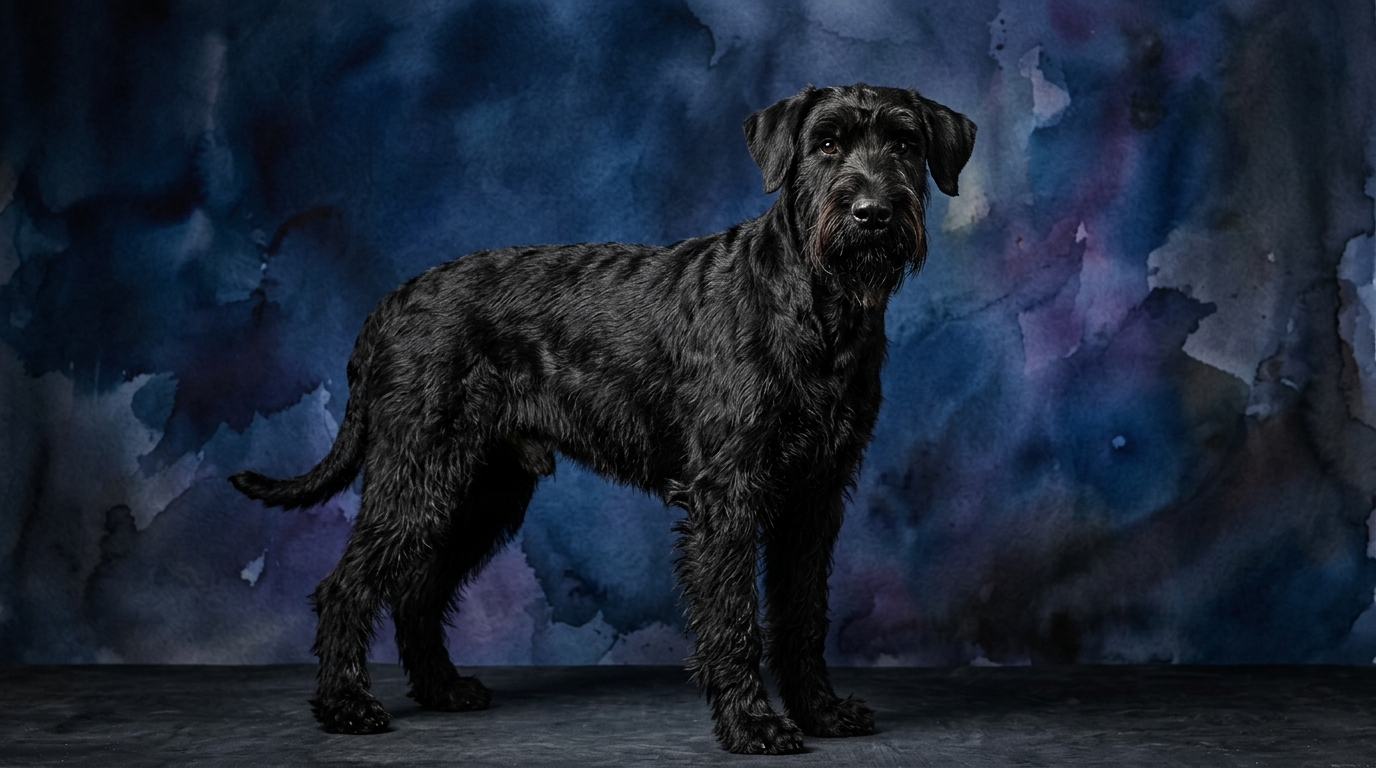
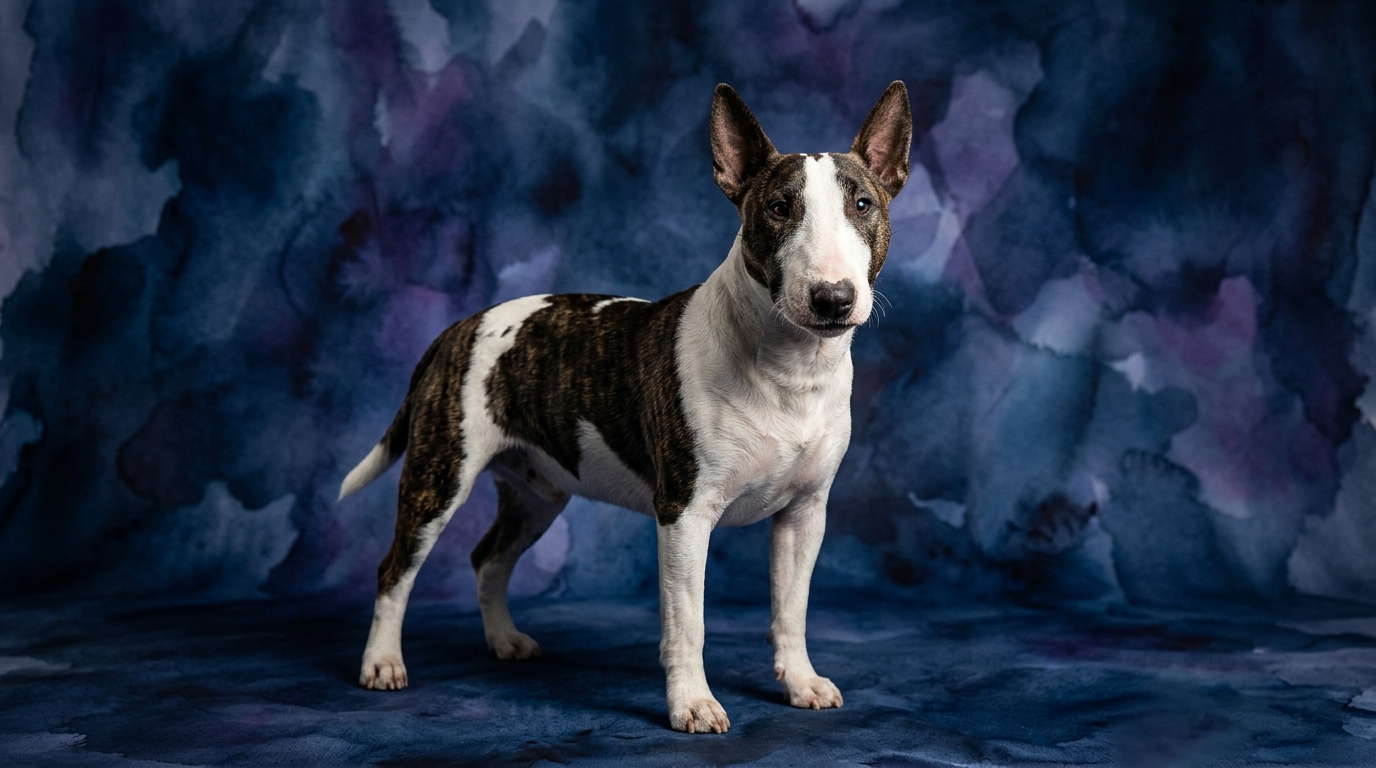
Side-by-Side Cognitive Profile
The Cosmic Pet Pet IQ Lab employs five key dimensions to evaluate canine intelligence, offering a nuanced understanding beyond simple obedience. For the Giant Schnauzer, a Working group dog, its cognitive strengths are evident in its Coren rank of #28, placing it among breeds that demonstrate a high capacity for learning and task execution. The Miniature Bull Terrier, a Terrier group dog, is not Coren-ranked, which doesn't diminish its unique cognitive profile but suggests a different approach to intelligence.
When we examine problem-solving aptitude, the Giant Schnauzer scores a robust 4 out of 5. This indicates a dog capable of analyzing novel situations, strategizing to overcome obstacles, and figuring out complex puzzles or environmental challenges with a good degree of ingenuity. They often display a methodical approach, applying past knowledge to new scenarios. In contrast, the Miniature Bull Terrier registers a 3 out of 5 in problem-solving. While still capable, their approach might be characterized by more trial-and-error, or a reliance on sheer tenacity to overcome issues rather than intricate planning. Their solutions might be less elegant but equally effective through sheer will.
Training speed is another critical dimension, where the Giant Schnauzer again shows a strong performance with a 4 out of 5. This score reflects a breed that typically picks up new commands and routines with relative ease and fewer repetitions. Their desire to engage and work alongside their human companions contributes significantly to this efficiency. The Miniature Bull Terrier, with a 3 out of 5 training speed, requires a more patient and often more creative training approach. Their independent spirit means they learn, but perhaps on their own terms, needing consistent positive reinforcement and engaging methods to solidify behaviors.
Both breeds share a social intelligence score of 3 out of 5, suggesting they are capable of understanding and navigating social dynamics, but perhaps not with the extreme sensitivity or broad affability seen in some other breeds. For the Giant Schnauzer, this often translates to a reserved demeanor with strangers, coupled with deep loyalty to their family unit. They observe and assess before engaging. For the Miniature Bull Terrier, this 3/5 score might manifest as a selective sociability, forming strong, devoted bonds with their inner circle while being more discerning or even aloof with outsiders. They are often less concerned with general approval.
Instinctive drive, which encompasses innate behaviors like guarding or prey drive, is rated 3 out of 5 for both breeds. For the Giant Schnauzer, this drive is rooted in its working heritage, manifesting as strong protective instincts and a desire for purpose-driven activity. They possess an inherent vigilance. The Miniature Bull Terrier's 3/5 instinctive drive is deeply tied to its terrier lineage, characterized by a tenacious prey drive, a determined digging instinct, and a spirited, sometimes feisty, approach to life. These drives are powerful motivators for each breed, shaping their natural behaviors and needs.
Finally, memory scores differentiate these two considerably. The Giant Schnauzer earns a 4 out of 5, indicating an excellent capacity to recall learned commands, past experiences, and routines over long periods. This strong memory aids significantly in advanced training and maintaining good behavior. The Miniature Bull Terrier scores 3 out of 5 for memory. While they certainly remember, their retention might be more selective or require more frequent reinforcement, particularly if training isn't consistently engaging or positive experiences aren't clearly established.
Where the Giant Schnauzer Excels Cognitively
The Giant Schnauzer's cognitive strengths lie in its structured approach to learning and its impressive retention. Its 4/5 problem-solving score means it can dissect complex tasks, like navigating an agility course or learning intricate multi-step commands, with greater efficiency. This isn't just about speed; it's about a deeper comprehension of the underlying task. For instance, if a gate latch mechanism changes, a Giant Schnauzer is more likely to quickly assess the new configuration and adapt its approach based on prior knowledge of similar mechanisms.
Their superior training speed (4/5) and memory (4/5) are interconnected advantages. A Giant Schnauzer can master a new command in fewer repetitions and reliably execute it weeks or months later without extensive refresher training. This makes them highly adaptable to varied roles, from competitive obedience to protection work, where precision and consistent recall are paramount. Their working breed background has honed a cognitive style that thrives on having a job, understanding expectations, and executing them effectively, making them particularly adept at tasks requiring sustained focus and intellectual engagement.
Where the Miniature Bull Terrier Shines Cognitively
While the Miniature Bull Terrier's scores might be generally lower, its cognitive profile possesses a unique brilliance, particularly in its tenacity and independent spirit. Its 3/5 problem-solving, while not as analytical as the Schnauzer's, is often fueled by an unwavering determination. If a Miniature Bull Terrier encounters a barrier, it might not devise the most elegant solution, but it will likely persist through various attempts until it finds a way, demonstrating a robust resilience that can be a cognitive advantage in specific scenarios. This dog doesn't give up easily, a trait stemming from its terrier heritage.
The Miniature Bull Terrier's social intelligence (3/5) and instinctive drive (3/5) combine to create a fiercely loyal and characterful companion. Their independence, while sometimes posing challenges in training, means they are not simply followers; they think for themselves. This can be a strength for owners who appreciate a dog with a strong personality and the capacity for independent decision-making, rather than one solely reliant on human direction. Their cognitive strength lies in their distinctive blend of courage, spirited determination, and a deep, selective devotion that forms the bedrock of their unique charm.
Training: Giant Schnauzer vs. Miniature Bull Terrier
When it comes to ease of training, the Giant Schnauzer generally holds a significant advantage. Its Coren rank of #28 places it among breeds that learn new commands with remarkable speed and retain them well, a fact supported by its 4/5 training speed and 4/5 memory scores. These dogs were selectively bred to work closely with humans, often in roles requiring complex tasks and consistent obedience. They typically respond well to positive reinforcement and clear, consistent instruction, eager to please and to understand their purpose within the family unit. This inherent cooperativeness translates into a more straightforward and often faster training journey.
The Miniature Bull Terrier, in contrast, presents a more nuanced training experience, reflected in its 3/5 training speed and 3/5 memory scores. As a terrier breed, they possess an independent streak and a strong will, historically bred to work autonomously. This means they might question commands or require more motivation to comply, especially if they don't perceive an immediate benefit. Training a Miniature Bull Terrier demands creativity, patience, and a deep understanding of canine motivation. Sessions need to be engaging, varied, and fun to hold their attention. While they are capable of learning, their independent nature means an owner must work harder to establish a strong working relationship and make training a rewarding collaboration rather than a simple command-and-response exercise. They are less inclined to offer automatic compliance and often require firm yet gentle boundaries.
Suitability for Active vs. Relaxed Owners
The Giant Schnauzer's cognitive profile, particularly its high problem-solving, training speed, and memory, makes it an excellent match for active and engaged owners. This breed thrives on having a 'job' to do, whether it's advanced obedience, agility, protection work, or simply consistent, stimulating training sessions. They require substantial physical exercise, but equally important is mental stimulation to prevent boredom and channel their considerable intellect constructively. Owners who enjoy dog sports, long hikes, or simply dedicating time daily to training and brain games will find the Giant Schnauzer a rewarding and capable partner. A relaxed owner who cannot provide consistent engagement might find a Giant Schnauzer developing self-directed (and potentially undesirable) activities to fulfill its cognitive needs.
The Miniature Bull Terrier, while also requiring regular exercise to manage its robust energy, suits owners who appreciate a dog with a unique character and are prepared to engage with its distinctive cognitive style. They are not necessarily a breed for purely 'relaxed' owners in terms of mental engagement, as their independent streak and tenacity need channeling. However, they may be better suited to owners who enjoy a spirited companion and are prepared for a less conventional training journey, one that values collaboration over strict obedience. They need an owner who is patient, consistent, and willing to embrace their sometimes clownish, sometimes stubborn personality. They thrive in homes where they are central to family life and receive ample attention and varied activities that satisfy their terrier instincts, rather than solely structured, repetitive tasks.
The Verdict
Choose the Giant Schnauzer if you seek a highly trainable, versatile working companion eager to engage in complex tasks and consistent training, offering dependable recall and problem-solving skills.
Opt for the Miniature Bull Terrier if you desire a devoted, spirited companion with a unique character, appreciating their independent thinking and tenacious spirit, even if it requires a more patient and creative training approach.
🧠 Find Your Pet's IQ Score
Our Pet IQ Lab assessment covers 25+ tests across 5 cognitive dimensions — personalized to your breed.
Take the Full IQ Test →Frequently Asked Questions
Are Miniature Bull Terriers stubborn during training?
Miniature Bull Terriers can indeed be perceived as stubborn due to their independent nature and strong will, which stems from their terrier heritage. They learn best with engaging, consistent, and positive reinforcement methods that make training feel like a partnership rather than a command.
Do Giant Schnauzers require extensive mental stimulation?
Yes, Giant Schnauzers require significant mental stimulation in addition to physical exercise. Their high problem-solving and training speed scores indicate a mind that thrives on learning new tasks, puzzle toys, and consistent training to prevent boredom and channel their working drive constructively.
How do their social intelligence scores of 3/5 manifest differently?
For the Giant Schnauzer, a 3/5 social intelligence often means they are reserved or aloof with strangers, forming deep bonds with their family. The Miniature Bull Terrier's 3/5 can manifest as selective sociability, being intensely devoted to their chosen people but potentially less interested in or even wary of unfamiliar individuals or situations.