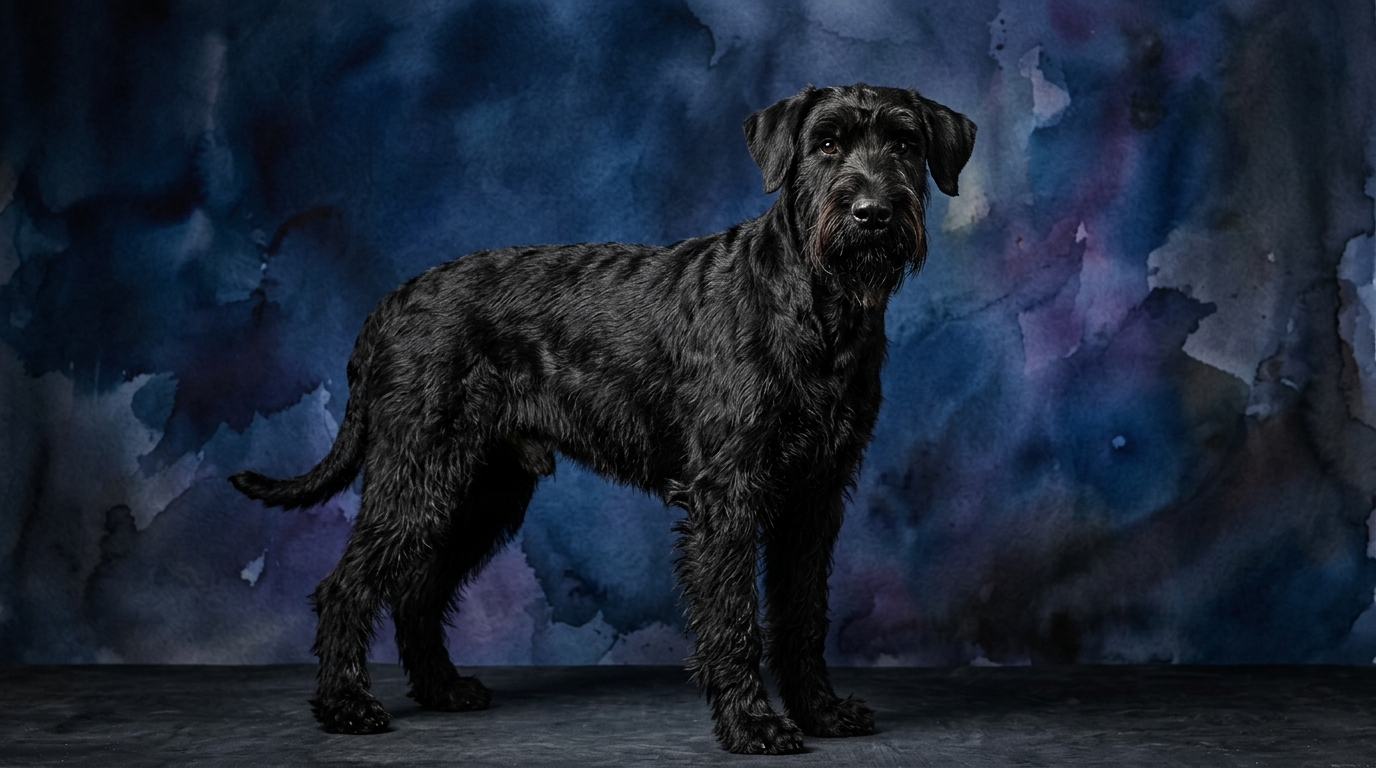
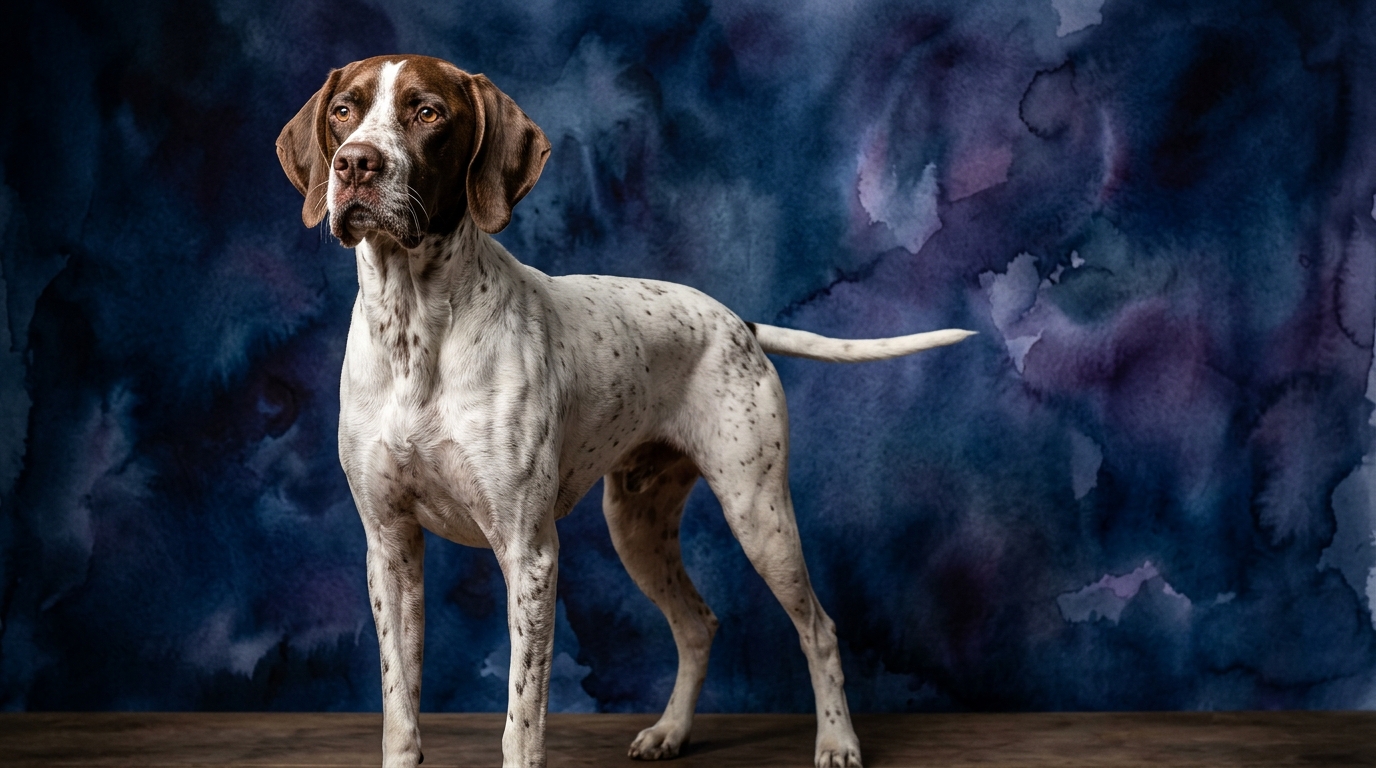
Side-by-Side Cognitive Profile: Giant Schnauzer vs. Pointer
The Cosmic Pet Pet IQ Lab employs a five-dimensional framework to assess canine intelligence, providing a granular view of each breed's mental aptitudes. For the Giant Schnauzer, a robust Working group dog with a Coren rank of #28, its profile paints a picture of substantial cognitive capacity. It demonstrates a Problem Solving score of 4/5, indicating a strong ability to navigate novel challenges and devise solutions. Its Training Speed, also at 4/5, suggests it acquires new commands and routines with notable efficiency. Memory stands at an impressive 4/5, meaning learned behaviors and associations are retained well over time. However, its Social Intelligence and Instinctive Drive are both rated 3/5; while perfectly adequate, these scores suggest a more independent social nature and a drive that, while present, might be less singularly focused than some specialized working breeds.
In contrast, the Pointer, a graceful Sporting group dog not specifically ranked by Coren, presents a different cognitive signature. Across all five dimensions – Problem Solving, Training Speed, Social Intelligence, Instinctive Drive, and Memory – the Pointer consistently scores 3/5. This consistent scoring indicates a balanced cognitive profile, where no single area dramatically overshadows another. A 3/5 in Problem Solving points to a capable but perhaps less innovative approach to new puzzles, while a 3/5 in Training Speed means it learns at a steady, moderate pace. Its 3/5 Memory ensures it holds onto learned tasks, though perhaps not with the same immediate recall as a higher-scoring breed. The 3/5 in Social Intelligence suggests a cooperative but not overly reliant disposition, and its 3/5 Instinctive Drive is precisely tuned for its historical role in the field, indicating a focused, purposeful drive rather than an overwhelming, broad one.
Where the Giant Schnauzer Excels Cognitively
The Giant Schnauzer's cognitive strengths are most apparent in its superior Problem Solving and Training Speed. With a 4/5 in Problem Solving, this breed exhibits a marked capacity for analytical thought and strategic planning when faced with complex situations. This isn't just about following commands; it's about evaluating a scenario, understanding cause-and-effect, and figuring out how to achieve a desired outcome independently. For example, a Giant Schnauzer might more readily figure out how to open a sophisticated latch or navigate a multi-step obstacle course without prior explicit instruction, relying on its own deductive reasoning.
Its 4/5 Training Speed means the Giant Schnauzer typically grasps new concepts and commands with fewer repetitions than many other breeds. This rapid acquisition of knowledge makes them adept at learning intricate sequences of behaviors, excelling in disciplines like competitive obedience, agility, or protection work where precision and swift understanding are paramount. Coupled with its 4/5 Memory, a Giant Schnauzer that has learned a task is likely to remember it accurately, even after a period of inactivity. This robust memory contributes to their reliability in performing complex routines and adapting to evolving training demands, making them excellent candidates for advanced roles requiring consistent recall of a wide array of commands.
Where the Pointer Shines Cognitively
While the Pointer's scores are consistently 3/5, its cognitive strengths lie in the harmonious balance and focused application of these traits, particularly concerning its instinctive purpose. The 3/5 Instinctive Drive, while not the highest, is highly refined and specialized for its role as a pointing bird dog. This isn't a broad, undirected drive; it's a keen, sustained focus on scent, tracking, and the precise act of 'pointing' prey. This cognitive specialization means that while a Pointer might not excel at abstract problem-solving in the same way a Schnauzer does, its brain is exceptionally wired for its specific hunting tasks, demonstrating remarkable concentration and perseverance in the field.
The Pointer's balanced 3/5 in Social Intelligence and Training Speed also contributes to its specific strengths. Its social intelligence allows for effective cooperation with a handler in a working context without an overly demanding or complex emotional landscape. This means they are responsive and willing partners in their field-specific activities, focused on the task at hand rather than constant negotiation or seeking reassurance. Their 3/5 Training Speed, combined with this cooperative nature and focused drive, means they are consistent learners within their domain, reliably picking up and retaining commands that are relevant to hunting or structured activities. They are often less prone to overthinking or becoming creatively disobedient, preferring to follow established patterns once understood, which is a significant asset in a working partnership.
Training Dynamics: Giant Schnauzer vs. Pointer
Training a Giant Schnauzer often involves harnessing its sharp intellect and strong will. Their 4/5 Training Speed means they learn quickly, but their problem-solving ability also means they can assess situations and decide if a command is worth their effort or if there's a more interesting alternative. They require an owner who understands how to maintain engagement through varied, challenging exercises and consistent, firm guidance. If training becomes repetitive or unstimulating, a Giant Schnauzer might become bored and invent its own activities, or simply choose not to comply, leveraging its cognitive capacity to outmaneuver a less experienced trainer. Their memory ensures that both good and bad habits are well-retained, emphasizing the need for early and continuous positive reinforcement.
The Pointer, with its consistent 3/5 scores, presents a different training experience. While it may not learn complex, novel commands as rapidly as a Giant Schnauzer, its more balanced and less intensely 'thinking' profile can make it a more straightforward trainee in certain respects. Pointers are generally eager to please and possess a focused work ethic, especially when tasks align with their natural instincts. Training them often requires patience and consistency, breaking down new skills into smaller, manageable steps. They are less likely to challenge authority through cunning and more likely to respond positively to clear, fair instruction. Their instinctive drive means that incorporating scent work or 'find it' games can be incredibly motivating, making training feel like a natural extension of their innate abilities rather than an imposed duty. While they might require more repetitions for abstract concepts, their biddability and desire to cooperate can make the training process smoother for an owner who appreciates a steady, predictable pace.
Suitability for Different Lifestyles: Active vs. Engaged Owners
Neither the Giant Schnauzer nor the Pointer is suited for a truly 'relaxed' owner in the sense of minimal engagement. Both breeds require significant physical activity and mental stimulation, but the *nature* of that engagement differs. The Giant Schnauzer, with its high problem-solving and training speed, thrives with owners who are prepared to provide consistent, mentally challenging activities. This breed needs more than just a walk; it needs puzzles, advanced obedience work, interactive games that require thought, and perhaps even a 'job' to feel fulfilled. They are best suited for active, experienced owners who enjoy structured training, canine sports, or even working roles, and who can appreciate and direct a dog with a strong, independent cognitive drive. A Giant Schnauzer left without sufficient mental engagement can become bored and potentially destructive or overly vocal, channeling its ample cognitive energy into less desirable behaviors.
The Pointer, while also demanding an active lifestyle, often requires a different type of owner engagement. Its consistent 3/5 scores, particularly its focused instinctive drive, mean it excels with owners who can provide outlets for its sporting heritage. This includes long runs, consistent off-leash exercise in safe areas, and activities like field trials, hunting, or scent work. While they benefit from mental stimulation, it often ties into their physical activities rather than purely abstract problem-solving. Owners who appreciate a dog with a clear, purposeful drive, and who are willing to facilitate that drive through ample physical activity and consistent, instinct-based training, will find the Pointer a rewarding companion. They are less likely to demand constant novel mental challenges than a Schnauzer, but their need for sustained physical output and opportunities to utilize their senses is non-negotiable.
The Verdict
Choose the Giant Schnauzer if you are an experienced owner seeking a highly capable, mentally agile partner for advanced training, canine sports, or protective roles, prepared to consistently challenge its sharp intellect and strong will. This breed thrives on complex tasks and requires an owner who can match its cognitive intensity.
Opt for the Pointer if you are an active individual or family seeking a cooperative, athletic companion for outdoor adventures and field-oriented activities, appreciating a dog with a balanced temperament and a focused, reliable drive for its sporting purpose. This breed excels when given ample opportunities to express its natural instincts through physical exercise and consistent, clear training.
🧠 Find Your Pet's IQ Score
Our Pet IQ Lab assessment covers 25+ tests across 5 cognitive dimensions — personalized to your breed.
Take the Full IQ Test →Frequently Asked Questions
Is the Giant Schnauzer difficult to train due to its strong will?
The Giant Schnauzer's strong will and high problem-solving ability mean training requires consistency, clear leadership, and engaging methods. While they learn quickly (4/5 training speed), they also assess commands and may choose to comply only if motivated, making them a challenge for novice trainers but rewarding for experienced ones.
How much exercise does a Pointer need compared to a Giant Schnauzer?
Both breeds require substantial exercise, but the type differs. The Pointer needs extensive physical activity, often off-leash, to satisfy its sporting drive and utilize its keen senses, such as long runs or field activities. The Giant Schnauzer also needs significant physical output, but equally crucial is consistent mental stimulation through training, puzzles, or a 'job' to engage its high problem-solving capacity.
Are Pointers good family dogs despite their hunting instincts?
Pointers can be excellent family dogs, known for their affectionate and even-tempered nature once their exercise needs are met. Their 3/5 social intelligence allows them to interact cooperatively with family members, though their strong instinctive drive means they need outlets for their energy to prevent boredom-related behaviors.