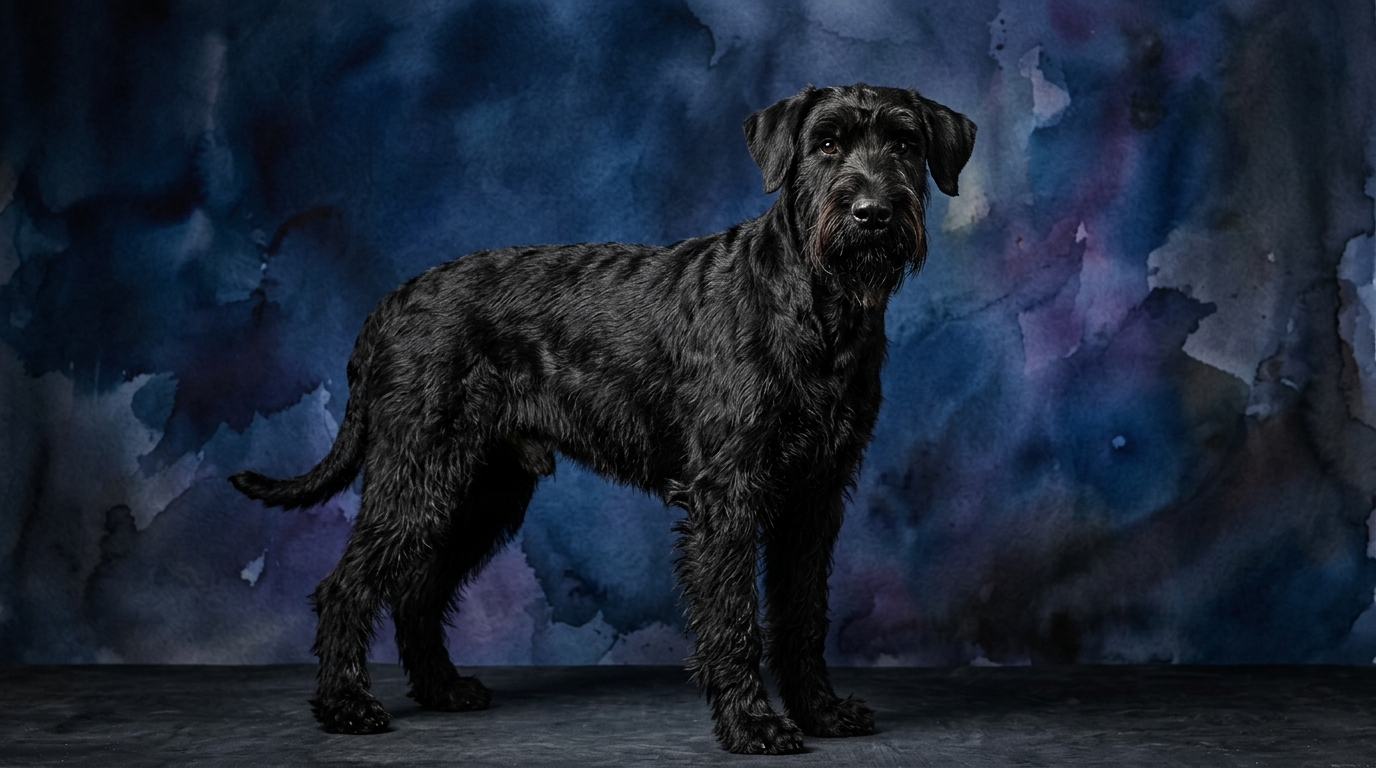
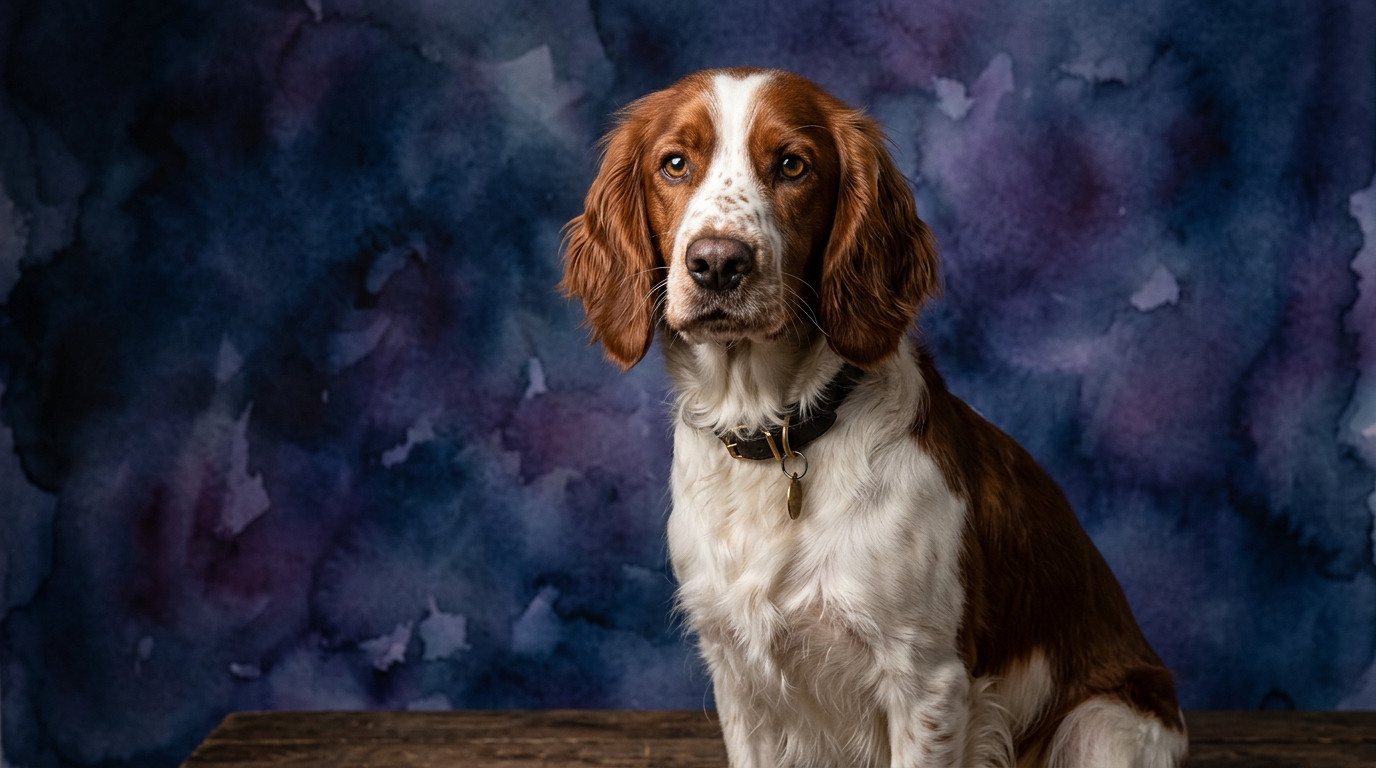
Side-by-Side IQ Profile: Giant Schnauzer vs. Welsh Springer Spaniel
Despite their differing historical roles, The Cosmic Pet Pet IQ Lab scores reveal both the Giant Schnauzer and the Welsh Springer Spaniel possess remarkable cognitive capabilities. Each breed registers identical scores across five key intelligence dimensions, prompting a deeper look into how these abilities are expressed through their unique temperaments and purposes.
For the **Giant Schnauzer**, a member of the Working Group:
Problem Solving (4/5): This score reflects the Giant Schnauzer's capacity for independent thought and strategic action, essential for their historical roles in guarding property and driving livestock. They excel at assessing situations and making decisions, rather than solely relying on handler cues. Training Speed (4/5): Giant Schnauzers assimilate new commands and routines with impressive quickness. Their working background instilled a readiness to learn complex tasks, though their independent streak means they require clear, consistent leadership to maintain focus. Social Intelligence (3/5): Their social cognition is characterized by discernment. Giant Schnauzers form deep, protective bonds with their immediate family, often exhibiting a reserved or watchful demeanor towards strangers, accurately reading intentions and social dynamics within their core group. Instinctive Drive (3/5): This drive is primarily rooted in their guarding and territorial instincts. They possess a strong impulse to protect their family and perceived domain, coupled with a history of herding, which translates into an inherent need for purposeful activity. Memory (4/5): Giant Schnauzers demonstrate excellent recall for commands, routines, and experiences, particularly those related to their perceived duties or past interactions. This robust memory aids in reinforcing training and remembering individuals or situations.
For the **Welsh Springer Spaniel**, a distinguished member of the Sporting Group:
Problem Solving (4/5): The Welsh Springer Spaniel's problem-solving aptitude shines in their ability to navigate complex environments, such as tracking elusive scents through varied terrain or figuring out how to retrieve objects from challenging spots. This involves keen observational skills and adaptive strategies. Training Speed (4/5): Welsh Springers pick up new commands and associate actions with rewards very efficiently. Their innate desire to please their handler, combined with a focused hunting drive, makes them highly receptive to learning new skills, especially those involving scent work or retrieving. Social Intelligence (3/5): Their social intelligence is marked by an affable nature and a strong focus on their human companions, from whom they readily seek approval. While generally friendly, they are attuned to human moods and cues, crucial for cooperative hunting, though their exuberance can sometimes mask subtle social signals. Instinctive Drive (3/5): The core of their instinctive drive lies in their powerful prey drive for birds and an eagerness to retrieve. This manifests as an innate desire to flush, track, and bring back items, making them highly motivated by activities that simulate these natural behaviors. Memory (4/5): Welsh Springers possess a strong memory for learned tasks, scent trails, and the locations of retrieved items. This cognitive strength is vital for their role as gun dogs, allowing them to recall specific training sequences and remember where they last encountered a scent.
Where the Giant Schnauzer Excels Cognitively
The Giant Schnauzer's cognitive strengths lean into their history as formidable working dogs, giving them an an edge in areas demanding independent strategic thinking and resilience under pressure. Their problem-solving, rated 4/5, is often applied to complex, dynamic situations requiring quick assessment and decisive action, such as discerning between a welcome visitor and a potential threat without direct instruction.
This breed demonstrates a particular aptitude for understanding intricate routines and anticipating next steps in structured environments, a testament to their robust memory and ability to connect cause and effect in a way that serves a protective or task-oriented function. Furthermore, their social intelligence, while rated 3/5, is specifically tuned to identifying and reacting to subtle shifts in human behavior within their trusted circle, making them exceptional at reading their family's needs or detecting unease.
Where the Welsh Springer Spaniel Shines Cognitively
Conversely, the Welsh Springer Spaniel excels in cognitive domains tied to their sporting heritage, showcasing a different kind of mental prowess. Their 4/5 problem-solving score is particularly evident in their ability to methodically work through complex scent puzzles, using keen olfactory discrimination to follow trails over varied terrain and through distractions, a task demanding sustained focus and adaptive strategies.
They possess a superior capacity for multi-sensory integration, processing visual, auditory, and olfactory information simultaneously to locate and retrieve game efficiently. This breed's memory, also 4/5, shines in its ability to recall specific scent locations and elaborate retrieving patterns, allowing them to execute multi-part commands with precision even after a delay. Their instinctive drive, rated 3/5, translates into an unwavering tenacity and enthusiasm for tasks involving their powerful nose and retrieving skills, which fuels a relentless pursuit of their "work" in the field.
Training Dynamics: Giant Schnauzer vs. Welsh Springer Spaniel
While both breeds boast an impressive 4/5 in training speed, the practical experience of training a Giant Schnauzer versus a Welsh Springer Spaniel presents distinct challenges and rewards, rooted in their inherent temperamental differences. The Giant Schnauzer, despite its quick grasp of commands, often approaches training with an independent and sometimes strong-willed mindset. Their history requires them to make decisions, meaning they might question directives if they don't perceive a clear purpose, necessitating a handler who provides consistent, confident leadership and engaging, varied tasks to maintain their mental investment. Without adequate mental stimulation and firm guidance, their intelligence can manifest as stubbornness or the development of self-directed, potentially undesirable, behaviors.
In contrast, the Welsh Springer Spaniel typically displays a more eager-to-please attitude, which can make initial training phases feel more fluid as they are naturally inclined to cooperate with their handler. However, their strong instinctive drive (3/5) for scent and movement means they are more prone to environmental distractions. A passing bird or an interesting smell can quickly divert their attention, requiring a trainer to be patient, highly engaging, and skilled at maintaining focus through positive reinforcement and short, dynamic sessions. Therefore, neither breed is inherently "easier" in terms of raw learning capacity; rather, the Giant Schnauzer demands a trainer who can channel their independence and provide a job, while the Welsh Springer Spaniel requires a trainer adept at managing their enthusiasm and channeling their natural drives away from distractions.
Matching Breeds to Lifestyles: Active vs. Relaxed Owners
Neither the Giant Schnauzer nor the Welsh Springer Spaniel are suitable companions for genuinely relaxed or sedentary owners; both breeds demand a significant commitment to physical activity and mental engagement. For active owners, the Giant Schnauzer thrives with a structured routine that includes vigorous exercise alongside demanding mental tasks. Their working heritage means they excel in activities like advanced obedience, agility, protection sports, or even competitive dock diving, requiring an owner who can consistently provide a "job" and channel their high energy and problem-solving skills into purposeful endeavors. They need an owner who is not just active, but also a confident leader capable of providing consistent direction and varied challenges.
The Welsh Springer Spaniel also requires substantial daily activity, often expressing it through bursts of energetic play, long runs, or enthusiastic retrieving sessions. They are ideally suited for owners who enjoy outdoor adventures like hiking, trail running, or field work, and who appreciate a dog that is always ready for action. While their energy is robust, their need for "work" might be less about structured tasks and more about sustained physical output and opportunities to use their nose, like scent games or retrieving. A truly relaxed owner would find both breeds overwhelming, as their unfulfilled physical and mental needs would quickly lead to undesirable behaviors. However, an active owner seeking a less intensely structured "working partner" might find the Welsh Springer Spaniel's joyful exuberance a slightly more adaptable fit than the Giant Schnauzer's need for a defined role.
The Verdict
Opt for the Giant Schnauzer if you are an experienced, confident owner seeking a formidable, independent-thinking companion for protection, complex training, or an active lifestyle that includes a "job" for your dog. This breed thrives with consistent leadership and varied mental challenges that engage their strategic problem-solving abilities.
Select the Welsh Springer Spaniel if you desire an affectionate, energetic partner for outdoor adventures, who excels in scent work and retrieving, and whose zest for life matches an owner committed to providing ample exercise and engaging, positive training. They are ideal for those who appreciate a spirited dog driven by natural sporting instincts.
🧠 Find Your Pet's IQ Score
Our Pet IQ Lab assessment covers 25+ tests across 5 cognitive dimensions — personalized to your breed.
Take the Full IQ Test →Frequently Asked Questions
Do Giant Schnauzers and Welsh Springer Spaniels learn at the same pace?
While both breeds share a 4/5 training speed rating, suggesting they learn new commands quickly, their motivation differs. Giant Schnauzers require clear purpose and leadership, while Welsh Springers are often driven by a desire to please and their strong prey drive, making their training experiences distinct.
Which breed is better for a family with children?
Both breeds can be good family dogs with proper socialization and training. Giant Schnauzers are protective and form deep bonds, but their reserved nature requires children to respect boundaries. Welsh Springers are generally more boisterous and friendly, often enjoying active play with children, though supervision is always advised due to their exuberance.
How do their instinctive drives differ in daily life?
The Giant Schnauzer's instinctive drive primarily manifests as a strong guarding instinct and a need for purposeful activity, often leading them to be watchful and protective. The Welsh Springer Spaniel's drive is rooted in hunting, resulting in a keen interest in scents, a strong desire to retrieve, and a generally more exuberant approach to exploring their environment.