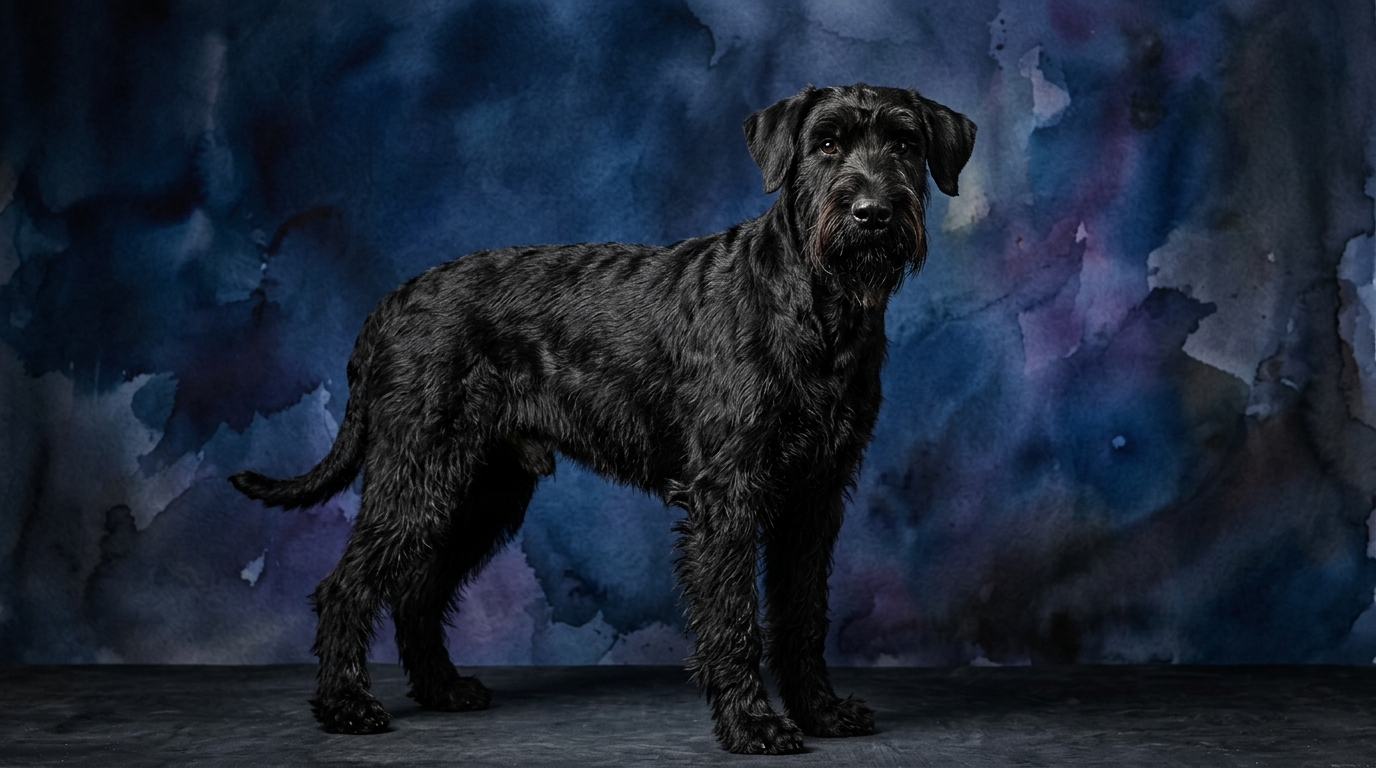
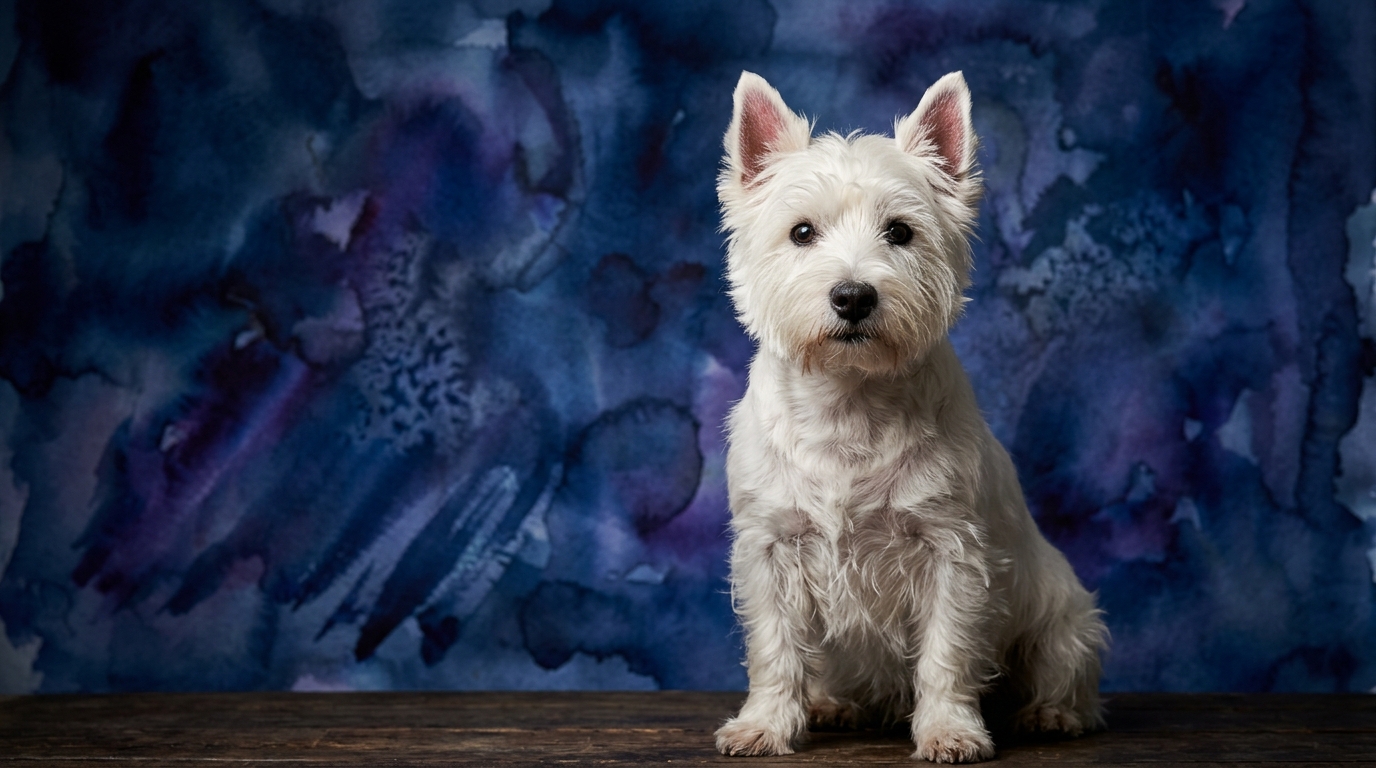
Side-by-Side Cognitive Profiles
Understanding a breed's cognitive strengths and nuances requires looking beyond general impressions and examining specific dimensions of intelligence. Our Cosmic Pet Pet IQ Lab provides a detailed breakdown, offering a clearer picture of what makes each of these distinct breeds tick.
The Giant Schnauzer, historically a working dog, boasts a robust cognitive profile reflecting its heritage. Its Problem Solving score of 4/5 indicates a capacity for intricate thought and autonomous decision-making, frequently demonstrating the ability to assess novel situations and devise effective strategies. A Training Speed of 4/5 signifies a rapid learning curve, reflecting an eagerness to absorb new commands and behaviors efficiently, often picking up new tasks with fewer repetitions. Their Social Intelligence at 3/5 suggests they comprehend human emotional states and social cues well enough for harmonious cohabitation, though they may display a more reserved or focused demeanor rather than overt effusiveness. An Instinctive Drive of 3/5 means they possess inherent predispositions for guarding or herding, but these drives are typically manageable and channelable. Finally, their Memory at 4/5 is a significant asset, allowing them to retain a vast repertoire of commands, experiences, and learned associations over extended periods.
The West Highland White Terrier, a quintessential terrier, presents a cognitive profile shaped by its independent hunting roles. With a Problem Solving score of 3/5, Westies exhibit a practical, often independent, approach to challenges, excelling at figuring out how to achieve immediate goals, sometimes with a touch of terrier cunning. Their Training Speed also stands at 3/5, indicating a steady learning pace that requires consistent and engaging methods to solidify new behaviors; they are capable of mastering commands but often need more repetition and strong motivational incentives due to their independent spirit. Like the Giant Schnauzer, their Social Intelligence is 3/5, meaning they competently read human moods and respond to household dynamics, but their social engagement might be more selective or on their own terms. An Instinctive Drive of 3/5, particularly for hunting small prey and digging, is present and requires appropriate outlets. Notably, Westies also boast an impressive Memory score of 4/5, particularly for spatial information and sequences that lead to desired outcomes, recalling past experiences with considerable accuracy.
Where the Giant Schnauzer Excels Cognitively
The Giant Schnauzer's cognitive profile reveals several areas where they hold a distinct advantage, particularly in structured learning environments and complex task execution. Their Problem Solving score of 4/5, contrasted with the Westie's 3/5, indicates a more advanced capacity for abstract reasoning and strategic planning. This manifests in their ability to quickly grasp multi-step instructions, excel in complex dog sports like competitive obedience or protection work, and adapt to novel training scenarios with less trial and error. For instance, a Giant Schnauzer might more readily understand the concept of “go find the keys” and develop a systematic search pattern, demonstrating a deeper conceptual understanding of the task.
Furthermore, the Giant Schnauzer's Training Speed of 4/5 means they absorb new information and commands with remarkable efficiency. This rapid acquisition of skills makes them particularly suited for roles requiring extensive and varied training, such as service work or advanced obedience titles. Their inherent drive to work alongside their human partners, combined with their quick cognitive processing, allows them to build a vast behavioral repertoire more swiftly. This isn't just about learning tricks; it's about internalizing complex rules and executing them reliably, a domain where their focused attention and processing speed truly shine, making them exceptionally responsive to direction.
Where the West Highland White Terrier Excels Cognitively
While the Giant Schnauzer excels in structured learning and complex problem-solving, the West Highland White Terrier's cognitive strengths lie in their independent, tenacious approach to challenges, particularly those rooted in their terrier heritage. Their Problem Solving score of 3/5, though slightly lower, is applied with a distinct focus on self-directed tasks. Westies are adept at figuring out practical solutions to immediate, tangible problems, often requiring persistence and cleverness. This could involve devising creative ways to access a burrow-like space, outsmarting a puzzle toy through sheer determination, or navigating intricate environments to locate a hidden object through scent work. Their problem-solving isn't about following human-designed protocols, but about achieving their own goals with ingenuity.
Moreover, both breeds share a high Memory score of 4/5, but the Westie's memory is often deployed in a way that supports their independent nature. They are particularly adept at remembering spatial layouts, the locations of preferred digging spots, or the most efficient routes to explore. This robust memory, combined with their instinctive drive (3/5) for scent work and tracking, means they can recall specific environmental cues and past successes with remarkable accuracy, making them tenacious and effective in pursuits that engage their natural predispositions. Their recall of what works for *them* in their environment, allowing them to repeatedly execute successful strategies, is a significant cognitive asset that fuels their determined spirit.
Which Is Easier to Train and Why?
When evaluating ease of training, the Giant Schnauzer generally presents a more straightforward path for most owners due to their higher Training Speed (4/5) and their inherent desire to collaborate. Their working dog background instilled a strong foundation for responsiveness and a willingness to engage in structured learning. They tend to pick up commands quickly, consolidate lessons efficiently, and thrive on the mental stimulation that consistent training provides. This means fewer repetitions are often needed, and the breed tends to be more attuned to human directives, making them highly receptive to advanced obedience, intricate routines, or specific service tasks. Their focus and drive, when properly channeled, translate into a cooperative and eager training partner.
Conversely, the West Highland White Terrier, with a Training Speed of 3/5, often requires a more nuanced and patient approach. Their terrier heritage cultivates an independent spirit and a strong will, which can sometimes be interpreted as stubbornness in a training context. While capable of learning any command, Westies may require more creative motivation, shorter training sessions, and a consistent, positive reinforcement strategy to keep them engaged. They are less likely to blindly follow commands if they don't perceive a personal benefit or if their independent instincts are pulling them in another direction. This isn't a deficit in cognitive ability, but rather a difference in motivational drivers; training a Westie often involves convincing them that cooperation is their idea, or at least highly rewarding, often through high-value treats or engaging games.
Which Suits Active Owners vs. Relaxed Owners?
For owners with an active lifestyle and a desire for a canine partner in various pursuits, the Giant Schnauzer is an ideal match. Their robust physical build, combined with their high cognitive engagement needs (Problem Solving 4/5, Memory 4/5, Training Speed 4/5), means they thrive on consistent mental and physical challenges. They excel in activities like advanced obedience, agility, tracking, and even protection sports, requiring owners who can dedicate significant time to structured exercise, complex training, and enriching mental stimulation. A Giant Schnauzer with insufficient outlets for their cognitive and physical energy can become bored or destructive, making them unsuitable for predominantly relaxed or sedentary households. They need a job, whether formal or informal, to truly flourish and maintain their mental well-being.
The West Highland White Terrier, while certainly not a couch potato, can adapt more readily to a broader spectrum of owner activity levels, provided their specific terrier needs are met. Their moderate instinctive drive (3/5) for hunting and digging means they benefit from daily walks, interactive play, and opportunities for scent work or puzzle toys. However, they don't typically demand the same intensity or volume of structured activity as a Giant Schnauzer. A Westie can be content with regular, engaging walks and playtime in a securely fenced yard, followed by periods of quiet companionship. Owners who appreciate a spirited companion but prefer a more moderate exercise routine, and are prepared to manage their independent streak with consistent, positive reinforcement, will find the Westie a charming and adaptable companion. They suit owners who appreciate their spirited nature and can provide outlets for their curiosity and tenacity without requiring extreme athleticism.
The Verdict
Select a Giant Schnauzer if you are an experienced owner seeking a highly trainable, cognitively demanding partner for advanced obedience, dog sports, or a working role, prepared to commit to substantial daily mental and physical exercise.
Opt for a Westie if you appreciate an independent, spirited companion with a moderate activity level, who thrives on engaging play and consistent, positive training that caters to their clever, tenacious nature and strong memory for self-initiated tasks.
🧠 Find Your Pet's IQ Score
Our Pet IQ Lab assessment covers 25+ tests across 5 cognitive dimensions — personalized to your breed.
Take the Full IQ Test →Frequently Asked Questions
Do Giant Schnauzers require more mental stimulation than Westies?
Yes, the Giant Schnauzer's higher problem-solving and training speed scores indicate a greater need for complex mental engagement and structured training to prevent boredom and channel their cognitive drive constructively. They thrive on learning and performing intricate tasks.
Are Westies more independent in their problem-solving approach?
Westies often approach problem-solving with a more independent, self-directed mindset, using their tenacity and practical cunning to achieve personal goals, contrasting with the Giant Schnauzer's more collaborative and structured problem-solving style. They excel at figuring things out on their own terms.
How do their memory scores impact daily life for owners?
Both breeds have excellent memory (4/5), meaning they recall commands and experiences well; for Giant Schnauzers, this supports complex, multi-step training, while for Westies, it aids in remembering preferred exploration routes, effective strategies for their independent pursuits, and locations of favored spots.