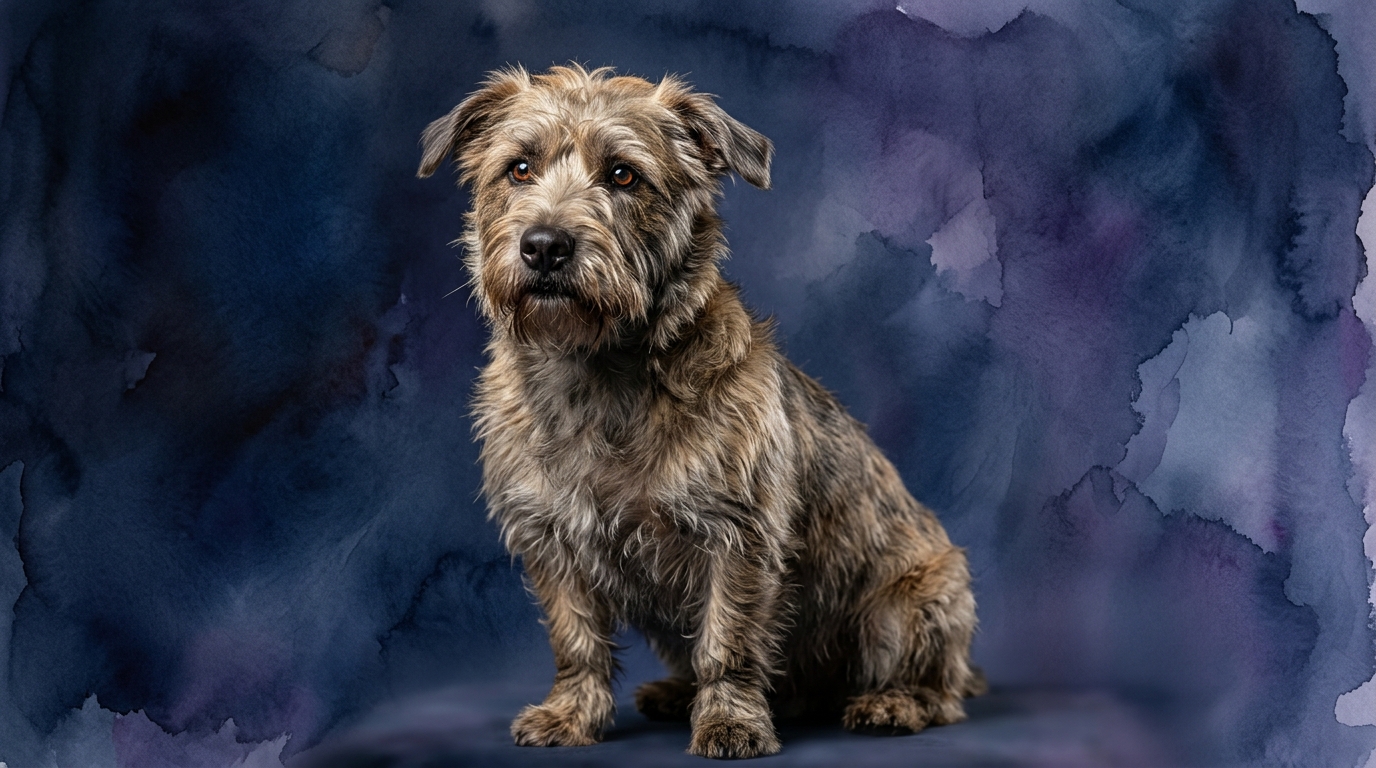
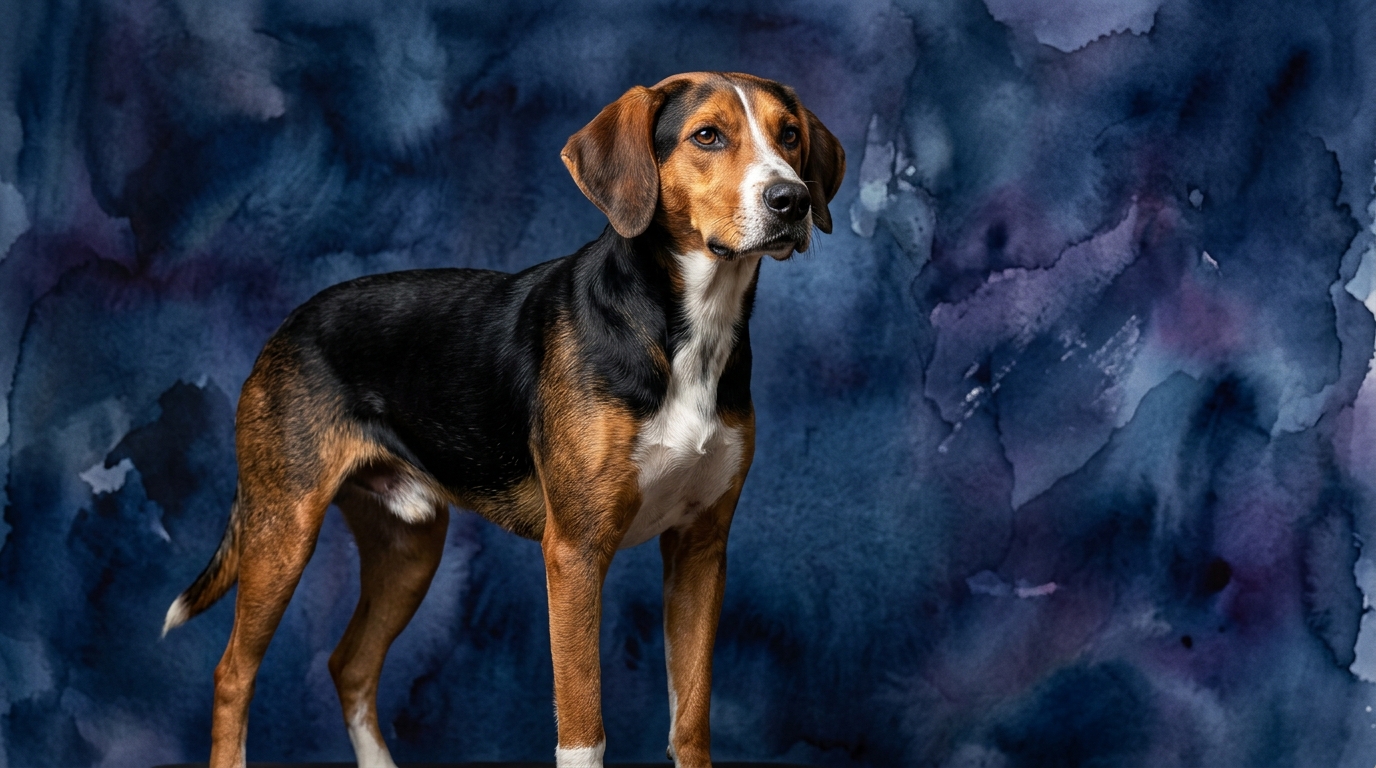
Side-by-Side Cognitive Profile
**Problem Solving (3/5):** The Glen of Imaal Terrier’s 3/5 in problem-solving often manifests as an independent, tenacious approach to challenges. Bred to go to ground and tackle vermin in tight spaces, they developed a knack for figuring out how to navigate complex environments or outmaneuver small prey. This isn't about rote learning, but about persistent, creative strategies to achieve a goal, often with a 'dig first, ask questions later' mentality, leading to practical and self-directed solutions. For the American Foxhound, a 3/5 in problem-solving is deeply rooted in their scent-tracking heritage. Their cognitive efforts are largely directed at interpreting complex olfactory information, following a faint trail across varied terrain, and making decisions based on subtle environmental cues. This form of problem-solving is less about manipulating objects and more about sensory deduction and sustained focus over long distances, often as part of a pack, where individual contributions lead to a collective solution.
**Training Speed (3/5):** A 3/5 for training speed in a Glen of Imaal Terrier means they are capable of learning new commands and routines, but their terrier stubbornness can sometimes override a desire to comply. They learn best with positive reinforcement, clear expectations, and trainers who understand their independent streak, often disengaging from repetitive drill work but excelling at tasks that engage their natural curiosity or mimic their working heritage. The American Foxhound’s 3/5 in training speed reflects their strong prey drive and independent nature. While certainly capable of learning, their attention can be easily diverted by compelling scents or the call of the chase, requiring immense patience, consistency, and a high-value reward system to maintain focus, especially when environmental stimuli are present.
**Social Intelligence (3/5):** The Glen of Imaal Terrier's 3/5 in social intelligence often translates to a deep, loyal bond with their immediate family, combined with a discerning attitude towards strangers and other dogs. They are astute observers of their human companions' moods and routines, but their social circle can be somewhat exclusive; while they can coexist peacefully with other pets if properly socialized, their terrier assertiveness means they might not always back down from a challenge. As a breed developed for pack hunting, the American Foxhound's 3/5 in social intelligence shines brightest in their interactions with other canines, understanding pack dynamics inherently and often thriving in multi-dog environments. With humans, they are typically amiable and affectionate, but perhaps less focused on subtle emotional cues than some companion breeds, their social intelligence being more about harmonious group living and cooperative effort.
**Instinctive Drive (3/5):** The Glen of Imaal Terrier's 3/5 instinctive drive is powerfully channeled into their original purpose: going to ground. This means a strong urge to dig, pursue small animals, and explore confined spaces, a drive that is persistent and focused, often overriding other stimuli once engaged. Owners must understand and manage this ingrained desire to hunt and tunnel, providing appropriate outlets like earthdog trials or secure digging areas to prevent destructive behaviors. For the American Foxhound, the 3/5 instinctive drive is unequivocally centered on scent and pursuit. Their world is often defined by their nose, and a compelling scent can trigger an immediate, single-minded chase response, focusing on endurance and following a trail relentlessly, sometimes to the exclusion of all else; providing outlets like tracking sports or long leashed walks is crucial to satisfy this profound innate urge.
**Memory (3/5):** A 3/5 in memory for the Glen of Imaal Terrier implies a good capacity to recall learned commands, routines, and the layout of their environment. They remember past interactions, both positive and negative, which influences their future behavior, making consistency and positive experiences vital for successful learning and trust-building. The American Foxhound's 3/5 memory is particularly strong for scent trails and learned routes, allowing them to remember complex sequences of smells and associate them with specific outcomes. While they also retain basic commands and routines, their memory is often most reliable when linked to their primary motivation – the hunt – remembering places where interesting scents were found or where they had a successful chase, reinforcing their natural instincts.
Where the Glen of Imaal Terrier Excels Cognitively
The Glen of Imaal Terrier demonstrates a particular cognitive advantage in independent, strategic problem-solving that requires physical manipulation or navigating confined spaces. Their terrier lineage instilled a capacity for self-reliance when faced with a challenge, whether it’s figuring out how to extract a toy from under furniture or devising a strategy to reach a desired spot. This isn't just about brute force; it's a persistent, often clever application of their physical abilities combined with a determined mindset. They excel at tasks demanding sustained focus on a single, tangible objective, often without direct human guidance, making them adept at puzzle toys or intricate scent work that involves finding a hidden item. Their smaller stature and robust build contribute to this, allowing them to access and manipulate environments that larger breeds cannot, showcasing a distinct form of practical ingenuity.
Where the American Foxhound Excels Cognitively
The American Foxhound exhibits a cognitive edge in tasks demanding exceptional sensory processing, particularly olfactory discrimination and sustained focus over long distances. Their brain is finely tuned to interpret a world of scents, allowing them to follow complex, often faint trails that would be imperceptible to most other breeds. This isn't merely about detecting a smell; it's about processing a nuanced tapestry of odors, differentiating individual scents, and remembering their sequence and direction over hours. This specialized form of problem-solving, coupled with their inherent endurance, makes them unparalleled in tracking and trailing. Their cognitive strength lies in their ability to filter out distractions and maintain a singular focus on an invisible path, demonstrating an impressive capacity for sustained attention driven by their powerful nose, making them masters of their olfactory domain.
Training Dynamics: Glen vs. Foxhound
Neither the Glen of Imaal Terrier nor the American Foxhound are typically described as 'easy' to train in the conventional sense, largely due to their independent working natures, but their challenges stem from different sources. The Glen of Imaal Terrier's training speed of 3/5 is often hampered by a characteristic terrier stubbornness and a strong sense of self-direction. They learn quickly when motivated and engaged, but if a task seems pointless or repetitive, they can become resistant or invent their own interpretations. Effective training for a Glen requires creativity, patience, and making the learning process feel like a collaborative game, tapping into their desire to work *with* their person rather than simply obey, responding best to positive reinforcement and a trainer who can make learning feel like a rewarding challenge.
The American Foxhound, also scoring 3/5 in training speed, presents a different set of obstacles. Their primary cognitive driver is their nose, and once a compelling scent is detected, their attention becomes almost entirely devoted to it, making recall and other commands secondary. Their pack-hunting heritage means they can be less focused on individual human direction than on following their instincts or the collective pack drive. Training an American Foxhound demands extraordinary consistency, high-value rewards to compete with environmental stimuli, and specialized training to build a strong recall even amidst overwhelming distractions. While they are capable of learning, their inherent drive to track means 'easy' is a relative term, requiring an owner dedicated to understanding and channeling their profound olfactory intelligence. In essence, the Glen challenges you with stubborn independence, while the Foxhound challenges you with an overpowering sensory focus.
Lifestyle Fit: Active vs. Relaxed Owners
For owners seeking a companion that aligns with an active lifestyle, both breeds offer unique benefits, though the type of activity differs significantly. The American Foxhound is undeniably suited for highly active owners who enjoy long, vigorous outdoor pursuits. Their history as endurance hunters means they thrive on extensive running, hiking, and tracking activities. An ideal owner for a Foxhound is someone who can provide daily opportunities for sustained physical exertion, preferably in a securely fenced area or on a long line, allowing them to fully engage their powerful legs and keen nose. They are not content with short walks; they require miles to feel truly fulfilled, making them a superb partner for runners, hikers, or those interested in canine sports like tracking or scent work. A relaxed owner would find the Foxhound's boundless energy and need for stimulation overwhelming, potentially leading to destructive behaviors born of boredom and unfulfilled instinct.
The Glen of Imaal Terrier, while sturdy and active, requires a different kind of engagement. Their activity needs are moderate to high, but less about sustained, long-distance running and more about bursts of energy, digging, and mental stimulation. They enjoy vigorous play sessions, challenging walks that allow for exploration and sniffing, and opportunities to 'work' their brains through puzzle toys or earthdog activities. An active owner for a Glen is someone who enjoys interactive play, short, brisk walks, and engaging in brain games or training sessions. A relaxed owner *might* manage a Glen if they are committed to consistent, shorter bursts of activity and mental enrichment. While not as demanding as the Foxhound in terms of sheer mileage, their intelligence and terrier tenacity mean they still need purposeful engagement to prevent boredom and channel their drives positively. They are not couch potatoes but can adapt better to a less intensely athletic routine than a Foxhound, provided their mental needs are met.
The Verdict
Choose the Glen of Imaal Terrier if you appreciate a tenacious, independent thinker who thrives on engaging mental challenges and interactive play, and you are prepared for their charmingly stubborn streak. They are an excellent fit for owners who enjoy problem-solving alongside their dog and can provide outlets for their digging and hunting instincts.
Opt for the American Foxhound if you lead a highly active outdoor lifestyle and are eager to partner with a dog whose world revolves around scent and sustained pursuit. They are ideal for dedicated runners, hikers, or those keen on scent work, and thrive in environments where their profound endurance and olfactory intelligence can be fully expressed.
🧠 Find Your Pet's IQ Score
Our Pet IQ Lab assessment covers 25+ tests across 5 cognitive dimensions — personalized to your breed.
Take the Full IQ Test →Frequently Asked Questions
Are Glen of Imaal Terriers good apartment dogs?
While sturdy, Glen of Imaal Terriers can adapt to apartment living if their exercise and mental stimulation needs are consistently met. They require daily walks, interactive play, and opportunities to engage their minds to prevent boredom and destructive behaviors.
Do American Foxhounds get along with other dogs?
American Foxhounds, bred for pack hunting, generally get along well with other dogs and often thrive in multi-dog households. Early and consistent socialization is still important to ensure harmonious relationships with canine companions.
How much grooming does a Glen of Imaal Terrier need?
Glen of Imaal Terriers have a double coat that requires regular grooming, including weekly brushing to prevent matting and hand-stripping a few times a year to maintain coat texture and health. This helps manage shedding and keeps their unique appearance intact.