Side-by-Side IQ Profile: Understanding the Nuances
The Cosmic Pet Pet IQ Lab assesses canine intelligence across five key dimensions, and for both the Glen of Imaal Terrier and the Borzoi, the numerical score is consistently 3 out of 5 across the board. However, these identical scores belie distinct manifestations of cognitive ability rooted in their breed histories and inherent temperaments. The Borzoi, with a Coren rank of #75, falls into the category of average working/obedience intelligence, while the Glen of Imaal Terrier is not Coren-ranked, indicating its specific cognitive profile is best understood through a lens of its working heritage.
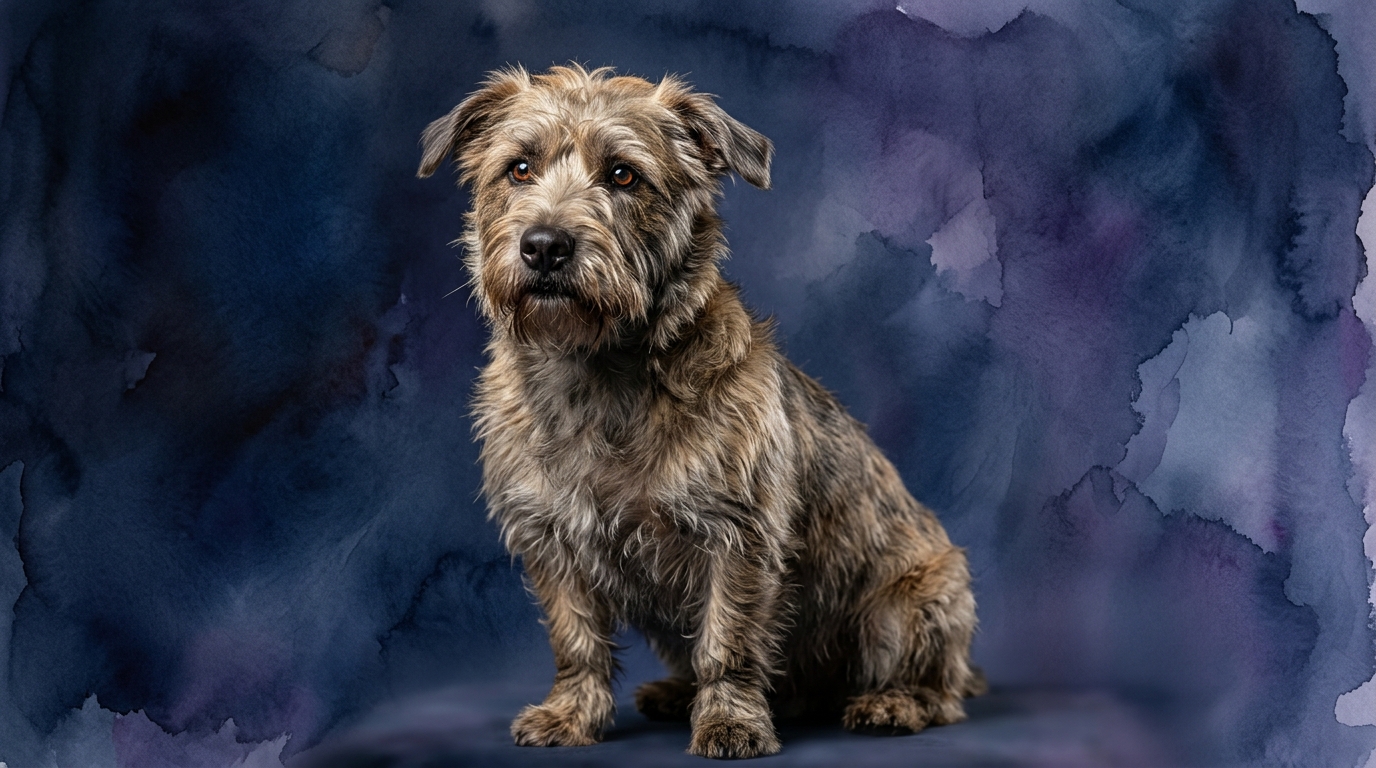
For the Glen of Imaal Terrier, Problem Solving (3/5) manifests as resourceful determination in navigating challenging terrains or outsmarting vermin. This isn't about complex abstract thought but rather a practical, persistent application to a physical task. Their Training Speed (3/5) shows an average pace, often requiring consistent, engaging methods to overcome a typical terrier independent streak; they learn, but often on their own terms. Social Intelligence (3/5) indicates a capacity for strong familial bonds and a discerning approach to strangers, often observing before engaging, with clear social cues within their trusted circle. Instinctive Drive (3/5) reflects a robust prey drive, particularly for digging and pursuing small game underground, an inherent motivation central to their being. Memory (3/5) suggests a solid ability to recall learned commands and familiar environments, though perhaps not with the precision of breeds specializing in complex sequences.
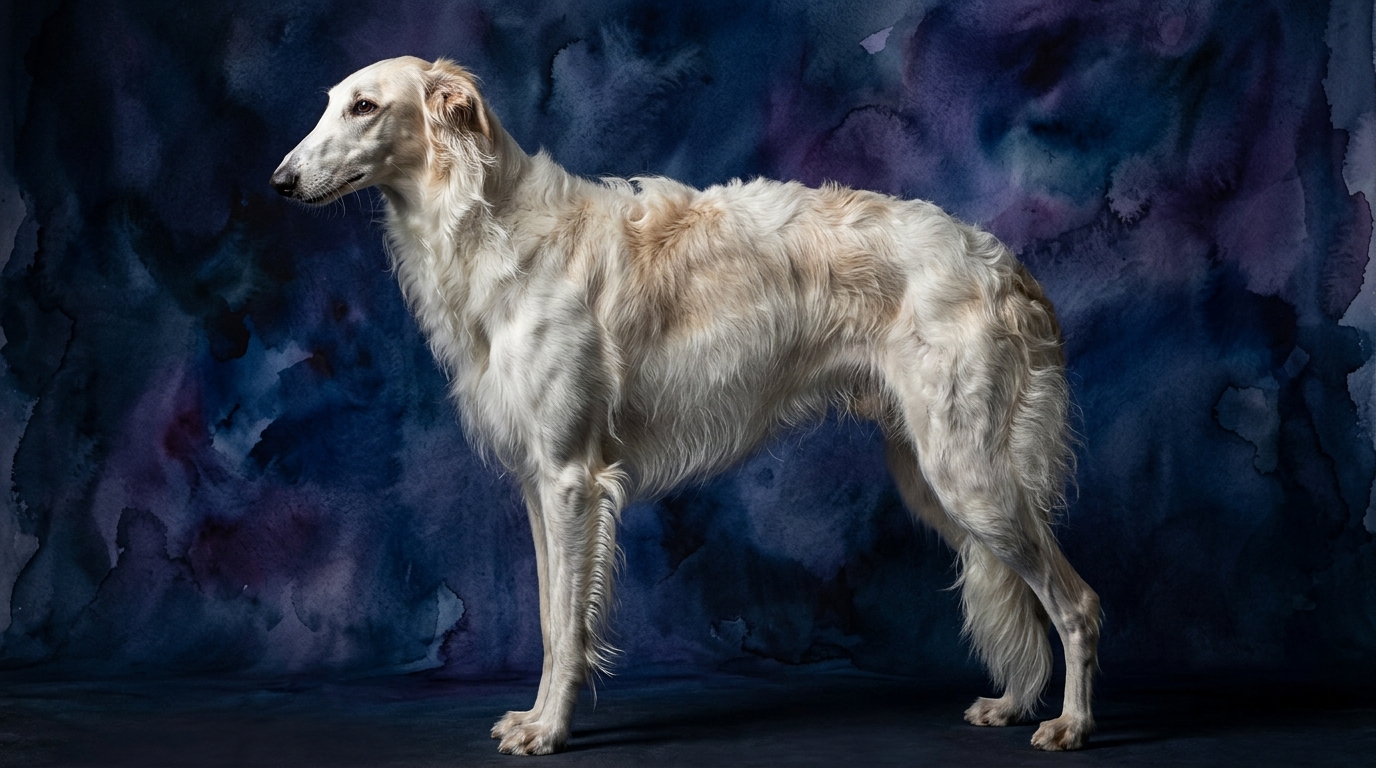
The Borzoi’s Problem Solving (3/5) expresses itself in strategic pursuit patterns during a chase, calculating trajectories and anticipating prey movement over vast distances. It’s about visual-spatial reasoning in motion, not abstract puzzles. Their Training Speed (3/5) points to an average learning curve, often requiring patient, positive reinforcement due to their sensitive nature and independent hound mindset; repetition without perceived purpose can be met with disinterest. Social Intelligence (3/5) is characterized by a gentle, often reserved demeanor, displaying deep affection for their family while maintaining a dignified distance from outsiders, communicating subtly. Instinctive Drive (3/5) is dominantly expressed as an intense sighthound prey drive, compelling them to chase anything that moves swiftly, often to the exclusion of other stimuli; this drive is powerful and innate. Memory (3/5) implies a reliable recall of established routines, familiar people, and the layout of their home territory, but their focus can be fleeting if a compelling visual stimulus captures their attention.
Where the Glen of Imaal Terrier Excels Cognitively
Despite identical numerical scores, the Glen of Imaal Terrier’s cognitive strengths shine in specific domains tied to its origins as a working earth dog. Its Problem Solving (3/5) is uniquely adapted for persistent, physical challenges. A Glen is adept at figuring out how to maneuver through tight spaces or locate a hidden 'pest' by scent and sound, demonstrating a tenacious, iterative approach to a physical puzzle. This contrasts with more abstract problem-solving; for a Glen, the solution often involves digging, squeezing, or outmaneuvering. This practical ingenuity in confined or challenging environments is a hallmark of their breed.
Their Instinctive Drive (3/5) is also a focused asset; while a Borzoi’s drive is about open-field pursuit, a Glen’s is intensely channeled into a specific task, making them incredibly effective at their historical job of 'going to ground'. This focused drive allows for a sustained, almost obsessive, engagement with a task once it’s identified, showcasing a singular mental fortitude. Their Social Intelligence (3/5) within their family unit is often more assertive and direct than a Borzoi’s, leading to clearer communication of needs and desires to their trusted human companions, which can be perceived as more 'responsive' in a domestic setting. They are less likely to be perceived as aloof, instead demonstrating a bold, engaging personality that seeks interactive engagement from their people.
Where the Borzoi Demonstrates Cognitive Prowess
The Borzoi, while sharing the same numerical IQ scores, demonstrates its cognitive prowess in areas reflecting its heritage as a swift, independent hunter of large game. Its Problem Solving (3/5) excels in dynamic, open environments; a Borzoi quickly processes complex visual information to predict the path of moving objects, making rapid, independent decisions during a chase without human direction. This visual-spatial problem-solving is distinct from a terrier’s physical puzzle-solving, emphasizing quick, accurate visual interpretation and strategic movement over brute force or persistent digging.
Their Instinctive Drive (3/5) is arguably more spectacular in its manifestation, focused on the sheer exhilaration and precision of a high-speed pursuit. This drive isn’t just about catching prey, but about the art of the chase itself, requiring immense focus and bursts of energy over vast distances. This intense, visually-triggered drive is unparalleled in its specific application among dog breeds. The Borzoi’s Social Intelligence (3/5), though often understated, allows for a profound, sensitive connection with its family, discerning subtle emotional cues and responding with gentle empathy, a trait that might be less overtly expressed in a more boisterous terrier. Their Memory (3/5) also appears particularly strong for remembering vast territories and effective hunting routes, indicating a keen spatial recall for large-scale environments.
Training Dynamics: Independence vs. Sensitivity
Neither the Glen of Imaal Terrier nor the Borzoi are typically described as 'easy' to train in the conventional sense, both scoring an average 3/5 in Training Speed. However, the nature of their training challenges differs significantly. The Glen of Imaal Terrier’s independent and tenacious terrier spirit means they require a firm, consistent, and creative approach. They are often more interested in pursuing their own agenda, like digging or investigating a scent, than in performing repetitive commands. Their problem-solving skills, while useful for their work, can translate into finding ways around undesirable tasks if not motivated appropriately. Training a Glen often involves channeling their strong instinctive drives into desired behaviors, rather than attempting to suppress them entirely. For instance, teaching a 'leave it' command needs to be incredibly rewarding to compete with their ingrained prey drive for small, scurrying creatures.
The Borzoi, on the other hand, possesses a sensitive and aristocratic temperament, coupled with a powerful sighthound drive. Their 3/5 Training Speed is influenced by their tendency to become bored with repetitive drills and their immense distraction by anything that moves swiftly. They respond poorly to harsh corrections, which can make them shut down or become anxious, creating a barrier to learning. Training a Borzoi requires immense patience, positive reinforcement, and short, engaging sessions that appeal to their desire for companionship rather than strict obedience. Their independence means they might understand a command but choose not to execute it if they see no immediate benefit, or if a squirrel suddenly appears. Recalling a Borzoi off-leash in an open area is often a lifelong training challenge due to their overwhelming instinctive drive. Therefore, while both require dedication, the Glen’s challenge stems from stubborn independence, whereas the Borzoi’s comes from sensitivity, boredom, and an overpowering prey drive that can override learned behaviors instantly.
Matching Lifestyles: Active Explorers vs. Sprinting Loungers
Understanding the nuanced activity levels and cognitive engagement of these breeds is crucial for matching them with the right owner. The Glen of Imaal Terrier, despite its compact size, is a robust working terrier with a 3/5 Instinctive Drive that demands mental and physical outlets. They are not content to be couch potatoes; their problem-solving nature and drive for 'work' mean they thrive with owners who enjoy structured activities like Earthdog trials, agility, or extensive walks where they can explore scents. Their energy is often expressed in bursts of intense activity followed by periods of calm, but they need daily engagement to prevent boredom and destructive behaviors. An 'active owner' for a Glen is someone who enjoys interactive play, consistent training, and providing opportunities for their terrier to use its brain and body in purposeful ways, even if it's just a vigorous game of fetch or a long sniff-walk. They are perhaps less suited for purely 'relaxed' owners who prefer minimal interaction or exercise.
The Borzoi, conversely, with its elegant and somewhat aloof demeanor, might appear suited for a relaxed owner, but this is a common misconception. While they are calm indoors and enjoy lounging, their 3/5 Instinctive Drive for chasing requires significant bursts of exercise in a safely enclosed area. A relaxed owner who cannot provide opportunities for them to stretch their legs and run freely will likely have an unhappy or frustrated Borzoi. They are not endurance runners like some hounds, but need to gallop at full speed to satisfy their sighthound instincts. An 'active owner' for a Borzoi is someone who can facilitate regular, safe off-leash running sessions, perhaps in a large fenced yard or a secure dog park. They are less about sustained, high-impact activities like hiking for hours, and more about explosive sprints. For a truly 'relaxed owner' who prefers minimal dog-centric activities, both breeds present challenges, but the Borzoi’s need for specific, high-intensity exercise is non-negotiable for their well-being.
The Verdict
Select a Glen of Imaal Terrier if you appreciate a resilient, independent canine companion who thrives on purposeful engagement and enjoys solving physical puzzles, and you are prepared for consistent, patient training to channel their tenacious spirit.
Opt for a Borzoi if you are drawn to a sensitive, dignified dog with an unparalleled need for high-speed, open-field running, and you are willing to embrace their independent nature with gentle, positive reinforcement.
🧠 Find Your Pet's IQ Score
Our Pet IQ Lab assessment covers 25+ tests across 5 cognitive dimensions — personalized to your breed.
Take the Full IQ Test →Frequently Asked Questions
Are Glen of Imaal Terriers good family dogs?
Glen of Imaal Terriers are typically devoted to their families and can be good with respectful children, displaying their 3/5 Social Intelligence through strong bonds. However, their terrier tenacity and prey drive mean they require proper socialization and supervision, especially with smaller pets.
Do Borzoi bark a lot?
Borzoi are generally not excessive barkers, often communicating through more subtle cues, reflecting their reserved 3/5 Social Intelligence. They might bark to alert to strangers or during play, but it's not a characteristic known for being a nuisance.
What specific activities engage a Borzoi's problem-solving skills?
A Borzoi's 3/5 Problem Solving primarily engages during activities that mimic their sighthound heritage, such as lure coursing or fast CAT events, where they must visually track and anticipate the movement of a 'prey' over varied terrain. These activities allow them to exercise their unique visual-spatial reasoning and instinctive drive.