
Side-by-Side Cognitive Profiles
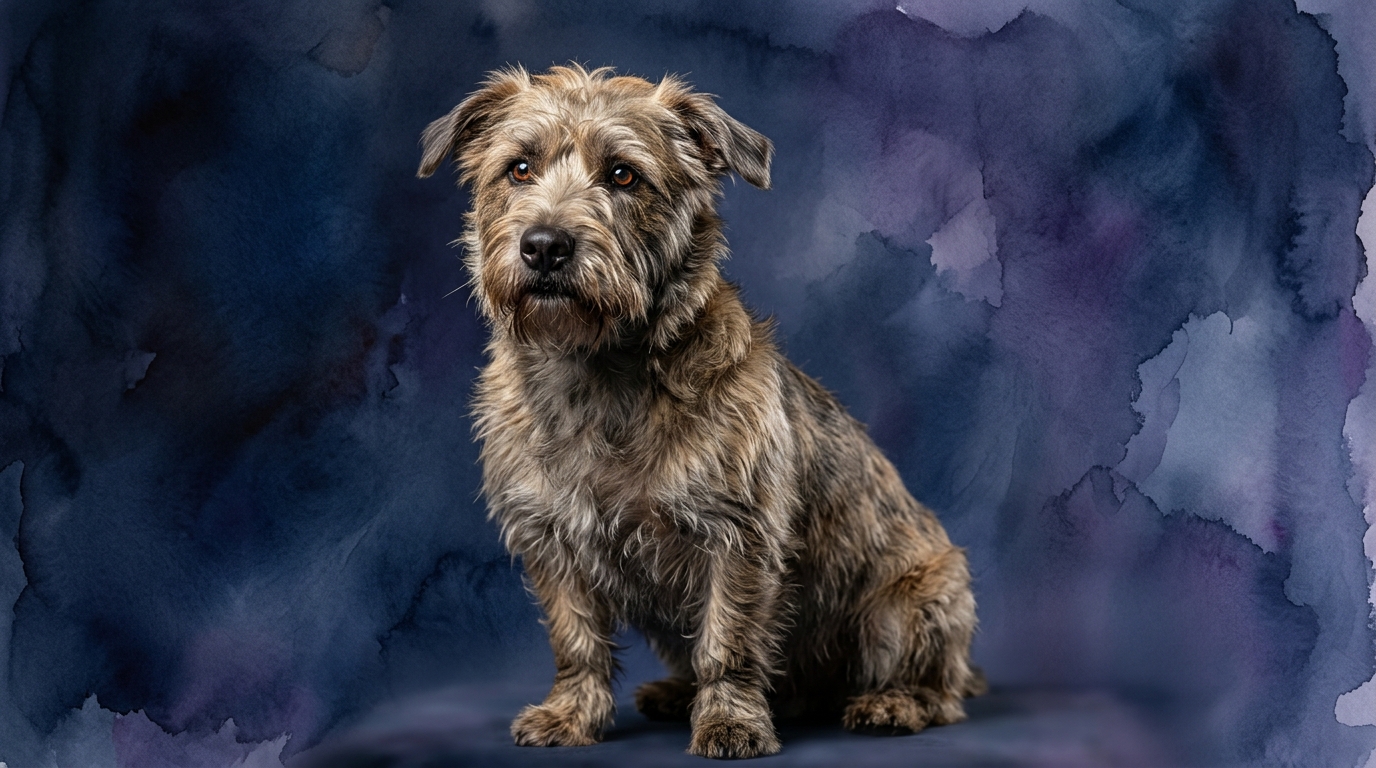
The Cosmic Pet Pet IQ Lab employs a five-dimensional framework to assess canine cognition, offering a nuanced view beyond simple rankings. For the Glen of Imaal Terrier, we observe a consistent performance across the board: Problem Solving 3/5, Training Speed 3/5, Social Intelligence 3/5, Instinctive Drive 3/5, and Memory 3/5. This suggests a balanced, practical mind, characteristic of its working terrier heritage, where independence and focused determination were prized.
In contrast, the Miniature Poodle presents a striking cognitive profile, reflected in its high Coren rank of #2. Its scores are Problem Solving 5/5, Training Speed 5/5, Social Intelligence 3/5, Instinctive Drive 3/5, and Memory 5/5. This profile indicates a dog with exceptional cognitive processing speed and retention, particularly in areas related to learning and adapting to new information, while maintaining a similar baseline for social awareness and inherent drives as the Glen.
Delving deeper, the Glen's 3/5 in Problem Solving points to a dog that approaches challenges with a direct, persistent strategy, often relying on its physical capabilities and determination. Its 3/5 in Training Speed and Memory suggests it learns at a steady pace and retains information adequately, but repetition and consistency are key. The Miniature Poodle's 5/5 in both Problem Solving and Memory, however, speaks to a remarkable capacity for abstraction, rapid learning, and the ability to recall complex sequences and associations with ease, making it highly adaptable to structured learning environments.
Where the Glen of Imaal Terrier's Cognition Shines
While the Miniature Poodle often garners attention for its rapid learning, the Glen of Imaal Terrier possesses a unique cognitive blend that makes it excel in specific contexts. Its 3/5 in Instinctive Drive, combined with its 3/5 in Problem Solving, translates into a tenacious and resourceful approach to tasks that require sustained effort and independent thinking without constant human direction. Unlike a breed that might overthink a problem, the Glen's cognitive style often leads it to a practical, direct solution, driven by its inherent working dog mindset.
This terrier's strength lies in its ability to focus intently on a singular objective, such as scent tracking or digging, and to persist until that goal is achieved. Owners often describe a distinct 'terrier logic,' where the Glen might not learn a trick in two repetitions but will meticulously work through an environmental puzzle, like finding a hidden toy or navigating a tricky obstacle, with a self-assured, determined focus that is less about human approval and more about the intrinsic reward of the task itself. Its steady memory and problem-solving, though not top-tier, are perfectly suited for these self-directed challenges.
Where the Miniature Poodle's Cognition Excels
The Miniature Poodle's cognitive strengths are evident across multiple dimensions, particularly in its stellar Problem Solving (5/5), Training Speed (5/5), and Memory (5/5). This combination allows the Poodle to grasp new concepts and commands with remarkable alacrity, often requiring far fewer repetitions than many other breeds. Its capacity for rapid association and retention means it can quickly build a vast repertoire of learned behaviors, making it a star in obedience, agility, and complex trick training.
The Miniature Poodle's exceptional problem-solving aptitude extends beyond simple commands; it can analyze novel situations, infer solutions, and generalize learning from one context to another. This mental agility means they thrive on varied challenges and are prone to seeking out new intellectual stimulation. Their superior memory ensures that once a solution or command is learned, it is not easily forgotten, fostering a highly responsive and consistently performing companion. This makes them particularly adept at tasks requiring sequential actions or understanding of abstract cues.
Which is Easier to Train and Why
Based on their cognitive profiles, the Miniature Poodle is demonstrably easier to train for a wide range of tasks, especially those requiring precise obedience or complex sequences. Its 5/5 Training Speed means it picks up new commands quickly, often after just a few repetitions, and its 5/5 Memory ensures these commands are retained over time. Poodles generally possess an innate eagerness to engage with their handlers in learning activities, often displaying a focused attention span and a desire to please that facilitates the training process. Their ability to generalize learning also means skills learned in one environment can be easily transferred to another.
The Glen of Imaal Terrier, with its 3/5 Training Speed and Memory, requires a more patient and nuanced approach. Glens are known for their independent nature and a certain degree of terrier stubbornness; they learn effectively but often need more consistent reinforcement and creative motivation. They may question the 'why' behind a command and are less inclined to perform simply for the sake of pleasing. Training a Glen often involves tapping into their instinctive drives and making tasks feel like a collaborative hunt or puzzle rather than a strict command-and-response exercise. Their social intelligence score of 3/5 suggests they are attentive to their human companions, but their strong individual will means they respond best to positive reinforcement and engaging, varied sessions rather than rote drills.
Matching Canine Minds to Lifestyles
Choosing between these two breeds often comes down to an owner's lifestyle and their preferred type of interaction. The Miniature Poodle, with its high scores in problem-solving, training speed, and memory, thrives with owners who enjoy active, mentally stimulating engagement. These dogs excel in dog sports like agility, obedience, and rally, and benefit immensely from puzzle toys, scent work, and learning new tricks regularly. Owners who are keen on consistent training, enjoy teaching complex behaviors, and appreciate a highly responsive companion will find the Poodle's cognitive makeup a rewarding match. They are adaptable to various living situations but need their minds to be as exercised as their bodies.
The Glen of Imaal Terrier, while certainly capable of learning, suits owners who appreciate a more independent and self-directed companion. Their balanced cognitive scores, coupled with their strong instinctive drive, mean they are content with activities that allow them to use their natural terrier instincts, such as exploring, digging, or engaging in earthdog trials. Owners who enjoy a dog with a distinct personality, who can entertain themselves to a degree, and who are prepared for a more persistent, less overtly 'eager to please' training journey will find the Glen a delightful companion. They are ideal for those who value grit and determination over rapid obedience, and who can provide opportunities for their dog to express its inherent working heritage in a constructive manner.
The Verdict: When to Choose Each
The Verdict
Choose a Glen of Imaal Terrier if you appreciate a dog with independent thought, tenacious problem-solving, and a steady learning pace, thriving on self-directed tasks and purposeful activity. They suit owners who value grit and a distinct, self-assured personality over lightning-fast obedience.
Opt for a Miniature Poodle if you seek a highly adaptable, rapidly learning companion eager for diverse mental challenges and complex training, excelling in obedience and dog sports. They are perfect for owners who enjoy interactive, consistent mental stimulation and a dog that quickly grasps new concepts.
🧠 Find Your Pet's IQ Score
Our Pet IQ Lab assessment covers 25+ tests across 5 cognitive dimensions — personalized to your breed.
Take the Full IQ Test →Frequently Asked Questions
Is the Glen of Imaal Terrier difficult to train?
The Glen of Imaal Terrier isn't necessarily difficult, but its independent nature and 3/5 training speed mean it requires patience, consistency, and engaging, positive reinforcement. They respond best when training feels like a puzzle or game, rather than rote memorization, due to their inherent terrier resolve.
Do Miniature Poodles need a lot of mental stimulation?
Yes, Miniature Poodles thrive on mental stimulation due to their 5/5 problem-solving and memory scores. They need regular challenges like puzzle toys, learning new tricks, or participating in dog sports to prevent boredom and ensure their cognitive needs are met.
How do their social intelligence scores compare?
Both breeds have a Social Intelligence score of 3/5, suggesting they are equally capable of understanding and responding to human and canine social cues. Neither is exceptionally outgoing nor particularly aloof, indicating a balanced approach to social interactions, capable of forming strong bonds within their family.