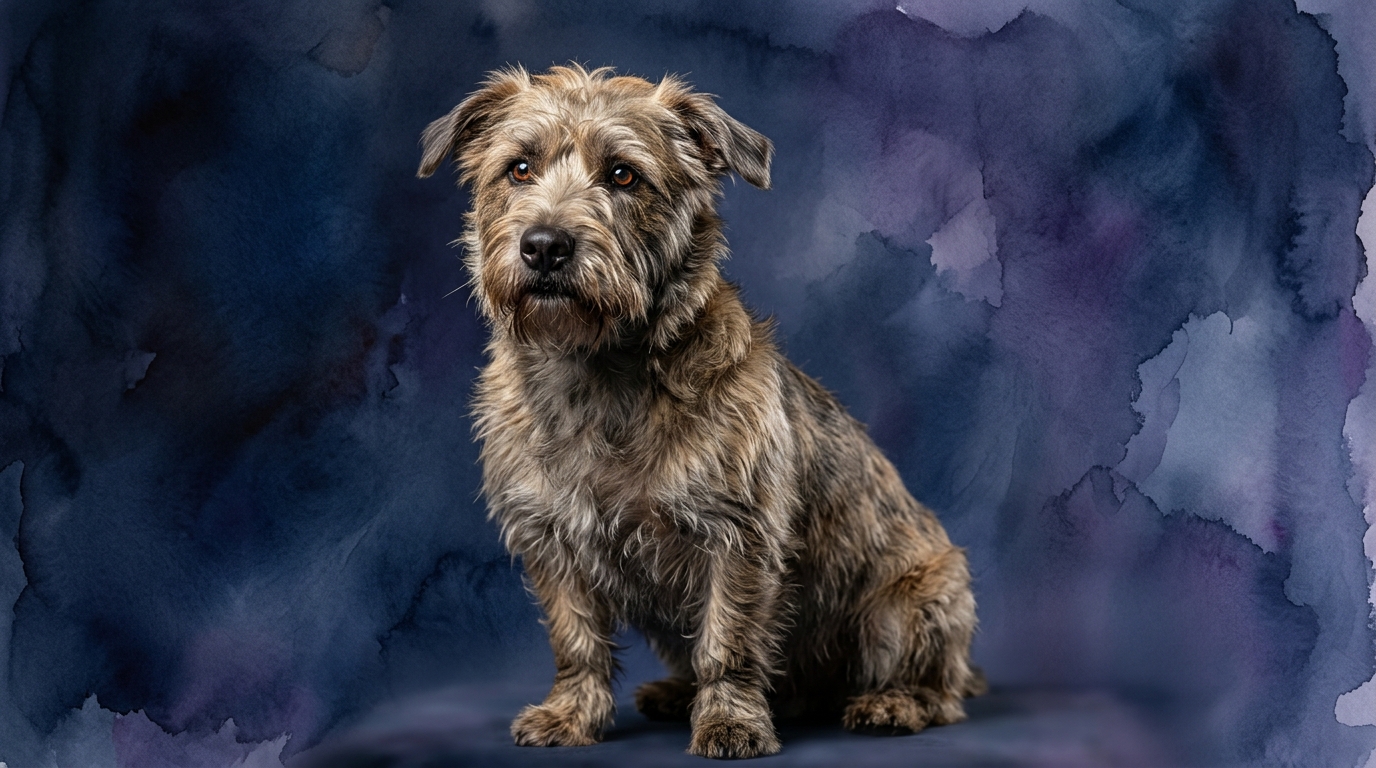

Side-by-Side Cognitive Profile: Unpacking Identical Scores
At The Cosmic Pet Pet IQ Lab, both the Glen of Imaal Terrier and the Russian Toy register a consistent 3/5 across all five cognitive dimensions. This identical numerical output, however, belies fascinating differences in how these breeds apply their inherent capabilities, reflecting their distinct evolutionary paths and breed purposes.
For **Problem Solving (3/5)**, the Glen of Imaal Terrier demonstrates a tenacious, practical approach. Their ancestral role as working terriers means their problem-solving acumen often manifests in figuring out how to overcome physical obstacles or persist in a task, such as navigating complex terrain or extracting a quarry. The Russian Toy, conversely, applies its 3/5 problem-solving to social navigation; they are adept at observing human behavior and devising strategies to gain attention, comfort, or desired outcomes within a domestic setting.
When assessing **Training Speed (3/5)**, the Glen often requires patient, consistent methods that appeal to their independent nature. They are capable learners, but their willingness to comply is frequently weighed against their own strong motivations, meaning lessons stick best when made highly rewarding and engaging. The Russian Toy, with its strong desire for human connection, often picks up new commands quickly, driven by the reward of praise and interaction. Their sensitivity, however, means they thrive on gentle, positive reinforcement and can be easily deterred by harshness.
Their **Social Intelligence (3/5)** also diverges in expression. The Glen of Imaal Terrier forms profound bonds with its immediate family, reading household dynamics with discerning accuracy, yet often maintains a reserved demeanor with strangers. Their social awareness is centered on their inner circle. The Russian Toy exhibits a finely tuned sensitivity to human emotions and intentions, often mirroring their owner's mood and displaying a strong protective instinct towards their chosen person, signaling a social intelligence geared towards intimate companionship.
The **Instinctive Drive (3/5)** in the Glen of Imaal Terrier is unmistakably rooted in its working heritage, encompassing a pronounced prey drive, an urge to dig, and an enduring tenacity in pursuit of a goal. These are deep-seated impulses that require appropriate outlets. The Russian Toy's instinctive drive, while also scoring 3/5, is largely channeled into vigilance and companionship. They possess a natural 'watchdog' tendency, often alerting to perceived anomalies with a sharp bark, and a powerful instinct for close physical proximity to their human, rather than predatory behaviors.
Finally, for **Memory (3/5)**, the Glen of Imaal Terrier displays robust recall for established routines, boundaries, and learned problem-solving sequences, especially those connected to successful outcomes or deterrents. They retain past experiences, both positive and negative, influencing future actions. The Russian Toy demonstrates excellent memory for individuals, preferred locations, and the specific behaviors that yield rewards from their human companions, making them adept at remembering learned tricks and the most effective ways to solicit affection or treats.
Where the Glen of Imaal Terrier Excels Cognitively
The Glen of Imaal Terrier's cognitive strengths, while numerically identical to the Russian Toy, shine brightest in areas demanding physical persistence and independent reasoning. Their 3/5 problem-solving score is uniquely expressed through a determined, hands-on approach to overcoming challenges in their environment. Imagine a Glen methodically strategizing how to access a hidden toy or patiently working to dig under a fence; this is their specific brand of cognitive application, leveraging their memory (3/5) to recall past successful physical maneuvers.
Their instinctive drive (3/5) bolsters this, providing the tenacity to see complex tasks through. This breed's specific cognitive win lies in its ability to process and act upon environmental cues with resolute independence, often requiring less direct human intervention in the moment than a more socially dependent breed might. They are masters of the 'figure it out myself' approach within their physical domain, a trait honed over generations of solitary work.
Where the Russian Toy Excels Cognitively
Conversely, the Russian Toy's cognitive prowess, though scoring 3/5, is distinctly geared towards sophisticated social navigation and emotional attunement. Their social intelligence (3/5) is a standout, allowing them to interpret subtle human body language and vocal tones with remarkable accuracy. This isn't just about reading a person; it's about anticipating needs and adjusting their own behavior to elicit a desired interaction, a complex form of social problem-solving.
The Russian Toy's training speed (3/5) is significantly amplified by this social acumen. They quickly learn which actions earn praise, treats, or cuddles, and their memory (3/5) effectively stores these social contracts. Their cognitive 'win' is in their profound ability to integrate seamlessly into human social structures, becoming highly responsive and interactive companions who excel at charming their way into the heart of the home, often anticipating desires before they are even fully expressed.
Training Dynamics: Glen of Imaal Terrier vs. Russian Toy
When considering ease of training, the Russian Toy often presents a smoother path for most owners due to their inherent desire to please and their strong social bond. Their social intelligence (3/5) means they are highly motivated by human approval, making positive reinforcement techniques exceptionally effective. They are sensitive creatures, responding best to gentle, consistent methods, and their focus on human interaction means they are generally attentive to cues. However, their small size and potential for distraction by exciting new stimuli or their own vocalizations can occasionally test an owner's patience.
The Glen of Imaal Terrier, while equally capable of learning, can prove more challenging for a novice trainer due to their independent streak and strong instinctive drives (3/5). Their problem-solving (3/5) often involves them assessing situations and deciding if a command aligns with their own interests. Training a Glen demands significant patience, unwavering consistency, and creative methods to make learning more rewarding than their innate desires, such as following a scent trail. Owners must tap into their tenacious spirit, ensuring training is a collaborative, engaging experience rather than a battle of wills.
Lifestyle Fit: Active vs. Relaxed Owners
For active owners seeking a resilient partner for outdoor exploration and mentally stimulating activities, the Glen of Imaal Terrier is often the more suitable choice. While not possessing boundless energy, their problem-solving (3/5) and strong instinctive drives (3/5) require regular outlets. They thrive on structured activities like scent work, earthdog trials, or long, varied walks that allow for investigation and engagement with their environment. An owner prepared to provide consistent training and diverse mental and physical challenges will find a deeply satisfied and engaging companion in the Glen.
Conversely, the Russian Toy is an ideal companion for more relaxed owners who prioritize close companionship and indoor activities. Their social intelligence (3/5) means they are happiest when integrated into daily family life, content with shorter, gentle walks and plenty of indoor play and interaction. They require consistent mental stimulation through training games and affectionate engagement but do not demand intense physical exertion. Their adaptability to a quieter home environment, coupled with their profound emotional connection to their human, makes them excellent companions for those who prefer a more serene lifestyle.
The Verdict
Opt for the Glen of Imaal Terrier if you appreciate a resilient, independent companion who thrives on practical problem-solving and outdoor exploration, and you are prepared for consistent, patient training tailored to a tenacious spirit.
Select the Russian Toy if you seek a highly social, sensitive companion who excels at reading human emotions and integrates seamlessly into a home life, and you can provide gentle, reward-based training and abundant affection.
🧠 Find Your Pet's IQ Score
Our Pet IQ Lab assessment covers 25+ tests across 5 cognitive dimensions — personalized to your breed.
Take the Full IQ Test →Frequently Asked Questions
Are Glen of Imaal Terriers stubborn?
Glen of Imaal Terriers possess a strong, independent streak stemming from their working heritage. While not stubborn in the sense of refusing to learn, their problem-solving (3/5) often leads them to prefer figuring things out on their own terms, requiring patient and consistent training that makes learning genuinely rewarding.
Do Russian Toys bark a lot?
Russian Toys can be quite vocal, often using their barks to alert owners to perceived anomalies or to express excitement and demand attention. Their social intelligence (3/5) means they are quick to communicate their needs and observations, sometimes leading to frequent vocalizations that can be managed with consistent training.
How much exercise does each breed need?
The Glen of Imaal Terrier requires moderate daily exercise, including walks and mental engagement like scent games, to satisfy their instinctive drives. The Russian Toy needs less intense physical exercise, usually content with short walks and indoor play, but thrives on consistent social interaction and mental stimulation to maintain their cognitive well-being.