
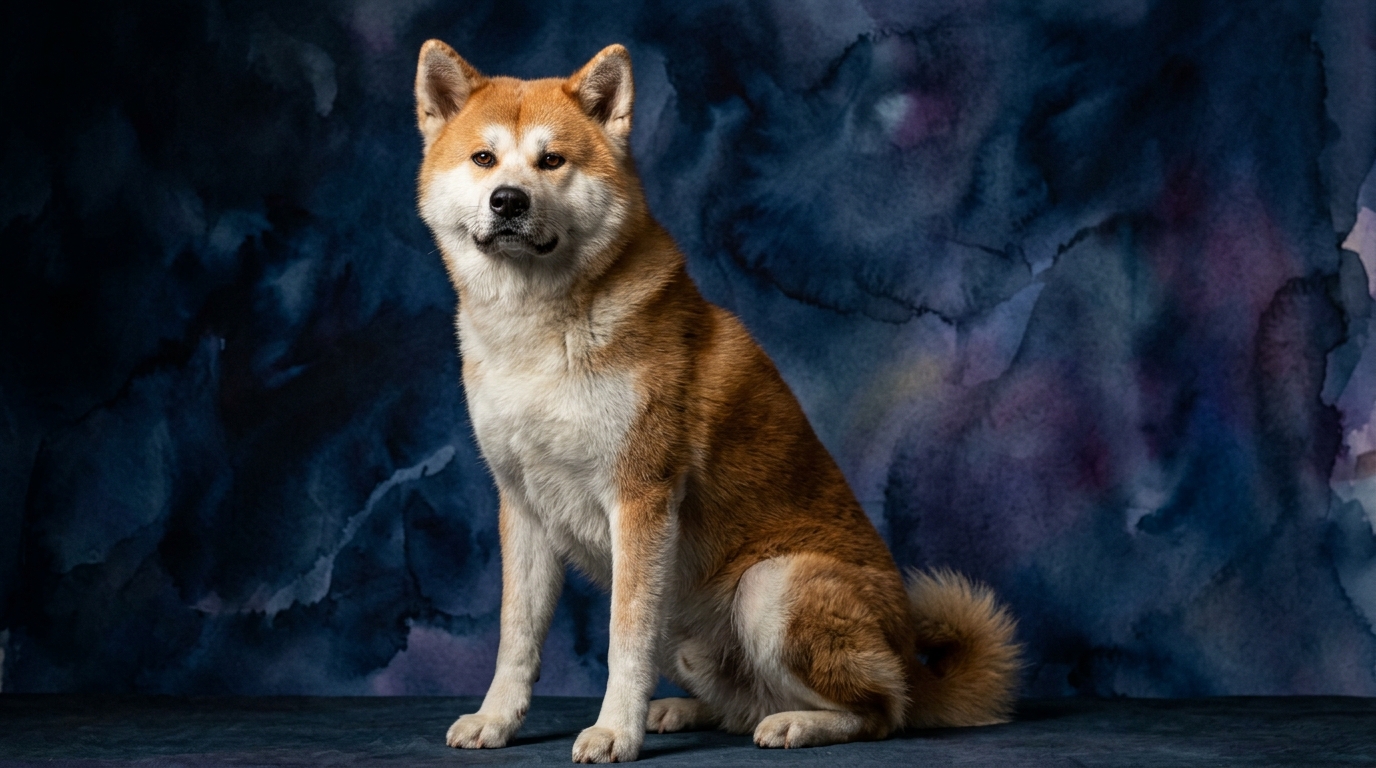
Side-by-Side IQ Profile: Golden Retriever vs. Akita
The Cosmic Pet Pet IQ Lab employs a multi-faceted approach to assess canine cognition, moving beyond simple obedience to encompass problem-solving, social understanding, and intrinsic drives. For the Golden Retriever, ranked #4 by Coren, its problem-solving ability scores a strong 4/5, reflecting its capacity to navigate novel situations and learn complex tasks with adaptability. Its training speed is exceptional at 5/5, indicating a swift grasp of commands and a high desire for cooperative learning. Social intelligence, also 5/5, highlights its remarkable capacity to read human cues, form deep bonds, and seamlessly integrate into family dynamics. An instinctive drive of 4/5 points to its strong retrieving and working heritage, channeled productively. Memory at 4/5 ensures it retains learned behaviors and associations effectively.
In contrast, the Akita, holding Coren rank #54, presents a distinct cognitive blueprint. Its problem-solving registers at 3/5; while capable, its approach is often independent, relying less on human direction for solutions. Training speed is a more measured 2/5, meaning it learns, but at its own pace, demanding consistent and patient methods rather than eager compliance. Social intelligence, rated 3/5, reflects its deep loyalty to its core family unit but often a reserved or aloof demeanor towards strangers, processing its social environment with discernment. Its instinctive drive is a powerful 5/5, emphasizing strong guarding, protective, and territorial tendencies that require careful management. Memory, like the Golden, is 4/5, demonstrating a good retention of experiences, routines, and family members, though it might particularly recall negative associations.
Where the Golden Retriever Excels Cognitively
The Golden Retriever truly shines in scenarios demanding cooperative intelligence and a desire to engage with human instruction. Their 4/5 problem-solving score, combined with a 5/5 training speed, means they excel at tasks requiring active participation and understanding of human expectations, such as advanced obedience, agility, or assistance work. Unlike breeds that might independently figure out a puzzle, Golden Retrievers often seek human input or approval as part of their problem-solving process, making them exceptionally responsive. Their 5/5 social intelligence allows them to anticipate human needs and moods, fostering a profound connection that translates into effortless communication and a willingness to perform. This breed thrives on joint ventures, demonstrating a cognitive profile geared towards partnership and shared accomplishment in a way few other breeds do.
Where the Akita Excels Cognitively
The Akita's cognitive strengths lie in its self-reliant nature and powerful intrinsic motivations, particularly its 5/5 instinctive drive. While its problem-solving is rated 3/5, this often manifests as independent, practical solutions to environmental challenges, rather than seeking human direction. This breed possesses an innate ability to assess situations and act decisively, especially concerning the protection of its territory or family, without needing explicit commands. Their memory, also 4/5, supports this by retaining knowledge of safe zones, perceived threats, and established routines, making them vigilant and reliable guardians. The Akita’s social intelligence, while 3/5, reflects a deep, discerning bond with its inner circle, allowing it to accurately read the subtle cues within its immediate family unit and react appropriately to external changes, a valuable trait for a protector. This cognitive independence means they can operate effectively without constant human oversight, a distinct advantage in specific roles.
Training Dynamics: Which is Easier to Guide?
When considering ease of training, the Golden Retriever holds a clear advantage, primarily due to its exceptional 5/5 training speed and 5/5 social intelligence. These dogs possess an innate desire to cooperate and please their human companions, actively seeking to understand and comply with commands. They respond enthusiastically to positive reinforcement, praise, and the opportunity to work alongside their owners, making training a highly collaborative and rewarding experience. Their adaptability and lower instinctive drive (4/5, meaning less independent and more manageable) allow them to readily generalize learned behaviors across various situations and distractions.
The Akita, with its 2/5 training speed and independent nature, presents a different training journey. While certainly capable of learning, an Akita often requires more patience, consistency, and a deep understanding of its self-assured temperament. They are less inclined to perform simply for the sake of pleasing and may require more compelling motivation or a clear understanding of the 'why' behind a command. Their powerful 5/5 instinctive drive means that while they can be trained, managing their natural protective and territorial behaviors requires dedicated, early socialization and ongoing reinforcement to channel these traits appropriately. Training an Akita is about building a respectful partnership based on mutual trust, rather than relying on an inherent eagerness to comply.
Matching Canine Cognition to Owner Lifestyles
For active owners seeking a dynamic partner for a wide range of activities, the Golden Retriever is an exemplary choice. Their high training speed and social intelligence make them eager participants in dog sports like agility, obedience, dock diving, or simply long hikes and runs. They thrive on consistent engagement and enjoy being an integral part of family outings, relishing both physical exertion and mental challenges alongside their people. Their cooperative nature means they are often more forgiving of handler errors and maintain enthusiasm through varied activities.
Conversely, while an Akita also benefits from regular exercise, the type of activity it suits might differ. Owners who enjoy purposeful, structured walks, secure off-leash areas for independent exploration, or activities that engage their guarding instincts (like perimeter checks) may find a good match. Akitas are not typically the “fetch-all-day” type; their exercise needs are often met with strong, consistent walks and mental stimulation that respects their independent spirit. For truly “relaxed” owners seeking a low-maintenance companion, neither breed is ideal, as both require significant commitment to training, socialization, and exercise. However, an owner who values quiet companionship, a watchful presence, and is prepared to manage a powerful, self-assured breed with a secure environment, but doesn't necessarily seek a constant playmate, might find the Akita a fitting companion.
The Verdict
Choose a Golden Retriever if you seek a highly cooperative, socially attuned, and versatile companion eager for joint activities, responsive training, and seamless integration into family life.
Choose an Akita if you appreciate an independent, dignified, and protective companion, prepared for consistent, patient training, dedicated early socialization, and a deep, respectful bond with a discerning guardian.
🧠 Find Your Pet's IQ Score
Our Pet IQ Lab assessment covers 25+ tests across 5 cognitive dimensions — personalized to your breed.
Take the Full IQ Test →Frequently Asked Questions
Is a Golden Retriever more intelligent than an Akita?
Based on Coren's ranking and our IQ Lab metrics, Golden Retrievers demonstrate superior cooperative intelligence, particularly in training speed and social understanding, making them appear more "trainable." Akitas possess a different kind of intelligence, characterized by strong independent problem-solving and instinctive drive, which makes them effective guardians.
Which breed is better for a first-time dog owner?
The Golden Retriever is generally more suitable for first-time dog owners due to its eager-to-please temperament, high trainability, and adaptability. Akitas, with their independent nature, strong protective instincts, and need for consistent, experienced handling, are often better suited for owners who have prior dog ownership experience and understand the commitment required for a powerful, self-assured breed.
Do Akitas need a lot of exercise?
Akitas require regular, consistent exercise to maintain physical and mental well-being, but their needs differ from many high-energy breeds. They benefit from daily structured walks and opportunities for independent exploration in a secure area, rather than constant high-impact play. Their exercise should also engage their minds, often through purposeful activities.