
Side-by-Side Cognitive Profile
The Golden Retriever, holding a Coren rank #4, demonstrates a remarkable capacity for learning and obedience within the canine world. Our Pet IQ Lab metrics show their Problem Solving at 4/5, indicating a strong ability to navigate novel situations and figure out solutions, often with a purposeful approach guided by human interaction. Training Speed shines at 5/5, meaning they grasp new commands and routines with exceptional quickness, requiring fewer repetitions than many other breeds. Social Intelligence, also 5/5, highlights their profound understanding of human cues, emotions, and intentions, making them highly attuned companions. Instinctive Drive at 4/5 points to their inherent inclination for retrieving and working alongside humans, leveraging natural predispositions for tasks. Memory at 4/5 suggests they retain learned behaviors and experiences effectively over time, contributing to their consistent performance and reliability.
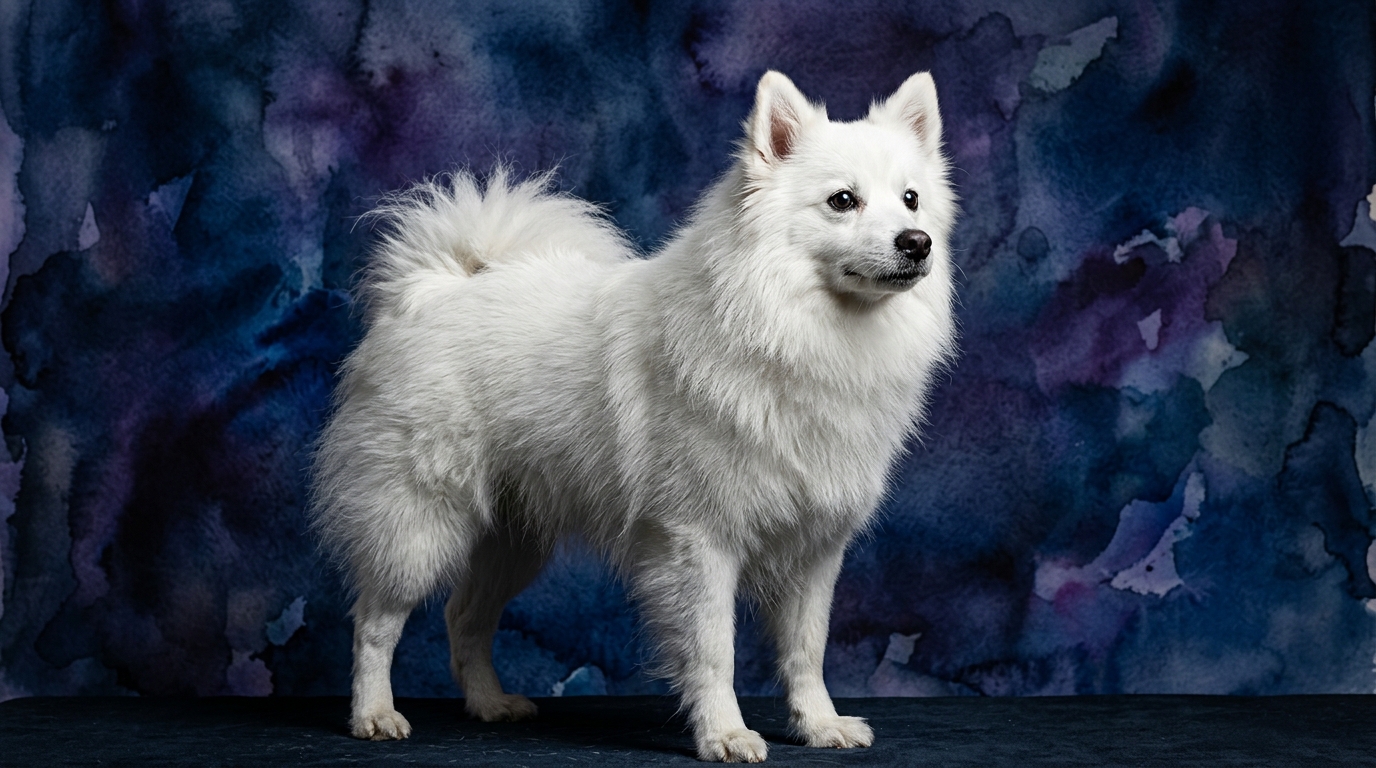
The American Eskimo Dog, while not appearing on Coren's ranking, provides a fascinating contrast through our Pet IQ Lab analysis. Their Problem Solving is rated 3/5, suggesting a moderate ability to tackle new challenges, often relying on learned patterns rather than innovative solutions, though their independence can lead to clever self-directed problem-solving. Training Speed is also 3/5, meaning they require a reasonable number of repetitions to master new commands, showing a steady but not exceptionally rapid learning curve. Social Intelligence at 3/5 indicates they are capable of understanding human social cues, but might not be as finely attuned or responsive to subtle emotional shifts as some breeds, fostering a more balanced, less dependent companionship. Instinctive Drive is 3/5, reflecting a general dog drive but without the specialized working instincts seen in many sporting breeds; their historical role often involved companionship and performance tricks rather than complex tasks. Memory at 3/5 implies a solid capacity for recall, retaining training and experiences reliably over time.
Where Golden Retriever Wins Cognitively
The Golden Retriever's cognitive edge is most apparent in their exceptional Training Speed and Social Intelligence, both rated 5/5. This combination means they not only pick up new commands with remarkable swiftness but also do so with an eager, cooperative spirit, deeply attuned to their owner's wishes and feedback. Their high social intelligence allows them to anticipate human actions and moods, making them incredibly intuitive partners in complex tasks like service work or therapy, where nuanced interaction is key. Their Problem Solving (4/5) is often applied in a context of cooperation; they're adept at figuring out how to achieve a goal when guided by a human, whether it's navigating an obstacle course or finding a hidden object. This breed excels in scenarios requiring consistent, reliable performance based on human direction and a deep understanding of social dynamics. For instance, a Golden Retriever might quickly learn a multi-step fetch game, not just because they understand 'fetch,' but because they read the excitement in your voice and the direction of your gaze, combining these cues to solve the 'where is it?' problem efficiently.
Where American Eskimo Dog Wins Cognitively
The American Eskimo Dog, while having more moderate scores across the board (all 3/5), possesses a unique cognitive profile that allows them to excel in specific contexts. Their Problem Solving at 3/5, combined with their independent spirit, often manifests as cleverness and resourcefulness in self-directed tasks. Unlike the Golden Retriever, who often looks to humans for guidance in problem-solving, an American Eskimo Dog might be more inclined to figure out how to open a cabinet or outsmart a puzzle toy on their own terms. Their moderate Social Intelligence (3/5) means they are affectionate and responsive, but less likely to be overwhelmed or overly dependent on human emotional states, fostering a balanced companionship. This independence, coupled with a solid Memory (3/5), means they retain tricks and routines well, often enjoying the mental stimulation of learning new performance-based behaviors for their own sake. They might not be driven by the same level of cooperative instinct, but their cognitive makeup makes them agile learners for specific, often entertaining, tasks that play to their showmanship and desire for attention. For example, an Eskie might devise a novel way to get a treat dropped under the couch, not necessarily waiting for human intervention, but rather using their own ingenuity.
Which is Easier to Train and Why
Without question, the Golden Retriever typically presents as the easier breed to train, primarily due to their superior Training Speed (5/5) and Social Intelligence (5/5). Their innate desire to please, coupled with their rapid comprehension, means they absorb new commands and behaviors with remarkable efficiency. They are highly motivated by positive reinforcement and are exceptionally responsive to human body language and vocal cues, making training sessions smooth and rewarding. A Golden Retriever is quick to offer desired behaviors and will persistently try to understand what is being asked of them, often requiring fewer repetitions to solidify a command. For instance, teaching a Golden Retriever to "stay" might involve only a few dedicated sessions before they reliably hold the position, driven by their understanding of your expectation and their desire for your approval.
The American Eskimo Dog, with a Training Speed of 3/5 and Social Intelligence of 3/5, requires a more patient and consistent approach. While capable learners, they don't possess the same innate drive to work collaboratively and can sometimes exhibit a more independent or even stubborn streak. They might require more repetitions to solidify a command and can be less forgiving of inconsistent training methods. Their intelligence often manifests in figuring out how to get what *they* want, rather than always aligning with human objectives. Training an Eskie often benefits from making it feel like a game or a puzzle they get to solve, rather than a strict command-and-response exercise. For example, teaching an American Eskimo Dog to "stay" might take longer, and they might test boundaries more frequently, requiring consistent reinforcement and motivation tailored to their playful yet discerning nature.
Which Suits Active Owners vs. Relaxed Owners
For owners who thrive on activity and seek a canine partner deeply involved in their daily routines, the Golden Retriever is an exceptional match. Their high instinctive drive (4/5) and social intelligence (5/5) mean they flourish with purposeful engagement, whether it's retrieving, agility, hiking, or simply being a constant companion in family outings. They require significant mental and physical stimulation to prevent boredom and channel their energy constructively. An active owner who enjoys teaching new skills, participating in dog sports, or embarking on regular adventures will find a Golden Retriever to be an eager, cooperative, and enthusiastic partner. Their need for consistent interaction and their desire to be part of every family activity makes them less suited for a truly relaxed, low-engagement lifestyle.
The American Eskimo Dog, while energetic and playful, can adapt more readily to a somewhat more relaxed ownership style, provided their needs for mental stimulation are met through engaging play and trick training. Their moderate instinctive drive (3/5) means they still enjoy activity, but might not demand the same intensity or duration of structured work as a Golden Retriever. They appreciate regular walks and playtime but can also be content with indoor games and puzzle toys. A relaxed owner who enjoys teaching fun tricks, engaging in moderate daily exercise, and appreciates a companion that is affectionate but also capable of entertaining itself for periods might find the Eskie a good fit. They are less driven by a constant need to "work" for their human and can be satisfied with a balance of interaction and independent activity, though their vocal nature means they will certainly let you know if they feel neglected!
The Verdict
Choose a Golden Retriever if you seek a highly cooperative, eager-to-please companion who excels in structured training, complex tasks, and thrives on being an integral, active part of your life. Their profound social intelligence makes them unparalleled partners for service roles, family integration, and owners committed to consistent, engaging interaction.
Opt for an American Eskimo Dog if you appreciate a clever, resourceful companion with an independent streak who enjoys learning tricks and moderate activity, fitting well into a home that values playful interaction and a dog capable of entertaining itself. They suit owners who can be patient and consistent in training, appreciating a dog's unique blend of affection and self-reliance.
🧠 Find Your Pet's IQ Score
Our Pet IQ Lab assessment covers 25+ tests across 5 cognitive dimensions — personalized to your breed.
Take the Full IQ Test →Frequently Asked Questions
Do Golden Retrievers get bored easily if not mentally stimulated?
Yes, Golden Retrievers, with their high problem-solving and instinctive drive, require significant mental stimulation to remain content. Without engaging activities, they can become bored, potentially leading to destructive behaviors or excessive vocalization as they seek an outlet for their cognitive energy. Providing puzzle toys, training sessions, and interactive games is crucial for their well-being.
Are American Eskimo Dogs good at learning tricks despite their moderate training speed?
Absolutely. While their training speed is moderate, American Eskimo Dogs are clever and enjoy mental challenges, making them excellent candidates for learning a wide array of tricks. Their intelligence often shines in performance-based activities where they can engage their problem-solving skills and enjoy being the center of attention.
How does social intelligence impact the bond with each breed?
The Golden Retriever's 5/5 social intelligence fosters an exceptionally deep, intuitive bond, as they are highly attuned to human emotions and cues, often seeming to anticipate needs. The American Eskimo Dog's 3/5 social intelligence creates a strong, affectionate bond that is more balanced, offering companionship without the same level of emotional mirroring, suitable for owners who appreciate a more independent yet loving canine presence.