
Side-by-Side IQ Profile: Golden Retriever vs. Australian Shepherd
The Golden Retriever, a Sporting group dog ranking #4 in Coren's intelligence studies, exhibits a balanced cognitive profile geared towards companionship and cooperative tasks. Their Problem Solving is rated 4/5, indicating an aptitude for sequential tasks and challenges that involve human guidance, rather than independent invention. They achieve a perfect 5/5 in Training Speed, reflecting an exceptional eagerness to please and rapid acquisition of new commands. Their Social Intelligence is also top-tier at 5/5, demonstrating a profound understanding of human emotions and social cues. Instinctive Drive scores 4/5, primarily focused on retrieving and gentle carrying, alongside a strong desire for family involvement. Finally, their Memory is solid at 4/5, reliably retaining learned behaviors and positive associations.
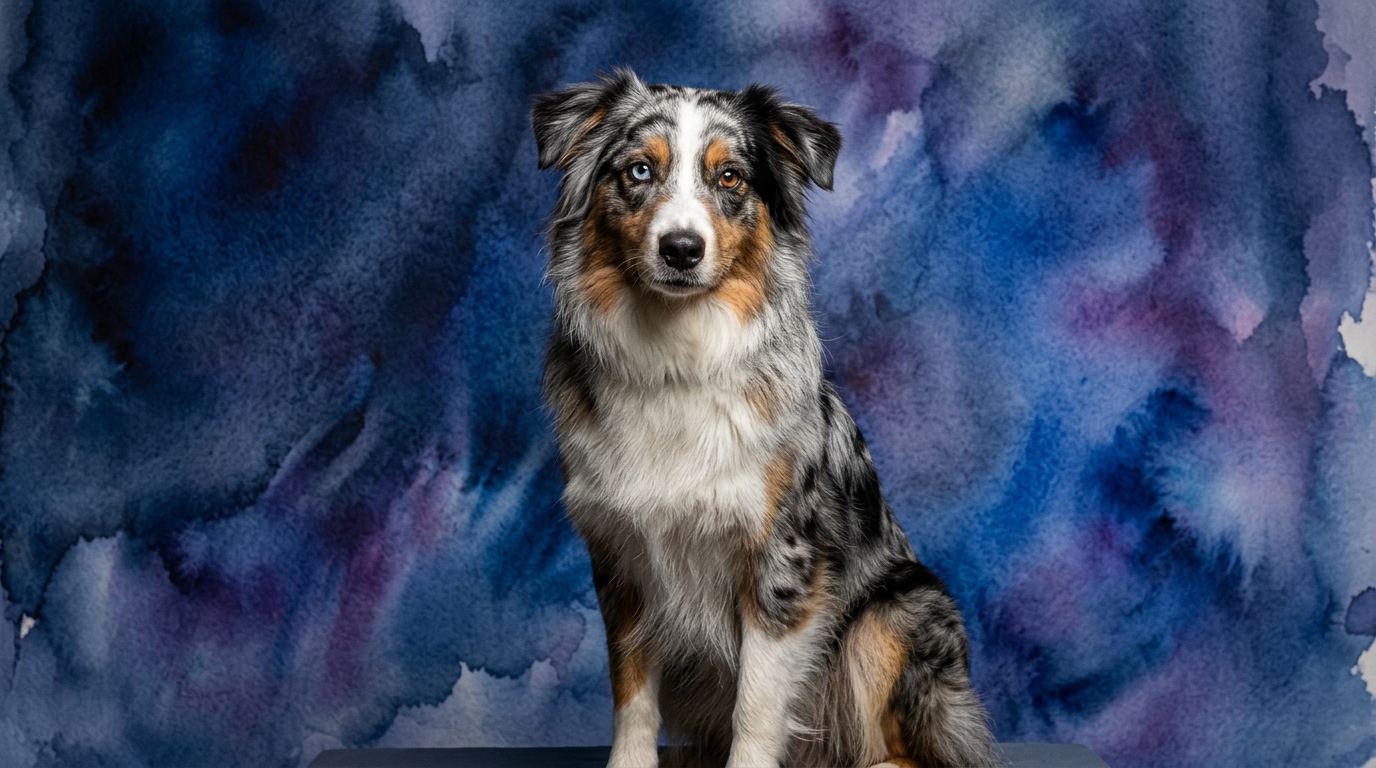
The Australian Shepherd, a Herding group dog not specifically Coren-ranked but renowned for its working acumen, presents a cognitive makeup emphasizing independence and dynamic problem-solving. They excel with a 5/5 in Problem Solving, showcasing a remarkable capacity for creative, on-the-fly solutions, especially in complex, changing environments. Their Training Speed matches the Golden Retriever at 5/5, absorbing new information quickly due to their focus and drive to work. Social Intelligence is rated 4/5, indicating deep loyalty to their primary family but often a more reserved demeanor with strangers. Their Instinctive Drive is a powerful 5/5, rooted in herding, which translates into a strong need for purpose and activity. The Australian Shepherd also boasts a perfect 5/5 in Memory, allowing them to recall intricate sequences, spatial arrangements, and complex patterns with precision.
Where the Golden Retriever Wins Cognitively
The Golden Retriever's cognitive strengths shine brightest in their unparalleled social intelligence and eagerness to integrate seamlessly into human family dynamics. With a top score of 5/5 in social intelligence, Goldens possess an innate ability to read and respond to human emotions, often anticipating needs before they are voiced. This translates into a profound capacity for companionship, offering comfort and seeking interaction. Their natural inclination to please, reflected in their 5/5 training speed, makes them exceptionally receptive to learning commands that foster cooperation and shared activity. A Golden Retriever excels in scenarios where a harmonious partnership is key, such as therapy work or guiding, where understanding subtle human cues and maintaining a calm, reassuring presence are paramount. Their problem-solving, rated 4/5, often manifests in practical ways, like carefully retrieving fragile items or patiently working through a puzzle toy that requires gentle manipulation, rather than brute force or independent strategizing. This cooperative problem-solving approach, coupled with their strong memory for positive reinforcement, ensures they remember and repeat behaviors that strengthen their bond with their human companions.
Where the Australian Shepherd Wins Cognitively
Conversely, the Australian Shepherd demonstrates superior cognitive prowess in areas demanding independent critical thinking, rapid adaptation, and sustained focus. Their 5/5 problem-solving ability allows them to analyze dynamic situations and formulate novel solutions, a trait honed by centuries of managing livestock. This breed doesn't merely follow instructions; they often evaluate the most efficient path to a goal, displaying an impressive capacity for strategic planning. Coupled with a perfect 5/5 in memory, Aussies can recall complex sequences and spatial information with remarkable accuracy, making them exceptional candidates for advanced obedience, agility, or competitive dog sports where intricate routines are common. Their instinctive drive, also rated 5/5, is a powerful engine for purpose-driven activity, compelling them to engage with tasks that require mental and physical engagement. While their social intelligence at 4/5 means they might be more discerning with new acquaintances, this focused social energy allows them to forge incredibly deep, almost telepathic, working partnerships with their chosen human, understanding subtle body language and anticipating commands even before they are fully given.
Which is Easier to Train and Why
Determining which breed is 'easier' to train depends heavily on the owner's goals and training style, though both breeds score 5/5 in training speed. The Golden Retriever's inherent desire to please and their high social intelligence make them incredibly straightforward for general obedience and family integration. They thrive on positive reinforcement and affection, eager to perform behaviors that earn praise. Their willingness to cooperate means they are typically less prone to independent decision-making during initial training, preferring to look to their handler for guidance. This makes them highly forgiving of novice trainers and a joy to teach foundational commands. Their strong retrieving drive also provides a natural outlet for focused training, making fetch or 'bring it' games excellent motivators.
The Australian Shepherd, while equally quick to learn, presents a different kind of training challenge due to their elevated problem-solving and instinctive drive. An Aussie learns commands rapidly, but their independent nature means they might question the 'why' or seek a more efficient way to perform a task if not engaged. Their high instinctive drive, rooted in herding, requires consistent mental stimulation and clear, consistent boundaries to prevent them from applying their natural urges to inappropriate targets, like nipping at heels or 'herding' children. For an Australian Shepherd, training isn't just about repetition; it's about engagement, understanding the purpose, and channeling their intense focus into productive outlets. They excel with trainers who can provide variety, advanced challenges, and a clear leadership role, transforming their cognitive power into impressive skill sets. Therefore, for a first-time dog owner seeking a compliant, eager-to-please companion, the Golden Retriever might feel 'easier,' whereas an experienced owner looking for a dynamic working partner might find the Aussie's intensity more rewarding to shape.
Suitability for Active vs. Relaxed Owners
The cognitive profiles of these breeds offer clear guidance for matching them with owner lifestyles. The Australian Shepherd, with its 5/5 problem-solving and instinctive drive, is unequivocally suited for active owners who can commit to significant daily mental and physical engagement. Their need for purpose means they thrive in environments offering structured activities like agility, flyball, disc dog, or even advanced obedience. A relaxed owner who cannot fulfill an Aussie's intense need for mental stimulation and physical exertion will likely find themselves with a bored and potentially destructive companion, as their powerful cognitive abilities will be directed towards self-invented, often undesirable, 'jobs.' Their excellent memory and problem-solving skills mean they remember intricate routines and enjoy mastering new, complex challenges.
In contrast, the Golden Retriever, while certainly enjoying activity, is a more adaptable companion for a wider range of owners. Their 4/5 instinctive drive is primarily focused on retrieving and companionship, which can be satisfied with regular walks, play sessions, and interactive family time. Their high social intelligence (5/5) means they are content being involved in family life, even if it's just lounging nearby. While they excel in dog sports, they don't *require* the same level of intense, purpose-driven activity as an Aussie to maintain mental equilibrium. A relaxed owner who provides consistent affection, moderate exercise, and basic training will find a Golden Retriever to be a contented and well-adjusted family member. They are less likely to invent their own 'work' if under-stimulated compared to an Aussie, preferring instead to seek out gentle interaction and companionship.
The Verdict
Choose a Golden Retriever if you seek a highly social, adaptable family companion eager to please, thriving on cooperative tasks and abundant affection, suitable for both moderately active and more relaxed home environments.
Opt for an Australian Shepherd if you are an experienced, active owner prepared to provide extensive mental challenges and physical exercise, valuing an independent problem-solver that excels in demanding dog sports and working roles.
🧠 Find Your Pet's IQ Score
Our Pet IQ Lab assessment covers 25+ tests across 5 cognitive dimensions — personalized to your breed.
Take the Full IQ Test →Frequently Asked Questions
Are Golden Retrievers better with children than Australian Shepherds?
Golden Retrievers, with their 5/5 social intelligence and generally more tolerant nature, often integrate seamlessly into families with children, showing high patience. Australian Shepherds, while loyal to their family, can have a stronger herding instinct which might lead them to 'herd' children, requiring careful supervision and training to manage this drive.
Which breed requires more grooming?
Both breeds have double coats and require regular grooming to prevent mats and manage shedding. Golden Retrievers typically have longer feathering that needs more frequent brushing, especially around the ears, legs, and tail, while Australian Shepherds have a medium-length coat that sheds considerably and benefits from consistent brushing.
Can an Australian Shepherd live in an apartment?
While an Australian Shepherd *can* adapt to apartment living, it's generally not ideal due to their exceptionally high energy levels and strong need for mental stimulation. They require extensive daily exercise and engagement to prevent boredom and destructive behaviors; a house with a secure yard and an owner committed to multiple daily outings is usually a better fit.