
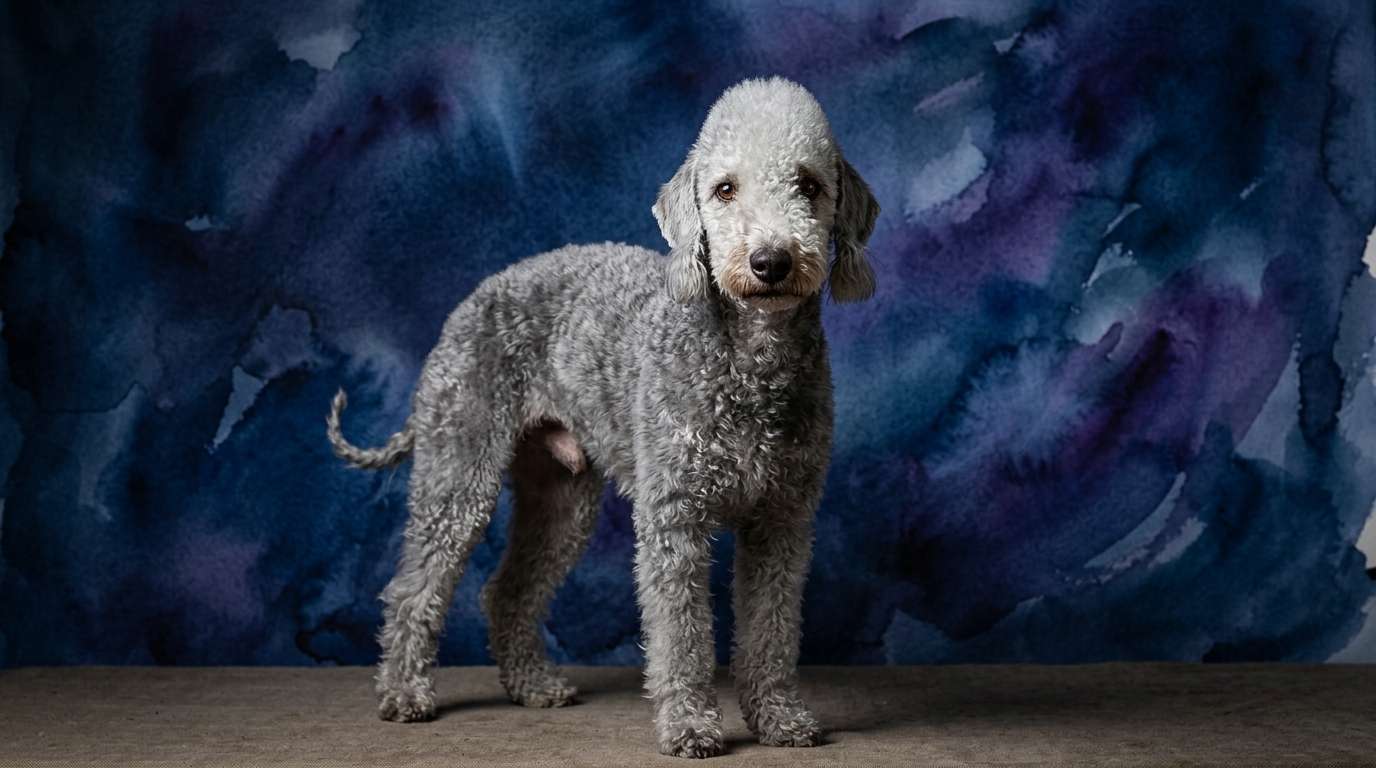
Side-by-Side Cognitive Profile: Golden Retriever vs. Bedlington Terrier
The Cosmic Pet Pet IQ Lab employs a five-dimensional framework to assess canine intelligence, offering a nuanced view beyond simple obedience. For the Golden Retriever, a Sporting group dog, this framework reveals a highly adaptable and cooperative mind. They exhibit a Problem Solving score of 4/5, demonstrating a capacity to navigate complex situations and adapt strategies effectively. Their Training Speed is an exceptional 5/5, indicating rapid command acquisition with minimal repetitions. Social Intelligence also scores 5/5, reflecting their profound ability to interpret human cues and intentions, fostering deep collaborative bonds. An Instinctive Drive of 4/5 highlights their strong desire to retrieve and work alongside humans, channeling their natural inclinations into shared tasks. Finally, their Memory is rated 4/5, signifying robust retention of learned behaviors and experiences, which contributes to their consistent performance.
In contrast, the Bedlington Terrier, a member of the Terrier group and not included in Coren's traditional ranking, presents a different cognitive blueprint, reflecting its independent heritage. Their Problem Solving is rated 3/5, suggesting a determined approach to challenges, often relying on persistence and innate drive rather than seeking human guidance. Training Speed is 3/5, indicating that while capable of learning, they require more consistent and engaging methods due to their self-reliant nature. Social Intelligence also stands at 3/5; while they form strong attachments, they may not exhibit the same nuanced attention to human social cues as more overtly cooperative breeds, often appearing self-sufficient. Their Instinctive Drive is 3/5, primarily geared towards hunting and independent exploration, which can translate into a focused pursuit of small prey or compelling scents. Their Memory is 3/5, meaning they retain commands and routines, especially with consistent reinforcement, but may benefit from more frequent refreshers compared to breeds with higher scores in this area.
Where the Golden Retriever Excels Cognitively
The Golden Retriever truly shines in dimensions requiring collaborative cognitive effort and rapid behavioral acquisition. Their 5/5 Training Speed means they grasp new concepts and commands with minimal prompting, often appearing to anticipate what's expected after just a few repetitions. This makes them exceptional candidates for complex obedience, service work, or competitive dog sports where intricate sequences are crucial. Furthermore, their 5/5 Social Intelligence allows them to interpret human body language, vocal inflections, and emotional states with remarkable accuracy. This cognitive empathy fosters a deep understanding of their owner's needs and moods, enabling them to offer comfort or adjust their behavior proactively. Their 4/5 Problem Solving, combined with their cooperative nature, means they frequently look to their human for cues when faced with a novel situation, then apply learned strategies to solve the puzzle in a human-approved manner. For instance, a Golden might quickly learn to open a specific gate by observing their owner, then replicate the action, or figure out how to retrieve a dropped item from a tight spot by nudging it with their nose, all while maintaining eye contact for approval. Their strong memory (4/5) ensures these learned skills and social nuances are retained over time, building a reliable and predictable companion.
Where the Bedlington Terrier Excels Cognitively
While not boasting the same collaborative scores as a Golden, the Bedlington Terrier presents a distinct cognitive profile that excels in independent application and tenacious pursuit. Their 3/5 Instinctive Drive, while lower numerically, represents a specialized cognitive focus: a relentless determination to track and engage with quarry. This isn't about pleasing a human, but about fulfilling an ancient, deeply ingrained purpose. When a Bedlington spots a squirrel or catches a compelling scent, their problem-solving (3/5) becomes singularly focused and highly effective within that context. They will employ varied strategies, often ignoring distractions, to achieve their goal, demonstrating a persistent mental fortitude. This independent problem-solving means they are adept at making their own decisions in the field, a cognitive strength valuable for their original hunting roles. Their lower Social Intelligence (3/5) can be reframed as a cognitive advantage in situations where a dog needs to operate without constant human input, relying on their own judgment and environmental cues. For example, a Bedlington might independently navigate a complex scent trail through varied terrain, making split-second decisions based on sensory input rather than waiting for a handler's next command. Their memory (3/5), while requiring more reinforcement for human-centric commands, is robust for environmental details and successful hunting strategies.
Training Dynamics: Golden Retriever vs. Bedlington Terrier
Comparing the ease of training between these two breeds highlights their fundamental cognitive differences. The Golden Retriever, with its 5/5 Training Speed and 5/5 Social Intelligence, is generally far more straightforward to train. They possess an innate desire to cooperate and please their human companions, coupled with a rapid ability to associate commands with actions and positive reinforcement. A Golden often needs only a handful of repetitions to understand a new cue, and their strong social bond means they are highly attentive to their trainer's feedback and eager to perform correctly. They view training as a collaborative activity, actively seeking guidance and approval.
In contrast, the Bedlington Terrier's 3/5 Training Speed and 3/5 Social Intelligence suggest a more challenging, though equally rewarding, training journey. Their independent spirit and strong instinctive drives mean they are less inherently motivated by human approval and more by their own internal convictions or the pursuit of self-directed interests, like scent tracking. Training a Bedlington requires significant patience, consistency, and creative engagement to make tasks appealing. They need to understand why a command is relevant to them, or that cooperating yields a greater reward than following their own impulses. This means training sessions must be kept short, positive, and varied to prevent boredom and maintain their focus. While they can learn a wide array of commands, the process demands more repetitions and a deeper understanding of terrier motivation. Their independent problem-solving means they might try to 'negotiate' or find loopholes if the rules aren't crystal clear and consistently enforced.
Matching Cognitive Profiles to Owner Lifestyles
The cognitive and behavioral profiles of these breeds lend themselves to very different owner lifestyles. The Golden Retriever, with its high social intelligence and cooperative drive, thrives with active owners who enjoy consistent engagement and shared activities. Their 4/5 Instinctive Drive for retrieving and working means they require regular mental and physical stimulation, such as fetch, obedience training, scent work, or long hikes. They are best suited for owners who want a canine partner deeply involved in their daily routines, someone who appreciates a dog that actively seeks interaction and participation. A 'relaxed' owner who prefers minimal dog-centric activity might find a Golden's need for engagement overwhelming, potentially leading to boredom-induced behaviors like excessive chewing or barking.
The Bedlington Terrier, on the other hand, presents a different kind of 'active' requirement. While they might not demand constant human-directed activity like a Golden, their 3/5 Instinctive Drive and independent problem-solving mean they need outlets for their terrier energy and prey drive. They excel with owners who understand and respect their independent nature and can provide structured opportunities for mental and physical exercise that appeal to their natural instincts. This could include earthdog trials, agility, long walks with plenty of sniffing opportunities, or puzzle toys that challenge their determination. A 'relaxed' owner might find their independent streak and occasional stubbornness challenging, especially if they expect a dog to be constantly attentive or easily redirected from a fascinating scent. While they can be calm indoors after sufficient exercise, their cognitive makeup means they need structured engagement, not just passive companionship, to be content. They are less about constant human interaction and more about having their specific drives satisfied.
The Verdict
Choose a Golden Retriever if you seek a highly cooperative, socially attuned canine partner eager to learn and participate actively in family life and structured activities. Their rapid training acquisition and strong desire to please make them ideal for owners who value a predictable, responsive companion.
Opt for a Bedlington Terrier if you appreciate an independent, persistent dog with a unique cognitive drive, willing to invest patience in consistent, engaging training that respects their terrier spirit. They suit owners who understand and can channel a determined, self-reliant nature.
🧠 Find Your Pet's IQ Score
Our Pet IQ Lab assessment covers 25+ tests across 5 cognitive dimensions — personalized to your breed.
Take the Full IQ Test →Frequently Asked Questions
Do Bedlington Terriers struggle with learning new commands?
Bedlington Terriers are capable learners, but their independent nature and lower training speed score mean they typically require more patience and consistency than a Golden Retriever. Training should be engaging and positive, focusing on clear communication and strong motivation to overcome their self-directed tendencies.
How does social intelligence differ between these breeds?
Golden Retrievers (5/5) exhibit exceptional social intelligence, keenly reading human emotions and intentions, fostering deep cooperative bonds. Bedlington Terriers (3/5) are more self-sufficient; while they bond strongly, they may not show the same nuanced attention to human social cues, often appearing less reliant on human direction.
Which breed is better for first-time dog owners?
A Golden Retriever is generally more forgiving for first-time owners due to their high training speed and cooperative nature, making initial training and integration smoother. A Bedlington Terrier's independent streak and specific training needs might be more challenging for someone without prior dog experience.