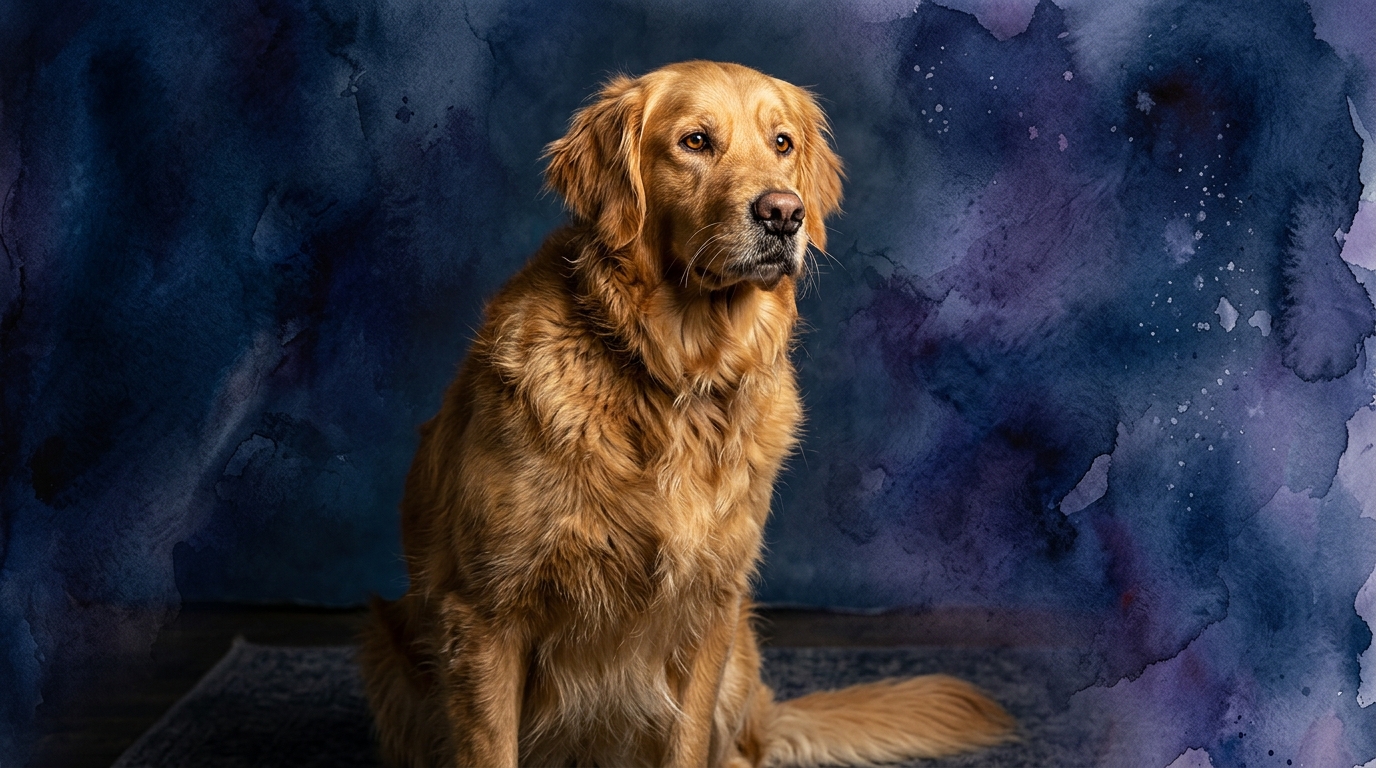
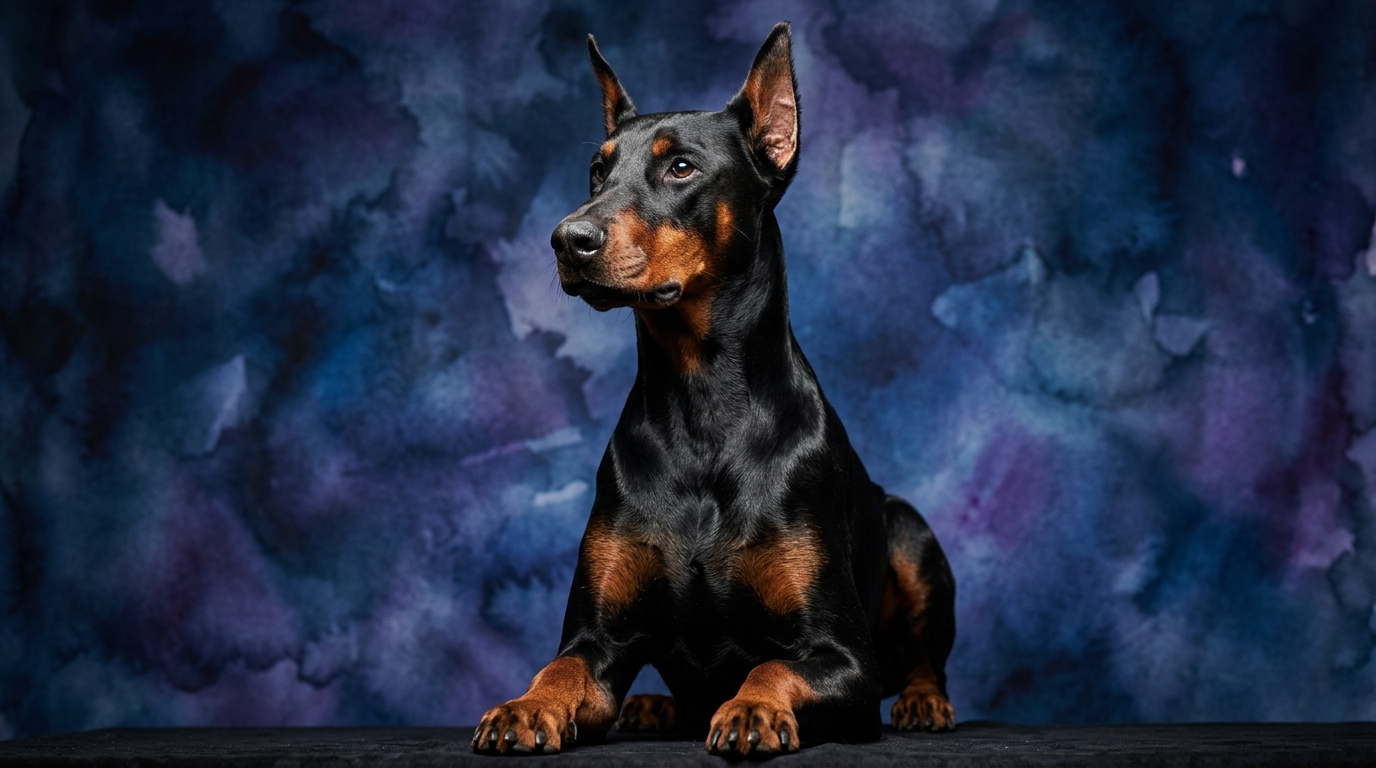
Side-by-Side Cognitive Profiles: Golden Retriever vs. Doberman Pinscher
In The Cosmic Pet Pet IQ Lab, we evaluate canine cognition across five distinct dimensions, offering a nuanced view beyond a single 'smartness' score. Both the Golden Retriever (Coren rank #4) and the Doberman Pinscher (Coren rank #5) demonstrate exceptional mental capabilities, yet their cognitive architecture is tailored to their breed histories and roles.
The Golden Retriever’s profile highlights a collaborative and socially attuned intellect. With Problem Solving at 4/5, Training Speed at 5/5, Social Intelligence at a perfect 5/5, Instinctive Drive at 4/5, and Memory at 4/5, they are predisposed to understanding and working harmoniously with humans. Their cognitive strengths are deeply rooted in their desire for connection and cooperative engagement.
Conversely, the Doberman Pinscher presents a highly focused and independent cognitive framework. Their Problem Solving is rated 5/5, Training Speed 5/5, Social Intelligence 4/5, Instinctive Drive 5/5, and Memory 5/5. This breed’s mental prowess is often directed towards vigilance, task mastery, and a formidable capacity for retention, reflecting their heritage as protectors and working dogs.
Where the Golden Retriever's Mind Shines
The Golden Retriever's standout cognitive strength lies in their Social Intelligence, earning a perfect 5/5. This dimension signifies an extraordinary ability to interpret human intentions, emotional states, and complex social cues. They are adept at reading body language, understanding tone of voice, and adjusting their behavior to foster connection, making them exceptional companions and therapy animals.
Their Training Speed, also at 5/5, is profoundly influenced by this social acuity. Golden Retrievers are not just quick to learn commands; they are eager to engage in the learning process itself, viewing it as a cooperative activity. Their desire to please and their capacity to anticipate human expectations enable them to grasp new concepts and perform intricate tasks with remarkable efficiency, particularly when the training involves positive reinforcement and interaction.
While their Problem Solving and Memory are rated 4/5, these scores are still very strong and complement their social nature. They excel at problem-solving that involves human partnership, such as retrieving specific items or navigating complex environments with guidance. Their memory allows them to retain a vast repertoire of commands and experiences, further solidifying their role as reliable and adaptable partners.
Doberman Pinscher's Distinct Cognitive Advantages
The Doberman Pinscher truly excels in Problem Solving (5/5) and Instinctive Drive (5/5). Their minds are wired for analytical thinking and decisive action, allowing them to independently assess situations and formulate solutions with precision. This, combined with their strong innate drives, makes them formidable in roles requiring vigilance, protection, and focused task completion, where they often anticipate challenges before they arise.
Their perfect 5/5 scores in both Memory and Training Speed underscore their capacity for rapid, accurate learning and long-term retention of complex sequences. A Doberman can quickly master intricate command chains and precise movements, performing them flawlessly even after extended periods. This makes them exceptional candidates for advanced obedience, protection sports, and roles demanding high levels of accuracy and consistency.
While their Social Intelligence is a robust 4/5, it often manifests differently than in a Golden Retriever. A Doberman's social engagement is typically more focused and discerning, often directed primarily towards their handler or immediate family unit. They are capable of understanding social cues but tend to prioritize the task at hand or their perceived duty, rather than seeking broad social interaction for its own sake.
Training Dynamics: A Tale of Two Approaches
Both breeds achieve a 5/5 in Training Speed, but the 'how' differs significantly. Golden Retrievers learn quickly due to their high social intelligence and intrinsic motivation to cooperate and please. They thrive on positive feedback, interactive games, and a strong bond with their trainer, making the learning process a shared, joyful experience. Their adaptability allows them to excel in diverse training environments.
Doberman Pinschers also learn at an impressive pace, driven by their superior problem-solving and intense instinctive drive. They respond exceptionally well to clear, consistent, and structured training that provides specific objectives and challenges their mental faculties. For a Doberman, training is often about mastery and precision, channeling their focused energy into executing tasks with unwavering accuracy.
Real behavioral differences emerge in their responses to training methods and handler styles. A Golden's social intelligence makes them more resilient to minor inconsistencies or variations in training, often trying to 'figure out' what the human wants. A Doberman, with its focused drive, benefits immensely from a confident and consistent handler who provides unambiguous direction and purpose. Lacking such structure, their intense drive can manifest as unwanted behaviors, whereas a Golden might simply become confused or less engaged.
Matching Cognitive Profiles to Lifestyles
For truly active owners who seek a partner for highly structured, challenging activities, the Doberman Pinscher's cognitive profile is a strong match. Their exceptional problem-solving (5/5) and intense instinctive drive (5/5) make them ideal for competitive dog sports like Schutzhund, advanced obedience, or even search and rescue, where precision, focus, and independent decision-making are paramount. They flourish when given a 'job' that engages their mind and body.
Golden Retrievers, while also energetic, suit active owners who prioritize companionship and collaborative activities. Their high social intelligence (5/5) and cooperative nature make them excellent partners for family hikes, agility, or even less competitive forms of obedience where the interaction and bond are as important as performance. They thrive on being an integrated part of family adventures.
Owners seeking a companion that seamlessly integrates into a relaxed, family-centric lifestyle often find the Golden Retriever a superb fit. Their adaptable social intelligence (5/5) and collaborative problem-solving (4/5) mean they are generally content with interactive play, regular walks, and ample companionship. They offer a balanced approach to mental stimulation, enjoying puzzles and training sessions but also content to simply be present.
Conversely, the Doberman Pinscher is generally not suited for a truly relaxed owner. Their intense instinctive drive (5/5) and superior problem-solving (5/5) demand consistent mental and physical engagement. Without adequate outlets for their cognitive and physical energies, Dobermans can become restless or destructive. They require an owner committed to providing purposeful activities and a structured routine to thrive.
The Verdict: When to Choose Each
The Verdict
Choose a Golden Retriever if you prioritize a highly cooperative companion who excels at understanding social cues and thrives on collaborative learning, integrating seamlessly into family life with a strong desire to please.
Opt for a Doberman Pinscher if you seek a focused, driven partner who excels at independent problem-solving and precision tasks, requiring a dedicated owner to channel their intense mental and physical energies into structured activities.
🧠 Find Your Pet's IQ Score
Our Pet IQ Lab assessment covers 25+ tests across 5 cognitive dimensions — personalized to your breed.
Take the Full IQ Test →Frequently Asked Questions
Which breed is better for first-time dog owners?
The Golden Retriever, with its high social intelligence and adaptable nature, is often more forgiving and easier for first-time owners to navigate. The Doberman's intense drive and need for consistent structure typically require more experienced handling to channel their energies effectively.
Do Dobermans require more mental stimulation than Golden Retrievers?
Yes, Dobermans typically require more structured mental stimulation due to their superior problem-solving and instinctive drive. They thrive on having tasks or 'jobs' that engage their precision and focus, while Goldens often find satisfaction in social interaction and cooperative play.
How does 'Instinctive Drive' differ between these two breeds?
The Doberman's instinctive drive (5/5) is often geared towards protection, vigilance, and task completion, reflecting their working heritage and need for purpose. The Golden Retriever's drive (4/5) is more oriented towards retrieving, companionship, and cooperative activities, aligning with their sporting background.