
Side-by-Side IQ Profile
**Golden Retriever (Sporting Group, Coren Rank #4):** Golden Retrievers exhibit a robust capacity for analytical thought, applying learned behaviors to novel situations and figuring out complex sequences to achieve goals. This manifests in their ability to retrieve specific items or navigate intricate obstacle courses. Their Training Speed (5/5) is remarkably rapid, absorbing new commands and routines swiftly, often requiring fewer repetitions. They possess an exceptional Social Intelligence (5/5), interpreting human cues like body language and vocal inflections to anticipate needs and form deep, cooperative bonds. Rooted in their retrieving heritage, their Instinctive Drive (4/5) is strong and purposeful, expressed as a keen interest in carrying objects, exploring scents, and engaging in physical tasks. They retain learned commands, routines, and experiences over extended periods, contributing to their dependable nature with a Memory score of 4/5.
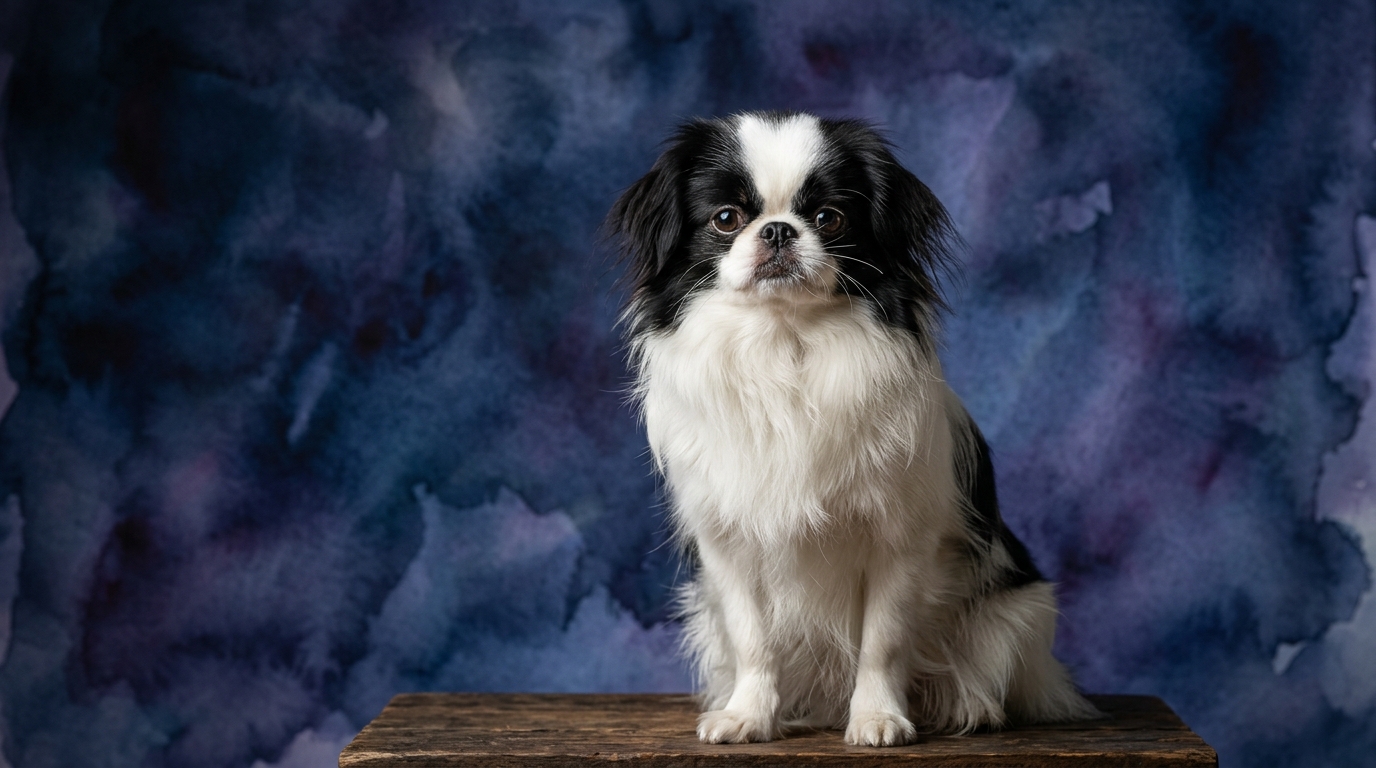
**Japanese Chin (Toy Group, Not Coren-Ranked):** Japanese Chins exhibit moderate Problem Solving (3/5) skills, capable of navigating household challenges or figuring out simple puzzles, with a cognitive focus often leaning towards social dynamics within their immediate family. While capable of learning, their Training Speed (3/5) is typically more deliberate, responding best to positive reinforcement and patient, consistent methods, often requiring more repetitions for mastery. These companions possess a nuanced Social Intelligence (3/5) primarily centered on their human family, demonstrating sensitivity to their owners' moods and a desire for close interaction. Their Instinctive Drive (3/5) is moderately developed, typically manifesting as a playful curiosity within the home environment rather than a strong urge for vigorous outdoor activities. Japanese Chins possess a good Memory (3/5) for routines, faces, and established household rules, contributing to their predictable and comforting presence.
Where Golden Retriever Wins Cognitively
The Golden Retriever's cognitive strengths position it as a truly versatile and capable partner for a wide array of activities. Its superior Problem Solving (4/5) means it can independently assess situations like opening a gate or retrieving dropped items from awkward spots, rather than relying solely on direct instruction. Coupled with its perfect Training Speed (5/5), Golden Retrievers absorb new commands and complex sequences with remarkable alacrity, making them exceptionally responsive to advanced obedience, agility, or service work. Their outstanding Social Intelligence (5/5) allows for an intuitive understanding of human emotions and intentions, fostering a deep, collaborative bond where they can anticipate needs and offer comfort, often before being asked. This profound empathy, combined with a strong Instinctive Drive (4/5) for purposeful activity, means they thrive on having a “job” and excel in roles requiring sustained focus and interaction. Their robust Memory (4/5) ensures consistent performance and a reliable grasp of extensive repertoires of commands and tasks.
Where Japanese Chin Wins Cognitively
While the Japanese Chin's scores might appear lower in comparison, they reflect a distinct set of cognitive priorities perfectly suited for its role as a devoted companion. Its Problem Solving (3/5) is adept at navigating social intricacies within the home, such as subtly communicating desires or finding the most comfortable sunbeam. The Chin's Training Speed (3/5), though moderate, is entirely sufficient for mastering essential house manners and charming tricks, especially when motivation is high, such as earning a favored treat or a cuddle. Where the Japanese Chin truly excels is in its focused Social Intelligence (3/5) and lower Instinctive Drive (3/5) when it comes to living harmoniously in a domestic setting. The Chin's contentment is found primarily in companionship, making them less prone to destructive behaviors born from an unmet need for strenuous activity. Their Memory (3/5) reliably tracks their favorite people, routines, and comfort zones, contributing to their predictable and endearing presence, making them masters of the art of being a cherished lapdog without demanding constant mental exertion.
Which is Easier to Train and Why
The Golden Retriever is notably easier to train due to its higher scores across several cognitive dimensions. Their Training Speed of 5/5 means they grasp new concepts and commands with minimal repetition, driven by an inherent desire to please and a strong work ethic. Their high Social Intelligence (5/5) allows them to keenly observe and respond to human cues, making communication during training remarkably fluid. For example, a Golden Retriever will often pick up a new retrieve command in just a few sessions, motivated by the task itself and the praise received. In contrast, the Japanese Chin's Training Speed of 3/5 indicates a more deliberate learning pace. While certainly trainable, they may require more patience, consistency, and highly motivating rewards. Their moderate Social Intelligence (3/5) means they might not be as keenly attuned to subtle human directives, sometimes preferring their own agenda over immediate compliance, especially if not adequately motivated. Training a Chin often involves finding what truly sparks their interest, such as a specific treat or a favorite toy, and then leveraging that for engagement.
Which Suits Active Owners vs. Relaxed Owners
Their IQ profiles clearly delineate suitability for different owner lifestyles. Golden Retrievers, with their high Instinctive Drive (4/5) and Problem Solving (4/5), thrive with active owners who can provide consistent mental and physical stimulation. They excel in environments where they have opportunities for long walks, runs, hikes, swimming, or engaging in dog sports like agility, obedience, or field trials. Their robust memory and social intelligence make them excellent candidates for service work or therapy roles, requiring owners who can dedicate time to advanced training and purposeful activities. Conversely, the Japanese Chin's more moderate Instinctive Drive (3/5) and lower demand for complex problem-solving make it an ideal companion for relaxed owners. They are content with shorter, leisurely walks and indoor playtime, preferring the comfort of home and close proximity to their human family. Their social intelligence is geared towards intimate bonding within a smaller circle, making them perfect for individuals or families seeking a devoted, quiet, and less physically demanding presence.
The Verdict
Opt for a Golden Retriever if you seek an active, collaborative partner eager for intellectual challenges, extensive training, and outdoor adventures, thriving on a shared purpose.
Select a Japanese Chin if you desire a devoted, serene companion content with a relaxed home environment and intimate social bonds, offering quiet affection rather than demanding strenuous activity.
🧠 Find Your Pet's IQ Score
Our Pet IQ Lab assessment covers 25+ tests across 5 cognitive dimensions — personalized to your breed.
Take the Full IQ Test →Frequently Asked Questions
Do Japanese Chins require less mental stimulation than Golden Retrievers?
Generally, yes. While all dogs benefit from mental engagement, the Japanese Chin's moderate problem-solving and instinctive drive mean they are satisfied with less intense and complex mental tasks compared to the Golden Retriever, who needs regular, challenging stimulation.
Can a Japanese Chin perform complex tasks like a Golden Retriever?
A Japanese Chin can learn basic commands and some tricks, but their cognitive profile is not geared for the complex, multi-step tasks or extensive service work that Golden Retrievers excel at due to their higher problem-solving and training speed scores.
How does Coren ranking relate to these breeds?
Stanley Coren's ranking primarily assesses 'working and obedience intelligence,' which heavily favors breeds like the Golden Retriever (ranked #4) that excel in structured training and task execution. The Japanese Chin is not Coren-ranked, indicating its intelligence is not primarily expressed through traditional obedience or working roles but rather through its distinctive companion qualities.