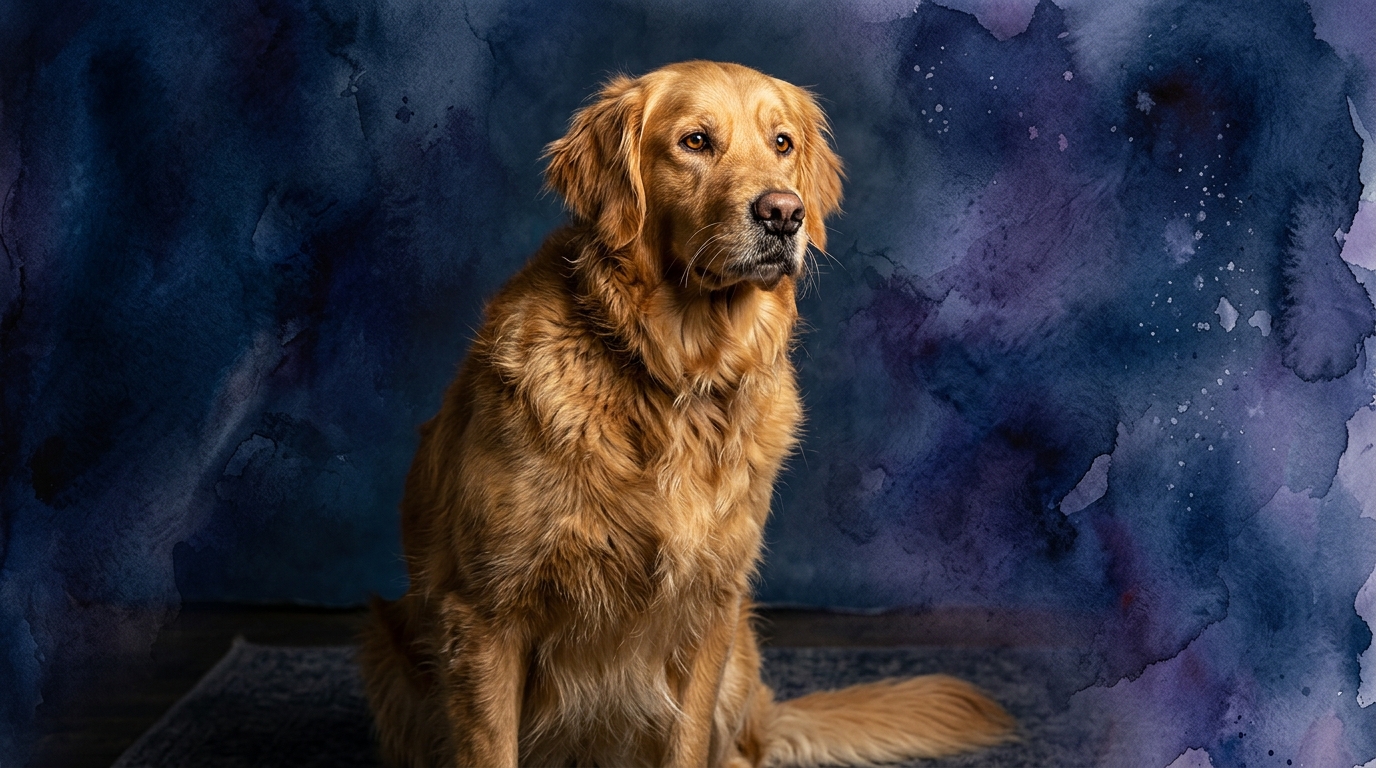
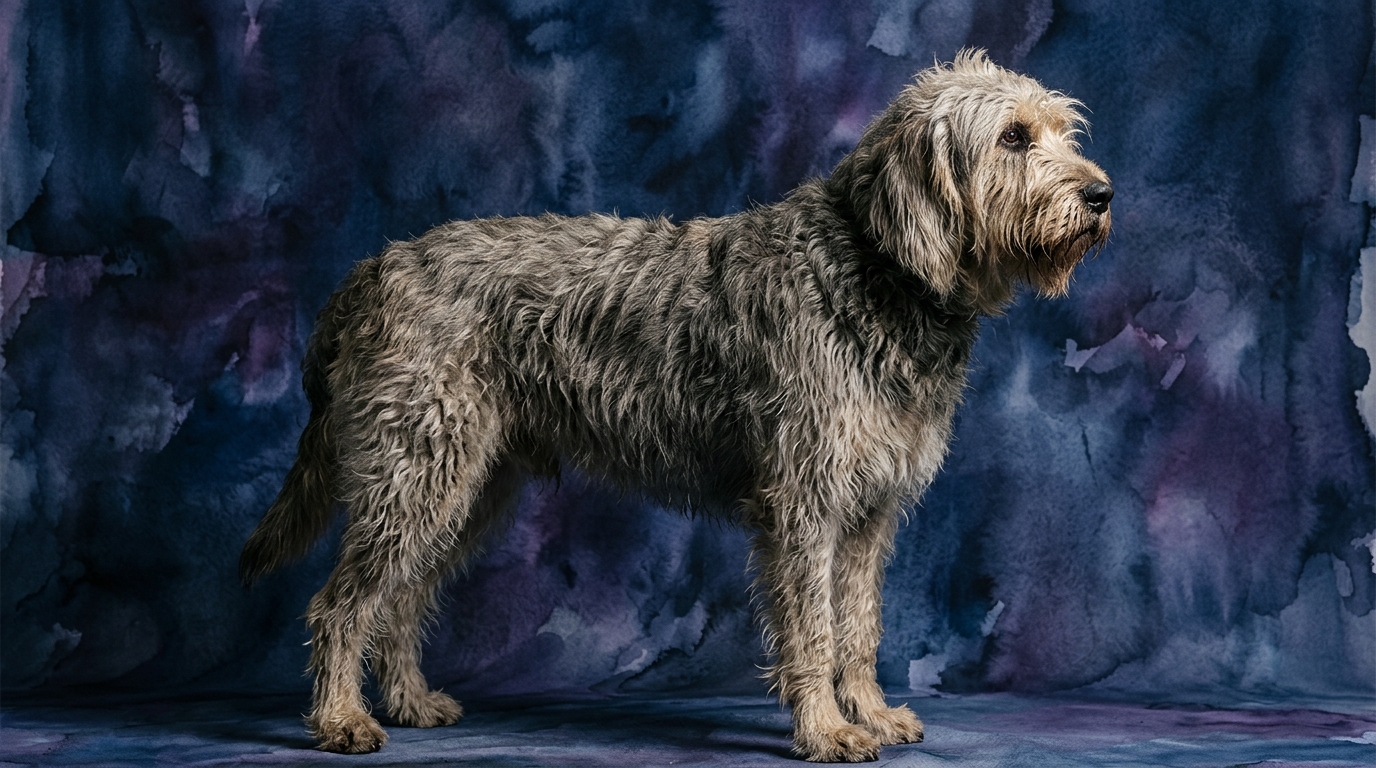
Side-by-Side Cognitive Profiles
The Cosmic Pet Pet IQ Lab assesses canine intelligence across five critical dimensions, providing a nuanced view beyond simple labels. For the Golden Retriever, a Sporting group dog, its profile is marked by a balanced and high-performing intellect. Its Problem Solving score of 4/5 indicates a capacity for adaptable thinking, allowing it to navigate complex situations and learn multi-step tasks with relative ease. The Golden Retriever's Training Speed is exceptional at 5/5, reflecting an eagerness to please and a quick grasp of new commands and routines. Social Intelligence, also at 5/5, highlights its remarkable ability to interpret human cues, form strong bonds, and integrate harmoniously into family life. An Instinctive Drive of 4/5 demonstrates a robust desire to work, retrieve, and engage in purposeful activities, while its Memory, rated 4/5, allows it to retain a wide array of information, from learned commands to the location of favored toys or specific routines.
In contrast, the Otterhound, a member of the Hound group, presents a distinct cognitive blueprint. Its Problem Solving ability is rated 3/5, suggesting a more direct, perhaps less abstract, approach to challenges, often relying on instinctual methods or learned patterns rather than innovative solutions. The Otterhound's Training Speed is 3/5, indicating that while trainable, it may require more patience and consistent motivation, often prioritizing its own interests over immediate human directives. Social Intelligence, also at 3/5, points to an independent nature; while affectionate with its family, it might not be as overtly attuned to human emotional states or social nuances as a Golden Retriever. Its Instinctive Drive, rated 3/5, is profoundly focused on its heritage: an unwavering pursuit of scent, endurance, and tracking, which can manifest as a powerful, sometimes singular, focus. Finally, its Memory score of 3/5 suggests it retains information effectively, particularly when it pertains to its primary drives like scent trails, but may not have the same breadth or detail in recall for human-centric tasks.
Where the Golden Retriever Excels Cognitively
The Golden Retriever's cognitive strengths lie in its versatility and its deep-seated desire to collaborate with humans. Its 4/5 Problem Solving score, coupled with its 5/5 Training Speed, means it can quickly master a diverse array of tasks, from intricate obedience routines to service work. This breed frequently demonstrates an ability to generalize learned behaviors to new contexts, showing a flexible intellect. For instance, a Golden Retriever taught to fetch specific items might, with minimal prompting, apply that understanding to retrieve a novel object. Its 5/5 Social Intelligence allows it to anticipate human needs and react appropriately to subtle cues, fostering an exceptionally intuitive partnership. They are adept at reading body language and vocal tones, making them remarkably responsive companions. This high social acumen also contributes to their adaptability in various social settings, interacting harmoniously with strangers and other animals.
Furthermore, the Golden Retriever's 4/5 Instinctive Drive is broad and highly redirectable. While they possess a strong retrieving instinct, this drive can be channeled into diverse activities like agility, dock diving, or therapy work. This adaptability means their inherent drives are not singular but rather a wellspring of motivation for a wide range of human-directed endeavors. Their 4/5 Memory supports this, enabling them to reliably recall a vast repertoire of commands and learned behaviors, even after long periods. They are also known for remembering routes and routines, which contributes to their reliability and predictability as companions.
Where the Otterhound Shows Unique Cognitive Strengths
While the Otterhound's overall IQ scores are generally lower than the Golden Retriever's, its cognitive profile is not without its own specific strengths, particularly when viewed through the lens of its original purpose. Its 3/5 Instinctive Drive, though numerically lower, represents an incredibly powerful and specialized form of intelligence: an unparalleled scenting ability and an enduring focus on tracking. This drive is not merely strong; it is all-consuming when activated, making the Otterhound a relentless and highly effective hunter in its domain. This singular focus, while challenging for general obedience, is a cognitive 'win' for tasks requiring intense, sustained concentration on a sensory input.
The Otterhound's 3/5 Problem Solving, while not as adaptable as a Golden's, often manifests as an independent, persistent approach. They may not seek human guidance as readily, instead relying on their own sensory input and determination to solve a problem, particularly if it involves a scent trail. This self-reliance can be a strength for owners who appreciate a dog with a strong will and a mind of its own, rather than one constantly seeking direction. Similarly, their 3/5 Social Intelligence means they are affectionate but often less 'needy' for constant human validation, offering a more self-contained companionship that some individuals find appealing. Their memory, also 3/5, is robust for what truly matters to them: the intricate details of a scent puzzle or the location of interesting outdoor features, making them highly effective at their specific, ancestral tasks.
Trainability: Golden Retriever vs. Otterhound
When it comes to trainability, the differences between these two breeds are quite pronounced, stemming directly from their IQ profiles. The Golden Retriever, with its 5/5 Training Speed and 5/5 Social Intelligence, is often described as a 'people-pleaser.' They possess an intrinsic motivation to cooperate and respond to human directives, making them exceptionally receptive to training. Their ability to quickly grasp commands, combined with their eagerness for positive reinforcement, means they can achieve proficiency in complex tasks in relatively short order. This breed thrives on interaction and finds joy in working alongside its human companions, making training a rewarding experience for both parties.
The Otterhound, on the other hand, presents a different training dynamic with its 3/5 Training Speed and 3/5 Social Intelligence. While not untrainable, they require more patience, creativity, and a deep understanding of hound motivation. Their independent nature and primary focus on scent can make them less inclined to immediately comply with commands that conflict with an interesting smell or a perceived tracking opportunity. Training an Otterhound often involves finding ways to make the desired behavior more appealing than the distractions of their environment, requiring consistent positive reinforcement and a strong, trusting bond. They are not as inherently driven to 'please' as a Golden, but rather to follow their nose, meaning training success often hinges on redirecting and integrating that powerful natural drive.
Matching Canine Cognition to Owner Lifestyle
The cognitive profiles of the Golden Retriever and Otterhound naturally lend themselves to different owner lifestyles. An active owner seeking a highly engaged, collaborative, and versatile canine partner will find the Golden Retriever to be an exceptional match. Their high Problem Solving, Training Speed, and Instinctive Drive mean they excel in activities like competitive obedience, agility, field trials, and various forms of service work. They require consistent mental stimulation and thrive on having a 'job' to do, whether it's retrieving the newspaper or participating in advanced training classes. Their high Social Intelligence also means they are excellent companions for owners who enjoy including their dog in all aspects of family life and social outings, as they adapt well to new people and environments.
For relaxed owners, or those seeking a dog with a more independent spirit and a passion for scent-driven exploration, the Otterhound offers a unique companionship. While they are active dogs requiring regular exercise, their cognitive demands are different. They might not be as eager for complex obedience routines or as focused on pleasing their human in every interaction. Instead, they will thrive with owners who appreciate long, meandering walks where their powerful nose can lead the way, or who are interested in scent work and tracking. Their lower Social Intelligence means they are content with periods of independent activity and may not constantly demand attention, making them suitable for owners who appreciate a dog that is affectionate but also self-sufficient. Owners must be prepared to manage their strong instinctive drive, ensuring secure environments to prevent them from following a compelling scent over great distances.
The Verdict
Choose a Golden Retriever if you desire a highly trainable, socially astute, and versatile companion eager to collaborate on a wide array of activities, thriving on interaction and purpose.
Opt for an Otterhound if you value an independent, scent-driven companion with a unique charm, and are prepared to embrace their powerful instinctive drives and more deliberate training pace.
🧠 Find Your Pet's IQ Score
Our Pet IQ Lab assessment covers 25+ tests across 5 cognitive dimensions — personalized to your breed.
Take the Full IQ Test →Frequently Asked Questions
Is the Golden Retriever better for first-time dog owners?
Yes, generally. Their high training speed and social intelligence make them more forgiving and easier to guide through basic obedience and socialization, offering a more straightforward experience for new dog parents.
Do Otterhounds require a lot of exercise despite their lower 'Instinctive Drive' score?
Yes, their Instinctive Drive of 3/5 refers to the *type* and *redirectability* of drive, not its intensity. Otterhounds were bred for endurance and require substantial daily exercise, especially opportunities to engage their powerful sense of smell.
How do their social intelligence differences impact living with children?
A Golden Retriever's 5/5 social intelligence often makes them remarkably patient and intuitive with children, adapting well to family dynamics. An Otterhound's 3/5 social intelligence means they can be affectionate with children but may require more supervision to ensure boundaries are respected, as they are less likely to instinctively 'read' subtle child cues.