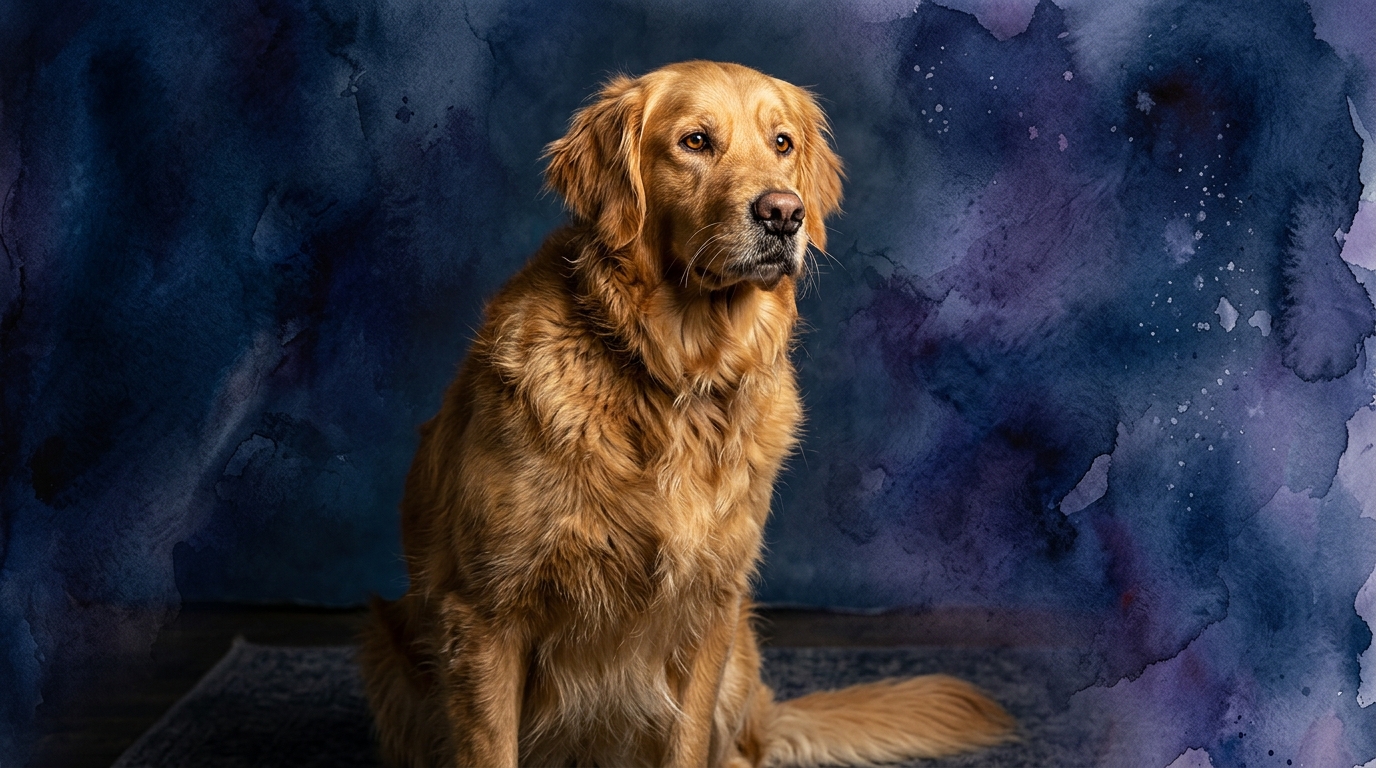
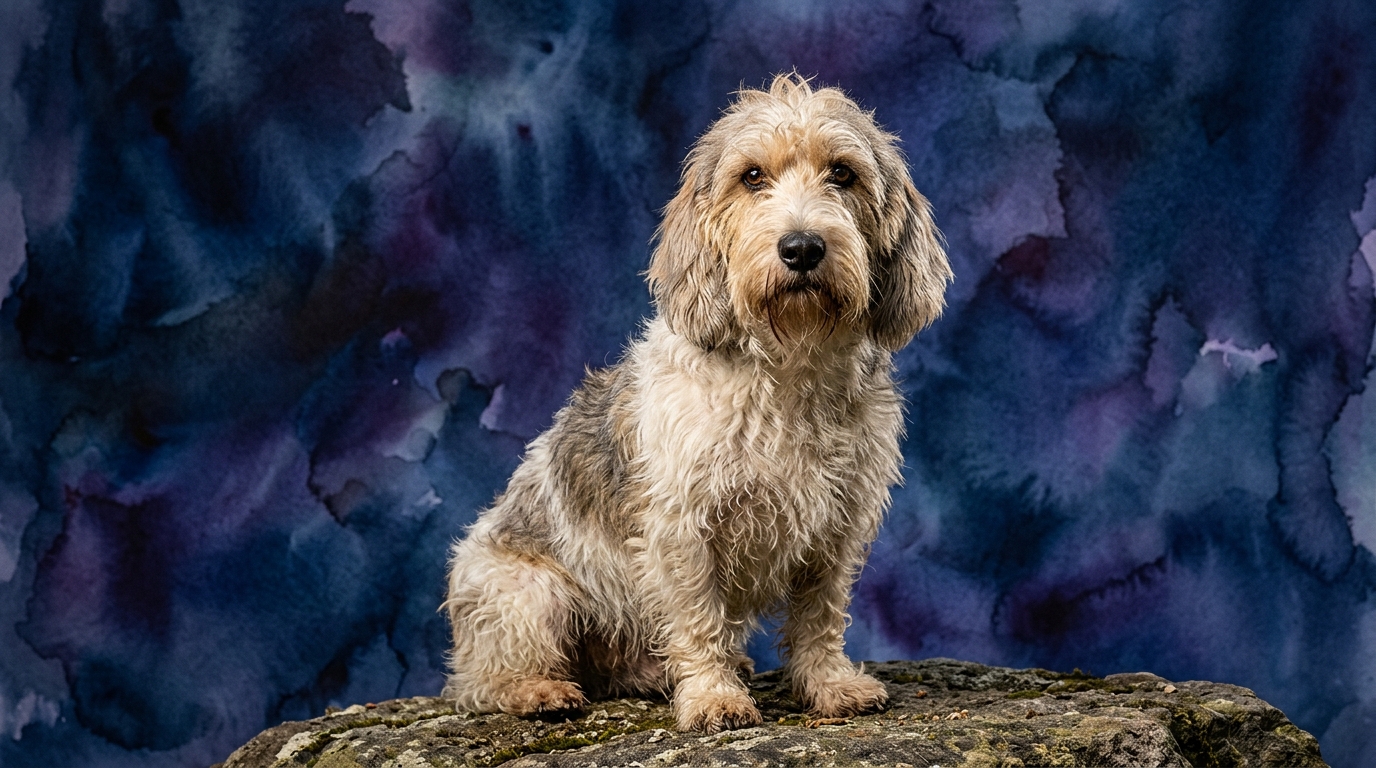
Side-by-Side Cognitive Profiles: Golden Retriever vs. PBGV
The Cosmic Pet Pet IQ Lab evaluates canine cognition across five crucial dimensions: Problem Solving, Training Speed, Social Intelligence, Instinctive Drive, and Memory. These metrics offer a nuanced understanding of how different breeds process information, interact with their environment, and learn from experience, moving beyond simplistic notions of 'smartness.'
The Golden Retriever, a prominent member of the Sporting Group, consistently ranks high in general canine intelligence surveys, notably securing the 4th position in Stanley Coren's widely referenced intelligence rankings. Our lab data reflects this, with the Golden Retriever scoring highly across the board: Problem Solving 4/5, Training Speed 5/5, Social Intelligence 5/5, Instinctive Drive 4/5, and Memory 4/5. These scores paint a picture of a highly adaptable, cooperative, and responsive companion, bred for intricate collaboration with human handlers in retrieving game.
In contrast, the Petit Basset Griffon Vendéen (PBGV), a charming member of the Hound Group, is not featured in Coren's top rankings, which often favor breeds excelling in obedience and working intelligence. Our lab scores for the PBGV are Problem Solving 3/5, Training Speed 3/5, Social Intelligence 3/5, Instinctive Drive 3/5, and Memory 3/5. These ratings do not suggest a lack of intellect, but rather a different kind of intelligence, one honed for independent thought and persistent pursuit of scent over direct human instruction, reflecting their heritage as robust scent hounds from the Vendée region of France.
Golden Retriever's Cognitive Edge
The Golden Retriever's exceptional scores highlight a cognitive profile geared for partnership and complex task execution. Their Problem Solving at 4/5 indicates a strong capacity to understand and navigate novel situations presented by their human companions, whether it's figuring out how to open a child-proof gate or learning the sequence of actions required for a multi-stage retrieve. This adaptability makes them highly versatile in various roles.
With a Training Speed of 5/5, Golden Retrievers demonstrate a remarkable ability to rapidly acquire and retain new commands and behaviors. This isn't just about repetition; it reflects a deep desire to please their handlers and a keen attentiveness to human instruction. They often grasp new concepts in just a few repetitions, making them highly receptive to formal obedience, agility, or service dog training.
Their Social Intelligence, also a perfect 5/5, is a cornerstone of their appeal. Golden Retrievers are exceptionally adept at reading human body language, vocal tones, and emotional states, allowing them to integrate seamlessly into family dynamics. This high social acumen enables them to learn through observation, anticipate intentions, and respond with empathy, fostering profound human-animal bonds and making them intuitive therapy animals or emotional support companions. Their Memory at 4/5 further supports their learning, allowing them to recall a vast repertoire of commands, remember specific people, and navigate familiar environments with ease.
The PBGV's Unique Cognitive Strengths
While the PBGV's scores might appear modest compared to the Golden Retriever, they reflect an intelligence perfectly suited to their historical purpose as independent hunting hounds. Their Instinctive Drive, rated 3/5, is not a weakness but a powerful, self-directed force. This drive manifests as an unwavering focus on scent, an internal motivation to track and pursue, often overriding human directives if a compelling scent is present. Their problem-solving (3/5) is frequently applied to the complex puzzles of the natural world, such as navigating dense underbrush or deciphering confusing scent trails.
The PBGV's Problem Solving, at 3/5, is geared towards independent exploration and persistence in their primary task: following a scent. They excel at figuring out how to bypass obstacles in pursuit of a trail, demonstrating ingenuity in real-world, scent-driven scenarios rather than in abstract, human-designed puzzles. This independent thought process, while sometimes perceived as stubbornness in a domestic setting, is a testament to their self-reliance in the field.
Their Social Intelligence (3/5) means PBGVs are affectionate and form strong bonds with their human 'pack,' but their primary motivation often stems from their own intrinsic drives rather than a constant need for human validation. They are social, enjoying interaction, but possess a spirited independence. Similarly, their Memory (3/5) is effective for recalling important scent information or familiar hunting grounds, but perhaps less focused on remembering every human-initiated command if a more primal instinct takes over.
Training Dynamics: A Tale of Two Motivations
Training a Golden Retriever is often a joyful and rewarding experience due to their high Training Speed (5/5) and Social Intelligence (5/5). They are inherently eager to please, thrive on positive reinforcement, and are highly attentive to their handler's cues. A Golden will typically make eye contact, actively seek to understand what is being asked, and quickly offer the desired behavior for praise or a treat. Their high recall is a prime example of this, as they are generally motivated to return to their human, even in distracting environments, because their focus is primarily on the handler.
Conversely, training a Petit Basset Griffon Vendéen, with a Training Speed of 3/5, requires a different mindset. PBGVs are capable of learning, but their strong Instinctive Drive (3/5) means their motivation is often internal and tied to their senses, particularly their nose. They are less inherently driven to 'please' in the human-centric sense and more inclined to follow their own compelling interests. This means training sessions need to be creative, consistent, and utilize high-value rewards that can compete with the allure of a captivating scent. A PBGV might learn a command perfectly indoors, but outdoors, a fleeting rabbit scent could easily override any learned recall, requiring a robust understanding of their hound nature and often a secure, fenced environment for off-leash exercise.
Lifestyle Compatibility: Active Explorers vs. Cooperative Companions
For owners with an active lifestyle, both breeds can be suitable, but for different reasons. The Golden Retriever excels as a partner in structured activities like long runs, retrieving games, agility, and obedience trials, where their cooperative nature and desire to work alongside their human shine. They thrive on interactive exercise that engages both their body and their keen mind, making them excellent companions for owners who enjoy shared, goal-oriented activities.
The Petit Basset Griffon Vendéen, while also active, aligns with owners who appreciate an independent, spirited companion for adventures centered around exploration and scent. They are tireless hikers and love to follow their nose, making them ideal for owners who enjoy rambling walks in varied terrain or engaging in scent-based dog sports. However, their strong chase drive and independent nature mean they require secure, fenced areas for off-leash activity and often a more patient, hands-off approach to outdoor exploration, allowing them to indulge their natural instincts without constant direction. For truly 'relaxed' owners seeking a low-maintenance companion, neither breed is ideal, but the Golden Retriever's adaptability and lower, self-directed drive may make them a slightly better fit than the perpetually curious and scent-driven PBGV.
The Verdict: Choosing Your Canine Cognition Partner
Selecting a canine companion involves understanding their inherent cognitive makeup and how it aligns with your lifestyle and expectations, ensuring a harmonious and fulfilling partnership for both human and dog.
The Verdict
Opt for a Golden Retriever if you seek a highly cooperative, eager-to-please companion who excels in structured training, thrives on social interaction, and will actively participate in family activities with impressive recall and adaptability.
Consider the Petit Basset Griffon Vendéen if you value an independent, spirited dog with a keen nose, are prepared for more creative and patient training approaches, and appreciate a companion whose joy comes from exploring the world through scent, even if it means a less human-centric focus.
🧠 Find Your Pet's IQ Score
Our Pet IQ Lab assessment covers 25+ tests across 5 cognitive dimensions — personalized to your breed.
Take the Full IQ Test →Frequently Asked Questions
Is the PBGV difficult to train?
PBGVs are not 'difficult' but require a different approach than breeds like Golden Retrievers. Their strong independent hunting drive means training must be highly engaging and consistent, often leveraging high-value rewards to compete with compelling scents and capture their attention.
How do their social intelligence scores impact family life?
The Golden Retriever's high social intelligence means they are generally more attuned to human emotions and cues, making them highly adaptable and responsive family members who seek to be involved. PBGVs are affectionate with their families but maintain a more independent spirit, often prioritizing their own interests over constant human direction, though still forming strong bonds.
Can a PBGV participate in dog sports?
Absolutely, PBGVs can excel in dog sports, particularly those that engage their natural instincts like scent work, tracking, or earthdog trials, where their keen nose and persistence are assets. While agility and obedience are possible, they may require more patience and creative motivation than a Golden Retriever due to their independent problem-solving approach and strong drive to follow scent.