
Side-by-Side IQ Profile: Golden Retriever vs. Samoyed
**Golden Retriever:** Ranked #4 by Coren, indicating a strong capacity for understanding and obeying commands. Their problem-solving score of 4/5 suggests they are adept at navigating complex tasks and adapting to new situations, often figuring out solutions independently. Training speed is a remarkable 5/5, meaning they grasp new commands and routines with exceptional swiftness, making them highly receptive students. Social intelligence, also 5/5, highlights their superb ability to read human cues and interact appropriately within social structures, fostering strong bonds. Instinctive drive, at 4/5, reflects their strong natural inclination for tasks like retrieving, often showing persistence and focus in goal-oriented activities. Their memory, a solid 4/5, ensures they retain learned behaviors and past experiences effectively, building on previous lessons.
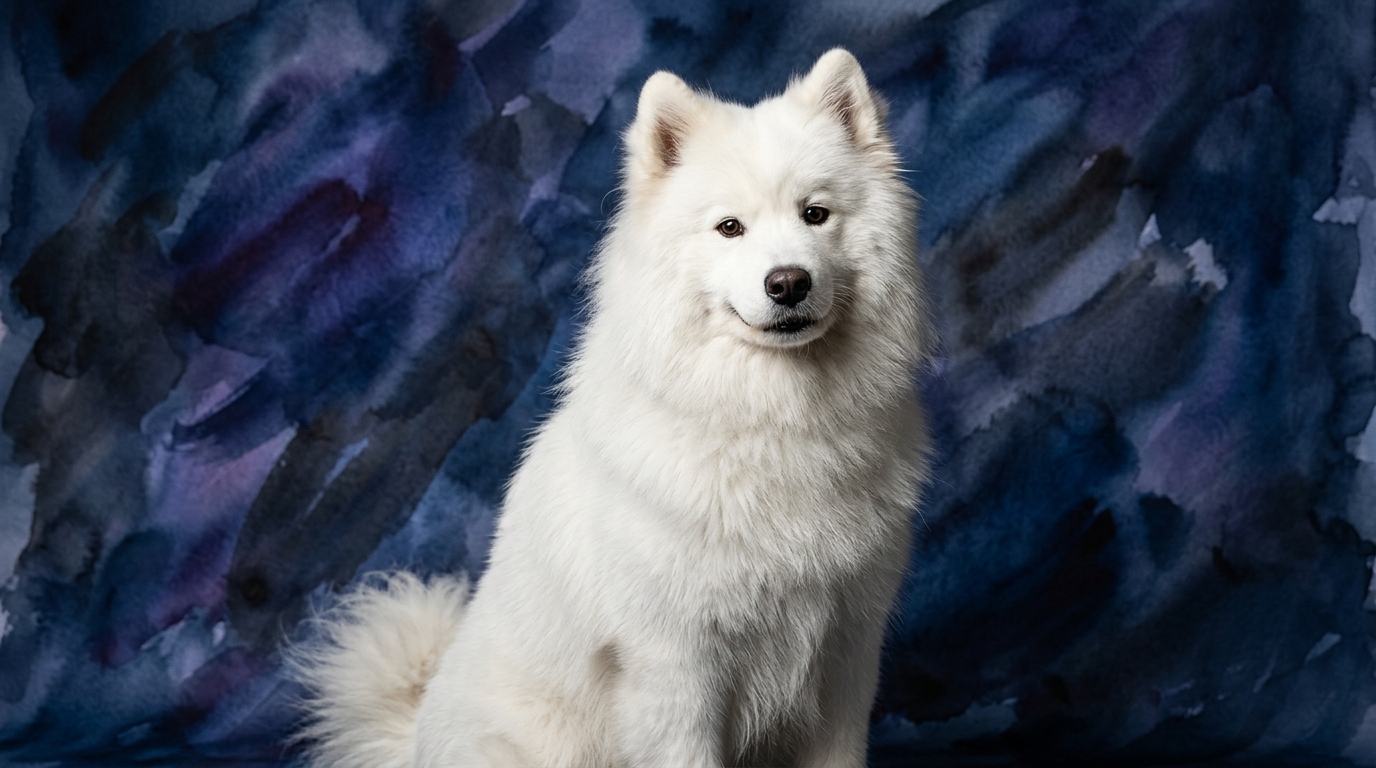
**Samoyed:** Holding a Coren rank of #33, the Samoyed demonstrates a respectable but more independent cognitive profile compared to the Golden. Their problem-solving ability is rated 3/5, indicating they can solve moderate challenges but might require more encouragement or time to process complex scenarios. A training speed of 3/5 suggests they learn at a steady pace, but may not show the rapid acquisition of commands seen in breeds bred for immediate obedience. Social intelligence, matching the Golden at 5/5, underscores their excellent capacity for harmonious interaction with humans and other animals, often displaying a gentle and amiable disposition. Their instinctive drive, 4/5, reflects their heritage as working dogs, possessing a strong pull to perform physical tasks, particularly those involving endurance. Memory, at 3/5, means they retain information but might need more consistent reinforcement than breeds with higher memory scores to solidify learning.
Where the Golden Retriever Wins Cognitively
The Golden Retriever's cognitive edge is most apparent in its problem-solving and training speed. With a 4/5 in problem-solving, they demonstrate a superior ability to figure out novel situations and puzzles, often applying learned concepts to new contexts with minimal guidance. This aptitude is a hallmark of their Sporting group heritage, where quick thinking and adaptive strategies are crucial for successful retrieves in varied environments.
Their perfect 5/5 training speed is a significant differentiator, allowing them to absorb and execute new commands with remarkable efficiency. This rapid learning curve means Golden Retrievers can master a wide repertoire of behaviors and respond reliably to complex instructions in shorter training periods, making them exceptionally pliable partners in various activities from obedience trials to assistance work. Their 4/5 memory further solidifies this advantage, ensuring learned skills are not easily forgotten.
Where the Samoyed Wins Cognitively
While the Samoyed's Coren rank is lower, their cognitive strengths lie in specific areas shaped by their working heritage. Their social intelligence, a perfect 5/5, stands out as a key advantage, indicating an exceptional capacity for understanding and engaging with both human and canine social dynamics. This strong social acumen is crucial for a breed historically working in close-knit groups with people and other dogs, fostering deep bonds and cooperative behavior.
Furthermore, their instinctive drive, also 4/5, is geared towards endurance and purpose-driven tasks, reflecting their history of pulling sleds over vast distances. This drive, while not always expressed as immediate obedience, translates into a profound persistence and resilience when engaged in physically demanding or repetitive activities. This tenacity allows them to sustain effort and focus on long-term goals, distinguishing them in endurance-based tasks rather than rapid-fire command execution.
Which Is Easier to Train and Why
Based on their IQ profiles, the Golden Retriever is demonstrably easier to train due to its superior training speed (5/5) and problem-solving ability (4/5). Golden Retrievers are bred to work closely with humans, responding readily to commands and exhibiting a strong desire to please, which translates into rapid acquisition of new behaviors. Their quick grasp of concepts means fewer repetitions are needed for a command to become ingrained, and they are adept at generalizing learned behaviors to new environments.
In contrast, the Samoyed, with a training speed of 3/5 and problem-solving at 3/5, requires a more patient and consistent approach. Samoyeds, while socially intelligent, possess a more independent and sometimes stubborn streak, characteristic of many working breeds developed to make decisions without constant human oversight. Their training often involves more motivation and creative engagement to overcome their inherent self-reliance, making the process longer and requiring more dedication from the owner.
Which Suits Active Owners vs. Relaxed Owners
For active owners seeking a highly engaged and cooperative companion, the Golden Retriever is an exceptional match. Their high training speed and problem-solving scores mean they thrive on mental stimulation and enjoy participating in a wide array of activities like agility, obedience, and retrieving games. They possess a robust instinctive drive (4/5) for purposeful activity, aligning perfectly with owners who enjoy hiking, running, or dog sports, and they are eager to learn new tricks and tasks. Relaxed owners, however, might find the Golden Retriever's energy and constant need for interaction and mental engagement demanding if not adequately met.
The Samoyed, while also possessing a strong instinctive drive (4/5) for endurance, suits active owners who appreciate a more independent yet amiable partner, particularly for activities like long-distance walks, hiking in cooler climates, or even sledding. Their intelligence is geared towards sustained effort rather than rapid obedience, meaning they excel when given a job that aligns with their natural pulling instincts. For relaxed owners, the Samoyed's significant exercise requirements and potential for independent decision-making might pose a challenge. While they are socially intelligent (5/5) and enjoy companionship, their need for physical exertion is substantial, and a lack of appropriate outlets can lead to boredom and potentially destructive behaviors.
The Verdict
Choose a Golden Retriever if you desire a highly trainable, eager-to-please companion who excels in rapid learning and problem-solving, thriving on consistent engagement and a variety of activities. They are ideal for owners seeking a cooperative partner for dog sports, assistance work, or a family dog that quickly adapts to routines.
Opt for a Samoyed if you are an active owner prepared for a dog with a strong independent streak, valuing endurance and a cheerful, socially adept companion for long outdoor adventures. They suit those who appreciate a unique blend of affectionate loyalty and a resilient, purpose-driven spirit.
🧠 Find Your Pet's IQ Score
Our Pet IQ Lab assessment covers 25+ tests across 5 cognitive dimensions — personalized to your breed.
Take the Full IQ Test →Frequently Asked Questions
Are Golden Retrievers better at learning complex tricks than Samoyeds?
Yes, Golden Retrievers generally excel at learning complex tricks more quickly than Samoyeds due to their superior training speed (5/5) and problem-solving ability (4/5). Their strong desire to please and focus on human direction allows them to grasp intricate sequences and commands with fewer repetitions. Samoyeds (training speed 3/5) can learn tricks, but may require more patience and motivation.
Which breed is more adaptable to new environments or routines?
The Golden Retriever tends to be more adaptable to new environments and routines, largely due to their higher problem-solving score (4/5) and strong social intelligence (5/5). They process new situations quickly and are generally more comfortable adjusting to changes when guided by their human companions. Samoyeds are adaptable but might take a bit longer to settle into novel surroundings or schedules, reflecting their more independent nature.
Do both breeds require similar amounts of mental stimulation?
While both breeds benefit from mental stimulation, the type and intensity can differ. Golden Retrievers thrive on varied, interactive mental challenges that involve learning new commands or solving puzzles directly with their owner. Samoyeds also need mental engagement, but their stimulation often comes from having a 'job' or engaging in activities that allow for more independent decision-making and endurance, rather than constant directed obedience.