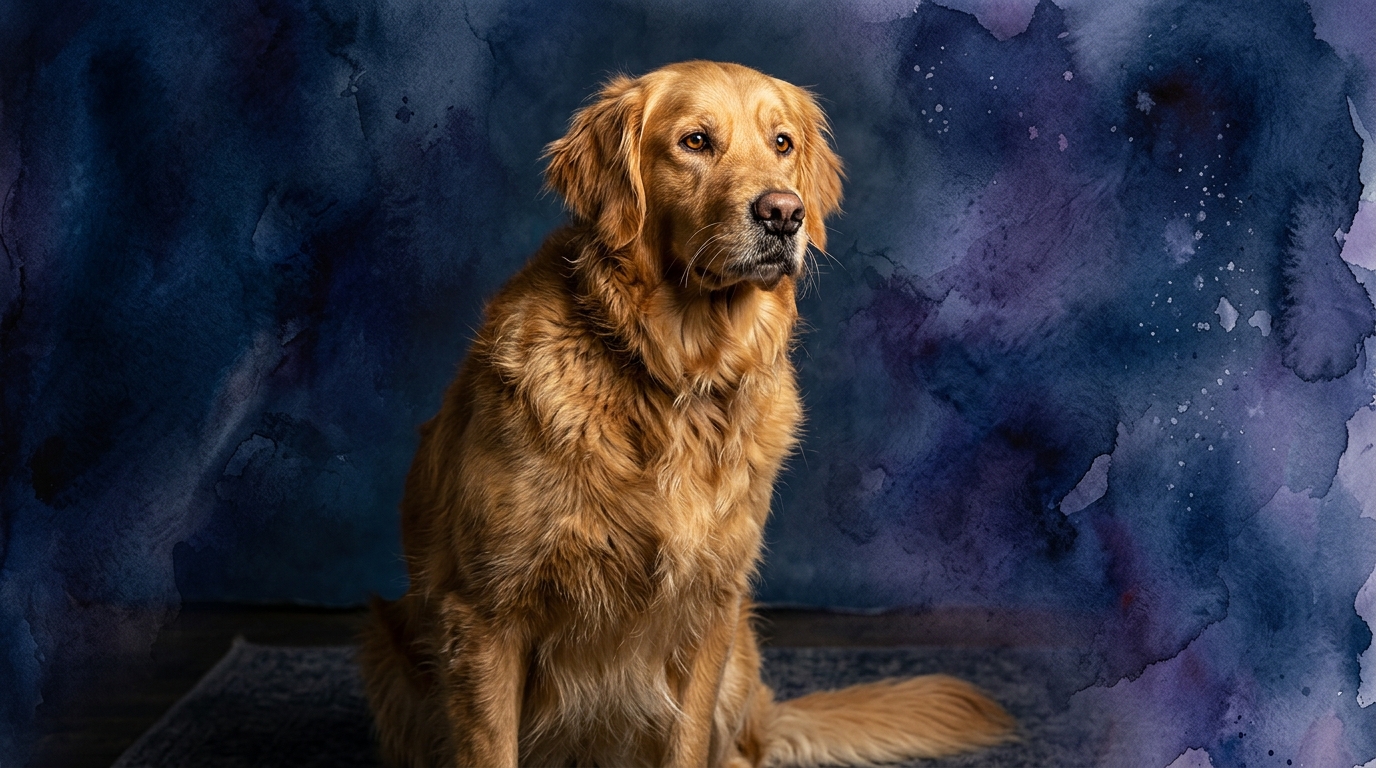

Side-by-Side IQ Profile: Golden Retriever vs. Tibetan Terrier
**Golden Retriever (Sporting Group, Coren Rank #4):** These dogs demonstrate robust cognitive abilities. Their **Problem Solving (4/5)** is characterized by a strong aptitude for understanding sequential tasks and adapting strategies to new challenges. **Training Speed (5/5)** is exceptionally high, reflecting their eagerness and rapid grasp of new commands and routines. **Social Intelligence (5/5)** is a hallmark, showing a deep attunement to human emotional states and cues, fostering strong cooperative bonds. Their **Instinctive Drive (4/5)** is geared towards retrieving and working alongside humans, providing a strong internal motivation for engagement. Finally, their **Memory (4/5)** allows for effective retention of complex learned behaviors and environmental information.
**Tibetan Terrier (Non-Sporting Group, Coren Rank #63):** Hailing from a different lineage, the Tibetan Terrier presents a distinct cognitive profile. Their **Problem Solving (3/5)** is capable, but often manifests as independent exploration rather than direct human-guided task completion. **Training Speed (3/5)** is moderate; they learn, but might require more varied methods and patience due to their self-reliant nature. **Social Intelligence (3/5)** sees them affectionate and engaged with their family, yet less overtly focused on interpreting every human directive, preferring a partnership of equals. Their **Instinctive Drive (3/5)** is moderate, leaning towards companionship and watchful guardianship rather than intense task orientation. Their **Memory (3/5)** is solid for routines and family members, though perhaps less geared towards rapid recall of extensive command sets.
Where the Golden Retriever Excels Cognitively
The Golden Retriever's cognitive strengths shine in areas demanding cooperative effort and structured learning. Their superior **Problem Solving (4/5)** allows them to quickly grasp multi-step sequences, like navigating complex agility courses or understanding the mechanics of a puzzle toy with minimal guidance. The exceptional **Training Speed (5/5)** means they absorb new commands, hand signals, and routines with remarkable efficiency, often generalizing learned behaviors to novel situations rapidly. Their profound **Social Intelligence (5/5)** enables them to interpret subtle human body language, vocal inflections, and emotional states, fostering an almost telepathic understanding in a working partnership. This high social attunement, combined with a strong **Instinctive Drive (4/5)** for retrieving and pleasing, translates into sustained focus and motivation for tasks initiated by their human companions. Furthermore, their **Memory (4/5)** ensures that once a behavior or task is learned, it is retained consistently, making them reliable partners in repeated activities.
Where the Tibetan Terrier Shows Unique Cognitive Strengths
The Tibetan Terrier’s cognitive profile offers unique advantages, particularly in situations calling for self-reliance and nuanced environmental awareness. Their **Problem Solving (3/5)**, while not as overtly cooperative, often manifests as independent resourcefulness; they might figure out how to access a desired item or navigate a tricky space through persistent, self-directed exploration. Their moderate **Social Intelligence (3/5)** means they are less prone to anxiety when left alone, demonstrating a calm self-sufficiency. This independence allows them to adapt well to varied environments without constant human reassurance or direction. Their historical role as watchdogs and companions in challenging terrains has likely honed their **Instinctive Drive (3/5)** for observing surroundings and reacting appropriately, often with a keen spatial awareness, allowing them to navigate complex indoor or outdoor landscapes with confidence. While their **Memory (3/5)** for extensive command sets may be moderate, they often exhibit a precise memory for the routines and preferred interactions within their immediate family unit, forming deep, personalized bonds rather than broad, task-oriented partnerships.
Training Dynamics: Which Breed is Easier to Train?
When considering ease of training, the Golden Retriever holds a distinct advantage. Their **Training Speed (5/5)** is a testament to their inherent desire to learn and engage with humans, allowing them to pick up new commands and behaviors in fewer repetitions. This is strongly supported by their exceptional **Social Intelligence (5/5)**, which makes them highly responsive to human cues and eager to please, translating into a natural inclination to cooperate during training sessions. Real behavioral differences include their consistent eye contact, readiness to follow instructions, and strong motivation for positive reinforcement, whether it’s a treat, praise, or a game of fetch. In contrast, the Tibetan Terrier, with a **Training Speed (3/5)** and **Social Intelligence (3/5)**, requires a different approach. While capable of learning, their independent nature means they may not always prioritize human directives over their own curiosity or comfort. They can be selective in their engagement, sometimes requiring more patience, varied training methods, and a strong emphasis on making learning fun and rewarding to maintain their interest. They might exhibit "selective hearing" if a task doesn't immediately appeal to them, highlighting their self-reliant cognitive style.
Matching Breeds to Lifestyles: Active vs. Relaxed Owners
The choice between these breeds often aligns with an owner's lifestyle and their preferred level of engagement in canine activities. For **active owners** who thrive on structured activities, dog sports, and consistent outdoor adventures, the Golden Retriever is an excellent match. Their high **Instinctive Drive (4/5)**, combined with top-tier **Problem Solving (4/5)** and **Social Intelligence (5/5)**, means they flourish with consistent mental and physical challenges. They excel in obedience, agility, retrieving, and even service roles, eagerly partnering with their humans in demanding tasks that require sustained focus and cooperation. They need an outlet for their considerable energy and cognitive capacity.
For **relaxed owners** who appreciate a companion with a bit more self-direction and a less intense demand for constant structured interaction, the Tibetan Terrier is often a better fit. While they certainly enjoy walks and playtime, their moderate **Instinctive Drive (3/5)** and more independent **Social Intelligence (3/5)** mean they are content with varied activities that don't always require intense, regimented partnership. They enjoy exploring, observing, and engaging on their own terms, making them suitable for owners who value a curious, adaptable companion that can entertain itself and doesn't always need to be "working." They still require regular exercise and mental stimulation, but their cognitive profile allows for a more flexible, less demanding daily routine.
The Verdict
Opt for a Golden Retriever if you seek a highly cooperative, task-oriented companion eager for structured learning, intense partnership in activities like dog sports, and a deep, responsive bond.
Select a Tibetan Terrier if you appreciate an independent thinker, a curious explorer, and a loyal companion that engages on its own terms, thriving with varied, less regimented interactions and a confident self-sufficiency.
🧠 Find Your Pet's IQ Score
Our Pet IQ Lab assessment covers 25+ tests across 5 cognitive dimensions — personalized to your breed.
Take the Full IQ Test →Frequently Asked Questions
Do Golden Retrievers need constant mental stimulation?
Yes, Golden Retrievers thrive with consistent mental engagement. Their high problem-solving ability and strong instinctive drive mean they benefit from puzzle toys, training sessions, and activities that challenge their minds regularly to prevent boredom.
Are Tibetan Terriers difficult to train because of their independence?
Tibetan Terriers are not necessarily difficult, but they require a training approach that respects their independent nature. Patience, positive reinforcement, and varied, engaging sessions work best, as they may not respond to repetitive drills with the same enthusiasm as more cooperative breeds.
How do these breeds differ in their social interactions with strangers?
Golden Retrievers, with their high social intelligence, are generally outgoing and friendly towards strangers, readily seeking interaction. Tibetan Terriers, while affectionate with their family, tend to be more reserved or observant with new people, often taking time to assess before engaging warmly.