
Side-by-Side IQ Profile: Golden Retriever vs. Toy Poodle
The Cosmic Pet Pet IQ Lab employs a multi-dimensional approach to assess canine cognition, moving beyond simple obedience to reveal a richer picture of a dog's mental capabilities. For the Golden Retriever, a Sporting group member ranking #4 on the Coren scale, we observe a balanced yet robust cognitive profile. Their problem-solving score sits at a solid 4/5, indicating an aptitude for navigating complex situations and learning from experience. Training speed is a standout at 5/5, suggesting a remarkable eagerness and ability to grasp new commands swiftly. Social intelligence, crucial for their roles as companions and service dogs, also rates a perfect 5/5, reflecting their profound understanding of human cues and emotional states. Instictive drive, linked to their retrieving heritage, scores 4/5, showcasing their innate motivation for specific tasks. Finally, their memory is strong at 4/5, allowing them to recall learned behaviors and routines effectively.
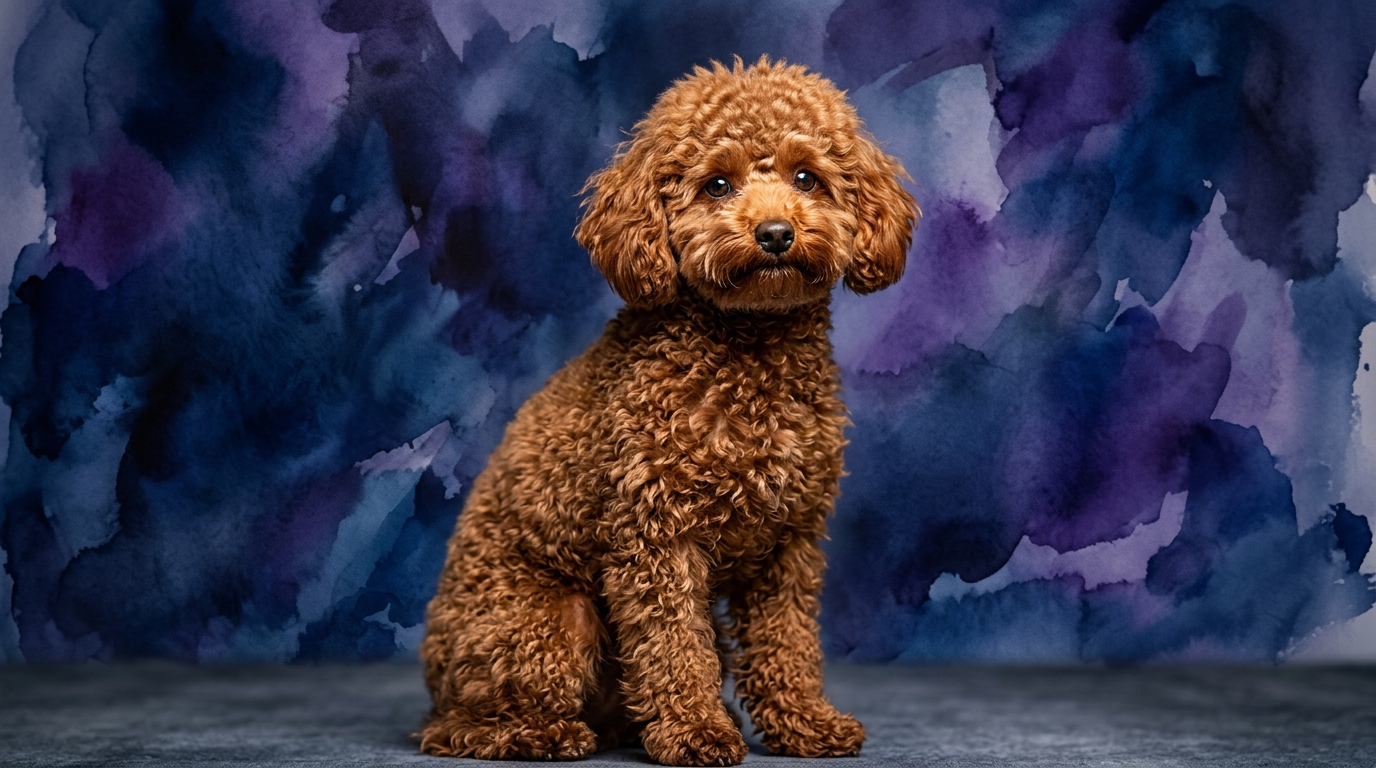
In contrast, the Toy Poodle, a member of the Toy group with an impressive #2 Coren rank, presents a cognitive profile skewed towards intellectual agility. Their problem-solving ability is exceptional, earning a 5/5, demonstrating a superior capacity for abstract thought and creative solutions to novel challenges. Like the Golden Retriever, their training speed is an outstanding 5/5, highlighting their quick uptake of instructions and eagerness to please. However, their social intelligence registers at 3/5; while capable of forming strong bonds, they may not possess the same intuitive grasp of nuanced human emotions or group dynamics as a Golden Retriever. Instinctive drive is also lower at 3/5, meaning their motivation is less rooted in primal working tasks and more in engagement with their human. A standout trait for the Toy Poodle is their memory, which achieves a perfect 5/5, suggesting an extraordinary ability to retain information over long periods, making them adept at complex sequences and long-term learning.
Where the Golden Retriever Wins Cognitively
The Golden Retriever's primary cognitive advantage lies in its exceptional social intelligence (5/5) and robust instinctive drive (4/5). This combination makes them unparalleled partners in cooperative tasks. Their deep understanding of human intentions and emotional states allows them to anticipate needs, respond appropriately to subtle cues, and form profoundly empathetic bonds. This isn't merely about obedience; it's about a mutual understanding that underpins their success as therapy dogs, service animals, and beloved family members who seem to 'just know.' Their instinctive drive means they possess an inherent desire to work alongside humans, specifically in retrieving and carrying tasks, making them naturally inclined to fulfill roles that require collaboration and purpose-driven activity. While a Toy Poodle might learn to fetch, a Golden Retriever often finds deep satisfaction and cognitive engagement in the act itself, driven by centuries of selective breeding for that purpose.
Where the Toy Poodle Wins Cognitively
The Toy Poodle truly shines in areas of abstract problem-solving (5/5) and long-term memory (5/5). Their capacity to not just learn commands but to genuinely understand the underlying principles of a task is remarkable. This means they can often figure out novel puzzles, manipulate objects to achieve a goal, or even devise their own solutions to perceived challenges, sometimes to their owners' amusement or chagrin. Their superior memory allows them to retain vast repertoires of tricks, complex routines, and intricate patterns of behavior with impressive longevity. This cognitive strength makes them exceptional candidates for advanced obedience, agility, and even dog sports that require intricate sequencing and recall, where their ability to remember long strings of commands gives them a distinct edge over many other breeds. They aren't just performing; they are often actively processing and recalling information with precision.
Which Is Easier to Train and Why?
Both breeds boast a training speed of 5/5, indicating they are exceptionally quick learners when it comes to formal commands. However, the 'ease' of training can differ based on the specific goals. The Golden Retriever's high social intelligence and instinctive drive make them inherently eager to please and cooperative. They thrive on positive reinforcement and readily engage in activities that involve working alongside their human, such as retrieving, tracking, or obedience. Their strong pack mentality means they are often highly motivated by praise and connection, making them forgiving of minor training errors and generally amenable to instruction. Their moderate problem-solving (4/5) means they grasp concepts quickly without overthinking or getting easily frustrated by repetitive drills.
The Toy Poodle's superior problem-solving and memory can make them appear 'smarter' in a traditional sense, allowing them to master complex sequences and intricate tricks with incredible speed. However, their lower social intelligence (3/5) and instinctive drive (3/5) mean their motivation might be more internally driven or dependent on consistent, novel engagement. They might get bored with repetitive tasks more quickly or require a trainer who can consistently challenge their intellect with new puzzles and advanced learning. While they learn quickly, their independence and intellectual curiosity might lead them to 'outsmart' their owners if training isn't consistent, stimulating, and engaging. They might also be more sensitive to perceived inconsistencies in training, given their sharp memory for details.
Which Suits Active Owners vs. Relaxed Owners?
For active owners seeking a dog to join them in outdoor adventures, cooperative sports, or even service work, the Golden Retriever is an excellent match. Their robust instinctive drive and social intelligence make them eager partners for hiking, swimming, retrieving games, or long runs. They thrive on having a 'job' and being an integral part of family activities, requiring both physical exercise and mental engagement that often involves human interaction and purpose. Their moderate problem-solving means they are adaptable but generally happy to follow a lead, making them ideal for owners who want a diligent and enthusiastic companion for shared experiences.
Relaxed owners, or those who prefer mental stimulation over purely physical exertion, might find the Toy Poodle a more suitable companion, provided they are prepared to engage their dog's formidable intellect. While they certainly enjoy walks and play, their lower instinctive drive means they aren't typically driven by the same intense need for strenuous outdoor activities as a Golden. Their exceptional problem-solving and memory mean they excel at indoor puzzle games, learning intricate tricks, or participating in dog sports like agility or obedience that are more about precision and mental agility than brute endurance. An owner who enjoys teaching new commands, setting up brain games, and providing consistent, stimulating mental challenges will find a Toy Poodle a remarkably rewarding and engaging companion, even if their lifestyle is less focused on high-octane outdoor pursuits.
The Verdict
Choose a Golden Retriever if you seek a highly cooperative, socially attuned companion for family activities, service work, or outdoor adventures, valuing their empathetic nature and eagerness to please.
Opt for a Toy Poodle if you appreciate a keenly intellectual companion capable of mastering complex tasks and puzzles, thriving on mental challenges, and offering a long-term memory for intricate learning.
🧠 Find Your Pet's IQ Score
Our Pet IQ Lab assessment covers 25+ tests across 5 cognitive dimensions — personalized to your breed.
Take the Full IQ Test →Frequently Asked Questions
Do Golden Retrievers or Toy Poodles learn commands faster?
Both breeds share an impressive training speed of 5/5 according to the Pet IQ Lab, indicating both can grasp new commands exceptionally quickly. Their motivation and preferred training styles might differ, but in terms of pure learning velocity, they are equally adept.
Which breed is better for complex problem-solving?
The Toy Poodle holds an edge in problem-solving, scoring 5/5 compared to the Golden Retriever's 4/5. This means Toy Poodles often demonstrate a superior capacity for abstract thought, figuring out novel situations, and devising creative solutions independently.
How do their social skills differ?
Golden Retrievers excel in social intelligence with a 5/5, showing a deep understanding of human emotions and group dynamics, making them highly empathetic. Toy Poodles score 3/5, capable of strong bonds but perhaps less intuitively attuned to nuanced social cues than their Golden counterparts.