
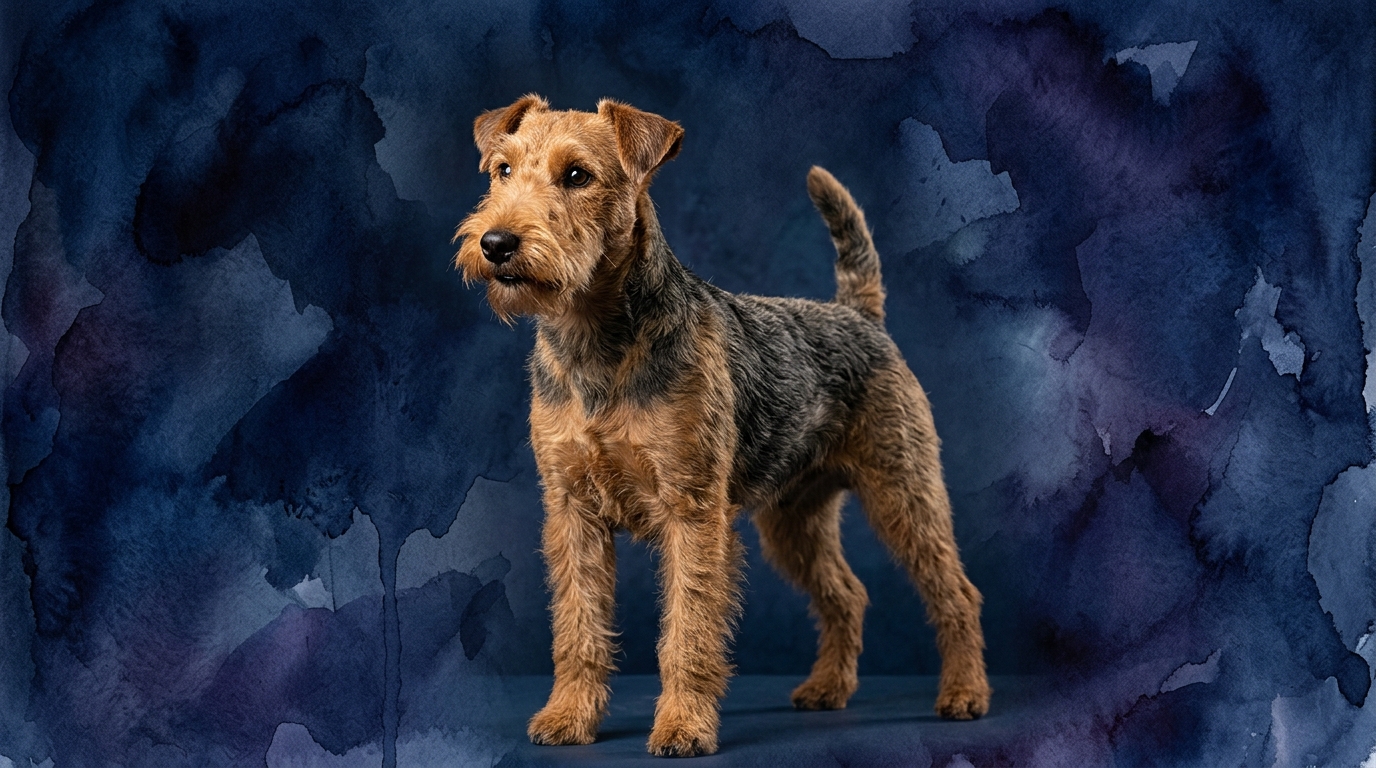
Side-by-Side IQ Profile: Golden Retriever vs. Welsh Terrier
The Golden Retriever, a distinguished member of the Sporting group, holds the impressive #4 spot in Stanley Coren's ranking for obedience and working intelligence, a testament to its profound capacity for understanding and executing human commands with consistency. Our Pet IQ Lab assessment gives them a strong 4/5 for Problem Solving, indicating their adeptness at navigating novel challenges with a clear, goal-oriented approach, often seeking human collaboration to achieve a solution. Their Training Speed is exceptional at 5/5, reflecting a remarkable eagerness and ability to rapidly assimilate new instructions and routines, making them highly responsive to positive reinforcement. Social Intelligence also scores a perfect 5/5, highlighting their profound attunement to human emotional states and cues, fostering deep cooperative bonds and an intuitive understanding of social dynamics within a family unit. An Instinctive Drive of 4/5 underscores their strong natural retrieving instincts, which, while potent, are typically channeled into constructive tasks and play, rarely becoming overwhelming. Finally, their Memory is rated 4/5, ensuring they retain learned behaviors, complex sequences, and positive associations effectively over extended periods, contributing to their reliability.
In contrast, the Welsh Terrier, a spirited representative of the Terrier group, is not specifically ranked by Coren, suggesting its intelligence manifests differently than pure obedience and often prioritizes independent action. Our Pet IQ Lab data assigns them a 3/5 for Problem Solving, indicating they are capable of independent thought and finding solutions, often through persistent exploration and trial-and-error rather than seeking immediate human direction. Their Training Speed is moderate at 3/5, meaning they require consistent, engaging methods, often involving variety and high-value rewards, as they can be less inclined to rapid, repetitive learning if not sufficiently motivated. Social Intelligence sits at 3/5; while affectionate and loyal, their interactions often reflect a more self-assured, on-their-own-terms engagement, rather than a constant desire for cooperative interaction or a need to always please. An Instinctive Drive of 3/5 speaks to their inherent terrier traits like digging, chasing, and a strong prey drive, which can sometimes override immediate human commands, demanding careful management and appropriate outlets. Their Memory, rated 3/5, is solid for retaining information, but their independent streak might lead to 'selective' recall or application of learned behaviors if a compelling instinctual alternative arises, requiring robust proofing in training.
Where the Golden Retriever Wins Cognitively
The Golden Retriever's cognitive strengths shine particularly bright in domains requiring cooperation, nuanced social understanding, and the rapid acquisition of complex, multi-step tasks. Their 5/5 Social Intelligence means they are not just responding to commands, but actively interpreting human intentions and emotional states, making them exceptional partners in activities like service work, therapy roles, or complex obedience trials where subtle cues and a strong partnership are paramount. This deep understanding allows them to adapt their behavior to human needs, offering comfort or assistance proactively. Their superior Training Speed (5/5) allows them to grasp new concepts and sequences with minimal repetition, whether it's learning the names of multiple objects, mastering intricate agility courses with precision, or performing a chain of behaviors to achieve a specific outcome. This breed excels at tasks demanding sustained focus on a human-directed goal, often demonstrating a proactive desire to please and a remarkable capacity for anticipating the next step in a routine. For instance, a Golden Retriever can be taught to retrieve a specific item from a cluttered room, not just based on scent, but by understanding a verbal request and processing visual information, showcasing their integrated problem-solving, memory, and cooperative skills in a truly impressive manner.
Where the Welsh Terrier Wins Cognitively
The Welsh Terrier's cognitive prowess, while different in its manifestation, is equally impressive, particularly in scenarios demanding independent thought, tenacity, and acute environmental awareness. Their 3/5 Problem Solving, though lower than the Golden's in a collaborative context, manifests as a clever, self-reliant approach to challenges, often involving creative resourcefulness and persistent investigation rather than waiting for human instruction. This breed excels in situations where a dog needs to make autonomous decisions, such as navigating a complex scent trail through varied and challenging terrain, or figuring out how to access a hidden toy using trial and error with remarkable persistence. Their strong instinctive drives, rated 3/5, are not merely impulses but fuel a persistent, focused determination, allowing them to overcome obstacles in pursuit of a perceived 'prey' or goal with singular dedication. This terrier grit translates into exceptional resilience and an unyielding spirit when faced with puzzles or tasks that require sustained effort and a certain level of independent judgment, making them formidable at tasks like barn hunt or earthdog trials, where their innate terrier skills of tracking, digging, and flushing are fully utilized and celebrated. They possess a unique ability to assess their surroundings and act decisively without constant human intervention.
Which is Easier to Train and Why
When comparing ease of training, the Golden Retriever presents a distinct advantage, primarily due to its exceptional Training Speed (5/5) and high Social Intelligence (5/5). Goldens possess an intrinsic desire to cooperate and please their human companions, making them highly receptive to positive reinforcement and quick to form strong associations between commands and actions. Their inherent eagerness means less repetition is typically needed to solidify new behaviors, and they often generalize learned skills more readily across different environments and distractions. Real behavioral differences include their tendency to maintain eye contact, seek interaction, and readily offer attention, all of which significantly streamline the training process and make them highly rewarding partners. In contrast, the Welsh Terrier, with its 3/5 Training Speed and 3/5 Social Intelligence, requires a more patient, creative, and consistent approach. Their independent spirit and strong instinctive drives (3/5), particularly a pronounced prey drive and digging instinct, can sometimes make them appear less 'trainable' in a traditional obedience sense, as their focus is often self-directed. A Welsh Terrier might find the enticing scent of a squirrel or the thrill of a digging opportunity far more compelling than a 'sit' command, demanding that trainers work harder to maintain focus, offer high-value rewards, and make training sessions exceptionally engaging and unpredictable. While they are capable learners, their inclination for self-directed action means owners must invest more effort in proofing commands in distracting environments and ensuring motivation consistently outweighs environmental temptations.
Which Suits Active Owners vs. Relaxed Owners
The suitability for active versus relaxed owners also reveals significant differences between these two breeds, stemming from their inherent energy and cognitive needs. The Golden Retriever, while a Sporting dog, is remarkably adaptable to various household dynamics. They thrive on activity, enjoying long walks, retrieving games, swimming, and mental challenges like puzzle toys, making them excellent companions for active owners who enjoy outdoor adventures and engaging their dog in purposeful activities. However, their high social intelligence and deep desire for companionship also mean they are content to settle down for relaxed family time, enjoying quiet moments indoors, provided their daily needs for physical exercise and mental engagement are consistently met. They are generally not 'hyper' dogs needing constant, frantic activity, but rather enjoy purposeful interaction and a balanced routine. The Welsh Terrier, conversely, leans more definitively towards active owners who understand and can channel their tenacious terrier energy and problem-solving drive. Their instinctive drives necessitate regular, vigorous exercise and mental stimulation that taps into their breed-specific traits, such as structured play involving chasing, digging, or complex scent games. A purely relaxed, sedentary lifestyle without consistent outlets for their energy and independent spirit can quickly lead to frustration, boredom, and potentially destructive behaviors like excessive digging or chewing. They are not content to be couch potatoes without dedicated engagement; they need owners prepared to provide consistent, engaging activities that satisfy their curious, spirited, and often physically demanding nature.
The Verdict
For owners seeking a highly cooperative companion, eager to learn complex tasks, and deeply integrated into family life, excelling in roles requiring consistent social interaction and rapid skill acquisition, the Golden Retriever is an ideal match.
For those who appreciate an independent, spirited companion capable of clever, self-directed problem-solving, and are prepared to engage with a dog that thrives on specific, challenging activities channeling its tenacious terrier nature, the Welsh Terrier will be a rewarding choice.
🧠 Find Your Pet's IQ Score
Our Pet IQ Lab assessment covers 25+ tests across 5 cognitive dimensions — personalized to your breed.
Take the Full IQ Test →Frequently Asked Questions
Is the Coren rank truly indicative of a dog's intelligence?
Coren's ranking primarily assesses 'obedience and working intelligence,' reflecting a dog's ability to learn and follow human commands. It doesn't fully capture adaptive intelligence, problem-solving without human cues, or unique breed-specific cognitive strengths like those seen in terriers, which often prioritize independent thought.
How does 'instinctive drive' impact a dog's daily life?
Instinctive drive dictates a dog's natural predispositions, such as retrieving, herding, or hunting. A higher drive means the dog will be more motivated by these natural behaviors, requiring owners to provide appropriate outlets or manage them through consistent training to prevent unwanted actions.
Can a Welsh Terrier learn complex tricks like a Golden Retriever?
A Welsh Terrier can certainly learn complex tricks, but it may take more patience and creative motivation compared to a Golden Retriever. Their independent nature means they might require more proofing in various environments and might not perform with the same eager-to-please consistency as a Golden.