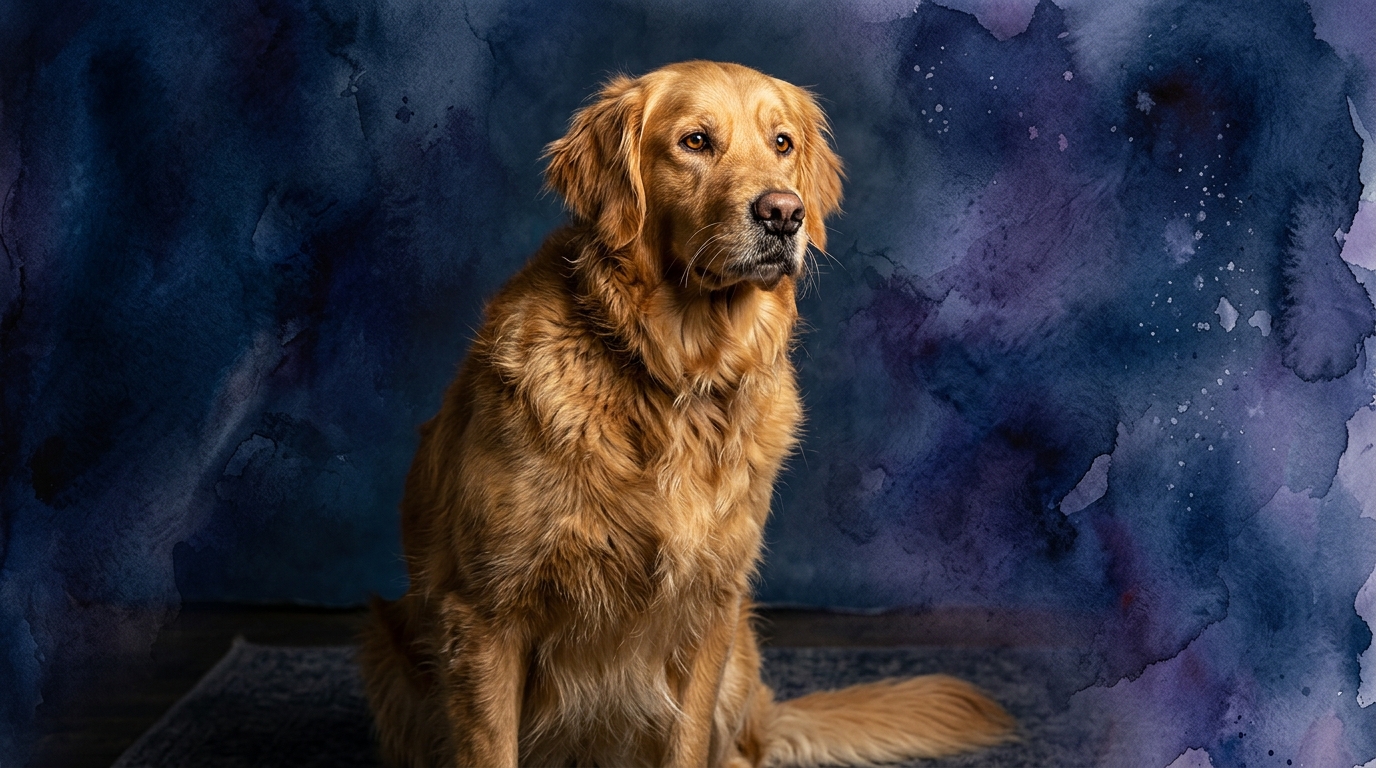

Side-by-Side Cognitive Profile: Golden Retriever vs. Yorkshire Terrier
The Cosmic Pet Pet IQ Lab provides a comprehensive look at the cognitive strengths of each breed across five dimensions. For the Golden Retriever, classified as a Sporting dog with a Coren rank of #4, its profile highlights a robust capacity for learning and interaction. Its Problem Solving is rated 4/5, indicating a strong ability to navigate complex situations and understand cause-and-effect. Training Speed stands at a perfect 5/5, reflecting its rapid acquisition of new commands and routines. Social Intelligence also scores 5/5, showcasing its profound understanding of human cues and emotional states. Instictive Drive is 4/5, primarily channeled into retrieving and working alongside humans, while Memory is 4/5, ensuring reliable retention of learned behaviors and associations over time.
In contrast, the Yorkshire Terrier, a Terrier breed with a Coren rank of #27, presents a different set of cognitive strengths tailored to its smaller stature and historical role. Its Problem Solving is rated 3/5, demonstrating practical cleverness in its immediate environment, such as figuring out how to get attention or access desired items. Training Speed is a solid 4/5, meaning it learns new commands efficiently, though its independent spirit might require more engaging methods. Social Intelligence scores 4/5, indicating a good understanding of household dynamics and strong bonds with its human family. Its Instictive Drive is 4/5, often manifesting as tenacious focus on perceived 'prey' or spirited play, a remnant of its ratting heritage. Memory is also 4/5, allowing it to recall routines, people, and boundaries effectively.
Where the Golden Retriever Excels Cognitively
The Golden Retriever's cognitive prowess shines particularly in tasks requiring collaborative problem-solving and nuanced understanding of human intent. With a 4/5 in Problem Solving and an unparalleled 5/5 in Social Intelligence, these dogs are adept at interpreting complex human instructions and executing multi-step solutions. This makes them exceptional candidates for roles demanding intricate sequences, such as advanced obedience trials, service dog work, or sophisticated scent detection. Their drive to work with humans, coupled with their ability to quickly grasp new concepts (Training Speed 5/5), allows them to excel in dynamic environments where adaptability and precision are paramount.
Furthermore, their 4/5 Instinctive Drive, deeply rooted in retrieving, means they are naturally inclined to engage with tasks that involve bringing objects back or following a specific sequence to achieve a goal. This translates into a focused application of their intelligence, whether it's navigating an agility course with precision, retrieving a specific item from a cluttered room, or performing a series of tasks to assist a person. Their cognitive strengths are geared towards partnership and purpose, making them highly versatile in structured learning environments.
Where the Yorkshire Terrier Excels Cognitively
The Yorkshire Terrier, while smaller, exhibits a distinct brand of cognitive strength, particularly in independent problem-solving within its immediate surroundings and assertive communication. Its 3/5 Problem Solving score reflects a practical cleverness often applied to outsmarting situations or asserting its preferences. This might manifest as quickly learning how to open a cupboard door, manipulating a toy to get a treat, or cleverly using its charm to gain attention. Their 4/5 Social Intelligence helps them understand household dynamics and leverage them to their advantage, ensuring their needs and desires are met.
The Yorkshire Terrier's 4/5 Instinctive Drive, stemming from its terrier heritage, provides a tenacious focus that, while not always directed at human-assigned tasks, demonstrates a sharp, independent mind. This drive can be channeled into specific activities like earthdog trials or agility, where quick, decisive action and independent thought are rewarded. They possess a keen observational intelligence, quickly assessing new people or situations and determining the best course of action from their perspective. Their cognitive strengths are often expressed through their spirited personality and ability to navigate their world on their own terms, making them clever companions who keep their families entertained.
Training: A Tale of Two Speeds and Motivations
When it comes to ease of training, the Golden Retriever generally presents a more straightforward experience, primarily due to its 5/5 Training Speed and 5/5 Social Intelligence. These dogs possess an innate desire to cooperate and please their handlers, making them highly receptive to instruction. They thrive on positive reinforcement and readily form strong associations between commands and actions. Their cooperative nature means they often need fewer repetitions to solidify a new behavior, and their focus remains strong even during extended training sessions. This inherent willingness to engage and learn collaboratively is a significant advantage in any training endeavor.
The Yorkshire Terrier, with a 4/5 Training Speed, learns new commands efficiently but can present different challenges due to its independent and sometimes stubborn terrier temperament. Their historical role as vermin hunters bred them for self-sufficiency and determination, meaning they might question commands or prioritize their own agenda if not adequately motivated. Training a Yorkshire Terrier requires patience, consistency, and making the learning process highly engaging and rewarding. While they can learn a vast array of commands and tricks, owners must be prepared to be more creative and persistent in maintaining their focus and enthusiasm, ensuring training is always a positive interaction that appeals to their clever nature.
Cognitive Suitability for Active vs. Relaxed Owners
For active owners seeking a canine partner for extensive outdoor adventures, dog sports, or demanding training regimens, the Golden Retriever is often an ideal match. Their 4/5 Instinctive Drive, often tied to retrieving and working, combined with their exceptional capacity for learning complex tasks and their need for mental engagement, means they thrive when given a 'job.' Owners who enjoy long hikes, competitive obedience, agility, or even search and rescue work will find a Golden Retriever's cognitive and physical attributes align perfectly with their lifestyle. These dogs require consistent mental and physical stimulation to prevent boredom and ensure their cognitive abilities are appropriately utilized.
Conversely, the Yorkshire Terrier's cognitive profile makes it well-suited for owners who prefer a more relaxed pace, have less expansive living spaces, or are seeking a companion whose engagement needs can be met within a home environment. While energetic, their exercise requirements are generally satisfied with indoor play sessions, short walks, and engaging mental games that challenge their 3/5 Problem Solving and 4/5 Social Intelligence. Their cleverness shines in navigating the nuances of home life and interacting with family members, often without demanding constant structured activity outside. They are excellent at making the most of their immediate surroundings and forming deep, personal bonds.
The Verdict
Opt for a Golden Retriever if you seek a highly cooperative, versatile companion keen on collaborative learning and outdoor adventures, thriving with consistent mental and physical engagement.
Select a Yorkshire Terrier if you appreciate a spirited, independent companion whose cleverness shines in navigating home life and who thrives on close family bonds and engaging, shorter bursts of activity.
🧠 Find Your Pet's IQ Score
Our Pet IQ Lab assessment covers 25+ tests across 5 cognitive dimensions — personalized to your breed.
Take the Full IQ Test →Frequently Asked Questions
Are Golden Retrievers better at learning tricks than Yorkshire Terriers?
Golden Retrievers, with a training speed of 5/5 and high social intelligence, generally excel at learning complex tricks and routines, often picking up new commands in fewer repetitions. Yorkshire Terriers (4/5 training speed) can learn many tricks, but their independent nature might require more creative and persistent motivation to maintain engagement.
How do their problem-solving abilities differ in daily life?
Golden Retrievers (4/5 problem-solving) might apply their intelligence to understanding complex household routines or finding creative ways to retrieve objects for their owners. Yorkshire Terriers (3/5 problem-solving) often use their cleverness to navigate their immediate environment, figure out how to get attention, or assert their preferences within the home.
Which breed is more adaptable to new environments?
Golden Retrievers, with their high social intelligence and cooperative nature, tend to adapt smoothly to new environments and social situations when properly introduced. Yorkshire Terriers, while observant, might be more cautious initially due to their protective instincts, requiring a bit more time and careful socialization to feel comfortable in unfamiliar settings.