Side-by-Side IQ Profile: Gordon Setter vs. Polish Lowland Sheepdog
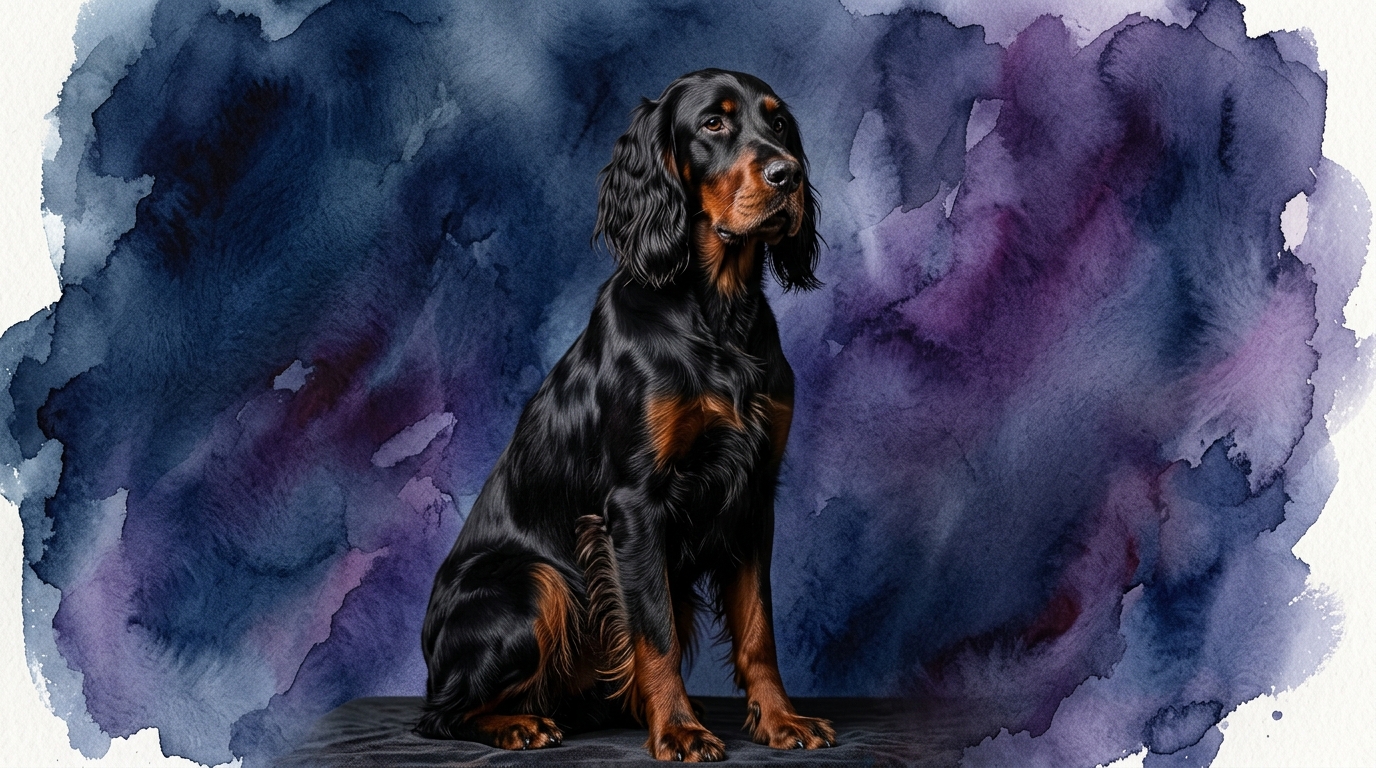
The Gordon Setter, a distinguished member of the Sporting group, holds a respectable Coren rank of #39, reflecting a generally cooperative and capable cognitive makeup. Its IQ profile reveals a remarkable aptitude for Problem Solving (4/5), suggesting an ability to navigate complex situations and strategize effectively. This breed also demonstrates a high Training Speed (4/5), indicating a quick grasp of new commands and routines. Their Social Intelligence is solid at 3/5, fostering strong bonds with their human family, while their Instinctive Drive, also 3/5, speaks to their inherent desire to hunt and range. A strong Memory score of 4/5 rounds out their profile, allowing for excellent retention of learned behaviors and spatial information, crucial for their traditional field work.
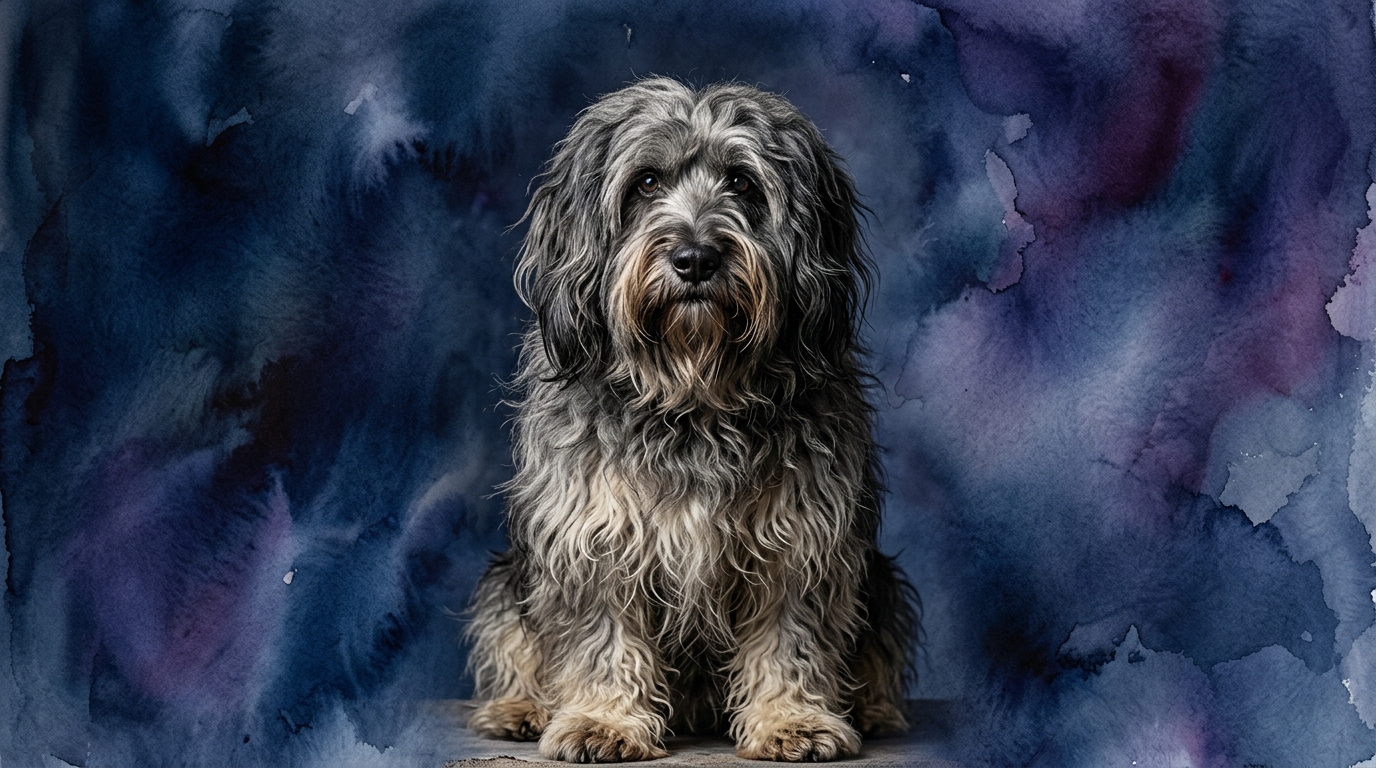
In contrast, the Polish Lowland Sheepdog (PON), a robust Herding breed, is not represented on Coren's ranking, which often signifies a different cognitive emphasis rather than a lack of mental capacity. The PON's IQ scores are consistently rated at 3/5 across all dimensions: Problem Solving, Training Speed, Social Intelligence, Instinctive Drive, and Memory. This consistent scoring suggests a balanced, practical intellect. Their Problem Solving (3/5) points to an adaptive, rather than abstract, approach to challenges, often rooted in their herding duties. A Training Speed of 3/5 indicates a moderate learning pace, while their Social Intelligence (3/5) allows for deep family connections alongside a discerning attitude towards strangers. Their Instinctive Drive (3/5) is powerfully geared towards herding and protection, and a Memory of 3/5 ensures they retain crucial information for their roles, albeit perhaps not with the same immediate recall as a breed with a higher score.
Where the Gordon Setter Wins Cognitively
The Gordon Setter’s cognitive strengths shine particularly brightly in areas demanding quick uptake and retention of information, as well as an active engagement with complex tasks. With a Problem Solving score of 4/5, the Gordon Setter often exhibits a more proactive and analytical approach to novel challenges compared to the Polish Lowland Sheepdog's 3/5. This translates into a dog that can more readily figure out how to manipulate puzzle toys, navigate intricate agility courses, or independently resolve minor obstacles in their environment, often with a clear, goal-oriented strategy. Their hunting background necessitates this type of independent yet focused problem-solving, distinguishing them in scenarios requiring flexible thinking and rapid adaptation.
Furthermore, the Gordon Setter's Training Speed (4/5) stands out as a significant advantage over the PON's 3/5. This breed typically grasps new commands and concepts with fewer repetitions, making training sessions more efficient and enjoyable. Their eagerness to please and inherent cooperative nature often means they are highly motivated to work alongside their human companions, making them excellent candidates for advanced obedience, competitive dog sports, or even complex service roles where a quick learning curve is paramount. This rapid acquisition of skills fosters a dynamic partnership, allowing for a broader repertoire of learned behaviors in a shorter timeframe.
The Gordon Setter's superior Memory (4/5) further enhances its cognitive wins. They are adept at retaining a vast array of commands, routines, and even spatial layouts over extended periods. This means that once a behavior is learned, it is less likely to fade, requiring minimal refreshing. This strong memory is vital for a dog expected to perform intricate field patterns or recall multiple complex sequences without error. This ability to consistently access and apply stored information gives them an edge in consistency and reliability across various tasks when compared to the Polish Lowland Sheepdog's solid, but not exceptional, memory score of 3/5.
Where the Polish Lowland Sheepdog Wins Cognitively
While the Polish Lowland Sheepdog (PON) might not outscore the Gordon Setter in raw speed or immediate compliance, its particular blend of cognitive attributes makes it exceptionally suited for its historical role, showcasing a different kind of intellectual strength. The PON's Problem Solving score of 3/5, while numerically lower, is geared towards practical, adaptive responses in dynamic, often unsupervised, environments. This isn't about solving abstract puzzles, but rather about independently assessing situations, making nuanced judgments regarding livestock movement, or discerning potential threats to its 'flock.' This self-reliant problem-solving, without constant human direction, is a hallmark of an effective herding dog, demanding thoughtful rather than immediate reactions.
The PON's Social Intelligence (3/5), combined with its Instinctive Drive (3/5), manifests as a profound understanding of its 'flock' dynamics, whether that involves livestock or its human family. They possess a keen observational intellect, allowing them to anticipate needs, interpret subtle cues, and protect their charges with a thoughtful, often reserved, demeanor. This contrasts with the Gordon Setter’s more outwardly cooperative, human-directed social engagement; the PON's social aptitude is geared towards autonomous guardianship and a deep, discerning loyalty. Their protective instincts are not merely reactive but are often based on a considered assessment of their environment and its inhabitants.
Furthermore, the PON’s Training Speed (3/5) and Memory (3/5) are perfectly adequate for the complex and often repetitive tasks of herding, where consistency, resilience, and independent decision-making in the face of environmental challenges are often more valuable than lightning-fast obedience to every human whim. Their learning style might be more deliberate, but it results in deeply ingrained behaviors that serve their purpose. The PON’s cognitive strengths lie in its independent judgment, its capacity for sustained focus on its duties, and the ability to make nuanced decisions based on its environment and inherent protective instincts, rather than striving for human-dictated perfection in every command.
Which is Easier to Train and Why
When considering ease of training, the Gordon Setter generally presents a more straightforward and rewarding experience for many owners. Their higher scores in Training Speed (4/5), Problem Solving (4/5), and Memory (4/5) mean they are typically eager to engage with their human partners, quickly grasp new commands, and retain lessons with fewer repetitions. Their cooperative nature, characteristic of a sporting dog bred to work alongside hunters, means they often seek to understand and execute tasks presented to them, making them highly responsive to positive reinforcement and consistent, clear methods. They thrive on interaction and often view training as a joint activity, leading to a more fluid and less repetitive learning process for both dog and owner.
In contrast, the Polish Lowland Sheepdog, with its 3/5 scores across these dimensions, often requires a more patient, nuanced, and understanding approach to training. Their herding heritage instills a degree of independent thought and a tendency to assess situations before acting, which can sometimes be perceived as stubbornness or a lack of immediate compliance. Training a PON often involves convincing them that a command is logical, beneficial, or aligns with their inherent protective instincts, rather than simply expecting blind obedience. While they are capable learners, it is at a more deliberate pace, and trainers must be prepared for a dog that might 'think' about a request before responding, especially if it conflicts with their strong sense of self or perceived duty. Consistency, positive reinforcement, and making training feel like a worthwhile endeavor are key to unlocking their potential.
Which Suits Active Owners vs. Engaged Owners
The Gordon Setter is an excellent match for active owners who relish structured activities and seek a cooperative partner in their pursuits. Their Sporting group background and higher scores in Problem Solving, Training Speed, and Memory mean they thrive with regular, engaging mental and physical exercise, such as long hikes, field work, agility, or advanced obedience. Owners who appreciate a dog that eagerly participates in shared endeavors, enjoys learning new skills, and has the stamina for extended outings will find the Gordon Setter rewarding. Their energy and focus are often directed outwards, towards their human companion and the task at hand, making them ideal partners for an owner with an active, participatory lifestyle.
The Polish Lowland Sheepdog, while not necessarily demanding the same *type* of high-octane activity as a Gordon Setter, absolutely suits engaged owners who understand the need for purpose and consistent mental stimulation. Their herding instincts mean they appreciate having a 'job' or clear boundaries, and their independent problem-solving (3/5) means they need outlets for their thoughtful nature, perhaps through puzzle toys, scent work, or even managing their human 'flock' (children or other pets). They are less suited for truly 'relaxed' owners who prefer minimal interaction, as their social intelligence and drive require consistent, thoughtful engagement to prevent boredom or unwanted independent decision-making. These dogs thrive with owners who can provide structure, mental challenges, and understand their need for a degree of autonomy, making them perfect for an 'engaged' owner rather than simply an 'active' one.
The Verdict
Choose the Gordon Setter if you desire a highly cooperative, quick-learning companion eager for shared activities and formal training, excelling in rapid task acquisition and retention.
Opt for the Polish Lowland Sheepdog if you appreciate an independent, thoughtful, and protective companion, willing to invest patience in training a dog whose instincts lean towards self-reliance and nuanced environmental assessment.
🧠 Find Your Pet's IQ Score
Our Pet IQ Lab assessment covers 25+ tests across 5 cognitive dimensions — personalized to your breed.
Take the Full IQ Test →Frequently Asked Questions
Is the Gordon Setter a good choice for first-time dog owners?
The Gordon Setter's eagerness to learn and cooperative nature can make them suitable for first-time owners who are committed to consistent training and providing ample physical and mental stimulation. Their responsiveness often simplifies the learning process for both dog and owner, provided their exercise needs are met.
How does the Polish Lowland Sheepdog's independence affect its trainability?
The Polish Lowland Sheepdog's independence means they might require more patience and creative motivation during training. They respond best to clear, positive reinforcement methods and trainers who can make tasks feel purposeful, rather than simply demanding obedience, as they prefer to think for themselves.
Do either of these breeds excel in dog sports like agility?
The Gordon Setter, with its higher training speed, memory, and problem-solving, often excels in agility and other dog sports, quickly mastering complex sequences and enjoying the cooperative challenge. The Polish Lowland Sheepdog can certainly participate and enjoy these sports, but their independent nature might mean a slightly slower learning curve and a more deliberate approach to obstacles, requiring more creative motivation.