Side-by-Side IQ Profile
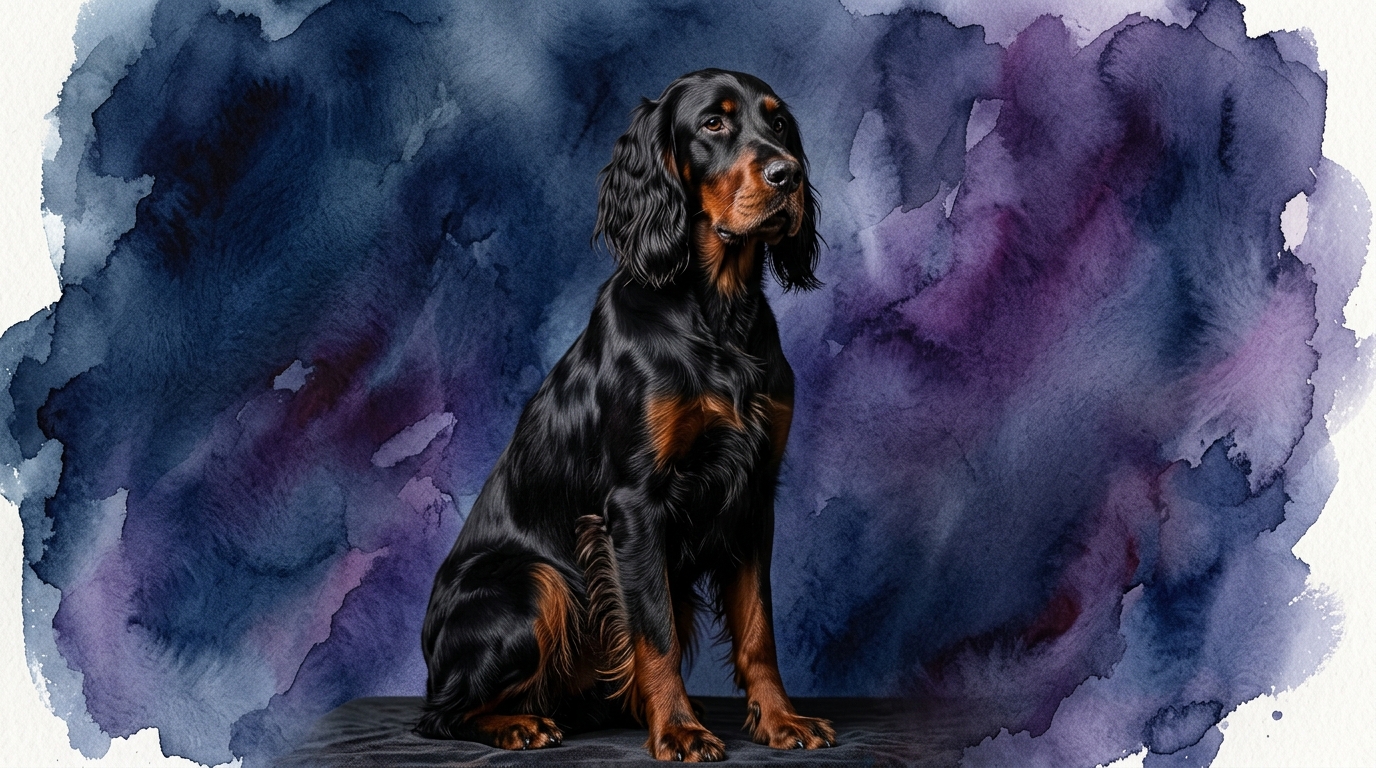
The Gordon Setter, a distinguished member of the Sporting group, brings a balanced yet formidable cognitive profile to our analysis, reflected in its Coren rank of #39. Its Problem Solving ability stands at a solid 4 out of 5, indicating a strong capacity to navigate complex situations and figure out solutions independently. This breed also demonstrates a Training Speed of 4 out of 5, meaning it can grasp new commands and routines with impressive efficiency. In terms of Social Intelligence, the Gordon Setter scores 3 out of 5, suggesting a good understanding of human cues but also a degree of independence. Its Instinctive Drive is also rated at 3 out of 5, a moderate level that can be effectively channeled for specific tasks. Finally, the Gordon Setter's Memory is rated at 4 out of 5, ensuring that learned behaviors and routines are retained reliably over time.
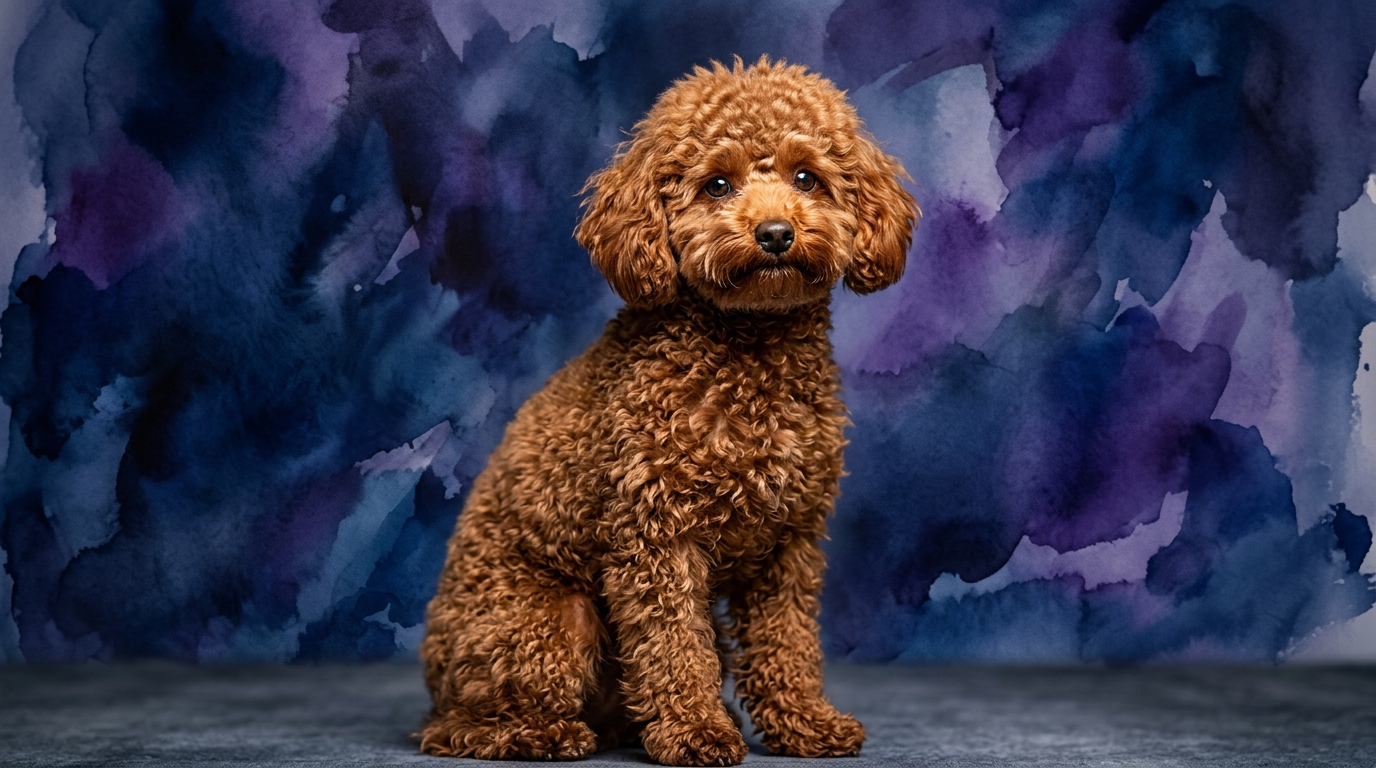
In stark contrast, the Toy Poodle, hailing from the Toy group, presents an exceptional cognitive landscape, boasting an astonishing Coren rank of #2. This breed achieves a perfect 5 out of 5 in Problem Solving, demonstrating an unparalleled aptitude for abstract thought and innovative solutions to challenges. Its Training Speed is equally impressive, scoring a full 5 out of 5, meaning new skills are acquired with remarkable swiftness, often with minimal repetition. Like the Gordon Setter, the Toy Poodle's Social Intelligence is rated at 3 out of 5, indicating a keen awareness of its human companions without being overly reliant on constant interaction. Its Instinctive Drive also sits at 3 out of 5, providing a balanced foundation for various activities. Crucially, the Toy Poodle's Memory is a perfect 5 out of 5, ensuring that once something is learned, it is deeply ingrained and readily recalled, making it a master of long-term retention.
Where Gordon Setter Wins Cognitively
While the Toy Poodle might boast higher scores in raw cognitive speed and memory, the Gordon Setter's cognitive profile excels in areas demanding sustained application of intellect within dynamic, often expansive, environments. Its Problem Solving (4/5) combined with its Training Speed (4/5) and Memory (4/5) positions it as a highly capable and enduring partner for tasks requiring stamina and methodical execution. For instance, in complex scent work or navigating challenging terrain during a hunt, the Gordon Setter's cognitive architecture supports prolonged focus and the ability to apply learned patterns over extended periods without faltering, a testament to its sporting heritage.
The Gordon Setter's cognitive strength lies in its practical integration of mental and physical prowess. Its ability to retain multi-step commands and execute them reliably in varying outdoor conditions is a significant advantage. This breed demonstrates a robust capacity for environmental awareness and decision-making in real-time scenarios, such as tracking game or retrieving. Its moderate Instinctive Drive (3/5) is precisely what allows it to be driven enough for work, yet trainable to follow human direction, making it an effective collaborator in goal-oriented activities where consistency and resilience are paramount.
Where Toy Poodle Wins Cognitively
The Toy Poodle's cognitive superiority is evident in its exceptional capacity for rapid learning, abstract problem-solving, and enduring memory. With perfect 5/5 scores across Problem Solving, Training Speed, and Memory, this breed demonstrates an unparalleled ability to grasp complex concepts and execute intricate sequences of commands with remarkable precision. Its problem-solving skills aren't just about figuring things out; they often involve devising creative, novel approaches to challenges, reflecting a deeper level of cognitive flexibility.
This breed’s cognitive advantage shines brightest in scenarios demanding quick intellectual uptake and flawless recall. A Toy Poodle can learn an entire repertoire of tricks or an advanced obedience routine faster than many other breeds, and once learned, it will perform them with consistent accuracy. Their ability to generalize learned behaviors across different contexts is also a hallmark of their superior intellect, meaning they can apply a lesson learned in one situation to a new, similar challenge without much additional instruction. This makes them incredibly adaptable to diverse training disciplines and mental enrichment activities.
Which is Easier to Train and Why
When assessing ease of training, the Toy Poodle undeniably holds an edge due to its superior cognitive metrics. Its perfect 5/5 in Training Speed means it absorbs new commands and behaviors with astonishing rapidity, often requiring fewer repetitions than the Gordon Setter. Coupled with a 5/5 in Problem Solving, the Toy Poodle frequently anticipates cues or actively attempts different behaviors to figure out what is being asked, making the training process feel more like a collaborative mental exercise. Their exceptional Memory (5/5) ensures that once a skill is acquired, it's rarely forgotten, leading to highly efficient retention and less need for remedial training.
The Gordon Setter, while still an impressive learner with 4/5 scores in Training Speed, Problem Solving, and Memory, typically requires a more structured and consistent approach. They absorb information well, but their learning curve might be slightly longer than the Poodle's. Their moderate Social Intelligence (3/5) suggests they might be less intensely driven by human approval compared to some breeds, necessitating a clear, consistent reward system to maintain motivation. While both breeds are highly trainable, the Toy Poodle's innate cognitive speed and capacity for independent thought in problem-solving situations generally translate to a smoother, faster, and often more intuitive training experience for a wider range of complex tasks.
Which Suits Active Owners vs Relaxed Owners
The Gordon Setter, true to its Sporting group lineage, is an ideal companion for active owners who relish outdoor adventures and can provide consistent, vigorous exercise. Its robust physical build and cognitive profile, which thrives on sustained, goal-oriented tasks, mean it requires ample opportunities for activities like long hikes, running, or participation in dog sports such as field trials, obedience, or agility. A Gordon Setter needs its intellect engaged through purposeful work or structured play that utilizes its natural instincts and endurance; a sedentary lifestyle would lead to boredom and potential behavioral issues.
The Toy Poodle, despite its small size, possesses a formidable intellect that demands significant mental enrichment, making it adaptable to both active and more relaxed owners, provided its cognitive needs are met. For a relaxed owner, this means committing to daily mental stimulation through puzzle toys, trick training, or short, engaging walks in varied environments, rather than just prolonged physical exertion. However, for active owners, the Toy Poodle can be an absolute superstar in dog sports, excelling in agility, obedience, or rally thanks to its rapid learning, exceptional memory, and eagerness to please. Its versatility allows it to thrive in a wide array of lifestyles, as long as its brilliant mind is kept busy.
The Verdict
For those who seek a loyal, enduring companion for outdoor adventures and structured training, valuing a balanced, robust intellect that thrives on sustained, purposeful activity, the Gordon Setter is an excellent choice.
For owners who delight in rapid learning, intricate problem-solving, and a compact companion capable of excelling in diverse mental challenges within a variety of living situations, the Toy Poodle is an ideal match.
🧠 Find Your Pet's IQ Score
Our Pet IQ Lab assessment covers 25+ tests across 5 cognitive dimensions — personalized to your breed.
Take the Full IQ Test →Frequently Asked Questions
Does a higher Coren rank mean a dog is always 'smarter'?
Coren's ranking primarily assesses "working and obedience intelligence," focusing on how quickly a dog learns and obeys commands. It's a valuable metric for trainability but doesn't encompass all facets of canine cognition, such as problem-solving or social intelligence, which our IQ Lab scores detail independently.
Can a Gordon Setter compete with a Toy Poodle in dog sports?
Absolutely! While the Toy Poodle might learn complex sequences faster, the Gordon Setter's stamina, focus, and strong memory make it a formidable competitor in sports like agility, obedience, and especially scent work or field trials, where its natural drives can be harnessed effectively for sustained performance.
How do the "Social Intelligence" scores affect daily living for these breeds?
Both breeds share a 3/5 Social Intelligence score, indicating they are generally responsive to human cues but may also exhibit independent thought. This means they are capable of forming strong bonds and understanding their owners, yet possess enough self-reliance to not be overly clingy, offering a balanced companionship dynamic.