
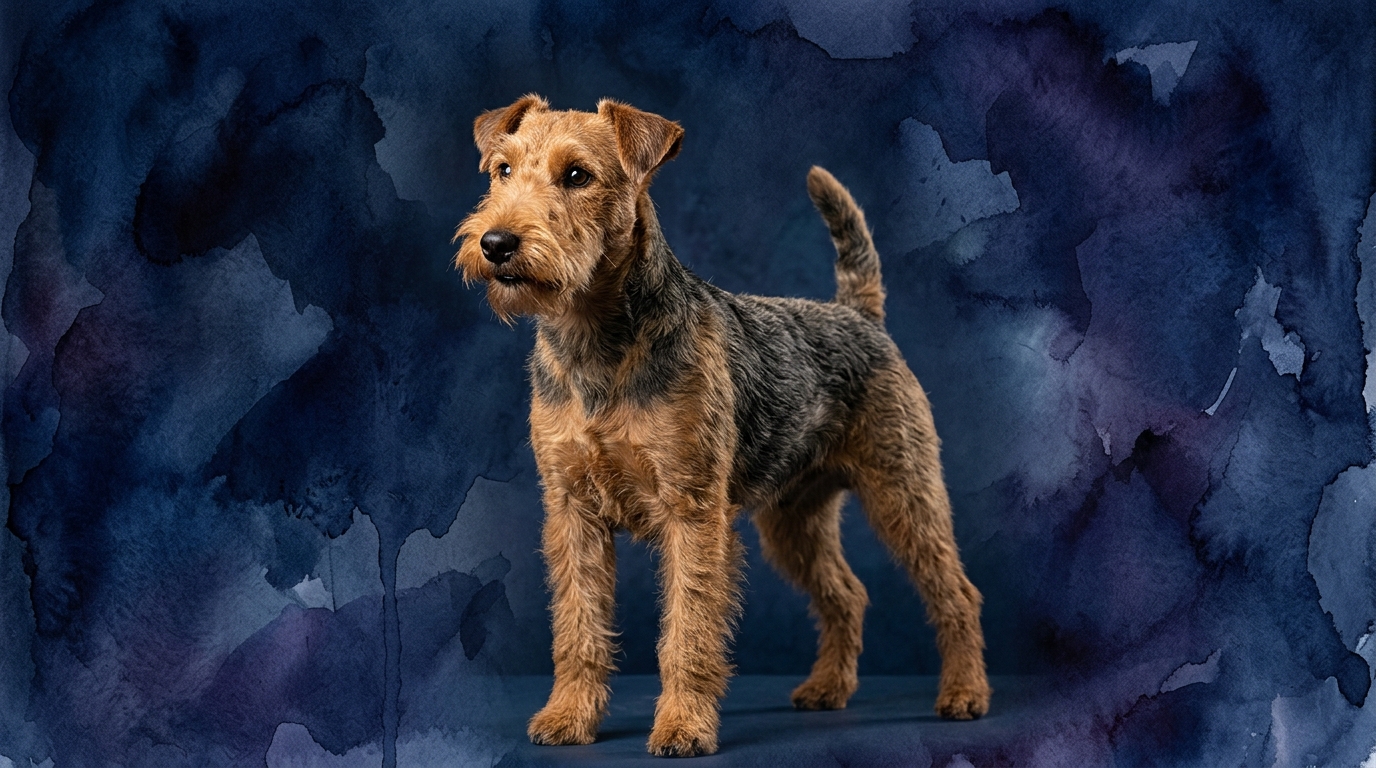
Side-by-Side IQ Profile: Gordon Setter vs. Welsh Terrier
At The Cosmic Pet Pet IQ Lab, we assess canine cognition across five key dimensions, offering a nuanced understanding beyond simple obedience. The Gordon Setter, a member of the Sporting Group, exhibits a Coren rank of #39, indicating a strong capacity for working intelligence and obedience. Its profile includes Problem Solving at 4/5, Training Speed at 4/5, Social Intelligence at 3/5, Instinctive Drive at 3/5, and Memory at 4/5. This suggests a dog that can navigate complex situations, learns new commands with relative ease, forms meaningful bonds, possesses a moderate drive for its natural purpose, and retains information effectively.
The Welsh Terrier, a feisty representative of the Terrier Group, is not listed on Coren's ranking, which often reflects breeds with a more independent working style rather than a lack of cognitive ability. Its IQ profile presents Problem Solving at 3/5, Training Speed at 3/5, Social Intelligence at 3/5, Instinctive Drive at 3/5, and Memory at 3/5. This suggests a resourceful dog capable of figuring things out, learning at a steady pace, engaging socially, driven by its heritage, and possessing reliable recall and retention, though perhaps not with the same swiftness or depth as the Setter.
Where the Gordon Setter Excels Cognitively
The Gordon Setter’s cognitive strengths are particularly evident in its superior Problem Solving and Training Speed scores, both rated at 4/5. This breed demonstrates a notable aptitude for understanding and executing multi-step tasks, quickly grasping new concepts, and adapting to novel training scenarios. Their ability to rapidly connect actions with consequences, coupled with a strong desire to cooperate, means they can master intricate sequences and commands more efficiently than many other breeds. For instance, a Gordon Setter is more likely to quickly learn a complex agility course or understand the nuanced cues of a field handler, processing and recalling these details with precision. Their 4/5 Memory score further enhances this, allowing them to retain vast amounts of learned information, from specific scent patterns in the field to a wide array of household rules and routines, over long periods.
This cognitive profile is a direct reflection of their heritage as a cooperative hunting dog, requiring them to work in tandem with humans, interpret subtle signals, and make intelligent decisions in dynamic environments. Their capacity for rapid learning means less repetition is needed during training, and their strong memory ensures that once a lesson is learned, it tends to stick. This makes them particularly adept at advanced obedience, competitive canine sports, and any role requiring consistent, reliable performance based on learned behaviors.
Where the Welsh Terrier Shows Unique Cognitive Strengths
While the Welsh Terrier’s scores are generally a point lower than the Gordon Setter’s in most categories, their cognitive profile reflects a different kind of strength, rooted in their independent terrier heritage. Their 3/5 Problem Solving score, though lower, doesn't imply a lack of intelligence, but rather a different approach; they are resourceful and tenacious in figuring things out, often through persistent trial and error rather than immediate compliance. This manifests as a strong will and an ability to work through challenges independently, which was crucial for their original purpose of flushing out quarry from dens. They are less reliant on human direction for every step, often preferring to assess and act on their own initiative.
The Welsh Terrier's 3/5 Instinctive Drive is also a distinctive strength. While the Gordon Setter’s drive is geared towards cooperative pointing and retrieving, the Welsh Terrier’s drive is focused on independent pursuit and determination. This manifests as an unwavering focus when engaged in a task that taps into their prey drive, such as chasing a ball or solving a puzzle feeder. Their social intelligence, also 3/5, is often characterized by strong, selective bonds with their family, combined with a confident and sometimes reserved demeanor towards strangers. This selective social engagement, while not as broadly amiable as some breeds, reflects a discerning and self-assured temperament, allowing them to thrive in close family units while maintaining a distinct personality.
Ease of Training: Gordon Setter vs. Welsh Terrier
When considering ease of training, the Gordon Setter generally presents a more straightforward path. With a Training Speed of 4/5 and Problem Solving at 4/5, they are quick to understand and respond to commands. Their Sporting group background predisposes them to work cooperatively with humans, often displaying a strong desire to please and a high level of biddability. This means they are typically eager to learn, absorb new lessons quickly, and are less likely to challenge authority or become easily distracted from the task at hand. Consistent, positive reinforcement methods tend to yield rapid and reliable results with a Gordon Setter, making them a rewarding partner for various training endeavors.
The Welsh Terrier, with its 3/5 scores in both Training Speed and Problem Solving, requires a different approach. Their terrier independence means they often have their own ideas and can be more challenging to motivate purely through compliance. While they are capable of learning, their progress might be slower, and they may require more engaging, game-based training methods to hold their interest. Their instinctive drive, also 3/5, means they can be easily sidetracked by interesting scents or movements, requiring owners to be particularly patient, consistent, and creative in making training rewarding and fun. They are not 'difficult' but demand a trainer who understands and respects their spirited, independent nature, transforming training into a partnership rather than a command-and-obey dynamic.
Suited Owners: Active vs. Relaxed Lifestyles
Both the Gordon Setter and the Welsh Terrier are breeds that thrive with active engagement, making neither truly suited for a purely 'relaxed' or sedentary owner. However, the *type* of activity they require differs significantly. The Gordon Setter, with its Sporting heritage, needs substantial physical exercise, often in the form of long walks, runs, or field work. They possess considerable stamina and mental acuity that benefits from activities like scent work, retrieve games, and participation in dog sports such as agility or obedience. An owner who enjoys spending several hours outdoors daily, engaging their dog in purposeful activities, would find a perfect match in a Gordon Setter. Their energy is often sustained and requires consistent outlets to prevent boredom and restlessness.
The Welsh Terrier, while also active, often prefers bursts of vigorous play and mental challenges over continuous endurance work. They need outlets for their strong prey drive and independent nature, which can include vigorous games of fetch, challenging puzzle toys, and opportunities for digging in a designated area. While they can adapt to smaller living spaces if their exercise needs are met, they are not content to lounge all day. Owners who enjoy interactive play, consistent training sessions to channel their terrier tenacity, and can provide regular mental stimulation will find a Welsh Terrier rewarding. A truly 'relaxed' owner who cannot meet these physical and mental demands might find the Welsh Terrier's spirited independence overwhelming, potentially leading to undesirable behaviors born of boredom.
The Verdict
Choose the Gordon Setter if you seek a highly trainable, cooperative companion for extensive outdoor activities, field sports, or competitive canine events, valuing rapid learning and a biddable nature.
Opt for the Welsh Terrier if you appreciate a spirited, independent, and resourceful companion, are prepared for creative and consistent training, and enjoy engaging in varied, stimulating activities.
🧠 Find Your Pet's IQ Score
Our Pet IQ Lab assessment covers 25+ tests across 5 cognitive dimensions — personalized to your breed.
Take the Full IQ Test →Frequently Asked Questions
Is the Gordon Setter good with children?
Gordon Setters are generally patient and affectionate with children, making them good family pets. Their cooperative nature and moderate social intelligence mean they often integrate well into family dynamics, though supervision is always advised with any dog and child interaction.
Do Welsh Terriers bark a lot?
Welsh Terriers can be vocal, using barks to alert their owners to new sights or sounds, or to express excitement. Consistent training from a young age can help manage excessive barking, but their terrier nature means they will often voice their opinions.
Which breed requires more grooming?
The Gordon Setter requires regular brushing to maintain its long, silky coat and prevent mats, along with occasional trimming. The Welsh Terrier has a wiry coat that benefits from regular brushing and professional stripping or trimming every few months to maintain its texture and appearance.