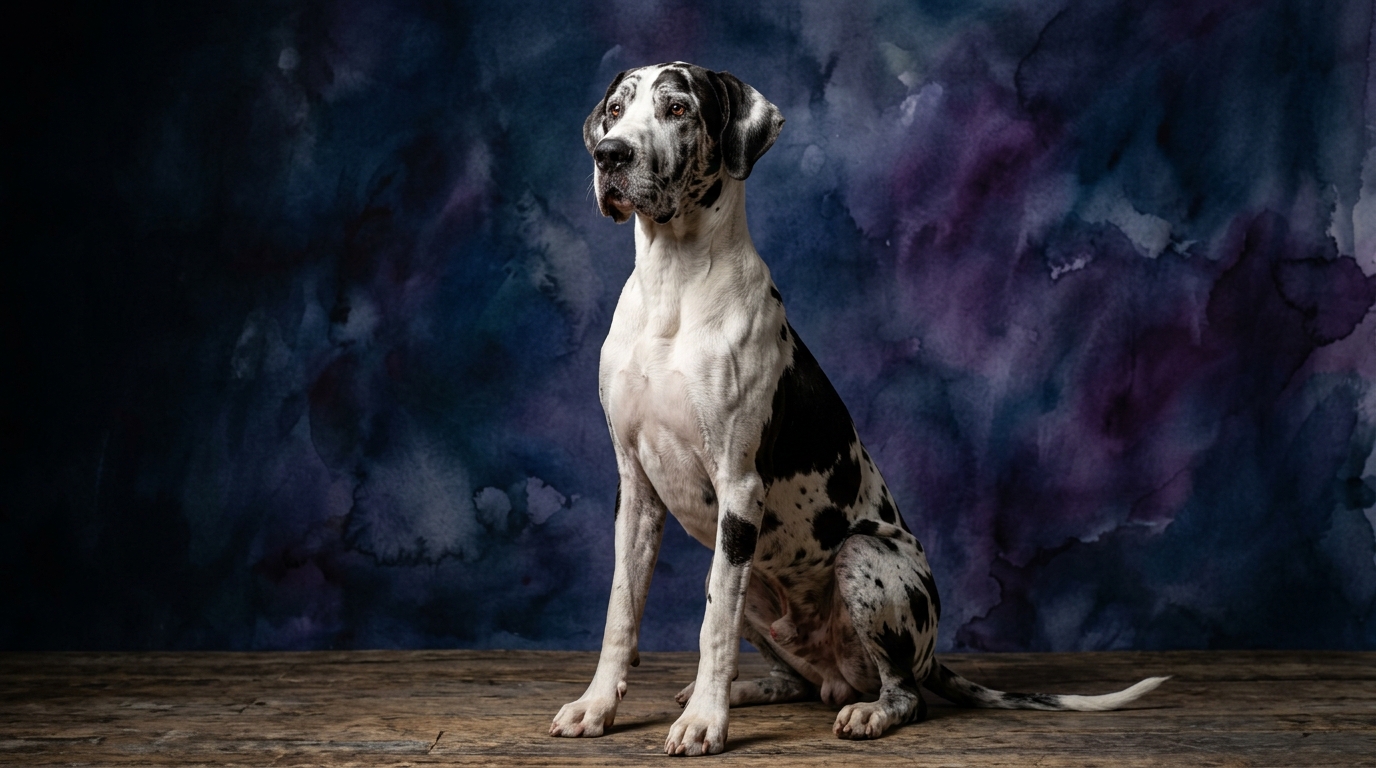
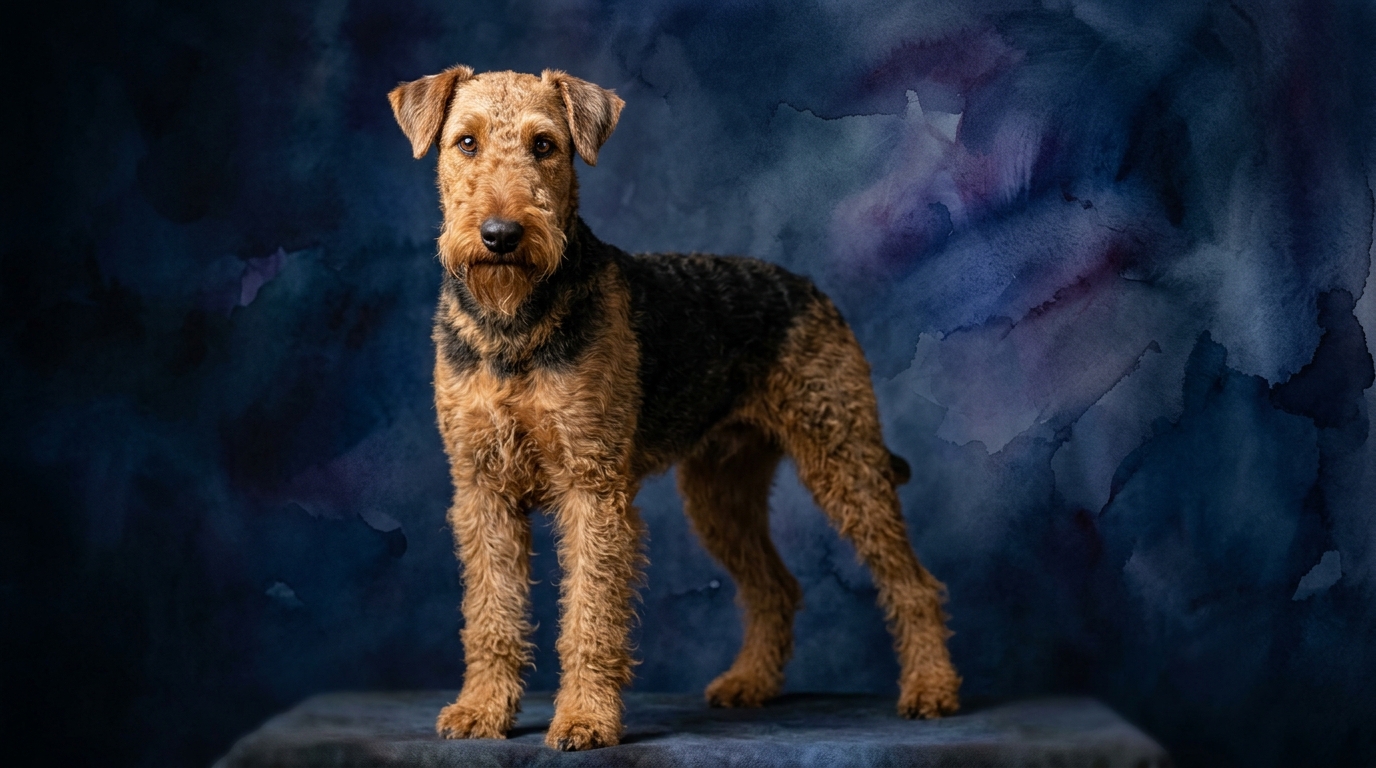
Side-by-Side IQ Profile: A Tale of Two Minds
At The Cosmic Pet Pet IQ Lab, we evaluate canine cognition across five key dimensions. The Great Dane, a Working Group dog, ranks #48 in Coren's intelligence scale, while the Airedale Terrier, from the Terrier Group, holds a higher #29 position. These rankings hint at differing cognitive strengths, which become clearer when we break down their individual IQ profiles.
The Great Dane's cognitive blueprint reveals a Problem Solving score of 3/5; they typically approach challenges directly or by seeking human assistance, rather than devising intricate solutions. Their Training Speed is also 3/5, indicating a steady, thoughtful learning pace that thrives on patience and positive reinforcement. Where they truly shine is Social Intelligence, scoring 4/5, demonstrating a profound capacity to read and respond to human emotions. Their Instinctive Drive sits at 3/5, a balanced expression of their working heritage, and their Memory is a functional 3/5, reliable for routines and learned behaviors.
In contrast, the Airedale Terrier exhibits a Problem Solving score of 4/5, showcasing a keen, resourceful intellect often capable of independent problem-solving. Their Training Speed is an impressive 4/5, meaning they grasp new concepts quickly, though their independent streak demands engaging and varied sessions. Their Social Intelligence is 3/5; while affectionate, they tend to be more observant and self-assured in social interactions. Instinctive Drive is 3/5, reflecting their terrier heritage with a moderate prey drive and inclination for exploration. Finally, their Memory is a robust 4/5, retaining learned information and experiences with considerable clarity.
Where Great Dane Wins Cognitively
The Great Dane's cognitive triumph lies undeniably in its exceptional social intelligence. Rated 4 out of 5, their ability to perceive and respond to the subtle nuances of human emotion is remarkable, often acting as gentle, intuitive comforters within a family unit. This isn't merely obedience; it's a deep, intuitive understanding that allows them to integrate seamlessly into family dynamics as sensitive, supportive members.
A Dane might quietly lean against a sad owner, offering silent solace, or gently nudge a hand for attention when they sense a need for interaction. This profound emotional connection and their capacity for non-verbal communication set them apart, making them unparalleled emotional anchors within a household. While their problem-solving might be direct, their social problem-solving – navigating complex interpersonal dynamics – is sophisticated and deeply empathetic.
Where Airedale Terrier Wins Cognitively
Conversely, the Airedale Terrier's cognitive strengths shine brightest in its problem-solving abilities and rapid training assimilation. With a 4 out of 5 in both categories, the Airedale demonstrates a formidable intellectual agility. They are often described as 'thinking dogs' who enjoy figuring things out for themselves, showcasing a knack for opening cabinets or devising strategies to obtain a coveted toy.
Their quick grasp of new commands isn't just about repetition; it's about actively processing and applying information, often with a flair for improvisation. This breed thrives on mental stimulation, relishing challenges that allow them to exercise their sharp minds. Their memory, also a 4 out of 5, complements this, ensuring that once a solution is found or a command learned, it's firmly entrenched, contributing to their reputation as capable and resourceful companions.
Which is Easier to Train and Why
While both breeds are certainly trainable, the 'easier' label depends heavily on an owner's approach and expectations. The Airedale Terrier, with its 4/5 training speed, tends to grasp new commands and concepts swiftly, often requiring fewer repetitions than the Great Dane's 3/5. However, this quick wit is paired with a strong independent streak and natural terrier tenacity. An Airedale needs a trainer who can maintain their interest with varied tasks, providing firm, consistent, yet positive guidance to channel their quick intellect productively; they can become bored and mischievous with rote, repetitive drills.
The Great Dane, despite a slower initial learning curve (3/5 training speed), often compensates with a stronger desire to please and a more agreeable nature, underpinned by their 4/5 social intelligence. They are generally less likely to challenge authority or invent their own agenda during a training session. Their sensitivity means harsh corrections are counterproductive, but a patient, kind approach often yields a deeply compliant and emotionally invested learner. For an owner prioritizing a deeply cooperative and emotionally connected training partnership, the Great Dane might feel more 'easier' in the long run, given their biddability.
Which Suits Active Owners vs. Relaxed Owners
The Airedale Terrier, with its higher problem-solving aptitude (4/5) and quicker training speed (4/5), naturally aligns with active owners prepared to provide significant mental and physical engagement. Their intelligent, independent nature means they thrive on structured activities like agility, advanced obedience, scent work, or complex puzzle toys, alongside frequent, varied outdoor adventures. Owners who enjoy teaching new tricks and exploring different training modalities will find the Airedale a responsive and rewarding partner; an under-stimulated Airedale might invent its own, potentially destructive, forms of entertainment.
The Great Dane, on the other hand, with its stellar social intelligence (4/5) and more moderate problem-solving (3/5) and training speed (3/5), is often a better fit for relaxed owners, particularly those who value emotional connection and a calm presence. While they still require regular exercise to maintain their large frames, their cognitive needs lean more towards companionship and social interaction than intense mental puzzles. They are content with gentle walks, quiet companionship, and being an integral, sensitive part of family life, making them excellent companions for those who enjoy a devoted, albeit giant, shadow.
The Verdict
If your priority is a deeply empathetic companion who is highly attuned to your emotions and desires a calm, affectionate presence in your home, the Great Dane's gentle giant intellect will be a perfect match.
Opt for the Airedale if you seek an intellectually agile, independent, and spirited partner who thrives on mental challenges, varied training, and an active, engaging lifestyle.
🧠 Find Your Pet's IQ Score
Our Pet IQ Lab assessment covers 25+ tests across 5 cognitive dimensions — personalized to your breed.
Take the Full IQ Test →Frequently Asked Questions
Do Great Danes or Airedale Terriers drool more?
Great Danes are generally known to drool more than Airedale Terriers, especially after drinking water or when excited. This is due to their loose jowls, a trait less common in the Airedale.
Which breed is better with children?
Both can be good with children, but the Great Dane's social intelligence and gentle nature often make them exceptionally patient and understanding with kids, despite their size. Airedales can be wonderful family dogs but require proper socialization and clear boundaries due to their spirited terrier temperament and potential for boisterous play.
What are the primary grooming differences between the two breeds?
Great Danes have short, smooth coats that require minimal grooming, mainly brushing to remove loose hair. Airedale Terriers have a dense, wiry double coat that needs regular brushing, hand-stripping, or professional grooming to maintain its texture and prevent matting, making their grooming more involved.