Side-by-Side Cognitive Profiles
The Cosmic Pet Pet IQ Lab assesses canine intelligence across five key dimensions, providing a nuanced understanding beyond a simple 'smart' label. For both the Great Dane and the American Staffordshire Terrier, a Coren rank of #48 places them squarely in the category of 'average working/obedience intelligence,' suggesting they require a moderate number of repetitions to learn new commands and demonstrate consistent understanding.
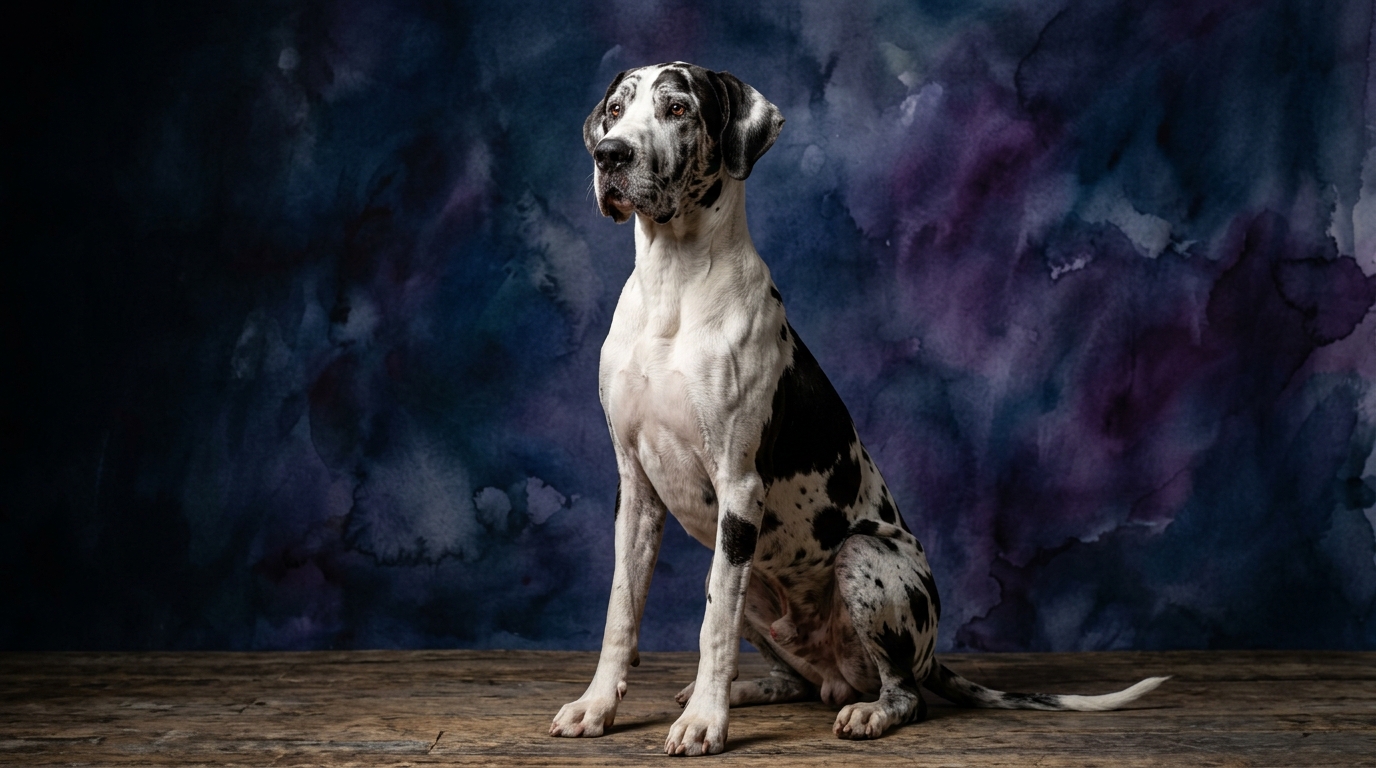
Breaking down the Great Dane's profile, we observe a Problem Solving score of 3/5, indicating a moderate capacity to independently figure out novel situations or overcome obstacles. Their Training Speed also stands at 3/5, suggesting they absorb new commands and routines at an average pace. Where they notably distinguish themselves is in Social Intelligence, earning a 4/5, which points to an elevated understanding of human emotions, social cues, and household dynamics. Instinctive Drive is rated 3/5, reflecting a moderate level of inherent breed-specific behaviors, while their Memory scores 3/5, indicating a solid but not exceptional recall of learned information and experiences.
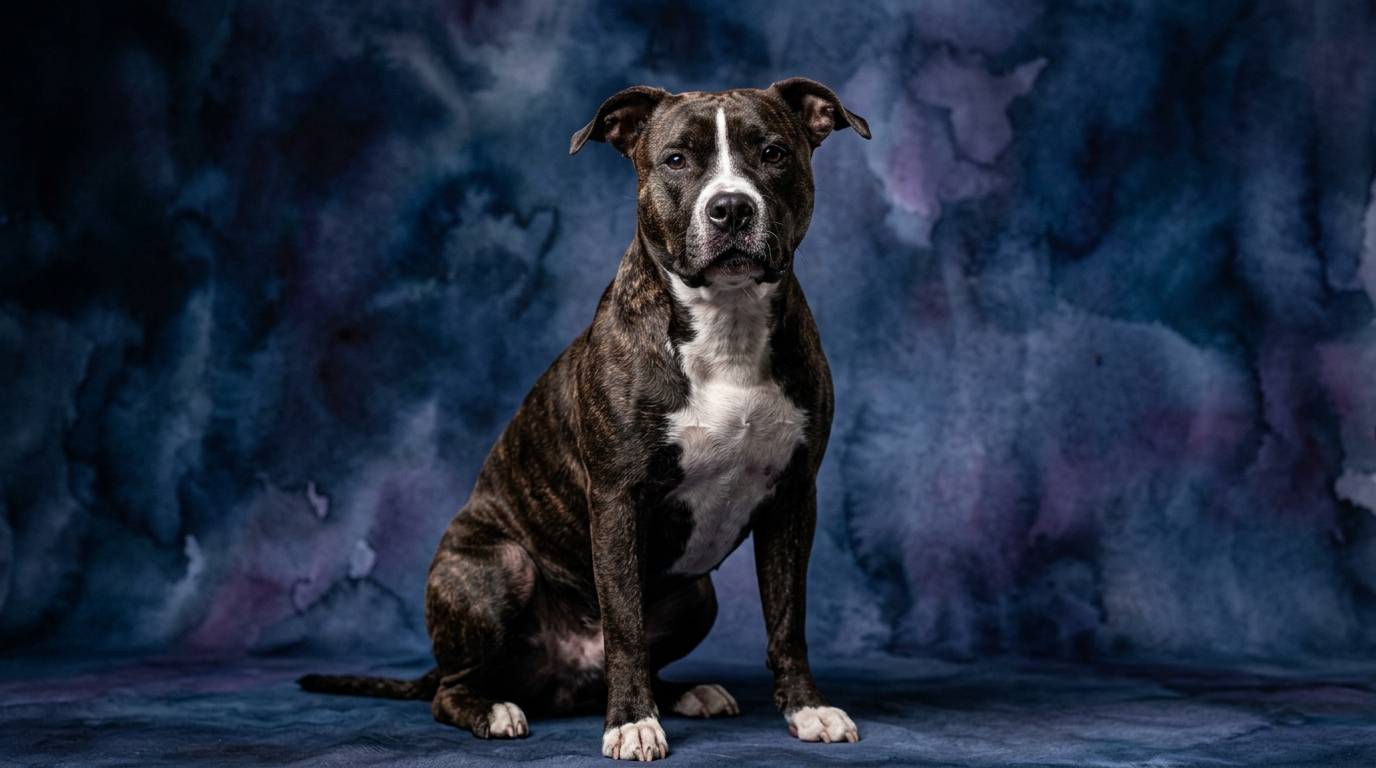
Conversely, the American Staffordshire Terrier's cognitive landscape presents a slightly different emphasis. Like the Great Dane, their Problem Solving is 3/5, demonstrating a similar moderate ability to tackle new challenges independently. Their Training Speed mirrors this at 3/5, meaning they also learn new tasks with an average number of repetitions. In Social Intelligence, the AmStaff scores 3/5, suggesting a good, but not exceptional, ability to interpret human social cues. Their Instinctive Drive is 3/5, reflecting a balanced level of innate terrier behaviors. However, the AmStaff’s Memory truly shines with a 4/5 rating, indicating a strong capacity to retain learned commands, routines, and past experiences over extended periods.
Where the Great Dane Excels Cognitively
The Great Dane's primary cognitive advantage lies in its superior Social Intelligence, rated at 4/5 compared to the AmStaff's 3/5. This higher score suggests a more profound attunement to the emotional states and intentions of their human companions. A Great Dane is often described as having an intuitive grasp of family dynamics, often sensing shifts in mood or anticipating needs without explicit commands.
This elevated social awareness can manifest as a greater sensitivity during training, where positive reinforcement and a strong bond are particularly effective. They may be quicker to understand subtle non-verbal cues from their owners, making them adept at navigating complex social situations within a household. Their ability to integrate seamlessly into family life, often acting as gentle and empathetic guardians, is a direct reflection of this heightened social cognition. They are often more receptive to subtle emotional feedback, making them excellent companions for individuals seeking a dog that truly 'gets' them on an emotional level.
Where the American Staffordshire Terrier Holds the Cognitive Edge
The American Staffordshire Terrier’s standout cognitive strength is its Memory, scoring an impressive 4/5 compared to the Great Dane's 3/5. This robust memory capacity means AmStaffs are particularly adept at retaining learned commands, routines, and associations over time. Once a behavior or command is thoroughly taught, an AmStaff is likely to recall it consistently, even after periods of inactivity.
This superior memory can be a significant asset in training, reducing the need for extensive refresher sessions and allowing for the building of a more complex repertoire of skills. It also contributes to their ability to remember specific locations, people, and experiences, which can be beneficial for tasks requiring consistent recall, such as agility courses or advanced obedience. For owners who value a dog that reliably remembers its training and routines, the AmStaff’s strong memory offers a distinct advantage, potentially leading to a more polished and predictable set of learned behaviors.
Ease of Training: A Nuanced Perspective
Both the Great Dane and the American Staffordshire Terrier share a Training Speed score of 3/5, indicating they learn new commands at an average pace. This means neither breed is inherently 'easier' or 'harder' to train in terms of raw speed. However, their differing cognitive strengths—social intelligence for the Dane and memory for the AmStaff—suggest different optimal training approaches and potential behavioral nuances.
A Great Dane, with its 4/5 social intelligence, may respond exceptionally well to training methods that emphasize connection, positive reinforcement, and clear emotional communication from the owner. They might quickly grasp *why* a certain behavior is desired based on the owner's satisfaction, making them sensitive to praise and encouragement. Their social understanding could also mean they are more inclined to please their family members, often seeking cooperation. However, their 3/5 memory means consistent, regular reinforcement is still important to solidify learned behaviors.
Conversely, an American Staffordshire Terrier, with its 4/5 memory, benefits greatly from consistent, clear, and structured training repetitions. Once a command is ingrained, it is likely to stick. Their 3/5 social intelligence means while they are responsive to their owners, they might be less swayed by subtle emotional cues and more by the direct consequence and consistency of the training itself. Owners should focus on making training sessions engaging and preventing the formation of undesirable habits, as those too could be remembered with tenacity. While both breeds benefit from early socialization and positive methods, the Great Dane might thrive on emotional rapport, while the AmStaff excels with precise, memorable instruction.
Lifestyle Match: Active vs. Relaxed Owners
When considering which breed aligns with an active versus a more relaxed lifestyle, their overall temperament and physical needs, combined with their cognitive profiles, offer clear distinctions. The Great Dane, despite its imposing size, often exhibits a surprisingly relaxed demeanor indoors once adequately exercised. Their 3/5 instinctive drive and moderate problem-solving mean they are generally content with a balanced routine of walks and quiet companionship.
Their higher social intelligence (4/5) makes them excellent companions for owners who appreciate a dog that is deeply integrated into family life and responsive to social cues, rather than constantly seeking independent activities. While they require daily exercise to maintain health and prevent boredom, they are not typically high-strung and can adapt well to a family that enjoys relaxed evenings at home after a good outdoor adventure. They are often content to supervise from the couch, making them suitable for owners who appreciate a calm presence in the home.
The American Staffordshire Terrier, on the other hand, often requires a more consistently active and engaging lifestyle. While their instinctive drive is 3/5, their terrier heritage often translates into a robust energy level and a need for mental stimulation. Their 3/5 problem-solving combined with their strong memory (4/5) means they thrive on consistent challenges and learning new tasks. They are dogs that benefit from purposeful activities beyond just a walk.
Owners who enjoy structured training, dog sports like agility or obedience, or regular vigorous exercise such as hiking or fetch will find the AmStaff a rewarding partner. Their tenacity and strong recall (due to memory) make them excellent candidates for advanced training and activities that channel their energy constructively. A relaxed owner who cannot provide consistent engagement might find an AmStaff developing their own, potentially less desirable, forms of entertainment.
The Verdict: When to Choose Each Breed
The Verdict
Choose a Great Dane if you prioritize a deeply empathetic and socially attuned companion who integrates seamlessly into family life and thrives on emotional connection, provided you can accommodate their size and moderate exercise needs. Their gentle nature and intuitive understanding of human cues make them exceptional family members.
Opt for an American Staffordshire Terrier if you are an active owner seeking a tenacious, memorable learner who excels in structured training and enjoys vigorous physical and mental challenges. Their strong memory and robust energy are best suited for a lifestyle that provides consistent engagement and purpose.
🧠 Find Your Pet's IQ Score
Our Pet IQ Lab assessment covers 25+ tests across 5 cognitive dimensions — personalized to your breed.
Take the Full IQ Test →Frequently Asked Questions
Do Great Danes have strong memories?
Great Danes have a memory rating of 3/5, indicating a solid but not exceptional capacity to recall learned information. Consistent reinforcement helps them retain commands, but they might require more frequent refreshers compared to breeds with higher memory scores.
Are American Staffordshire Terriers good at understanding human emotions?
American Staffordshire Terriers possess a social intelligence rating of 3/5. This means they have a good ability to understand human emotions and social cues, though perhaps not with the same intuitive depth as breeds with higher scores in this dimension.
Which breed is better for complex problem-solving tasks?
Both the Great Dane and the American Staffordshire Terrier score 3/5 in problem-solving. This suggests they have a moderate ability to figure out novel situations independently, and generally benefit from guidance rather than being left to solve complex problems entirely on their own.