A Side-by-Side Cognitive Profile
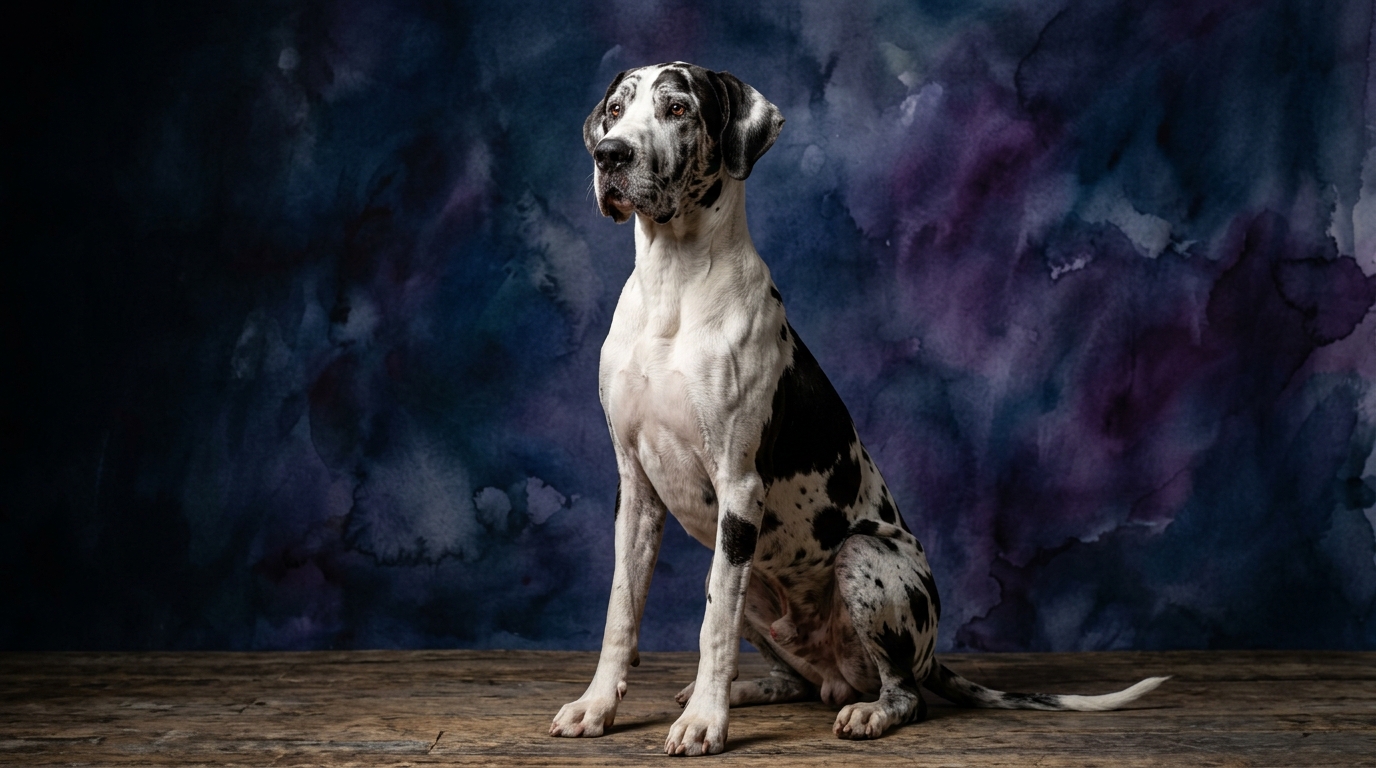
The Cosmic Pet Pet IQ Lab employs five key dimensions to evaluate canine cognition, offering a granular view of how each breed processes the world. For the Great Dane, we observe a Problem Solving score of 3/5, indicating competence in navigating moderately complex situations, often through learned sequences. Their Training Speed also stands at 3/5, suggesting they absorb new commands at an average pace, thriving with consistent, positive reinforcement. A notable strength is their Social Intelligence at 4/5, reflecting a deep capacity to interpret human emotions and social cues, fostering profound relational bonds. Their Instinctive Drive is rated 3/5, primarily channeled towards companionship and a gentle protective instinct for their family, while Memory is 3/5, allowing them to retain routines and familiar associations reliably.
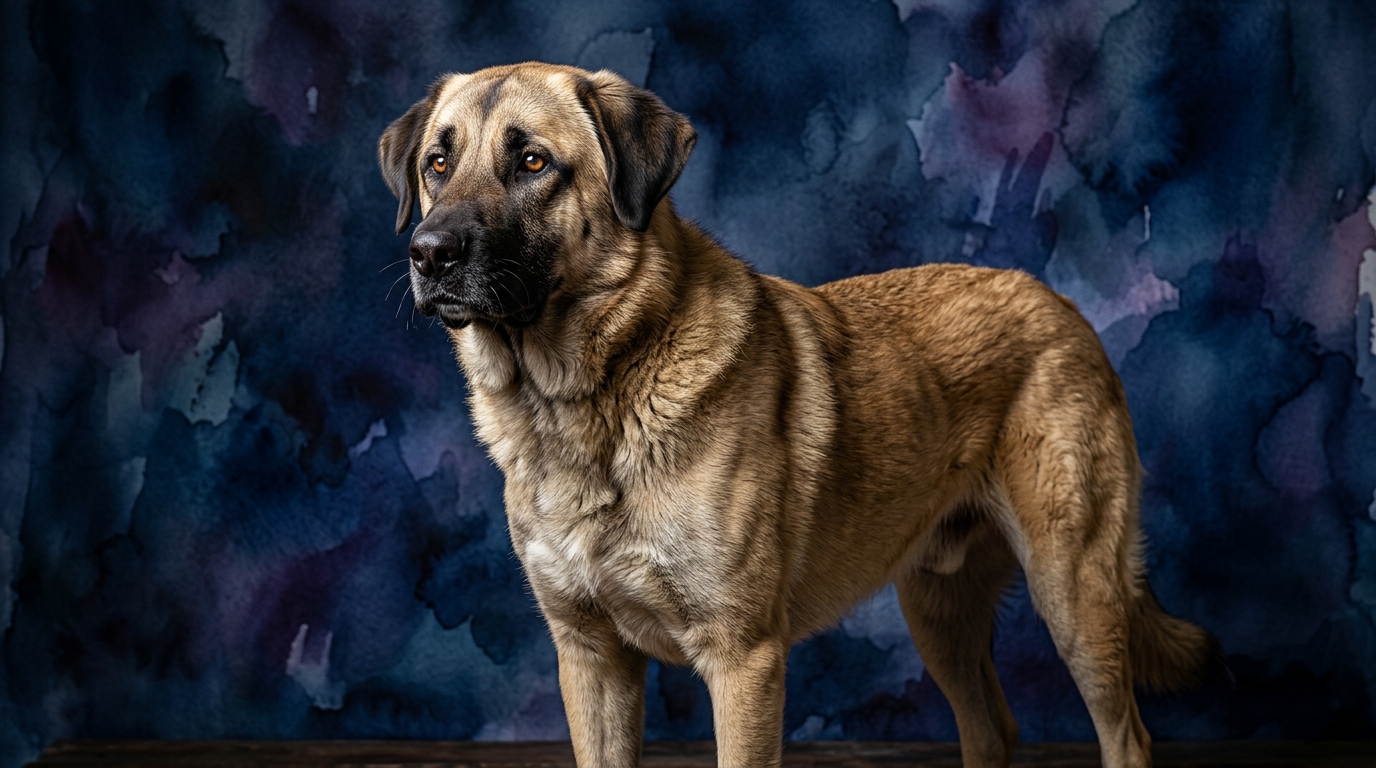
Turning to the Anatolian Shepherd Dog, their cognitive profile presents a different emphasis, despite some numerically similar scores. They also achieve a Problem Solving score of 3/5, yet this often manifests in practical, independent decision-making, particularly concerning their guarding responsibilities. Their Training Speed is 3/5, meaning they learn steadily but may require a more patient approach due to their independent streak. Social Intelligence is rated 3/5, indicating an understanding of their immediate social unit but a more reserved demeanor with outsiders. Their Instinctive Drive, also 3/5, is powerfully oriented towards guardianship and territorial protection, acting on these impulses with inherent confidence. Finally, their Memory is 3/5, robustly retaining information pertinent to their territory and the recognition of trusted individuals versus potential threats.
Where the Great Dane Excels Cognitively
The Great Dane's standout cognitive advantage lies squarely in its Social Intelligence, scoring a 4/5 compared to the Anatolian's 3/5. This higher social acumen translates into a remarkable perceptiveness of human emotional states and subtle social nuances, making them exceptionally responsive and empathetic companions. They possess an innate ability to 'read the room,' often adjusting their demeanor based on the mood of their human family members, which facilitates smoother integration into varied social dynamics. This superior social understanding means they are generally quicker to form deep, reciprocal bonds and are more inclined to seek and respond to human interaction and approval, making them highly adaptable to complex household environments and social gatherings.
Their cognitive strength in this area makes Great Danes particularly adept at tasks requiring close human-canine collaboration and emotional responsiveness. They can anticipate owner needs and reactions, often demonstrating a gentle sensitivity that reinforces their role as a devoted family member. This strong social drive also enhances their cooperativeness in training, as they are often motivated by the positive reinforcement of human praise and affection, building a strong working relationship based on mutual understanding.
Cognitive Strengths of the Anatolian Shepherd Dog
While many of the Anatolian Shepherd Dog’s cognitive scores align numerically with the Great Dane, their strengths are expressed through a distinct application of those abilities, particularly in their problem-solving and instinctive drive. Their Problem Solving score of 3/5 is not about navigating human-centric puzzles, but rather about autonomous decision-making in a protective context. This breed excels at assessing environmental cues, identifying potential threats, and formulating independent responses to secure their territory or livestock without constant human direction. Their cognitive process in these scenarios involves a sophisticated evaluation of risk and a proactive, self-reliant approach.
The Anatolian’s Instinctive Drive, also 3/5, is profoundly rooted in centuries of livestock guardianship, manifesting as an acute and unwavering sense of purpose. This drive is not merely a reaction but a complex cognitive program that enables them to patrol, survey, and protect their domain with minimal prompting. Their memory (3/5) is particularly robust for retaining territorial knowledge and recognizing patterns related to security, allowing them to distinguish between routine occurrences and genuine anomalies. This self-sufficiency and environmental awareness are critical cognitive assets, positioning them as highly effective, independent guardians.
Training Dynamics: Which Breed is More Amenable?
When considering ease of training, the Great Dane often presents a more straightforward path for the average owner. With a Training Speed of 3/5 and a Social Intelligence of 4/5, their inherent desire to please their human companions acts as a powerful motivator. They are generally responsive to positive reinforcement, praise, and social interaction, which helps cement learned behaviors. While they learn at an average pace, their eagerness for connection means they are typically more cooperative pupils, less inclined to question commands, and more focused on the trainer during sessions. Their responsiveness to human cues makes the training process feel like a shared activity rather than a directive.
The Anatolian Shepherd Dog, with a Training Speed of 3/5 and Social Intelligence of 3/5, requires a different training approach. Their independence and strong, inherent guarding instincts mean they may not be as inherently motivated by human approval as the Great Dane. They learn at a steady pace but often process commands through the lens of their utility and purpose, sometimes questioning directives that don't align with their perceived role or appear illogical to their task-oriented mind. Training an Anatolian demands exceptional patience, consistency, and a deep understanding of their guardian mindset, focusing on clear boundaries and demonstrating the value of cooperation in a way that resonates with their autonomous nature. They respond best to fair, firm, and respectful leadership that acknowledges their self-reliant cognitive style.
Matching Breeds to Lifestyles: Active vs. Relaxed Owners
For owners seeking a companion that seamlessly integrates into a relaxed yet engaged family lifestyle, the Great Dane often proves to be an an ideal match. While they do require regular exercise to maintain their physical well-being, their social intelligence and moderate instinctive drive mean they are equally content to lounge alongside their humans, participating in quiet family activities. They thrive on companionship and being an intrinsic part of daily household life, making them suitable for owners who prioritize close interaction and a gentle presence in their home. Their adaptability means they can adjust to various activity levels, as long as their need for social engagement is met.
The Anatolian Shepherd Dog, conversely, is better suited for owners who understand and respect their profound working heritage and independent cognitive style. These dogs require more than just exercise; they need a sense of purpose, whether that's guarding a property, overseeing livestock, or having a dedicated 'job' that engages their autonomous problem-solving and protective instincts. They are not typically a 'relaxed' lap companion in the same vein as a Great Dane, preferring a more structured environment where their natural drives can be constructively channeled. Owners must be prepared to provide ample space, consistent mental stimulation relevant to their guarding nature, and a lifestyle that accommodates their watchful and self-reliant demeanor.
The Verdict
Choose the Great Dane if you seek a deeply socially attuned companion who thrives on human interaction and seamlessly integrates into family life, offering gentle responsiveness and emotional connection.
Opt for the Anatolian Shepherd Dog if you desire an independent, resolute guardian with a strong sense of purpose, capable of autonomous decision-making in a protective role, and you appreciate a self-reliant canine partner.
🧠 Find Your Pet's IQ Score
Our Pet IQ Lab assessment covers 25+ tests across 5 cognitive dimensions — personalized to your breed.
Take the Full IQ Test →Frequently Asked Questions
How do their problem-solving skills differ in daily life?
The Great Dane's problem-solving (3/5) often involves navigating social situations or routines within a human household, focusing on learned patterns. The Anatolian Shepherd Dog's problem-solving (3/5) is typically applied to assessing environmental threats and making independent decisions in a guarding context, prioritizing security.
Are Great Danes truly 'gentle giants' from a cognitive perspective?
Yes, their 4/5 social intelligence score underpins their 'gentle giant' reputation. This cognitive trait allows them to be highly perceptive of human emotions and social cues, fostering a naturally empathetic and responsive demeanor that contributes to their gentle interactions.
What does the 'instinctive drive' score of 3/5 mean for both breeds?
For Great Danes, this score reflects a moderate drive towards companionship and family protection, manifesting as a watchful presence. For Anatolian Shepherd Dogs, the same score signifies a profound, autonomous drive for territorial and livestock guardianship, leading to proactive, independent security behaviors.