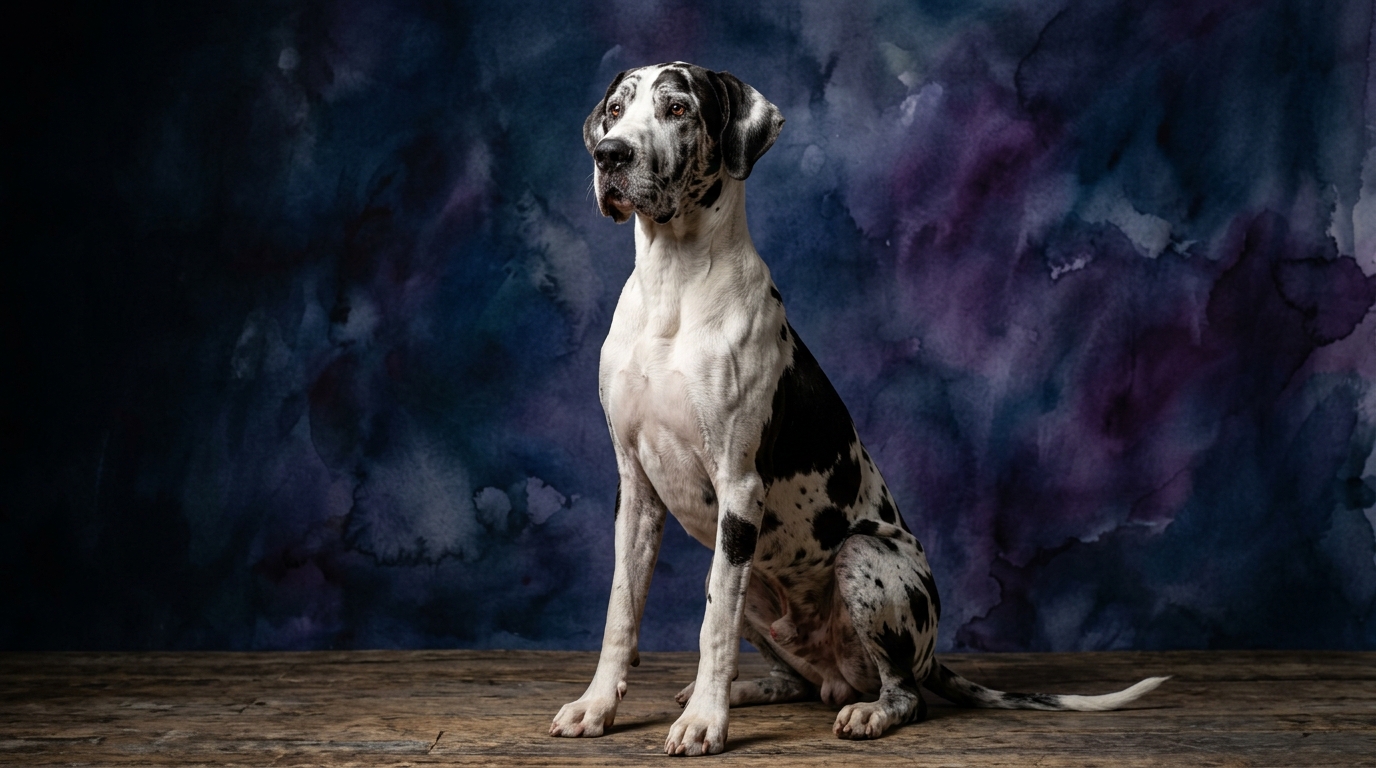
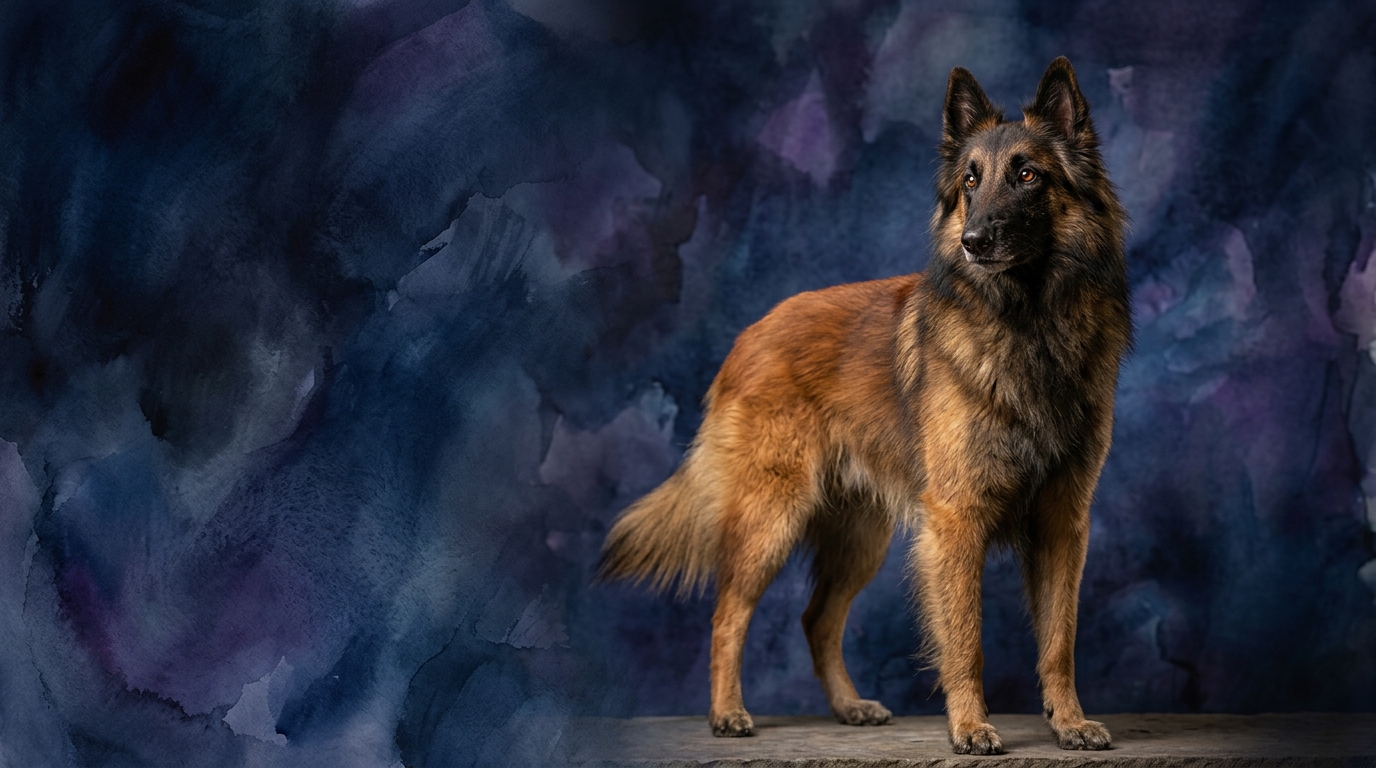
Side-by-Side Cognitive Profiles: Great Dane vs. Belgian Tervuren
At The Cosmic Pet Pet IQ Lab, we dissect canine cognition into five key dimensions to provide a nuanced understanding of each breed's mental landscape. For the Great Dane, a breed often revered for its gentle giant persona, its cognitive makeup reflects a focus on companionship and emotional attunement. Their Problem Solving is rated 3/5, indicating they are not typically quick to devise novel solutions on the fly, often relying on established routines or learned behaviors rather than spontaneous strategizing. Training Speed also scores 3/5; while capable learners, they require consistent, patient repetition to solidify commands and complex sequences. Where they truly shine is Social Intelligence, earning a 4/5 for their remarkable ability to read human emotions and social cues, forming deep, empathetic bonds. Their Instinctive Drive is a moderate 3/5, primarily manifesting as a desire for protection and comfort within their family unit, rather than strong prey or work drives. Finally, their Memory is 3/5, meaning they retain learned information and routines, though occasional refreshers may be beneficial for less frequently practiced tasks.
In stark contrast, the Belgian Tervuren, a breed rooted in herding and working roles, presents a cognitive profile geared towards efficiency, rapid learning, and independent thought. Their Problem Solving is an exceptional 5/5, showcasing an outstanding capacity to analyze complex situations and devise effective, adaptive solutions, even in unfamiliar environments. This analytical prowess is mirrored in their Training Speed, which also achieves a perfect 5/5; Tervurens grasp new commands and intricate sequences with remarkable swiftness, often requiring very few repetitions to master a concept. Their Social Intelligence, while competent, scores 3/5; they understand social hierarchies and human communication but are often more task-focused than emotionally demonstrative, and can be reserved with strangers. Instinctive Drive is 3/5, but this is a targeted drive, channelled into their herding heritage, often expressed as a desire to control movement or organize their environment. Their Memory is a flawless 5/5, allowing them to retain vast repertoires of learned knowledge and recall them reliably over extended periods, making them superb long-term learners.
Where the Great Dane Excels Cognitively
The Great Dane’s primary cognitive strength lies squarely in its superior Social Intelligence, scoring a 4/5 compared to the Tervuren’s 3/5. This dimension highlights their profound capacity for empathy and their intuitive understanding of human emotional states. A Great Dane frequently demonstrates an uncanny ability to sense when their human companion is distressed, offering a comforting nudge or a quiet presence without explicit instruction. This isn't merely about obedience; it's a deeper, more nuanced attunement to the emotional landscape of their family. They excel at forging strong, reciprocal bonds, often acting as a mirror to their owner’s mood. Their social acumen translates into a calm, reassuring presence that can be incredibly therapeutic, making them exceptional emotional support animals or gentle family companions who navigate the subtle dynamics of a household with grace. They are responsive to subtle shifts in tone and body language, often anticipating needs based on these delicate cues, making them highly intuitive partners in daily life.
Where the Belgian Tervuren Excels Cognitively
The Belgian Tervuren’s cognitive triumphs are concentrated in its exceptional Problem Solving (5/5), Training Speed (5/5), and Memory (5/5). This trifecta makes them an unparalleled force in tasks requiring rapid learning and sustained mental effort. Their problem-solving abilities are not just about overcoming obstacles; they involve foresight and strategic thinking, enabling them to navigate complex scenarios, such as intricate agility courses or searching for hidden objects, with remarkable efficiency. This breed doesn't just react; it plans. Their lightning-fast Training Speed means they absorb new commands and multi-step sequences with minimal repetition, often understanding the underlying concept rather than just rote memorization. This cognitive agility is further bolstered by their flawless Memory, allowing them to retain vast amounts of information and recall it accurately over long periods, making them ideal candidates for advanced obedience, protection work, or service roles where a wide repertoire of reliably executed behaviors is crucial. They thrive on the mental gymnastics of learning and applying knowledge.
Training Dynamics: Which Breed Learns Faster?
When considering ease of training, the Belgian Tervuren holds a distinct advantage, primarily due to its 5/5 Training Speed and 5/5 Memory. Tervurens are wired to learn rapidly and retain information reliably, making them exceptionally responsive to consistent, engaging training methods. Their inherent drive to work and solve problems means that training sessions are often perceived as stimulating games, fostering enthusiasm and quick comprehension. A Tervuren will often grasp a new command in just a few repetitions, eager for the next challenge. This doesn't mean they are 'easy' in the sense of requiring little effort; rather, their cognitive horsepower means they progress at an accelerated pace, but their keen intelligence also necessitates mental engagement to prevent boredom and potential destructive behaviors.
The Great Dane, with its 3/5 Training Speed and 3/5 Memory, requires a more patient and repetitive approach. They are willing to please and respond well to positive reinforcement, but their processing speed is more deliberate. Training a Great Dane involves breaking down tasks into smaller, manageable steps and repeating them consistently over time to ensure solid retention. Their desire for companionship means they respond well to training that strengthens the bond with their owner, viewing it as a shared activity rather than a competitive challenge. While they may not pick up complex sequences as quickly as a Tervuren, their eventual understanding is robust. Given their immense size, early and consistent training is paramount to ensure good manners and control, making patience a virtue for Great Dane owners.
Matching Canine Cognition to Owner Lifestyles
Understanding these cognitive profiles is crucial for matching a dog to an owner's lifestyle. The Belgian Tervuren, with its exceptional problem-solving, rapid training speed, and flawless memory, is undeniably suited for active owners. This breed demands consistent mental engagement and physical exertion; they thrive when given a purpose, whether it's through advanced obedience, agility, protection work, or other dog sports. An owner who can dedicate significant time to structured training, puzzle-solving, and regular vigorous exercise will find a Tervuren to be an incredibly rewarding and capable partner. Without sufficient mental and physical outlets, a Tervuren's unused cognitive energy can manifest as anxiety, boredom, or destructive tendencies, making them a challenging choice for a relaxed or inexperienced owner.
Conversely, the Great Dane, with its moderate cognitive scores across most dimensions but a high social intelligence, is an excellent fit for owners who appreciate a more relaxed pace but still value deep companionship. While Great Danes are large and require regular, moderate exercise to maintain their health, they do not possess the same relentless drive for constant mental challenges as a Tervuren. They are often content with a few good walks, some playtime, and plenty of quality time lounging with their family. Their high social intelligence means they need significant human interaction and thrive on being an integral part of the household, but they don't demand a constant schedule of complex tasks. Owners seeking an empathetic, devoted companion who enjoys a predictable routine and a strong emotional connection will find a Great Dane to be a perfect match, provided they can accommodate their size and moderate exercise needs.
The Verdict
Choose a Great Dane if you seek an empathetic, devoted companion who thrives on strong social bonds and a predictable routine, where a moderate pace of learning is acceptable.
Opt for a Belgian Tervuren if you are an experienced, active owner eager to engage a dog in demanding mental and physical activities, valuing rapid learning and excellence in complex tasks.
🧠 Find Your Pet's IQ Score
Our Pet IQ Lab assessment covers 25+ tests across 5 cognitive dimensions — personalized to your breed.
Take the Full IQ Test →Frequently Asked Questions
Do Great Danes require a lot of mental stimulation?
While Great Danes appreciate routine and companionship, their mental stimulation needs are moderate compared to breeds like the Tervuren. They benefit from consistent training, puzzle toys, and engaging in family activities, but don't typically demand complex, daily challenges to prevent boredom.
Are Belgian Tervurens good family dogs?
Belgian Tervurens can be excellent family dogs, especially for active families willing to engage them in training and activities. They are loyal and protective of their family but can be reserved with strangers and require socialization to ensure they are well-adjusted.
How does a dog's Coren rank relate to its IQ profile?
The Coren rank primarily reflects a breed's 'working and obedience intelligence,' which aligns closely with our 'training speed' and 'memory' dimensions. It indicates how quickly a dog learns new commands and obeys them, providing a good general indicator but not a full picture of their cognitive spectrum.