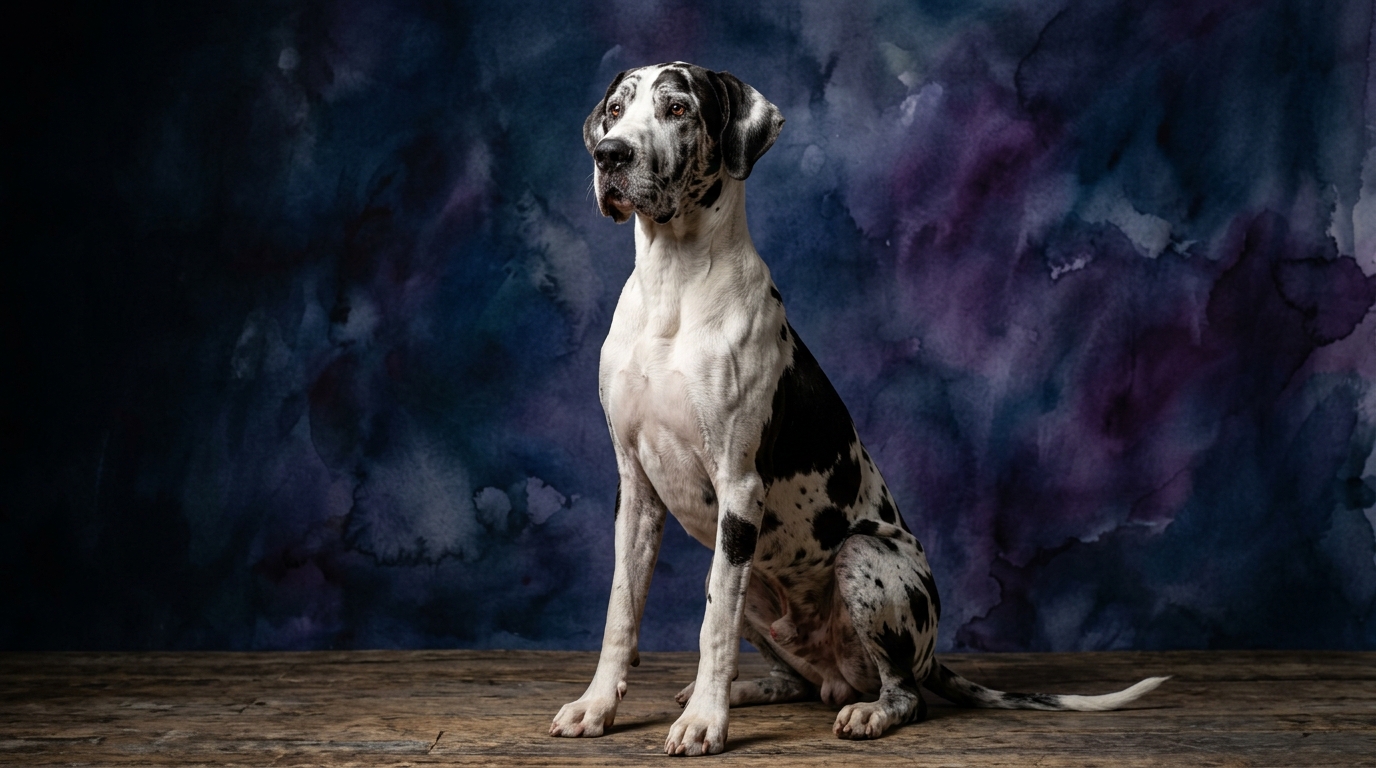
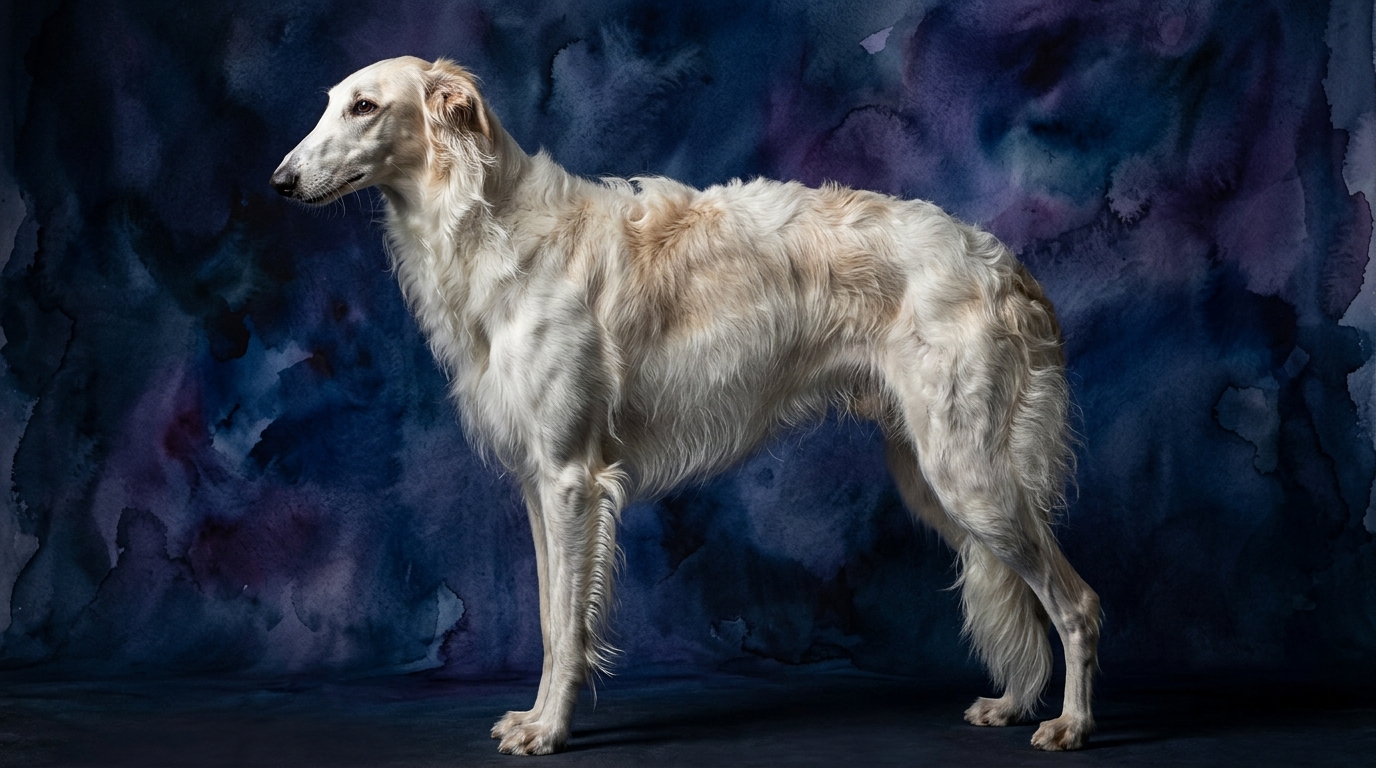
Side-by-Side Cognitive Profile: Great Dane vs. Borzoi
At The Cosmic Pet Pet IQ Lab, we evaluate canine intelligence across five key dimensions, providing a nuanced understanding beyond simple obedience. Let's delve into how the Great Dane and Borzoi compare in these specific areas.
Both the Great Dane and the Borzoi register a 3/5 in Problem Solving. This indicates that neither breed is predisposed to spontaneously devise complex solutions to novel problems without prior learning. They can effectively learn and execute routines and familiar challenges, but are unlikely to independently invent new strategies for intricate puzzles.
In Training Speed, both breeds again score 3/5. This suggests a moderate pace of learning new commands and behaviors. Owners should anticipate that consistent repetition and patient reinforcement will be necessary for both the Great Dane and the Borzoi to reliably acquire new skills, rather than expecting rapid, effortless mastery.
Social Intelligence is where the first notable divergence appears. The Great Dane scores 4/5, while the Borzoi earns a 3/5. The Great Dane exhibits a more pronounced sensitivity to human social cues and emotional states, often making them more attuned to their family's moods and interactions. The Borzoi, while forming deep attachments, tends to be more reserved and less overtly expressive in social contexts, often processing social information with a distinct independence.
Instinctive Drive is rated 3/5 for both breeds, though its manifestation differs significantly. For the Great Dane, this drive often presents as a protective instinct towards their family and territory, rooted in their historical role as guardians. For the Borzoi, this drive is acutely focused on their sighthound nature, compelling them to chase moving objects with intense, single-minded focus.
Finally, Memory for both breeds is a consistent 3/5. This implies a solid, but not exceptional, capacity for recalling learned commands, routines, and past experiences. Regular reinforcement helps maintain their recall abilities and ensures that learned behaviors remain sharp.
Beyond these five dimensions, it's worth noting their Coren rankings. The Great Dane stands at #48, suggesting they typically grasp new commands in 25-40 repetitions and obey the first command 50% of the time or better. The Borzoi, at #75, generally requires 40-80 repetitions for new commands and obeys the first command less reliably, often below 30% of the time, reflecting their more independent and selective nature.
Where the Great Dane Excels Cognitively
The Great Dane demonstrably shines in the realm of social intelligence, scoring a point higher than the Borzoi at 4 out of 5. This translates into a more pronounced sensitivity to human emotional states and social cues, often making them more responsive to their family's moods and intentions. Their higher Coren ranking of #48 further supports this, indicating a greater predisposition to understanding and executing human directives with fewer repetitions than the Borzoi. This cognitive edge means Great Danes often excel in roles requiring close partnership and a willingness to collaborate, making them intuitive companions who are often eager to engage in shared activities and respond to nuanced communication. They are frequently more attuned to their owner's desires and more easily integrated into complex family dynamics due to their perceptive understanding of social structures.
Where the Borzoi Holds Unique Cognitive Strengths
While the Borzoi’s general cognitive scores align or fall slightly below the Great Dane's, their unique sighthound heritage imbues them with a specialized form of cognitive strength. Their instinctive drive, while rated 3/5, is acutely honed for independent pursuit and observation, a particular kind of problem-solving that involves rapid assessment of movement and distance. This breed possesses an unparalleled focus when stimulated by a moving target, demonstrating exceptional visual processing and decision-making for their original purpose. Their social intelligence, rated 3/5, doesn't imply a lack of affection but rather a more discerning and independent approach to relationships, valuing quiet companionship and forming deep, albeit less overtly expressive, bonds with their chosen few. This reserved nature can be seen as a cognitive strength for owners who appreciate a dog capable of entertaining itself and not constantly seeking interaction, thriving in an environment where subtle communication is valued and overt displays of affection are not the primary measure of connection.
Which is Easier to Train and Why?
When it comes to trainability, the Great Dane generally presents an easier path for most owners. Their superior social intelligence, rated 4/5, means they are typically more attuned to human instruction and possess a stronger desire to please their handlers. This intrinsic motivation, coupled with their Coren rank of #48, suggests they will grasp new commands with fewer repetitions and respond more reliably to cues. Great Danes often approach training as a collaborative effort, eager to engage and understand what is being asked of them.
Conversely, the Borzoi’s independent sighthound nature, while not unintelligent, means they are often less motivated by pleasing humans and more by their own internal drives or external stimuli. Their Coren rank of #75 indicates a greater need for patience and consistency in training, as they may require more repetitions to solidify commands and might choose to obey only when they perceive value in it, rather than out of an inherent desire for compliance. Their strong prey drive can also make focus challenging in environments with tempting distractions, requiring dedicated, engaging, and highly rewarding training methods that account for their independent thought processes.
Matching Breeds to Lifestyles: Active vs. Relaxed Owners
For owners seeking a companion that balances activity with periods of calm, the Great Dane often fits seamlessly into various lifestyles. While they require regular exercise to maintain their physical and mental well-being, their social intelligence means they thrive on interaction and are generally content to relax indoors with their family after their needs are met. They adapt well to routines and enjoy being part of daily household activities, making them suitable for owners who enjoy shared, moderate physical engagement and consistent companionship, often enjoying long walks or playtime in a secure yard.
The Borzoi, on the other hand, presents a different dynamic. While often described as supremely relaxed and quiet indoors, even to the point of being couch potatoes, their sighthound heritage demands specific outlets for their energy. They need opportunities for intense, short bursts of running in a securely fenced area, where they can fully unleash their instinctive drive. This makes them ideal for owners who appreciate a calm indoor presence but are committed to providing dedicated, high-speed exercise sessions, often independently of human-led games, rather than long, sustained hikes or jogs. Their independent spirit means they may not always seek constant human engagement during their downtime, preferring to nap or observe quietly.
The Verdict
Choose a Great Dane if you seek a highly social companion eager to engage, relatively easier to train, and deeply attuned to family dynamics, valuing companionship and a desire to please.
Opt for a Borzoi if you appreciate an independent, reserved dog that forms deep, quiet bonds, requires specific, high-intensity exercise outlets, and offers a serene, almost feline presence indoors.
🧠 Find Your Pet's IQ Score
Our Pet IQ Lab assessment covers 25+ tests across 5 cognitive dimensions — personalized to your breed.
Take the Full IQ Test →Frequently Asked Questions
Are Great Danes good with children?
Great Danes, with their 4/5 social intelligence, are generally gentle and tolerant with children, often forming strong protective bonds. However, their immense size necessitates supervision to prevent accidental knocks, especially with very young children, ensuring a safe and harmonious environment for all.
Do Borzoi dogs need a lot of grooming?
Yes, Borzoi dogs have a long, silky coat that requires regular grooming to prevent matting and minimize shedding. Weekly brushing is typically sufficient to maintain their coat's condition, although some owners opt for professional grooming periodically to keep them looking their best.
What is the difference between a sighthound's and a working dog's intelligence?
A sighthound's intelligence, like the Borzoi's, is acutely focused on independent visual tracking and pursuit, demonstrating rapid decision-making in high-speed scenarios. A working dog's intelligence, exemplified by the Great Dane, often emphasizes cooperation, understanding complex commands, and problem-solving in partnership with humans to achieve tasks.