Unpacking Their Cognitive Blueprints: A Side-by-Side IQ Profile
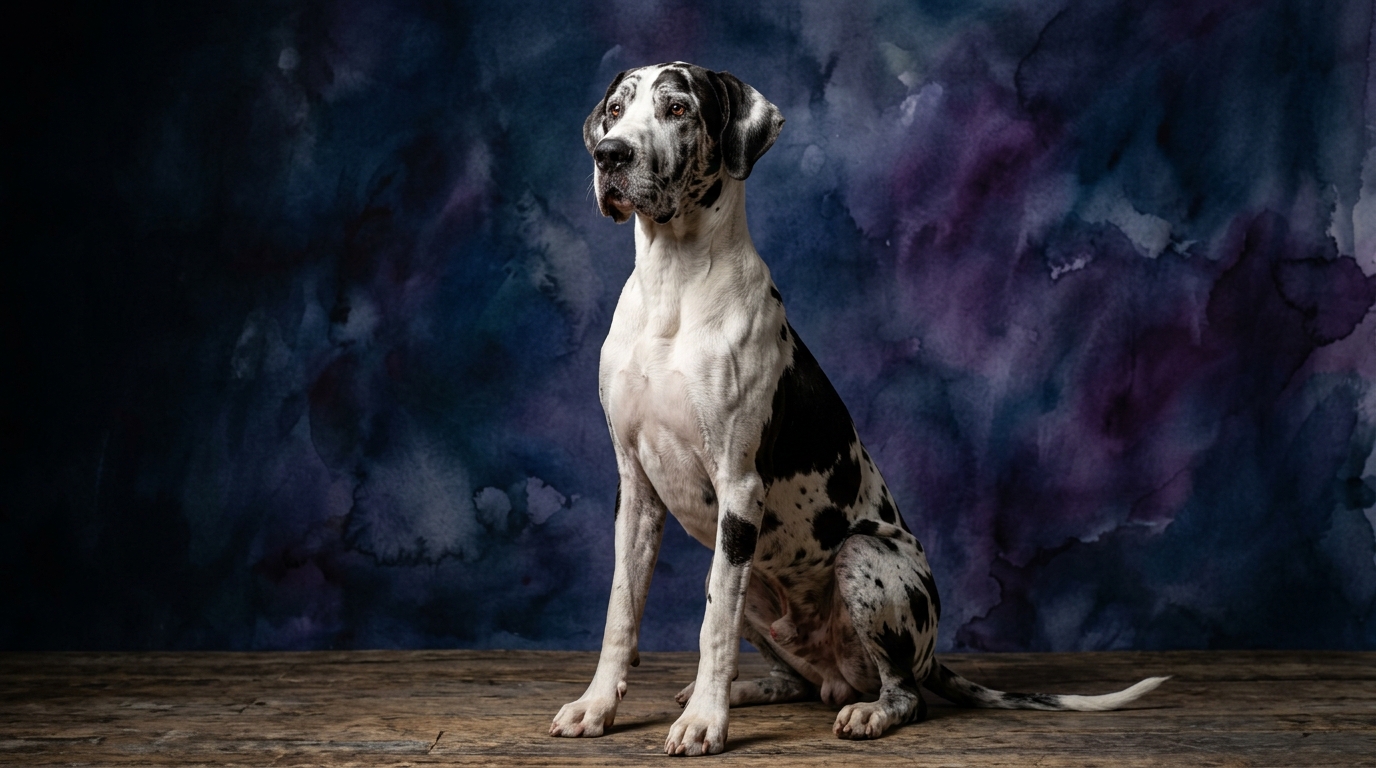
To truly appreciate the mental capabilities of the Great Dane and the Boston Terrier, we delve into their individual IQ dimensions, as cataloged by The Cosmic Pet Pet IQ Lab. The Great Dane, a member of the Working Group, registers a Coren rank of #48. Its problem-solving ability is rated 3/5, indicating a moderate capacity to navigate novel situations or figure out how to achieve a desired outcome. Training speed also stands at 3/5, suggesting a steady, consistent pace in learning new commands and routines. Where this breed shines is in social intelligence, scoring 4/5, reflecting a strong understanding of human cues, emotions, and group dynamics. Instictive drive is moderate at 3/5, hinting at a balanced presence of inherent behavioral patterns, while memory is also 3/5, indicating a fair retention of past experiences and learned information.
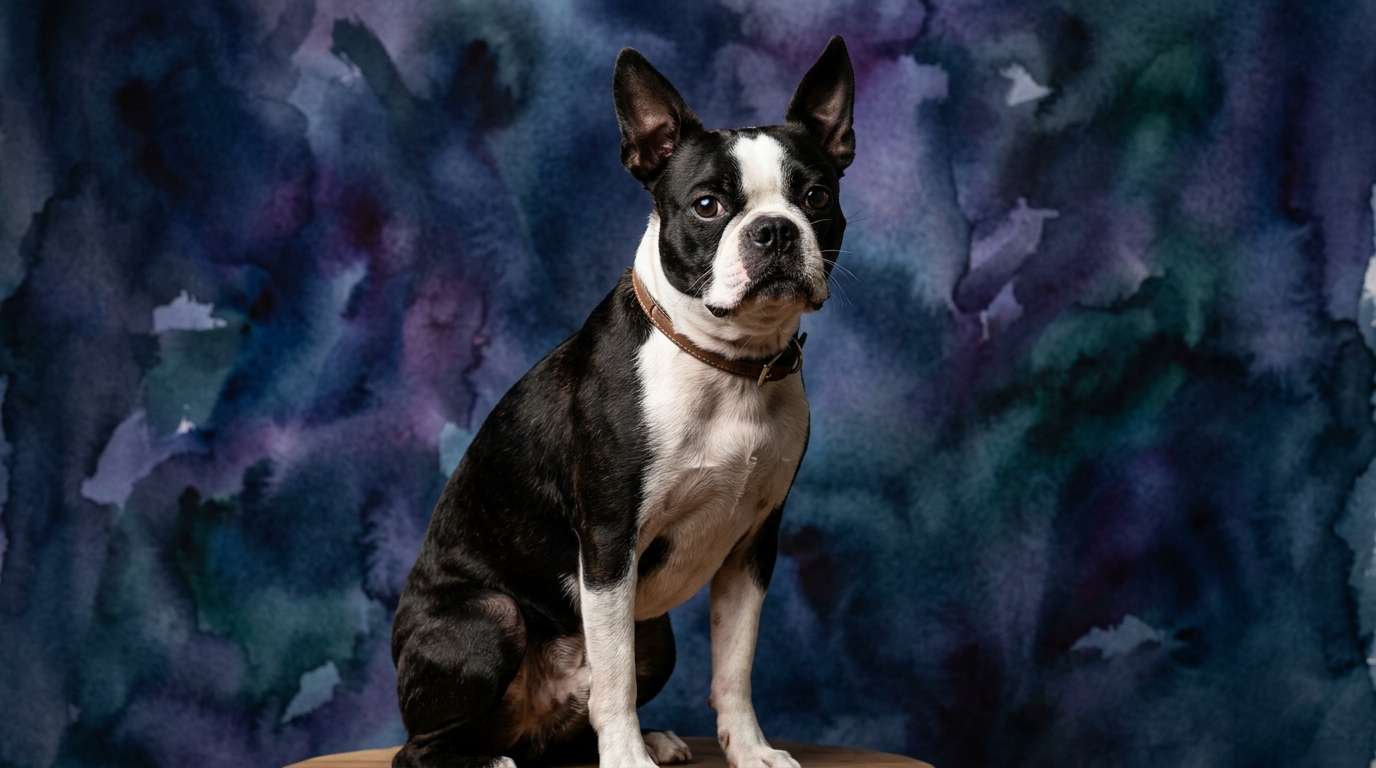
The Boston Terrier, hailing from the Non-Sporting Group, holds a Coren rank of #54, placing it just slightly below the Great Dane in the overall obedience and working intelligence spectrum. Cognitively, it mirrors the Great Dane in several key areas: problem-solving is 3/5, demonstrating a similar moderate aptitude for tackling mental challenges. Its training speed is also 3/5, suggesting an agreeable learning pace. Like the Great Dane, the Boston Terrier exhibits a robust social intelligence at 4/5, indicating a profound ability to connect with and respond to human interaction. The primary divergence appears in instinctive drive, where the Boston Terrier scores 2/5, signifying a lower prevalence of innate, primal behaviors compared to many other breeds. Its memory, like the Great Dane's, is rated 3/5, allowing for moderate recall of lessons and life events.
Where the Great Dane's Mind Finds Its Edge
While many cognitive metrics align between these two breeds, the Great Dane holds a distinct, albeit subtle, advantage in instinctive drive, scoring 3/5 compared to the Boston Terrier's 2/5. This difference is rooted in the Great Dane's heritage as a working breed, originally developed for tasks like hunting boar and guarding estates. This moderate instinctive drive manifests as a more pronounced awareness of its surroundings and a greater inclination towards vigilance or protective behaviors. This isn't about aggression, but rather an inherent predisposition to observe and react to changes in its environment, which can translate into a more attentive companion, particularly when it comes to monitoring the household or responding to external stimuli. Their capacity for problem-solving (3/5) combined with this drive suggests a dog that can apply its moderate ingenuity to tasks that align with its natural inclinations, such as understanding household routines or even navigating complex spaces.
Furthermore, the Great Dane's social intelligence at 4/5, combined with its larger physical presence, means it can leverage its understanding of human cues to act as a more imposing, yet gentle, guardian. This blend of moderate drive and high social awareness allows them to interpret human needs for security or companionship with a subtle, inherent readiness. This cognitive nuance makes them particularly adept at forming deep bonds built on mutual understanding and a foundational sense of protection, without being overly reactive or difficult to manage for an owner who appreciates this deeper engagement.
The Boston Terrier's Unique Cognitive Strengths
The Boston Terrier, despite not outscoring the Great Dane in any direct category, presents its own unique cognitive strengths, particularly stemming from its lower instinctive drive (2/5). This reduced drive is not a deficit, but rather an adaptive advantage in a domestic setting. A Boston Terrier is less likely to be compelled by strong primal urges to chase, dig, or herd, making them inherently less prone to behaviors that require significant channeling or redirection. This contributes to their reputation as adaptable and generally well-behaved house companions, as their mental energy is less consumed by innate drives that might conflict with human living arrangements. Their moderate problem-solving (3/5) and memory (3/5) are directed more towards understanding and navigating their immediate human-centric world, rather than fulfilling complex working roles.
Their high social intelligence (4/5) truly shines in this context of lower instinctive interference. Without strong competing drives, Boston Terriers are exceptionally focused on human interaction and communication. They excel at reading moods, understanding routines, and seeking engagement, often becoming highly attuned to their owners' daily lives. This makes them remarkably responsive to social cues and eager to please, channeling their moderate learning capabilities into being excellent family members. Their cognitive profile suggests a companion whose intelligence is primarily directed towards harmonious living and strong interpersonal bonds, making them highly desirable for those seeking a less instinct-driven, more purely companion-focused canine.
Training Dynamics: Which Breed Learns with Greater Ease?
When considering ease of training, both the Great Dane and the Boston Terrier share a training speed score of 3/5 and an impressive social intelligence of 4/5. This commonality suggests that both breeds respond well to positive reinforcement, clear communication, and consistent methods. Their strong social intelligence means they are inherently motivated to engage with their human companions and understand what is expected of them, making the training process a collaborative effort rather than a battle of wills. Owners of both breeds will likely find them receptive to learning basic commands and house rules at a steady pace, benefiting from patience and reward-based approaches.
However, the subtle difference in instinctive drive plays a role in the nuances of their trainability. The Great Dane's slightly higher instinctive drive (3/5) means that while they are eager to learn, they might occasionally be distracted by environmental stimuli related to their inherent vigilance or protective instincts. Training might sometimes involve redirecting these natural urges into appropriate channels. The Boston Terrier, with its lower instinctive drive (2/5), may present fewer instinct-driven distractions during training sessions. Their focus can be more singularly directed towards the human handler and the task at hand, potentially making them appear slightly more straightforward to train for general obedience in a typical home environment, as there are fewer competing primal motivations to manage. Both breeds benefit from early socialization to harness their social intelligence effectively, ensuring they apply their learning to a wide range of situations and interactions.
Matching Minds to Lifestyles: Active vs. Relaxed Owners
Choosing between a Great Dane and a Boston Terrier based on lifestyle involves understanding how their cognitive profiles translate into daily needs and behaviors. For active owners, the Great Dane presents a compelling choice. Their moderate problem-solving (3/5) and memory (3/5) mean they benefit significantly from consistent mental stimulation, such as advanced obedience, puzzle toys, or even participation in dog sports that accommodate their size. Their 3/5 instinctive drive, while not as intense as some working breeds, still means they appreciate having a 'job' or purpose, even if it's just being a vigilant companion on hikes or during outdoor activities. An active owner who can provide structured exercise and engage their large companion in thoughtful ways will find the Great Dane a rewarding partner, capable of handling varied environments with a calm, observant demeanor.
Conversely, the Boston Terrier is often an ideal fit for more relaxed owners. Their compact size and lower instinctive drive (2/5) mean they are less prone to demanding strenuous physical outlets or exhibiting strong territorial behaviors that require constant management. While they still thrive on mental engagement through training and interactive play, their needs are generally more adaptable to smaller living spaces and less intense daily routines. Their high social intelligence (4/5) ensures they are content being close companions, happy to participate in whatever their owner is doing, whether it's a leisurely walk in the park or a quiet evening at home. A relaxed owner who values companionship, consistent but moderate mental enrichment, and a dog that integrates seamlessly into a calm household will find the Boston Terrier's cognitive makeup perfectly aligned with their lifestyle.
The Verdict
Choose the Great Dane if you seek a vigilant, socially attuned companion with a moderate drive for purpose, capable of learning complex tasks, and who can accommodate a large, gentle giant in a consistent, engaging environment.
Opt for the Boston Terrier if you're looking for a compact, socially responsive companion with fewer instinct-driven behaviors, adaptable to various living situations, and who appreciates consistent, moderately paced learning and close interaction.
🧠 Find Your Pet's IQ Score
Our Pet IQ Lab assessment covers 25+ tests across 5 cognitive dimensions — personalized to your breed.
Take the Full IQ Test →Frequently Asked Questions
Do Great Danes or Boston Terriers require more mental stimulation?
Both breeds have similar problem-solving and memory scores (3/5), indicating they both benefit from regular mental stimulation. The Great Dane's slightly higher instinctive drive might mean they appreciate tasks that engage their natural vigilance, while the Boston Terrier's stimulation often revolves around social interaction and learning new tricks for companionship.
Which breed is better for first-time dog owners?
Both breeds possess high social intelligence (4/5) and moderate training speed (3/5), making them generally receptive to training for first-time owners. The Boston Terrier's smaller size and lower instinctive drive might make them slightly easier to manage in a new owner's household, while a Great Dane requires an owner comfortable with their large size and potential protective instincts.
Are Great Danes or Boston Terriers more independent thinkers?
With problem-solving scores of 3/5 for both, neither breed is exceptionally independent in their thinking compared to breeds with higher scores, but they are capable of moderate self-reliance in certain situations. Their strong social intelligence means they are generally inclined to look to their human companions for guidance rather than acting purely independently.