Side-by-Side Cognitive Profiles
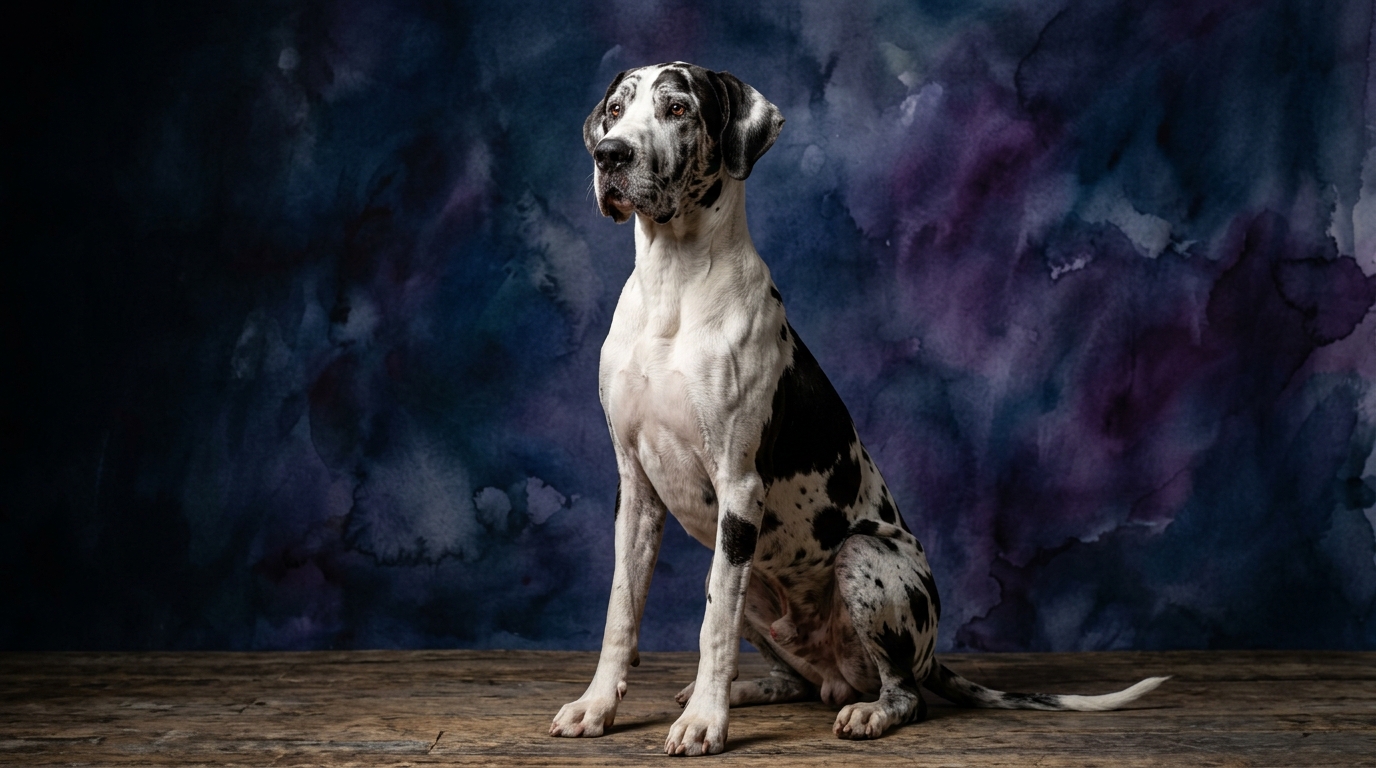
The Cosmic Pet Pet IQ Lab employs a five-dimensional framework to assess canine intelligence, offering a nuanced view beyond a simple ranking. For the Great Dane, a Working group dog ranking #48 in Coren’s intelligence list, their profile includes Problem Solving at 3/5, Training Speed at 3/5, Social Intelligence at 4/5, Instinctive Drive at 3/5, and Memory at 3/5. This suggests a dog with moderate abilities across most cognitive areas, but a notable strength in understanding social cues and forming deep connections.
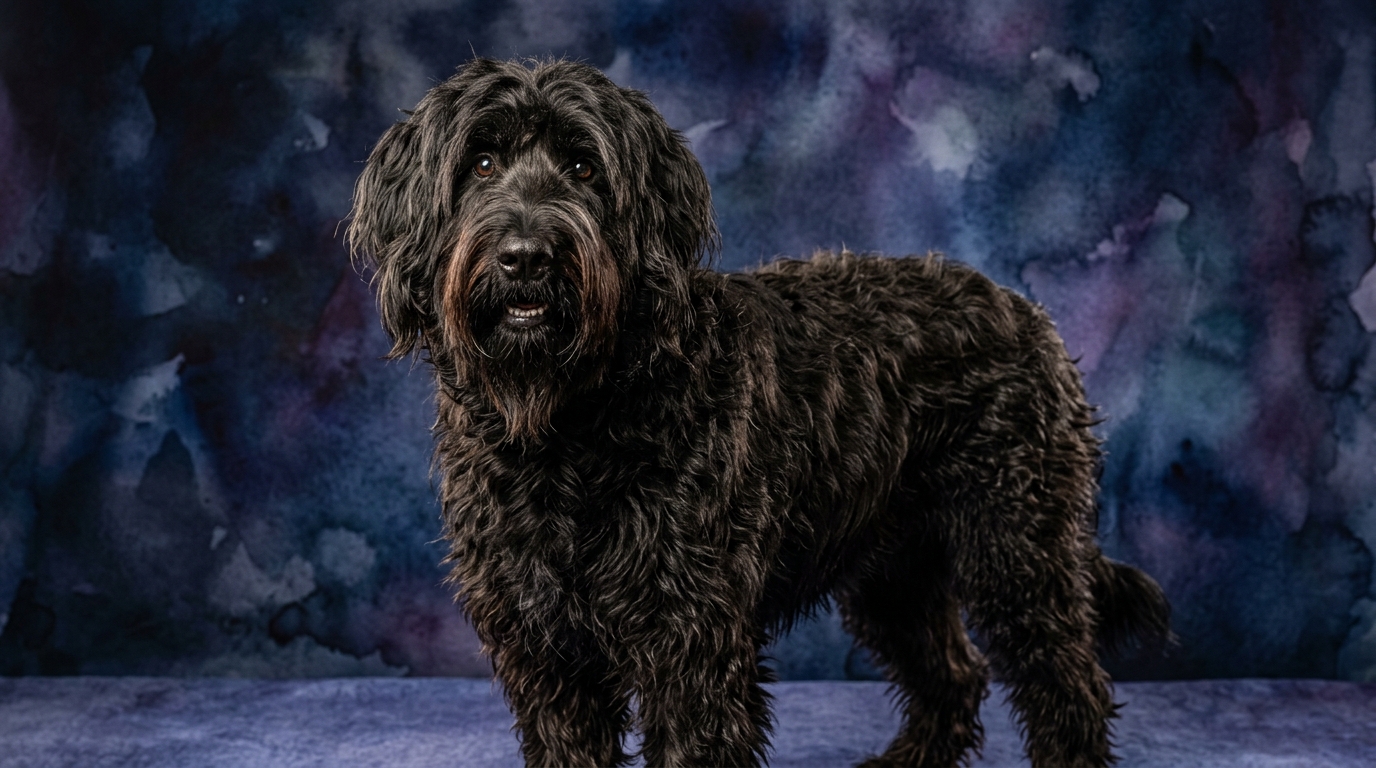
In contrast, the Briard, a Herding group dog with a higher Coren rank of #30, presents a different cognitive blueprint. Their IQ scores are: Problem Solving 4/5, Training Speed 4/5, Social Intelligence 3/5, Instinctive Drive 3/5, and Memory 4/5. This profile indicates a breed with enhanced capabilities in practical problem-solving, rapid learning, and strong retention, reflecting their heritage of independent decision-making in the field. Both breeds share a moderate Instinctive Drive, but its manifestation differs due to their distinct historical roles.
Where the Great Dane Shines Cognitively
The Great Dane's standout cognitive strength lies in their Social Intelligence, rated at an impressive 4/5 compared to the Briard's 3/5. Great Danes excel at interpreting and responding to human emotions and social structures, often displaying a remarkable capacity for empathy. They are quick to pick up on their owner's mood or intentions, making them exceptional companions in a family setting. This acute social awareness fosters a strong bond, allowing them to integrate seamlessly into household dynamics and often anticipating needs or offering comfort without explicit commands. This cognitive advantage contributes significantly to their reputation as deeply attuned companions, making them highly responsive to their family's social cues and emotional states.
Where the Briard Holds the Cognitive Edge
The Briard demonstrates a clear cognitive advantage in several key areas. With a Problem Solving score of 4/5 (versus the Great Dane’s 3/5), they approach new situations with a thoughtful, analytical demeanor, often devising solutions to obstacles rather than passively waiting for direction. Their heritage as herding dogs instilled a capacity for independent decision-making and strategic thinking. This practical intelligence is complemented by a quicker Training Speed (4/5 versus 3/5), allowing them to grasp complex sequences and abstract concepts with greater facility. Furthermore, their superior Memory (4/5 versus 3/5) ensures that once a lesson is learned or a solution discovered, it is retained effectively, making their learning durable and consistent. This combination of robust processing power, rapid acquisition, and enduring recall positions the Briard as a formidable learner, particularly in task-oriented environments.
Trainability: A Tale of Two Temperaments
When considering ease of training, the Briard generally presents as the more readily trainable breed, largely attributable to their superior Training Speed rating of 4/5 compared to the Great Dane's 3/5. Briards were historically bred to work independently, making quick decisions while managing livestock, which fostered a strong desire to understand and execute tasks efficiently. This inherent drive for purpose means they often approach training sessions with eagerness and a natural inclination to engage mentally, absorbing new commands and complex routines at a faster rate. Their higher Problem Solving and Memory scores also contribute, allowing them to not only learn quickly but also to apply and retain what they've learned in varied contexts. In contrast, while Great Danes are certainly trainable, their learning curve is more moderate, requiring consistent, patient, and often more repetitive reinforcement to solidify behaviors. Their focus might be more on social connection than task mastery, meaning trainers need to leverage that social bond to motivate learning effectively.
Matching Canine Cognition to Owner Lifestyles
For active owners seeking a canine partner for ventures beyond basic walks, the Briard is often the more fitting choice. Their background demands consistent mental engagement and physical activity; they thrive when given a job, whether it's advanced obedience, agility, or engaging in complex puzzle games that tap into their problem-solving abilities. Their robust nature and desire for purpose mean they are not content to simply lounge, requiring consistent mental and physical outlets to prevent boredom and channeling their instinctive drives constructively. Conversely, the Great Dane typically aligns better with owners who appreciate a more relaxed lifestyle. While they still require regular exercise to maintain their physical health, their cognitive profile leans towards companionship and social interaction rather than intense, task-oriented activity. They are often content to be near their human family, enjoying gentle walks and comfortable lounging, making them suitable for individuals or families whose primary desire is a deeply affectionate, socially attuned companion rather than a high-octane working partner.
The Verdict
Choose the Great Dane if you prioritize a deeply empathetic and socially attuned companion who thrives on close family bonds and gentle interaction, valuing presence over performance.
Opt for the Briard if you seek a mentally agile partner eager to learn, solve problems, and engage in purposeful activities, offering a rewarding challenge for an active, dedicated owner.
🧠 Find Your Pet's IQ Score
Our Pet IQ Lab assessment covers 25+ tests across 5 cognitive dimensions — personalized to your breed.
Take the Full IQ Test →Frequently Asked Questions
Is a Great Dane or Briard better for first-time dog owners?
A Great Dane might be slightly more forgiving for a first-time owner due to their higher social intelligence and generally more relaxed demeanor, requiring less intensive mental stimulation. Briards, with their independent nature and higher drive for mental tasks, often benefit from owners experienced in channeling their energy and cognitive abilities.
Do Briards require more grooming due to their coat?
Yes, Briards typically require more intensive grooming than Great Danes. Their long, shaggy double coat needs regular brushing to prevent matting and remove debris, a commitment that ensures their comfort and coat health. Great Danes have a short, smooth coat that is significantly lower maintenance.
How do their instinctive drives manifest differently?
Both breeds have a 3/5 instinctive drive, but it manifests uniquely. The Great Dane's drive often leans towards protection and companionship, manifesting as a desire to be with and guard their family. The Briard's drive is rooted in their herding heritage, often seen in their inclination to gather or "manage" family members, or a strong desire for a job to do.