Side-by-Side IQ Profile: Great Dane vs. Bull Terrier
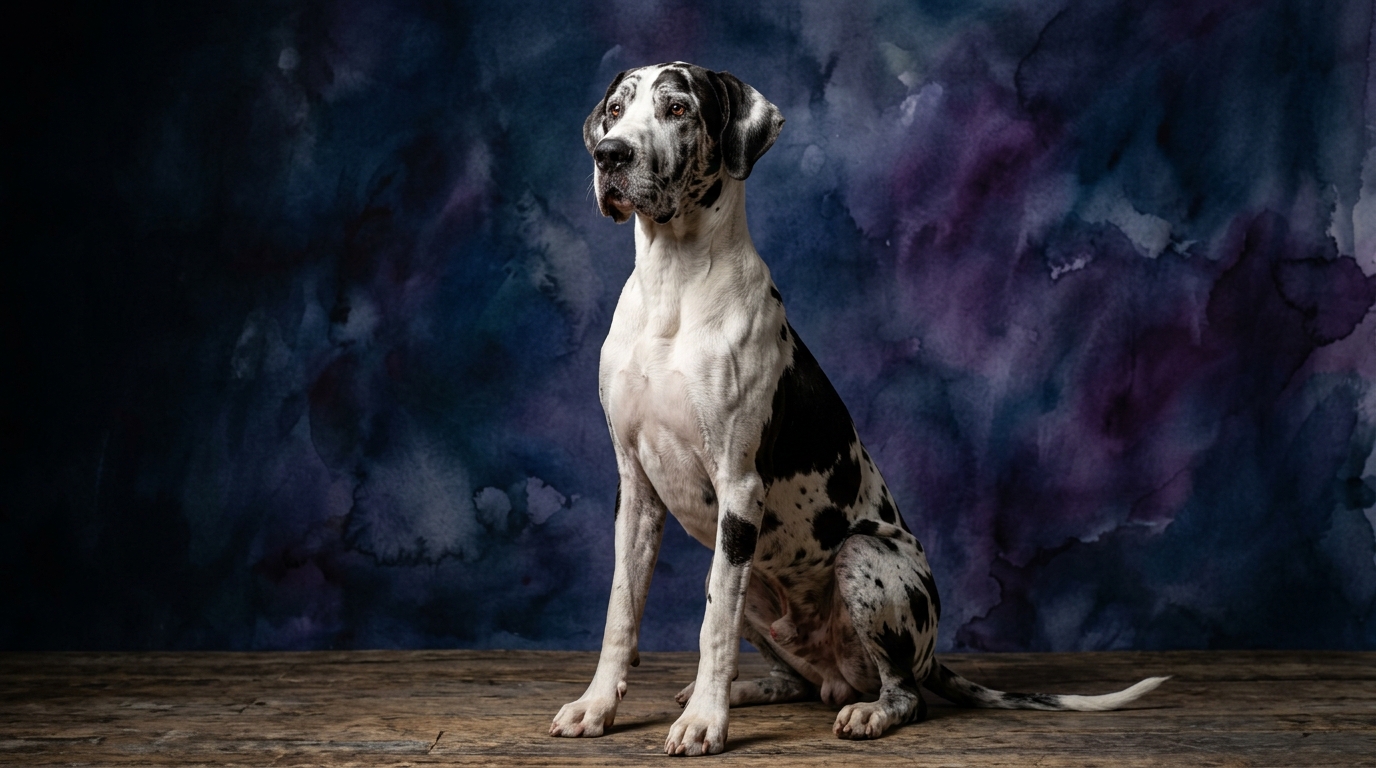
At The Cosmic Pet Pet IQ Lab, we delve beyond appearances to map the unique cognitive landscapes of different breeds. For the Great Dane, classified within the Working group with a Coren rank of #48, their IQ profile reveals a balanced and socially attuned intellect. Their Problem Solving ability is rated 3/5, indicating a capacity for navigating moderately complex situations, often with a thoughtful, observant approach. Training Speed is also 3/5, meaning they learn new commands at a steady pace, generally responding well to consistent, positive methods. A standout trait is their Social Intelligence at 4/5, reflecting a deep understanding of human emotions and social cues, fostering strong bonds. Instinctive Drive sits at 3/5, manifesting as a protective yet gentle companionship, while Memory is 3/5, allowing them to retain learned behaviors and recognize familiar faces and routines effectively.
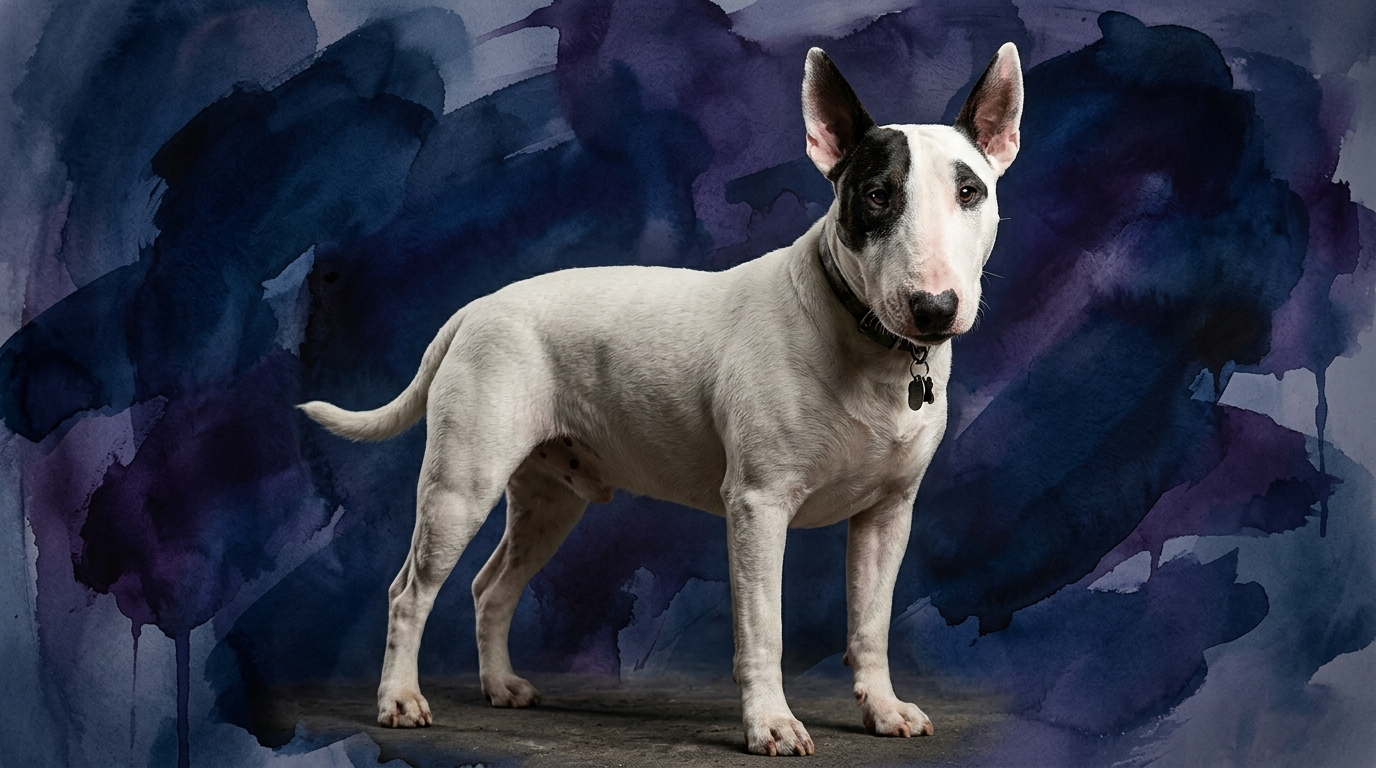
In contrast, the Bull Terrier, a member of the Terrier group with a Coren rank of #66, exhibits a profile characterized by determination and a certain independent spark. Their Problem Solving ability matches the Great Dane at 3/5, though their approach often involves persistent, sometimes headstrong, trial-and-error rather than quiet contemplation. Training Speed is likewise 3/5, suggesting they are capable learners but may require more engaging and varied methods to maintain focus and enthusiasm. Their Social Intelligence is 3/5, indicating a capacity for connection, albeit often expressed with a more self-reliant demeanor compared to the Great Dane's overt empathy. Instinctive Drive is 3/5, rooted in their terrier heritage, manifesting as a focused enthusiasm for tasks and a robust zest for life. Finally, their Memory is 3/5, allowing them to recall experiences and training, though their independent nature might sometimes influence their willingness to apply that recall.
Where the Great Dane Wins Cognitively
The Great Dane's cognitive edge lies most distinctly in its superior Social Intelligence, rated 4/5 compared to the Bull Terrier’s 3/5. This higher rating translates into a profound capacity for emotional resonance and nuanced interaction. Great Danes often exhibit an empathetic understanding of human moods, providing comfort or quiet companionship when sensing distress. They are adept at reading subtle body language and vocal tones, which allows for a remarkably intuitive bond with their families. This social acuity helps them integrate seamlessly into household dynamics, often becoming a gentle, observant presence that responds thoughtfully to the ebb and flow of family life.
Furthermore, their Coren rank of #48 places them significantly higher than the Bull Terrier’s #66, suggesting an overall cognitive architecture that lends itself to a broader range of working intelligence, even if individual dimensions are similar. This general cognitive advantage, combined with their social prowess, means Great Danes can often anticipate needs or react appropriately in complex social situations without explicit commands. They process their environment with a calm, discerning intellect, making them naturally attuned to their human companions' unspoken communications and emotional states, fostering a deeper, more reciprocal connection than many other breeds.
Where the Bull Terrier Wins Cognitively
While sharing several cognitive ratings with the Great Dane, the Bull Terrier’s unique blend of instinctive drive and problem-solving manifests as a tenacious and spirited approach to the world. Their 3/5 rating in Problem Solving, when combined with their strong-willed nature and 3/5 Instinctive Drive, often translates into an unyielding determination to achieve a goal. A Bull Terrier presented with a puzzle might not contemplate it with the Great Dane's quiet observation but will instead engage with robust, persistent attempts, sometimes demonstrating surprising ingenuity born from sheer refusal to give up. This makes them particularly adept at tasks requiring focus and endurance, such as scent work or agility courses where their drive can be channeled.
The Bull Terrier's independent streak, a hallmark of many terrier breeds, can also be seen as a cognitive strength in certain contexts. While it might pose training challenges, it also means they are less reliant on constant human direction and can exhibit a degree of self-sufficiency in navigating novel situations. Their physical robustness and eagerness to engage with their environment mean they often approach new stimuli with a confident, exploratory mindset. This cognitive resilience, coupled with their spirited energy, makes them effective at overcoming obstacles through sheer force of will and a unique brand of creative persistence.
Which is Easier to Train and Why?
Both Great Danes and Bull Terriers share a Training Speed rating of 3/5, indicating that neither is a lightning-fast learner nor particularly difficult to train, but their methodologies for success diverge significantly due to their behavioral differences. The Great Dane’s higher Social Intelligence (4/5) and desire to please make them generally more receptive to training, particularly when positive reinforcement and gentle methods are employed. They are sensitive to tone and body language, thriving on praise and connection. Harsh corrections can easily discourage a Great Dane, making them shut down. Their inherent desire for companionship means they often view training as another form of bonding, which can accelerate their learning curve once a strong rapport is established.
The Bull Terrier, on the other hand, with its 3/5 Social Intelligence and pronounced independent streak, requires a different training approach. While equally capable of learning, they often possess a 'what's in it for me?' attitude. Training sessions need to be engaging, consistent, and interspersed with play to prevent boredom and harness their energetic, sometimes stubborn, nature. Their instinctive drive (3/5) means they can be easily distracted by environmental stimuli, demanding a trainer who can maintain their focus with high-value rewards and varied exercises. Success with a Bull Terrier comes from patience, creativity, and turning training into a game where they feel like they are winning, rather than being commanded.
Which Suits Active Owners vs. Relaxed Owners?
Considering their cognitive profiles and inherent temperaments, the Great Dane typically aligns better with relaxed owners, while the Bull Terrier flourishes with active companions. Great Danes, despite their imposing size, are often described as 'gentle giants' who enjoy a more moderate pace of life. Their strong social intelligence (4/5) means they thrive on close companionship and quiet time with their family. They require daily walks and opportunities for yard play, but they are not typically high-energy dogs that demand constant vigorous activity. Their calm demeanor and empathetic nature make them excellent companions for owners who appreciate a peaceful home environment and a deeply connected, observant pet.
Conversely, the Bull Terrier's robust energy, 3/5 instinctive drive, and tenacious problem-solving approach demand an owner who can match their enthusiasm and provide consistent mental and physical challenges. They are a breed that thrives on structured play, regular exercise, and engaging activities like dog sports, extensive walks, or interactive puzzle toys. An active owner who enjoys consistent training, outdoor adventures, or dog park visits will find the Bull Terrier to be an engaging and spirited partner. Without sufficient outlets for their cognitive and physical energy, Bull Terriers can become bored and channel their determination into less desirable behaviors, making them a better fit for those who embrace an energetic lifestyle.
The Verdict
Choose a Great Dane if you seek a deeply empathetic, thoughtful companion who will integrate seamlessly into a calmer family environment and thrives on quiet, social connection.
Choose a Bull Terrier if you desire a tenacious, spirited partner who will engage enthusiastically in consistent mental and physical challenges, and whose independence you appreciate.
🧠 Find Your Pet's IQ Score
Our Pet IQ Lab assessment covers 25+ tests across 5 cognitive dimensions — personalized to your breed.
Take the Full IQ Test →Frequently Asked Questions
Are Great Danes good with children?
Yes, Great Danes typically exhibit a gentle and patient temperament with children, largely due to their high social intelligence (4/5). They are often very tolerant and protective, making them excellent family pets when properly socialized and supervised, understanding the delicate nature of interactions with younger family members.
Do Bull Terriers get along with other pets?
Bull Terriers can coexist with other pets, but it requires careful, early socialization and consistent training due to their 3/5 instinctive drive and independent nature. Their terrier heritage means some may have a strong prey drive, so introductions to smaller animals should always be managed and supervised to ensure safety and harmony.
What kind of mental stimulation do Great Danes need?
Great Danes benefit from mental stimulation that engages their 3/5 problem-solving and memory skills, often through interactive puzzle toys, obedience training, and opportunities for social interaction. Engaging them in gentle games that require thoughtful decision-making or learning new, complex commands will keep their minds sharp and content.