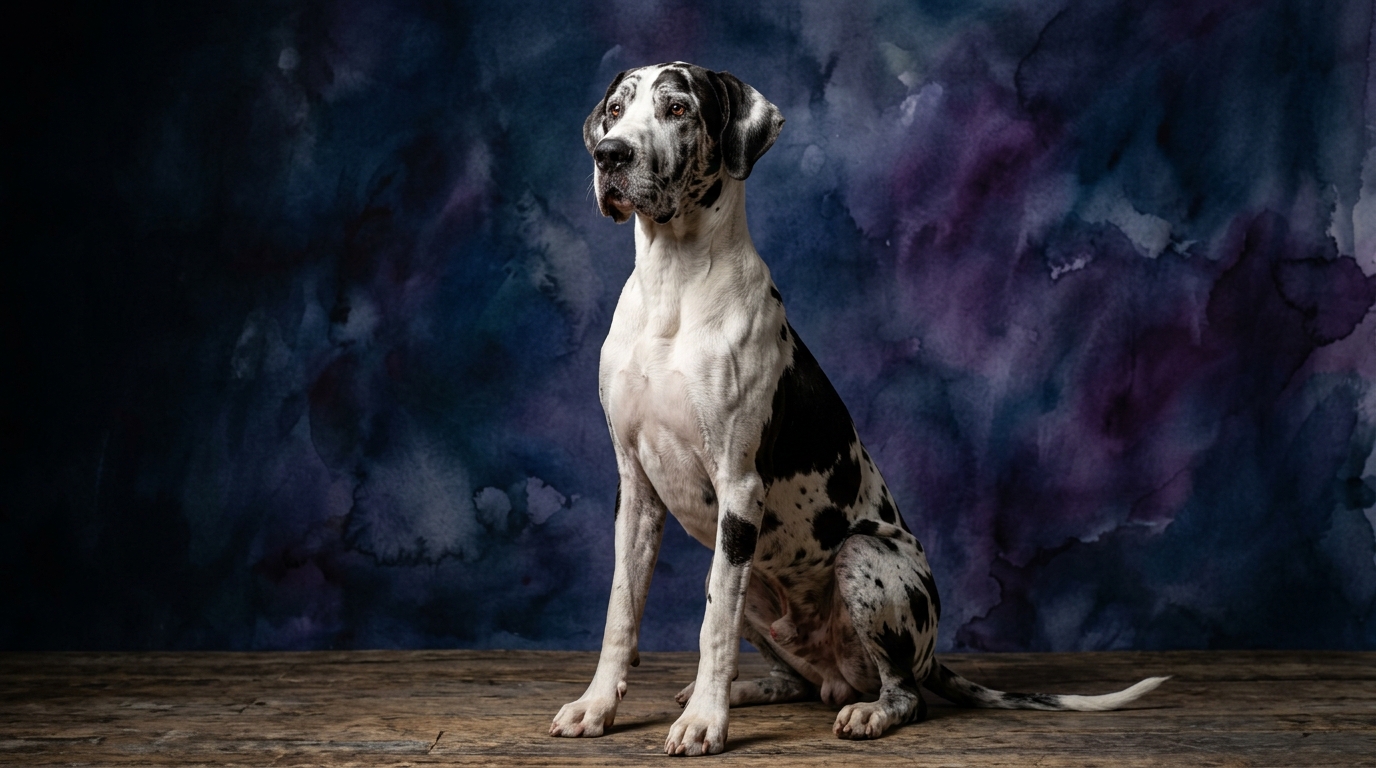
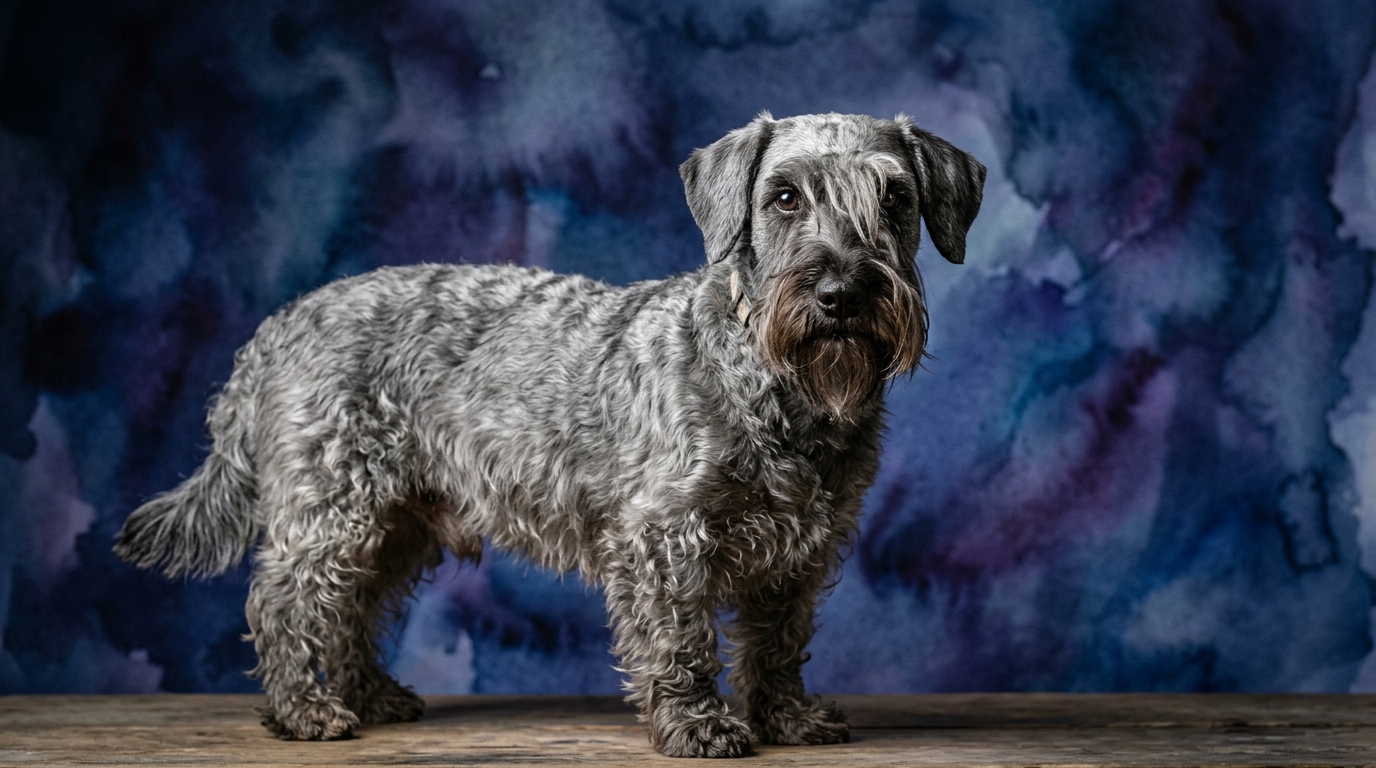
Side-by-Side IQ Profile: Great Dane vs. Cesky Terrier
The Cosmic Pet Pet IQ Lab assesses canine intelligence across five key dimensions, providing a nuanced view of how breeds process and interact with their world. For the majestic Great Dane, ranked #48 by Coren for working and obedience intelligence, its profile includes a Problem Solving score of 3/5, indicating competence in learned sequences and routines rather than abstract innovation. Its Training Speed is also 3/5, suggesting a steady, consistent learning pace requiring positive reinforcement. The Great Dane truly distinguishes itself with a Social Intelligence of 4/5, displaying a profound attunement to human emotions and family dynamics, making it an exceptional companion. Its Instinctive Drive is 3/5, manifesting more as a watchful, protective presence than an overwhelming prey drive, while its Memory is rated 3/5, ensuring reliable retention of commands and experiences.
In contrast, the Cesky Terrier, a breed not Coren-ranked, presents a consistent cognitive profile across all dimensions. It registers a Problem Solving score of 3/5, excelling in practical, goal-oriented tasks relevant to its terrier heritage, such as navigating complex physical spaces or locating hidden objects. Its Training Speed is 3/5, capable of learning but often requiring engaging methods to counteract typical terrier independence. The Cesky Terrier's Social Intelligence is 3/5; it forms strong bonds with its family but can be reserved with strangers, reading its immediate social circle effectively but not with the same overt empathy as a Great Dane. An Instinctive Drive of 3/5 highlights its natural inclination for digging and chasing, demanding appropriate outlets. Finally, its Memory is 3/5, retaining information but sometimes appearing to 'forget' commands when its innate drives take precedence.
Where the Great Dane Excels Cognitively
The Great Dane's standout cognitive strength lies in its exceptional Social Intelligence, scoring a notable 4/5 compared to the Cesky Terrier's 3/5. This higher rating signifies a superior capacity for understanding and responding to human emotional states and social cues. Great Danes are profoundly empathetic and intuitive, often anticipating their owners' needs or moods, providing comfort, and integrating themselves seamlessly into the family's emotional fabric. This isn't merely about friendliness; it's a sophisticated processing of social information that allows them to thrive in cooperative environments and makes them highly receptive to human direction. Their Coren ranking of #48 further underscores their aptitude for working cooperatively and responding to human commands, a direct benefit of their advanced social cognition and desire to please.
This heightened social awareness translates into a dog that is not only a companion but also a deeply connected confidant, often sought after for therapy work due to their calming presence and ability to mirror human emotions. While the Cesky Terrier is affectionate, the Great Dane's cognitive architecture leans more heavily into complex social bonding, making it an unparalleled choice for individuals or families seeking a canine partner with profound emotional depth and a cooperative spirit that facilitates harmonious living.
Where the Cesky Terrier Shines Cognitively
While both breeds share a 3/5 Problem Solving score, the Cesky Terrier's cognitive prowess truly shines in its application of practical intellect, particularly within its compact, agile framework. Unlike the Great Dane, whose problem-solving might lean towards executing learned routines, the Cesky excels at independent, goal-oriented tasks driven by its terrier instincts. This breed demonstrates remarkable persistence and ingenuity when faced with environmental challenges, such as navigating tight spaces, deciphering scent trails, or meticulously 'unearthing' hidden objects. Its smaller size is a cognitive asset here, allowing it to access and manipulate environments that would be impossible for a Great Dane.
The Cesky's problem-solving is intrinsically linked to its instinctive drive, making it adept at tasks requiring focused determination and independent thought to achieve a specific objective, whether it's outsmarting a puzzle toy or persistently digging to find a buried treasure. This specialized form of intelligence, rooted in its earthdog heritage, represents a distinct cognitive advantage for owners who appreciate a dog that can independently assess and conquer physical challenges, showcasing a tenacious and effective practical intellect in its specialized domain.
Which Is Easier to Train and Why
When considering ease of training, the Great Dane generally presents a more straightforward experience for most owners, despite both breeds sharing a 3/5 Training Speed score. The Great Dane's superior Social Intelligence (4/5) plays a pivotal role here; their strong desire to please their human companions and their attunement to social cues make them highly responsive to positive reinforcement. They are eager to cooperate and integrate into family structures, which minimizes resistance during training sessions. Their Coren rank of #48 further supports their capacity for obedience and working alongside humans, indicating a cognitive predisposition towards understanding and executing commands when properly motivated.
The Cesky Terrier, while capable of learning quickly, often requires a more nuanced approach due to its inherent terrier independence and strong instinctive drives. Their 3/5 Social Intelligence means they might not be as overtly people-focused, and their 3/5 Instinctive Drive can lead to distractions if something more compelling (like a scent or potential 'prey') captures their attention. Training a Cesky demands creativity, consistency, and a deep understanding of their terrier nature to channel their energy and focus effectively. They are not 'stubborn' in the sense of being defiant, but rather possess a strong internal compass that can sometimes override human commands if not properly managed through engaging and varied training methods.
Which Suits Active Owners vs. Relaxed Owners
The Great Dane, despite its imposing size, often suits more relaxed owners who appreciate a calm, companion-focused presence indoors. After sufficient daily exercise to stretch their long limbs and satisfy their moderate activity needs, Great Danes are typically content to be 'couch potatoes,' valuing close proximity to their families. Their high social intelligence means they thrive on interaction and being an integral part of family life, rather than demanding constant high-intensity physical activity. Owners who enjoy serene evenings, gentle walks, and a large, affectionate shadow will find the Great Dane's cognitive and behavioral profile a perfect match. They require owners who can manage their size and provide a structured, calm home environment where their social needs are met.
Conversely, the Cesky Terrier is better suited for active, engaging owners who are prepared to provide consistent mental and physical stimulation. Their terrier instincts and problem-solving abilities, even at 3/5, demand outlets that go beyond simple walks. These dogs thrive on structured activities like scent work, puzzle toys, earthdog trials, or agility, which allow them to use their keen intellect and physical prowess. Owners who enjoy an active lifestyle and are keen to channel a dog's independent spirit into productive tasks will find the Cesky's cognitive profile rewarding. They are not content to simply 'be'; they need a purpose and an owner willing to engage their sharp minds and persistent drives.
The Verdict
Choose the Great Dane if you seek a deeply empathetic, socially attuned companion who thrives on cooperative interaction and a calm, integrated family life.
Opt for the Cesky Terrier if you appreciate an independent, spirited partner with a keen practical intellect, eager to engage in stimulating activities that leverage its tenacious drives.
🧠 Find Your Pet's IQ Score
Our Pet IQ Lab assessment covers 25+ tests across 5 cognitive dimensions — personalized to your breed.
Take the Full IQ Test →Frequently Asked Questions
Are Great Danes good with children?
With their high social intelligence and gentle nature, Great Danes often form strong, patient bonds with children, but their sheer size always necessitates supervised interactions to prevent accidental bumps.
Do Cesky Terriers bark a lot?
Cesky Terriers can be vocal, particularly when alerting to strangers or perceived threats, a trait stemming from their protective instincts; consistent training can help manage excessive barking.
What kind of living environment is best for a Great Dane?
Despite their size, Great Danes adapt well to various living situations, including apartments, as long as they receive adequate daily exercise and have ample indoor space for their large bodies to comfortably relax.