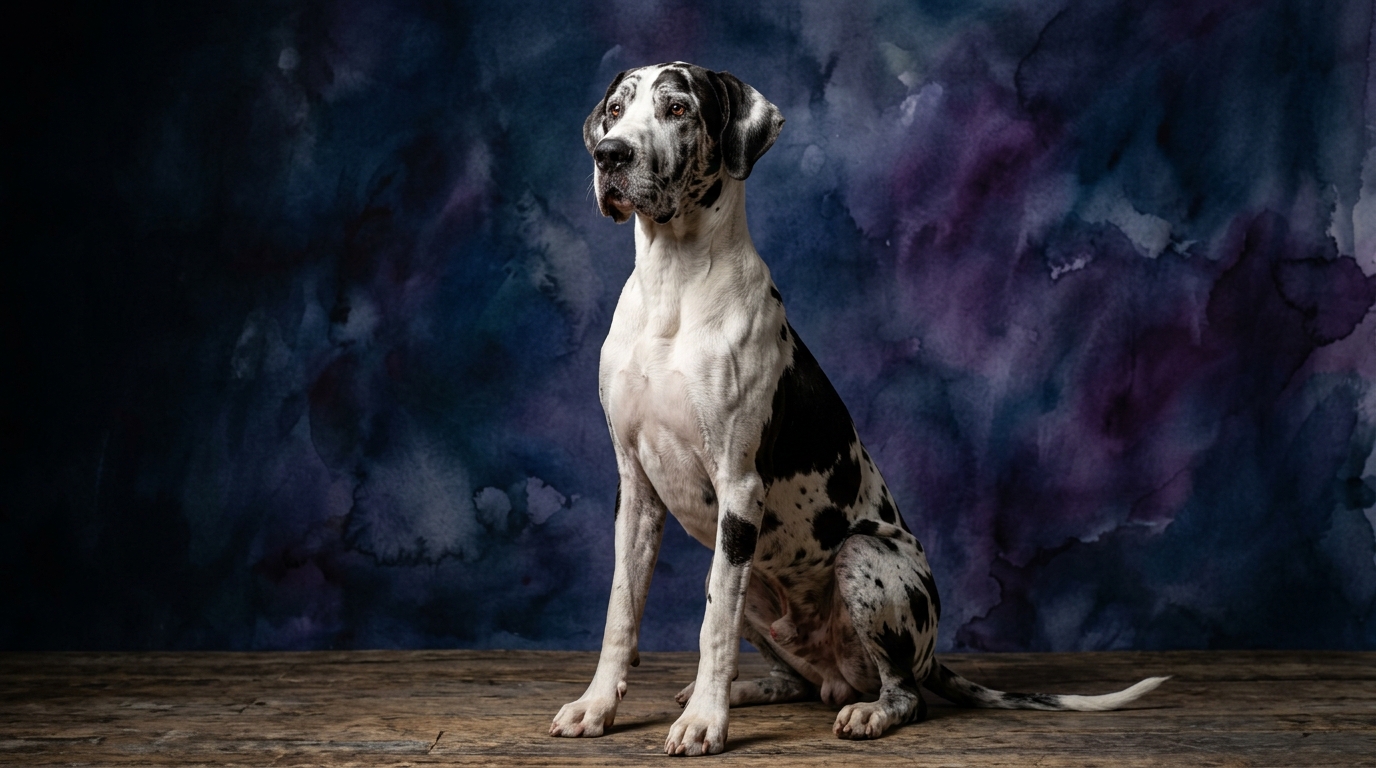
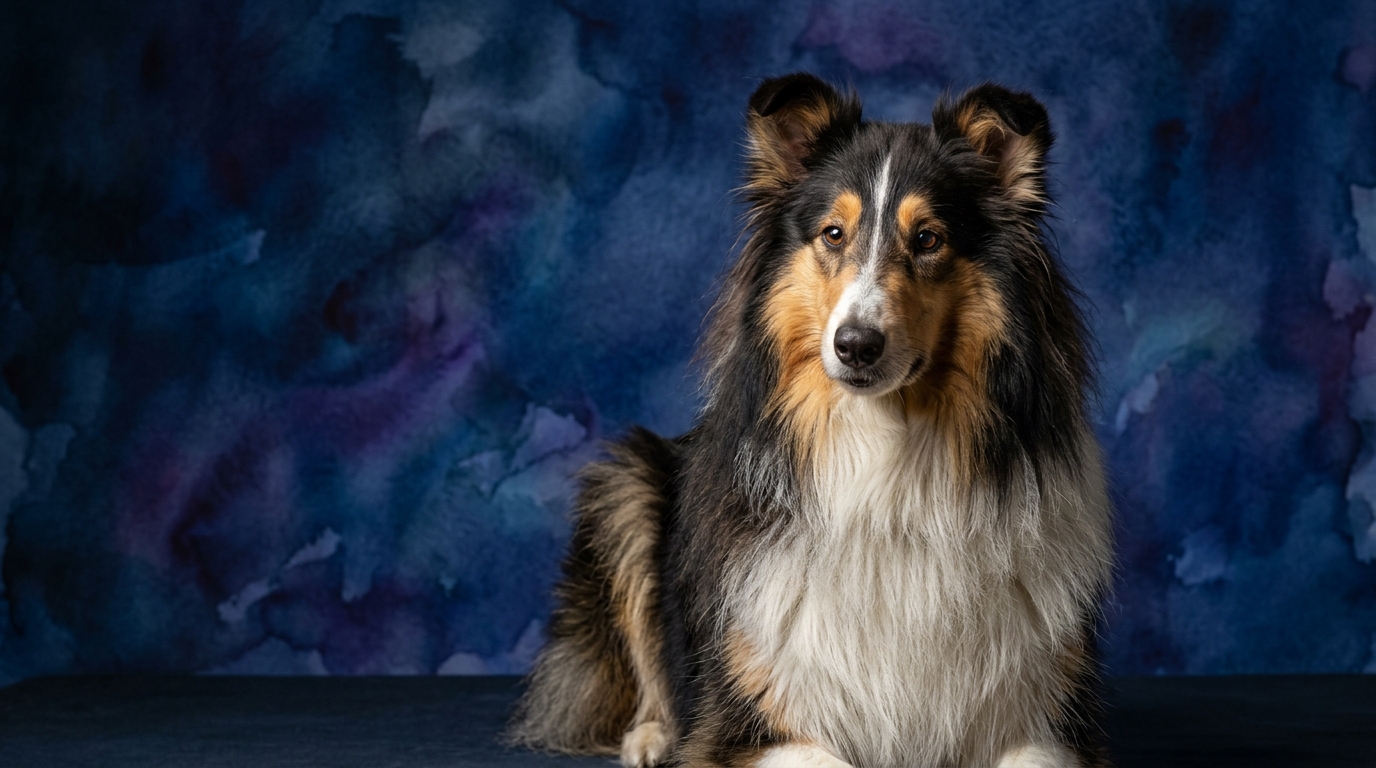
Side-by-Side IQ Profile: Great Dane vs. Collie (Rough)
The Great Dane, a member of the Working Group and ranking #48 in Coren's intelligence scale, presents a balanced cognitive profile. Their Problem Solving is rated 3/5, suggesting they can navigate moderately complex scenarios, often relying on learned patterns rather than innovative solutions. Training Speed also sits at 3/5, indicating they absorb new commands at a steady pace, requiring consistent reinforcement. Where Great Danes truly shine is in Social Intelligence, scoring 4/5; they are remarkably attuned to human emotions and social cues, often forming deep, empathetic bonds. Their Instinctive Drive is 3/5, reflecting a moderate inclination towards their historical guarding and companionship roles, while Memory is 3/5, meaning they retain information well but may not recall intricate sequences over long periods without practice.
The Rough Collie, hailing from the Herding Group and placing significantly higher in Coren's ranking at #16, presents a distinctly different cognitive blueprint. Their Problem Solving is a robust 4/5, showcasing a greater capacity for independent thought and creative solutions, especially when faced with novel challenges. Training Speed mirrors this at 4/5, indicating a quicker grasp of new concepts and a readiness to learn. While their Social Intelligence is 3/5, they are affectionate but less overtly empathetic than Danes. Instinctive Drive is 3/5, reflecting their inherent desire to manage and group, even in a domestic setting. However, their standout attribute is Memory, scoring an impressive 5/5, allowing them to recall complex sequences, routines, and experiences with remarkable precision and longevity.
Where the Great Dane Wins Cognitively
The Great Dane's primary cognitive advantage lies in its exceptional Social Intelligence (4/5). These dogs possess an uncanny ability to read human emotions, often anticipating needs or offering comfort without explicit prompts. This isn't just about being affectionate; it's a sophisticated understanding of subtle body language, tone of voice, and even shifts in household atmosphere. A Dane might gently nudge a hand when sensing sadness or quietly observe a child playing, intervening only if safety demands it. Their moderate Instinctive Drive (3/5) complements this, directing their natural protective instincts through a lens of social awareness rather than raw aggression. This makes them superb companions for families and individuals who value a deeply connected, empathetic presence, as their cognitive strength is in fostering profound emotional bonds and maintaining harmonious social environments.
Where the Collie (Rough) Wins Cognitively
The Rough Collie's cognitive strengths are rooted in its herding heritage, particularly evident in its superior Problem Solving (4/5) and unmatched Memory (5/5). Unlike the Dane, Collies often approach challenges with a strategic mindset, quickly assessing situations and devising effective solutions. This might manifest as figuring out how to open a child-proof gate or navigating a complex agility course with minimal instruction. Their exceptional Memory allows them to store and retrieve vast amounts of information, making them adept at remembering long command sequences, intricate routines, and the precise locations of objects or people. This cognitive architecture enables them to excel in tasks requiring sequential learning and sustained attention, such as competitive obedience or service work, where recalling detailed instructions is paramount. Their quick Training Speed (4/5) further amplifies these advantages, allowing them to rapidly build upon their extensive memory banks.
Which is Easier to Train and Why
When considering ease of training, the Rough Collie generally holds an edge due to its higher Training Speed (4/5) and exceptional Memory (5/5). Collies absorb new commands more quickly and retain them over extended periods, making initial training sessions and long-term reinforcement highly efficient. Their problem-solving acumen also means they can generalize learned behaviors to new contexts more readily, reducing the need for repetitive drills in varied environments. For instance, a Collie taught "stay" in the living room will likely apply it faster in a busy park than a Great Dane.
The Great Dane, with a Training Speed of 3/5 and Memory of 3/5, requires a more patient and consistent approach. While certainly trainable, they may take longer to grasp new concepts and might need more frequent refreshers to solidify learned behaviors. Their cognitive process is less about rapid assimilation and more about steady, consistent reinforcement. However, their high Social Intelligence (4/5) can be leveraged effectively in training; Danes respond well to positive reinforcement rooted in social connection and praise, making training a bonding experience rather than a purely task-oriented one. Owners willing to invest more time in consistent, positive methods will find their Danes responsive and eager to please within their cognitive framework.
Which Suits Active vs. Relaxed Owners
For owners seeking a more active, mentally engaging partnership, the Rough Collie is often the better fit. Their higher Problem Solving (4/5) and strong Instinctive Drive (3/5) mean they thrive on mental stimulation and purpose-driven activities. They excel in dog sports like agility, obedience, or even herding trials, which provide outlets for their cognitive strengths and desire to work. An owner who enjoys teaching complex tricks, engaging in daily training sessions, or participating in structured activities will find the Collie a willing and capable partner, preventing boredom-related behaviors.
Conversely, the Great Dane is more suited for relaxed owners who value companionship and a calm presence. While they enjoy walks and moderate play, their cognitive profile leans towards social interaction and observation rather than intense, prolonged mental tasks. Their moderate Instinctive Drive (3/5) means they aren't constantly seeking a "job" but are content to be part of the family rhythm, often serving as a watchful, empathetic presence. Owners who prefer gentle strolls, quiet evenings, and a dog whose primary joy is simply being with its people will find the Great Dane's temperament and cognitive strengths align perfectly with their lifestyle.
The Verdict
Choose the Great Dane if you prioritize a deeply empathetic, socially astute companion who offers calm, watchful presence and thrives on close human connection rather than constant mental challenges.
Opt for the Rough Collie if you desire a highly trainable, problem-solving partner who excels at learning complex tasks, remembers intricate routines, and thrives on consistent mental engagement and purpose.
🧠 Find Your Pet's IQ Score
Our Pet IQ Lab assessment covers 25+ tests across 5 cognitive dimensions — personalized to your breed.
Take the Full IQ Test →Frequently Asked Questions
Do Great Danes struggle with training due to their size?
Great Danes don't struggle with training because of their size itself, but their Training Speed (3/5) means they may take longer to learn new commands compared to breeds with higher scores. Consistency and positive reinforcement are key to their success.
Are Rough Collies good for first-time dog owners?
Rough Collies can be good for first-time owners who are prepared for their mental stimulation needs and grooming. Their high training speed and memory make them responsive, but their herding instincts require consistent guidance.
How do their social intelligence scores impact their interaction with children?
A Great Dane's 4/5 Social Intelligence makes them exceptionally gentle and attuned to children's moods, often acting as patient, watchful guardians. A Rough Collie's 3/5 Social Intelligence means they are affectionate but might exhibit gentle herding behaviors with children, requiring supervision.