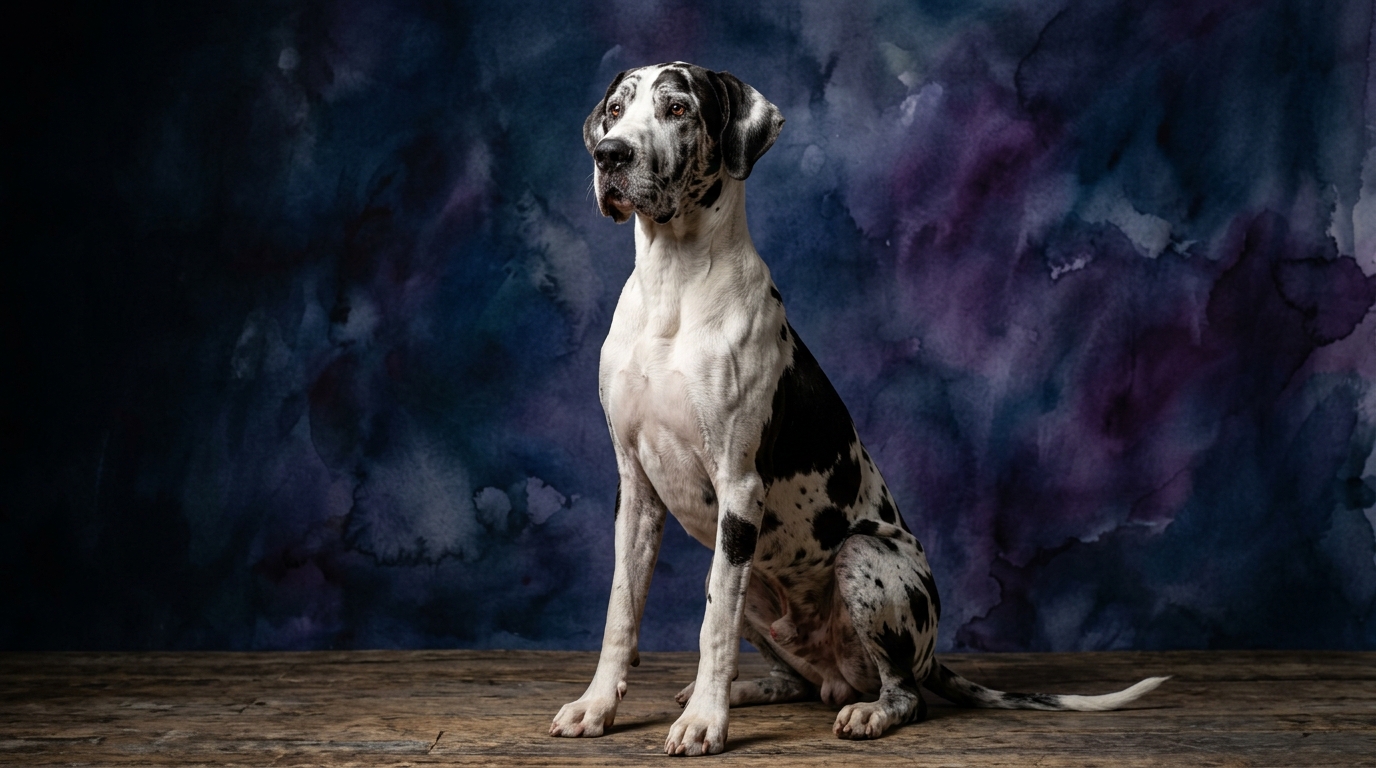

Side-by-Side IQ Profile: Great Dane vs. Manchester Terrier
The Cosmic Pet Pet IQ Lab employs a comprehensive five-dimensional framework to assess canine intelligence, moving beyond simplistic notions of 'smartness.' For the Great Dane, a breed within the Working group with a Coren ranking of #48, their profile reveals a balanced yet socially astute intellect. They register a 3/5 in Problem Solving, indicating a capacity for learning complex tasks but often preferring human guidance over independent strategizing. Their Training Speed also scores 3/5, suggesting they absorb commands effectively with consistent, clear instruction. Where they truly shine is in Social Intelligence, earning a 4/5; this reflects a remarkable ability to read human emotions, understand household dynamics, and form deep, empathetic bonds. Instinctive Drive stands at 3/5, meaning they possess moderate natural predispositions like guarding or companionship without being overly intense. Finally, their Memory is rated 3/5, allowing them to retain learned behaviors and routines reliably.
The Manchester Terrier, a vibrant member of the Terrier group, presents a distinct cognitive blueprint. While not Coren-ranked, their IQ scores are largely consistent across several dimensions with their larger counterpart. They achieve a 3/5 in Problem Solving, demonstrating an ability to navigate challenges but often through established patterns rather than novel solutions, a trait common in breeds bred for specific tasks. Their Training Speed also scores 3/5, indicating a steady learning curve that thrives on engaging, consistent methods. In Social Intelligence, the Manchester Terrier scores 3/5; they form strong attachments and understand their immediate social circle but may exhibit a more independent streak or reserved demeanor with strangers compared to the Great Dane. Their Instinctive Drive is 3/5, reflecting a balanced terrier tenacity for chasing and exploring without being overwhelming. Memory, like the Great Dane, is rated 3/5, showing good recall for experiences and commands.
Where the Great Dane Excels Cognitively
The Great Dane's primary cognitive advantage lies in its superior Social Intelligence, scoring a 4/5 compared to the Manchester Terrier's 3/5. This higher score translates into a profound capacity for emotional understanding and interpersonal connection. A Great Dane is often more attuned to subtle human cues, capable of discerning moods, anticipating needs, and offering comfort or companionship with remarkable sensitivity. Their Coren ranking of #48, placing them in the 'average working/obedience intelligence' category, suggests a greater willingness to comply with human directives and a stronger drive to please, which inherently involves reading and responding to their owner's intentions. This social attunement makes them exceptional family members, integrating seamlessly into household dynamics and often forming deep, empathetic bonds that influence their learning and behavior.
Furthermore, their sheer physical presence, while not directly a cognitive trait, often necessitates a heightened awareness of their surroundings and the people within them. This constant negotiation of space and interaction, combined with their social acumen, can foster a more nuanced understanding of cause and effect in a human-centric environment. They learn to navigate their large bodies around obstacles and people with surprising grace, a form of spatial intelligence often reinforced by social feedback. This blend of social sensitivity and environmental awareness gives the Great Dane a unique cognitive edge in harmonious cohabitation.
Where the Manchester Terrier Shows Cognitive Strengths
While many of their IQ scores align, the Manchester Terrier's cognitive strengths often manifest differently, rooted in their terrier heritage. Their 3/5 Problem Solving score, though numerically identical to the Great Dane, can be interpreted through the lens of their breed-specific drives. Terriers were historically bred for independent vermin control, demanding a certain self-reliance and tenacity in figuring out how to achieve a goal. This means their problem-solving might be less about complying with human-set tasks and more about persistent, focused effort in self-motivated pursuits, such as finding a hidden toy or navigating a complex scent trail. They exhibit a determined focus when engaged in tasks they deem worthwhile, often showing ingenuity in overcoming obstacles related to their instinctive drives.
The Manchester Terrier's 3/5 Instinctive Drive, while also numerically similar, is often expressed with a characteristic terrier zest and determination. This drive fuels their curiosity and provides a strong internal motivation for exploration and engagement, which, when channeled correctly, can be a powerful cognitive asset. They are adept at learning through repetition and consistency, especially when the training taps into their natural instincts for chasing, digging, or puzzle-solving. Their slightly more independent Social Intelligence (3/5) means they are less swayed by overt human emotional cues and more driven by their own motivations, making them effective and self-sufficient in certain problem-solving scenarios where a Great Dane might wait for direction.
Which is Easier to Train and Why?
Considering their cognitive profiles, the Great Dane generally presents as an easier breed to train for obedience and household manners. Their higher Social Intelligence (4/5) means they are often more receptive to human communication, eager to please, and quick to pick up on emotional cues from their trainer. This inherent desire for social harmony and connection makes them highly responsive to positive reinforcement and less likely to challenge authority. Their Coren ranking of #48 further supports this, indicating a strong capacity for understanding and executing commands when properly taught. While their Training Speed is 3/5, their social aptitude often makes the training process smoother and more rewarding for both dog and owner, as they actively seek to understand and comply.
The Manchester Terrier, with a 3/5 in both Training Speed and Social Intelligence, can be a willing student but often requires a more nuanced approach. Their terrier independence, while not outright stubbornness, means they might question commands or prioritize their own interests if not sufficiently motivated. Training them often benefits from making sessions engaging, varied, and tapping into their natural drives to prevent boredom and maintain focus. While equally capable of learning, their responsiveness might be less about appeasing their owner and more about the intrinsic reward or challenge of the task itself. Owners must be consistent, patient, and creative to harness the Manchester Terrier's energetic and self-directed nature effectively.
Which Suits Active Owners vs. Relaxed Owners?
For owners seeking a more relaxed companion, the Great Dane often proves to be an excellent match. Despite their imposing size, Great Danes are frequently described as 'gentle giants' who enjoy quiet companionship and often prefer lounging on the sofa with their families. Their high Social Intelligence makes them deeply connected to their human pack, content to simply be in their presence. While they certainly require regular exercise to maintain health and prevent boredom, their energy demands are typically manageable, consisting of daily walks and some playtime rather than intense, prolonged activities. They thrive in environments where they receive ample affection and social interaction, making them ideal for individuals or families who appreciate a calm, empathetic presence in their home.
Conversely, the Manchester Terrier is better suited for more active owners or those prepared to provide consistent mental and physical stimulation. Their terrier lineage imbues them with a spirited energy, keen intelligence, and a strong desire for engagement. They flourish with daily opportunities for vigorous exercise, such as brisk walks, runs, or engaging in dog sports like agility or earthdog trials. Their 3/5 Instinctive Drive means they benefit greatly from activities that challenge their problem-solving skills and allow them to express natural behaviors in a constructive manner. Owners who can commit to regular training sessions, interactive games, and outdoor adventures will find the Manchester Terrier a lively and rewarding companion, perfectly matching their energetic lifestyle.
The Verdict
Choose a Great Dane if you value deep emotional connection, an empathetic companion attuned to your moods, and a generally calmer presence in your home that responds readily to guidance.
Opt for a Manchester Terrier if you seek a spirited, independent companion who thrives on engaging activities, consistent mental challenges, and an active lifestyle that matches their tenacious energy.
🧠 Find Your Pet's IQ Score
Our Pet IQ Lab assessment covers 25+ tests across 5 cognitive dimensions — personalized to your breed.
Take the Full IQ Test →Frequently Asked Questions
Do Great Danes experience separation anxiety more than Manchester Terriers?
Great Danes, with their higher social intelligence and strong bond to their families, can be prone to separation anxiety if not properly socialized and trained for alone time. Their deep attachment means they genuinely miss their human companions. Manchester Terriers, while also social, often exhibit a more independent streak, which may make them slightly less susceptible, though individual temperament always plays a role.
Are Manchester Terriers difficult to house train due to their intelligence?
Manchester Terriers are not inherently difficult to house train; their 3/5 problem-solving and memory scores indicate they are capable learners. However, their independent nature means consistency and positive reinforcement are crucial. Any perceived difficulty often stems from owners not meeting their need for clear boundaries and engaging training methods.
Does a Great Dane's Coren ranking mean they are 'smarter' than a non-ranked Manchester Terrier?
The Coren ranking primarily assesses 'working and obedience intelligence,' reflecting a dog's ability to learn and execute human commands. A Great Dane's #48 rank indicates strong compliance in this area. The Manchester Terrier's lack of ranking doesn't imply lower intelligence overall, but rather that their cognitive strengths might lie more in independent problem-solving and breed-specific drives, which are not the primary focus of Coren's scale.