Side-by-Side Cognitive Profiles
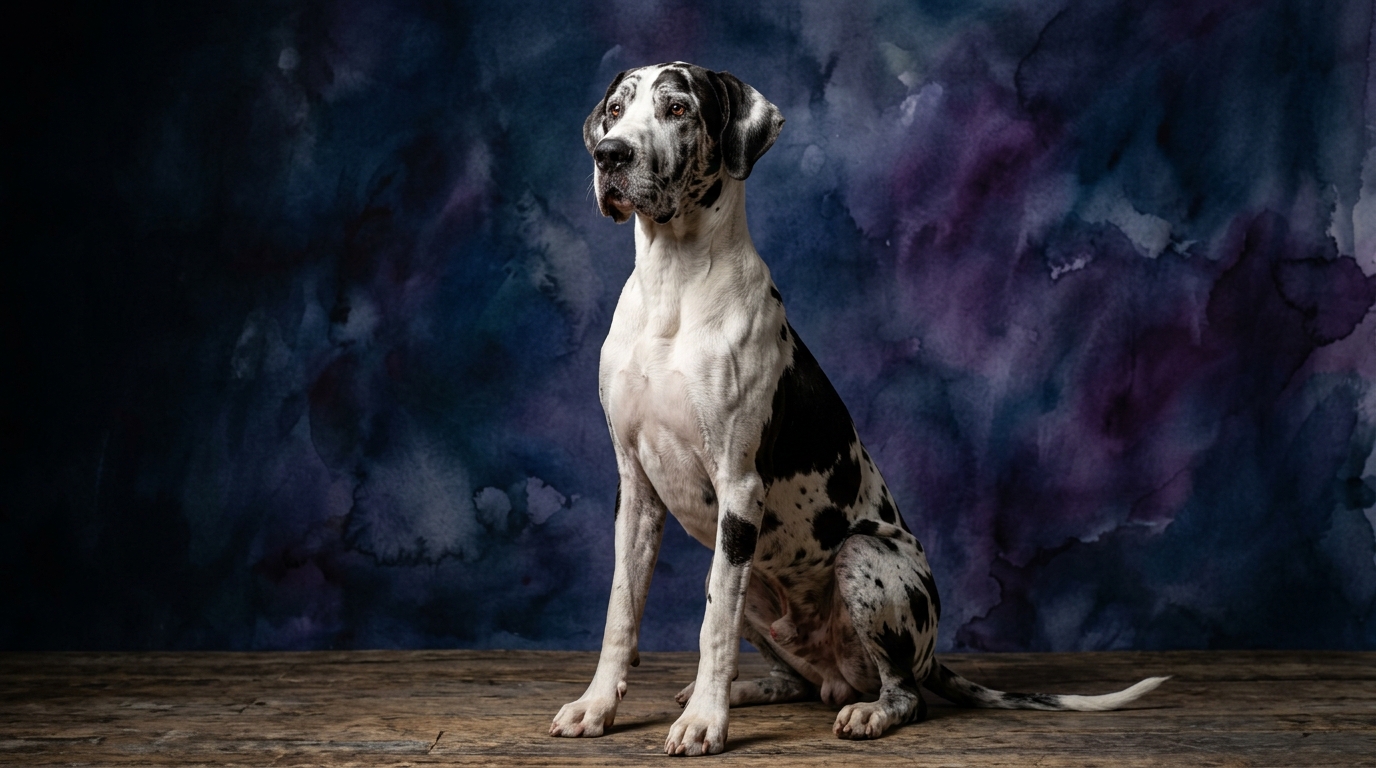
The Cosmic Pet Pet IQ Lab employs a comprehensive framework to assess canine intelligence, moving beyond simple obedience to encompass various facets of cognitive ability. For the Great Dane, with a Coren rank of #48, their profile includes a Problem Solving score of 3/5, indicating an average capacity to navigate novel situations or figure out simple puzzles, but they aren't known for complex strategic thinking. Their Training Speed is also 3/5, meaning they absorb new commands at a moderate pace, requiring consistent repetition and positive reinforcement to solidify learning. A standout is their Social Intelligence at 4/5, reflecting a strong ability to interpret human emotions and intentions, making them highly responsive to their family's moods and social cues, and generally open to new, friendly faces. Their Instinctive Drive is 3/5, encompassing moderate inherent drives like some prey awareness or territoriality, but these are typically secondary to their desire for companionship. Finally, their Memory is 3/5, retaining learned commands and routines adequately, remembering familiar faces and places, but not characterized by an exceptional ability to recall complex sequences.
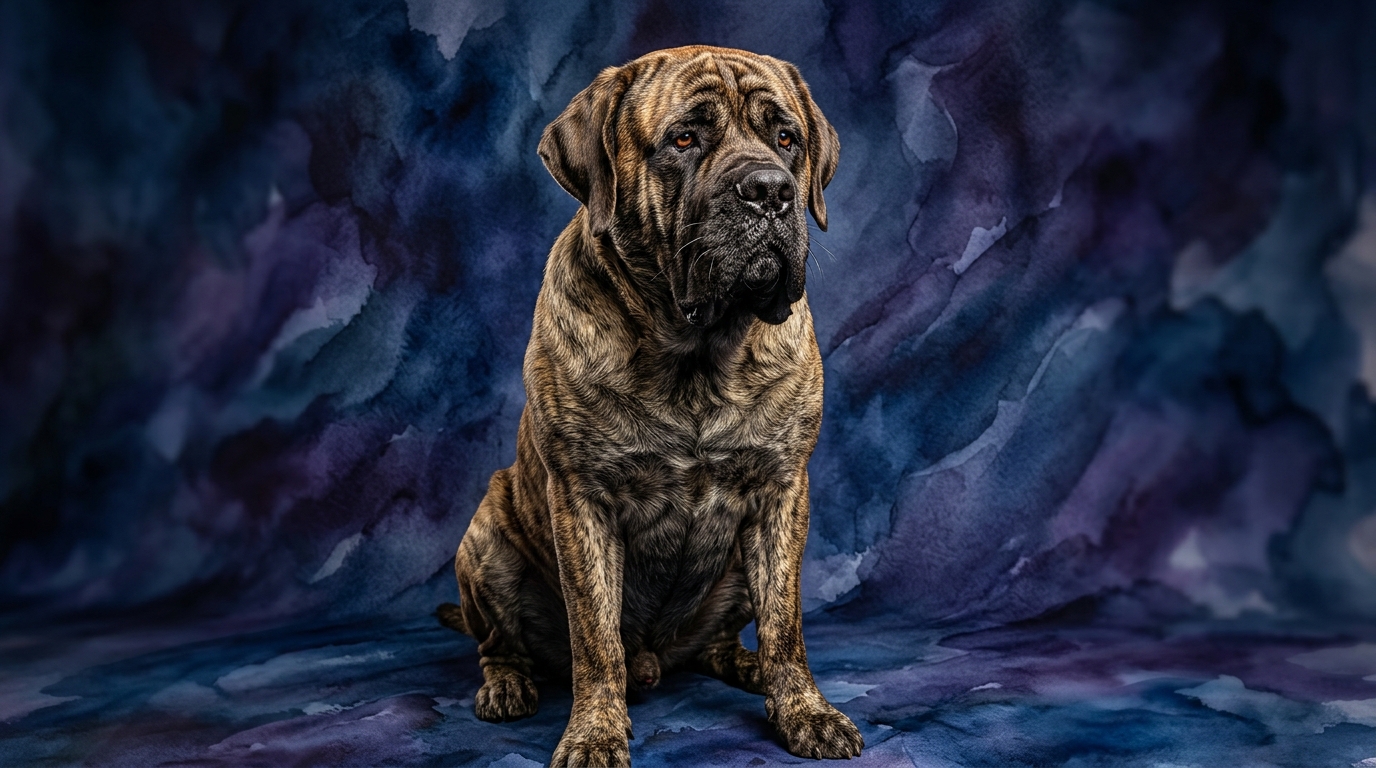
The Mastiff, ranked #72 by Coren, presents a slightly different cognitive emphasis. Their Problem Solving score of 3/5 mirrors the Great Dane, indicating a similar average aptitude for basic puzzle-solving without leaning towards intricate strategy. Their Training Speed is also 3/5, suggesting they learn at a comparable moderate pace, necessitating patience and consistent, positive reinforcement. Where a key difference emerges is their Social Intelligence, rated at 3/5; they form deep bonds with their immediate family but are typically reserved with strangers, taking time to assess new individuals, with their social radar primarily focused on their inner circle. Their Instinctive Drive, also 3/5, is distinctly channeled towards guarding and protecting their family and territory, manifesting as a watchful and often imposing presence rather than a strong prey drive. Like the Great Dane, their Memory is 3/5, allowing them to retain routines and family recognition without an extraordinary capacity for recalling complex information over extended periods.
Where the Great Dane Excels Cognitively
The Great Dane's most notable cognitive advantage lies in its superior Social Intelligence, scoring 4/5 compared to the Mastiff's 3/5. This higher score isn't just about friendliness; it signifies a more nuanced understanding of human social cues and emotional states. A Great Dane is often more attuned to the subtle shifts in a household's mood, capable of offering comfort or engaging in play based on perceived human sentiment. This enhanced social acuity makes them highly adaptable in varied social settings, provided they are properly socialized from a young age. They tend to integrate more smoothly into families with frequent visitors or diverse social circles, readily accepting new, friendly interactions once introduced. Their inclination to seek out and respond to human connection makes them exceptionally empathetic companions, often reading their owner's intentions and desires with remarkable clarity.
Where the Mastiff Shows Distinct Strengths
While both breeds score 3/5 in Instinctive Drive, the Mastiff's inherent drives are uniquely specialized, providing a distinct cognitive strength in guardianship. Their historical role as protectors is deeply ingrained, manifesting as a profound awareness of their territory and family's well-being. This isn't merely a reactive bark; it's a cognitive vigilance where their problem-solving skills, though rated average, are often applied to assessing and managing potential threats within their perceived domain. Their lower Coren rank of #72, suggesting a less generalized working intelligence, paradoxically contributes to this strength; their focus is less on diverse tasks and more on consistent, unwavering protection. This means they are less likely to be distracted by novel stimuli when their protective instincts are engaged, offering a steadfast and predictable presence. Their cognitive resources are efficiently directed towards observing and maintaining the security of their inner circle, making them unparalleled in their quiet, watchful dedication.
Trainability: Great Dane's Responsiveness vs. Mastiff's Independence
When considering which breed might be easier to train, the Great Dane often presents a smoother experience, despite both breeds having a 3/5 Training Speed. The crucial differentiator here is the Great Dane's 4/5 Social Intelligence. This higher capacity for understanding and responding to human cues translates into a greater eagerness to please and a stronger motivation derived from social praise and interaction during training sessions. They are more likely to actively engage with their handler, finding the process itself rewarding due to the positive social feedback. This means that while they learn at a moderate pace, their willingness to participate and their responsiveness to guidance can make training feel more cooperative and less like a chore.
The Mastiff, with its 3/5 Social Intelligence, forms deep bonds but tends to be more reserved and independent in its approach to structured tasks. They might not possess the same overt desire to please through repetitive exercises. Training a Mastiff requires more patience, consistency, and an understanding of their intrinsic motivation, which is often tied to their protective nature or a clear, practical benefit. While they are capable learners, their independent streak means they might need more convincing or a different style of engagement to maintain focus. Handlers must establish a clear, respectful relationship and make training rewarding in ways that resonate with the Mastiff's inherent dignity and watchful temperament, rather than relying solely on exuberant social praise.
Ideal Owners: Active Companionship vs. Calm Vigilance
The cognitive and behavioral profiles of these breeds suggest different ideal ownership styles. The Great Dane, with its higher social intelligence and moderate instinctive drive, thrives with owners who seek an integrated family member. While giant, they are not high-energy athletes, but they do enjoy regular, moderate exercise, such as walks and playful interaction. Their social nature means they flourish in environments where they are included in daily activities, receiving consistent attention and interaction. They are well-suited for owners who appreciate a dog that is emotionally responsive, enjoys being part of the family's social fabric, and is content with a balance of activity and comfortable lounging.
Conversely, the Mastiff's calm demeanor, strong guardian instincts, and more reserved social intelligence make them ideal for owners who prefer a more relaxed, watchful companion. They require less intense physical exercise than many breeds, preferring shorter, steady walks and the opportunity to observe their domain. Their deep bond is often expressed through a quiet, steadfast presence rather than constant overt interaction. They are best suited for owners who value a dog's independent spirit, appreciate a calm home environment, and understand that their companion's primary cognitive focus is on providing a protective, stable presence rather than continuous social engagement.
The Verdict
Choose a Great Dane if you desire a socially expressive companion who readily adapts to varied social situations and thrives on being an interactive, emotionally attuned family member.
Opt for a Mastiff if you seek a calm, steadfast presence that forms deep, protective bonds with its family and prefers a more relaxed home environment built on quiet companionship.
🧠 Find Your Pet's IQ Score
Our Pet IQ Lab assessment covers 25+ tests across 5 cognitive dimensions — personalized to your breed.
Take the Full IQ Test →Frequently Asked Questions
Are Great Danes better guard dogs than Mastiffs?
No, Mastiffs inherently possess a stronger, more focused guarding instinct. While a Great Dane might alert to strangers, a Mastiff's historical purpose and cognitive profile lean more towards territorial protection and a vigilant, imposing presence.
Do Great Danes and Mastiffs get along with other pets?
Great Danes, with their higher social intelligence, generally adapt better to multi-pet households if properly socialized from a young age. Mastiffs can coexist, but their more reserved nature and protective instincts might require more careful, supervised introductions to new animal companions.
How much mental stimulation do these breeds need?
Both breeds benefit from moderate mental stimulation to prevent boredom. Great Danes respond well to interactive games and training that leverages their social connection, while Mastiffs appreciate consistent routines and tasks that engage their watchful nature, like 'patrolling' the yard or simple scent games.