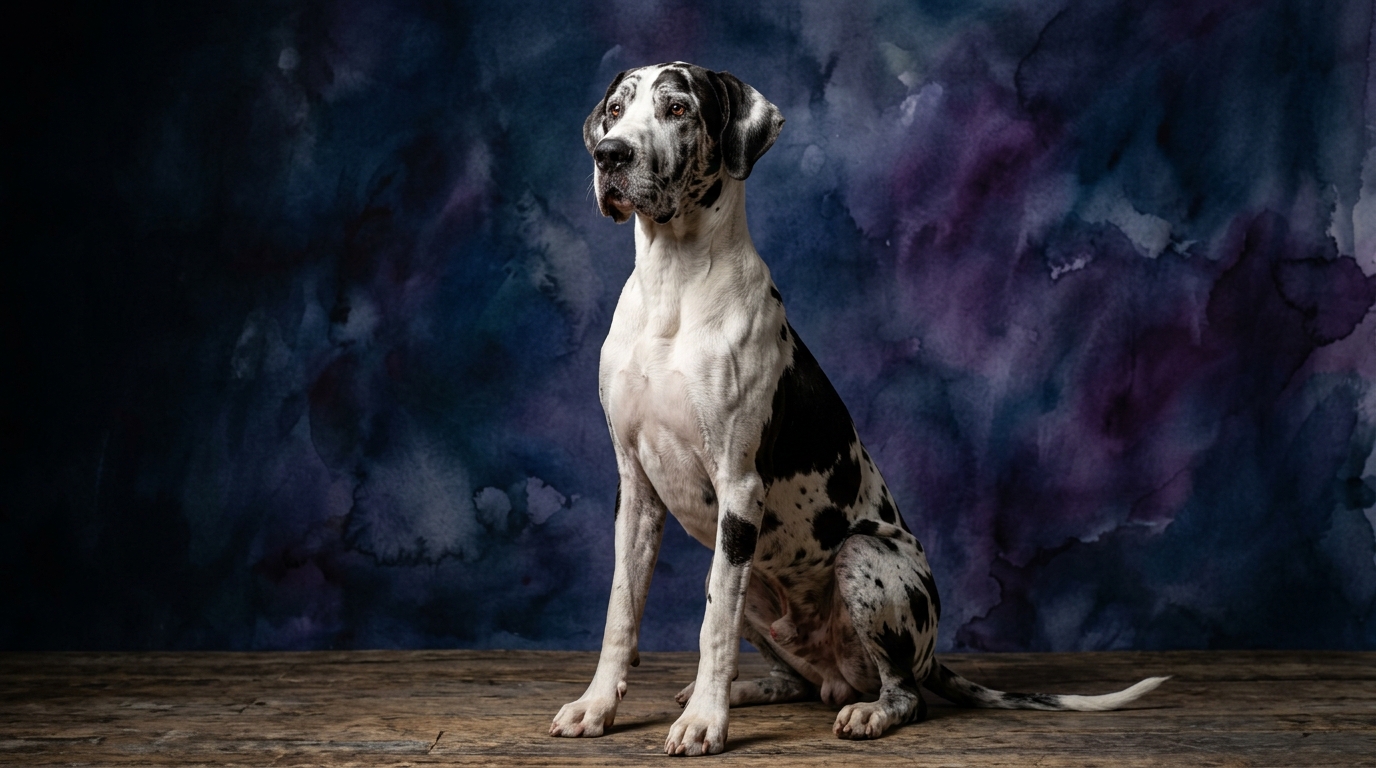
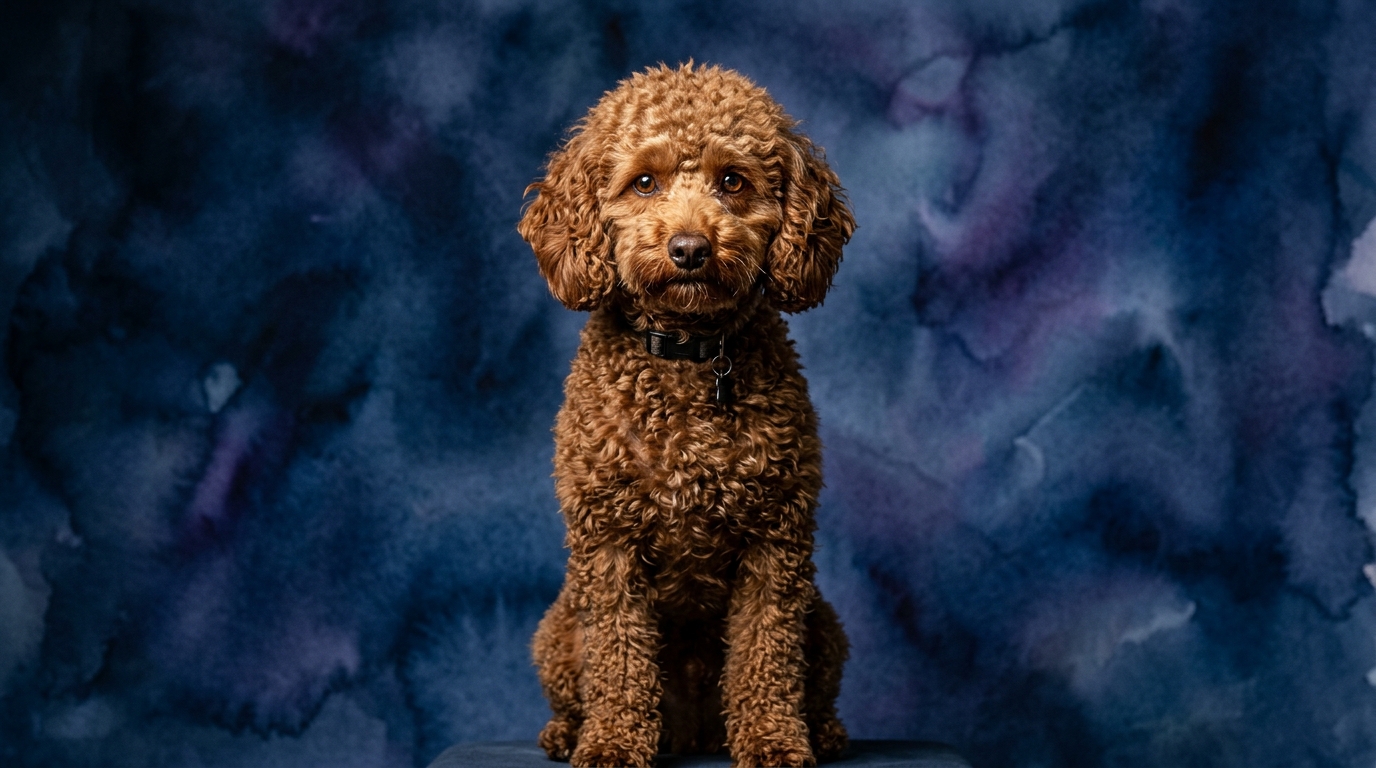
Side-by-Side IQ Profile: Great Dane vs. Miniature Poodle
Delving into their cognitive blueprints, our Pet IQ Lab data reveals distinct strengths for both the Great Dane and the Miniature Poodle across five key dimensions. The Great Dane, a Working group dog, registers a Coren rank of #48, while the Miniature Poodle, from the Non-Sporting group, commands a Coren rank of #2. These rankings offer a glimpse into their working and obedience intelligence, but our deeper dive uncovers more nuanced cognitive landscapes.
For Problem Solving, the Great Dane scores 3/5, indicating a moderate capacity to navigate and resolve novel challenges, often preferring to seek human assistance. The Miniature Poodle, however, boasts a perfect 5/5, suggesting exceptional aptitude for independently analyzing situations and devising clever solutions. In Training Speed, the Great Dane scores 3/5, meaning they acquire new commands at a steady, deliberate pace. The Miniature Poodle excels here with a 5/5, demonstrating rapid assimilation of new tasks and behaviors, often requiring minimal repetition.
Social Intelligence is where the Great Dane truly shines, earning a 4/5. This reflects a profound ability to interpret human emotions, communicate effectively, and form deep, empathetic bonds with their families. The Miniature Poodle scores 3/5 in social intelligence, indicating they are responsive and interactive but may not possess the same nuanced emotional attunement or desire for constant human validation as the Dane. Both breeds share an Instinctive Drive score of 3/5, suggesting a moderate level of inherent urges like guarding, chasing, or retrieving, which can be channeled through appropriate activities.
Finally, for Memory, the Great Dane scores 3/5, implying good retention of learned information but potentially benefiting from occasional refreshers, particularly for less frequently practiced behaviors. The Miniature Poodle, with a 5/5 in Memory, showcases an outstanding capacity to recall both positive and negative experiences, allowing them to build extensive behavioral repertoires and remember complex sequences over long periods.
Where the Great Dane Wins Cognitively
The Great Dane's cognitive strength particularly lies in its superior Social Intelligence, scoring a 4/5 compared to the Miniature Poodle's 3/5. This indicates an elevated capacity for emotional understanding and communication with their human companions. Danes often display a remarkable sensitivity to their owners' moods, offering comfort or seeking interaction based on subtle cues and expressions. They excel at forming deep, empathetic bonds, frequently acting as gentle, watchful guardians who are highly attuned to the family dynamic.
Their cognitive blueprint prioritizes connection and understanding within their social group. This means they are less inclined to independently 'engineer' solutions to complex environmental puzzles and more likely to look to their human for guidance and reassurance. This reliance on human partnership is a hallmark of their social aptitude, making them profoundly responsive to their owners' needs and emotions, fostering a sense of profound companionship rather than independent problem-solving.
Where the Miniature Poodle Wins Cognitively
The Miniature Poodle's cognitive profile reveals a powerhouse in specific areas where the Great Dane is more moderately endowed. With a perfect 5/5 in Problem Solving, Training Speed, and Memory, the Poodle is a remarkably agile and efficient learner. Their problem-solving prowess means they are adept at navigating novel situations, figuring out how to manipulate objects, or devising strategies to acquire a coveted toy. This isn't just about mischievousness; it's a genuine cognitive ability to analyze and react effectively to their environment.
Their rapid training speed (5/5) makes them exceptionally quick to grasp new commands and complex sequences, often requiring fewer repetitions than many other breeds to solidify a behavior. Coupled with a 5/5 in Memory, they retain these lessons over long periods, allowing them to build vast repertoires of learned behaviors. This makes them exceptional candidates for intricate obedience, agility, or trick training, where a comprehensive understanding and retention of numerous tasks are key to success.
Which is Easier to Train and Why?
Based on our Cosmic Pet Pet IQ Lab data, the Miniature Poodle is demonstrably easier to train due to their superior scores in Training Speed (5/5) and Memory (5/5), along with their exceptional Problem Solving (5/5). They process new information quickly, require fewer repetitions to solidify a command, and retain those lessons for extended periods. This means a Miniature Poodle can progress through advanced obedience or learn complex tricks at a much faster rate, often enjoying the mental challenge of new tasks. For instance, teaching a Poodle a multi-step routine like "fetch the leash, bring it here, sit" would likely be a smoother and faster process, with the Poodle quickly grasping the sequence and associating actions with cues.
In contrast, the Great Dane, with 3/5 in Training Speed and Memory, requires more patience and consistency. While they are certainly trainable, their learning curve is steadier, not as rapid. They may need more repetitions and clearer, more consistent cues to fully internalize new commands. However, the Dane's high social intelligence (4/5) means they are generally keen to please their human and respond well to positive reinforcement and clear, gentle communication, even if the learning itself takes a bit more time to cement. A Great Dane might take longer to master a 'stay' command in a distracting environment, but their desire to cooperate with their beloved person will eventually lead to success with persistent effort.
Which Suits Active Owners vs. Relaxed Owners
The cognitive profiles of the Great Dane and Miniature Poodle lend themselves to different owner lifestyles. For owners seeking a companion that thrives on consistent mental engagement, intricate training, and problem-solving activities, the Miniature Poodle is an exceptional match. Their high scores in problem-solving, training speed, and memory mean they need regular intellectual stimulation to prevent boredom and channel their sharp minds constructively. They excel in dog sports like agility, obedience, or even scent work, making them ideal for active owners who enjoy dedicating time to mental challenges alongside physical exercise and can provide the consistent intellectual outlets their Poodle craves.
Conversely, the Great Dane, while needing regular physical activity commensurate with their size, is better suited for owners who appreciate a more relaxed cognitive pace, prioritizing deep social bonding over complex mental gymnastics. Their superior social intelligence means they flourish in environments where they receive ample affection, clear communication, and integration into family life. They are perfect for owners who enjoy a large, gentle companion that is highly attuned to their emotions and content with a steady routine, rather than constantly seeking out new puzzles to solve. Their contentment comes more from companionship and belonging than from mastering complex tasks.
The Verdict
If you seek a deeply empathetic, socially intelligent companion who thrives on close human connection and a steady, predictable routine, the Great Dane is an ideal choice, offering immense loyalty and comfort.
If you're an owner who revels in advanced training, enjoys challenging your dog with complex tasks, and values a quick-witted, highly trainable partner for sports or tricks, the Miniature Poodle will exceed your expectations.
🧠 Find Your Pet's IQ Score
Our Pet IQ Lab assessment covers 25+ tests across 5 cognitive dimensions — personalized to your breed.
Take the Full IQ Test →Frequently Asked Questions
Does Coren rank directly correlate with overall intelligence?
Coren rank primarily assesses "working and obedience intelligence," reflecting how quickly a breed learns human commands. It doesn't encompass all facets of intelligence like social or problem-solving abilities, which our Pet IQ Lab measures separately, offering a more complete picture.
Can a Great Dane learn complex tricks despite its lower training speed?
Absolutely. While a Great Dane might require more repetition and patience than a Miniature Poodle, their strong social intelligence and desire to please their owners mean they can certainly master complex tricks with consistent, positive reinforcement and clear, kind guidance.
Do Miniature Poodles require constant mental stimulation?
Yes, due to their high problem-solving and memory scores, Miniature Poodles benefit significantly from consistent mental challenges. Daily puzzle toys, engaging training sessions, or participation in dog sports help satisfy their cognitive needs and prevent boredom, ensuring they remain well-adjusted.