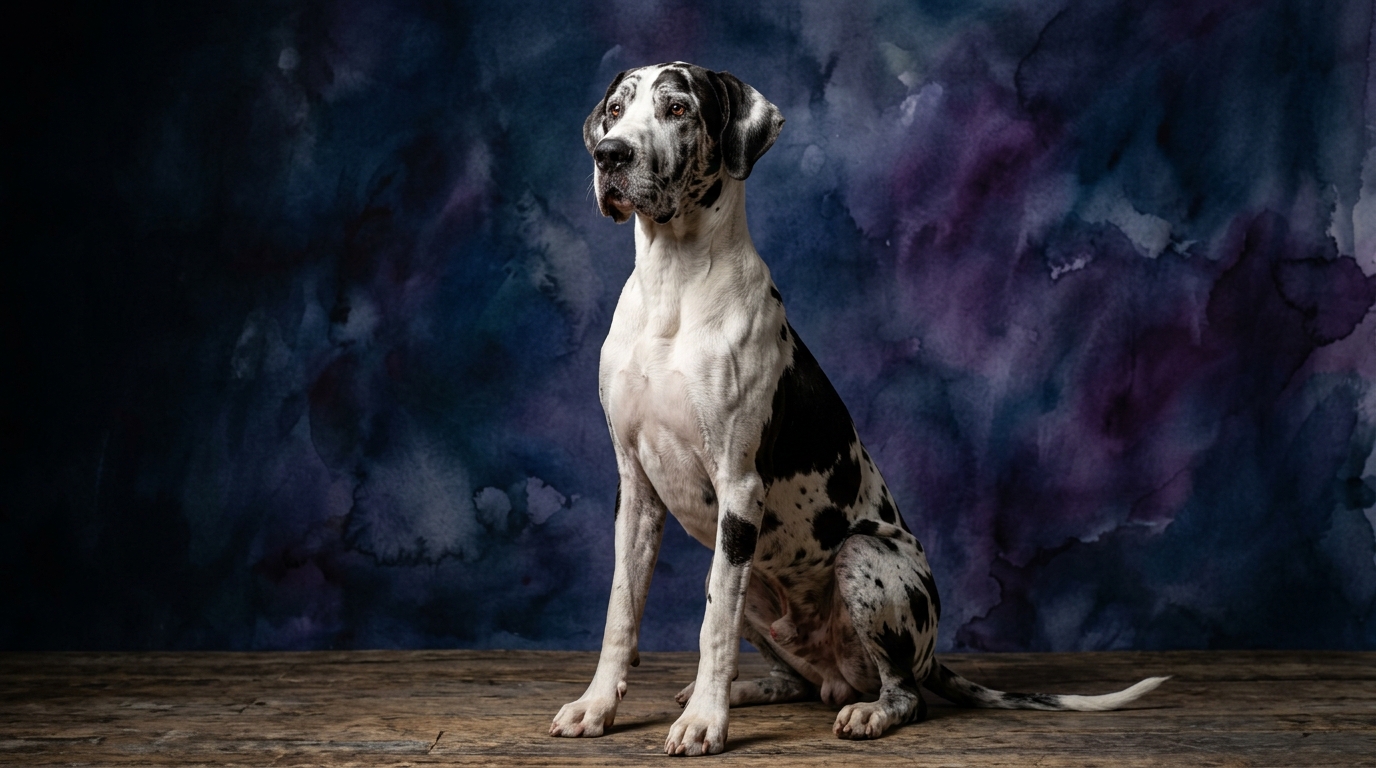
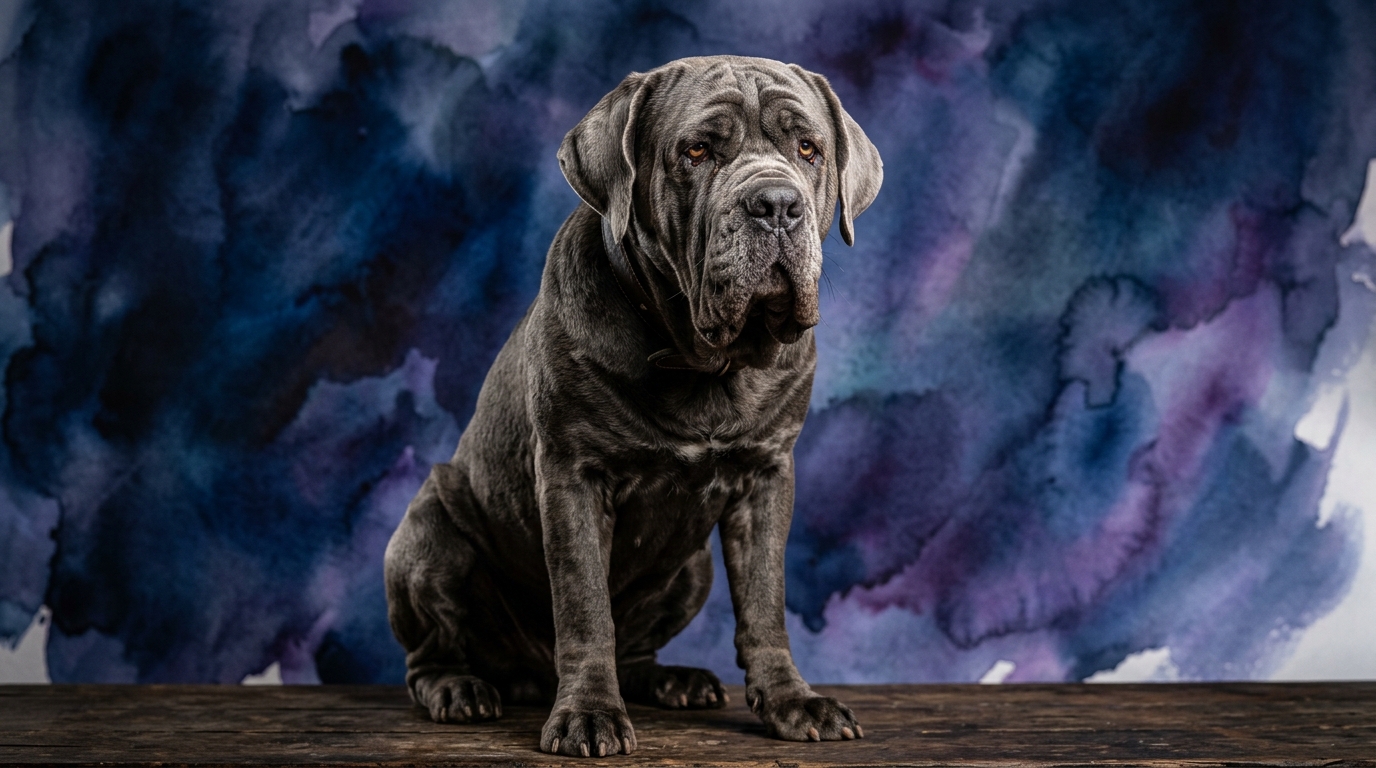
Side-by-Side IQ Profile: Great Dane vs. Neapolitan Mastiff
For the Great Dane, a Problem Solving score of 3/5 indicates a moderate capacity for navigating novel situations and figuring things out without constant instruction. Their Training Speed of 3/5 suggests they grasp new commands at a steady, average pace, thriving with consistent reinforcement. A standout Social Intelligence of 4/5 reflects a strong aptitude for understanding human cues, social dynamics, and forming deep, intuitive bonds. An Instinctive Drive of 3/5 points to balanced natural urges, while a Memory score of 3/5 implies a solid ability to recall learned behaviors and past experiences over time.
The Neapolitan Mastiff, with a Problem Solving score of 3/5, demonstrates a comparable ability to the Great Dane in tackling new challenges, often preferring a thoughtful, perhaps less impulsive, approach. Their Training Speed also rates 3/5, meaning they learn at a consistent rate, benefiting significantly from patient and clear instruction. A Social Intelligence of 3/5 suggests they are capable of understanding social cues but may exhibit a more reserved or selective nature in their interactions. Instinctive Drive at 3/5 reflects a moderate level of inherent behaviors, frequently manifesting as a strong protective instinct, and their Memory of 3/5 indicates a reliable capacity for retaining lessons and remembering past interactions.
Where the Great Dane Wins Cognitively
The Great Dane’s distinct advantage lies in its superior Social Intelligence, scoring 4/5 compared to the Neapolitan Mastiff’s 3/5. This higher score translates into a more intuitive grasp of human emotions, intentions, and social hierarchies within a household. They often display a greater eagerness to please and engage in cooperative behaviors, making them highly attuned companions who can pick up on subtle cues from their owners. This cognitive strength means a Great Dane is typically more receptive to nuanced communication and more likely to seek out social interaction as a primary motivator.
This enhanced social acumen also contributes to their adaptability in new social environments. While both breeds are observant, the Great Dane’s cognitive framework generally makes them more open to strangers and new experiences, provided proper socialization. Their ability to "read the room" and adjust their behavior accordingly facilitates smoother integration into diverse human activities and family dynamics, making them comfortable in varied social settings.
Where the Neapolitan Mastiff Wins Cognitively
While the Neapolitan Mastiff shares similar scores across many cognitive dimensions, its unique strengths are found in the *application* of its balanced intelligence, particularly concerning its instinctive drive and social discernment. With a 3/5 in Instinctive Drive, often expressed as a profound protective instinct, their Problem Solving (3/5) and Social Intelligence (3/5) work in concert to make them formidable, discerning guardians. Their cognitive process in this role involves a calm, observational assessment of their surroundings, often making calculated judgments about potential threats without immediate, overt reaction.
This breed's cognitive "win" isn't necessarily about speed or eagerness, but about depth and deliberation. Their social intelligence, though a point lower than the Great Dane, is characterized by a deep, selective loyalty rather than broad sociability. They excel at understanding their core family unit and discerning outsiders, often displaying a quiet, watchful intelligence that processes information before acting. They might not be the quickest to learn a new trick for its own sake, but they are exceptionally adept at remembering who belongs and understanding the subtle dynamics within their protective sphere.
Which Is Easier to Train and Why
The Great Dane generally presents as the easier breed to train, primarily due to its higher Social Intelligence score of 4/5. This elevated capacity for understanding human cues and intentions means they are often more motivated by pleasing their owners and responding to social reinforcement. A Great Dane is more likely to actively seek interaction and guidance, making them more receptive during training sessions. Their cognitive framework allows them to more readily interpret verbal commands, body language, and even emotional states, which facilitates a smoother learning process.
In contrast, the Neapolitan Mastiff, with a Social Intelligence score of 3/5 and a strong independent streak, may require a more patient and consistent training approach. While equally capable of learning (Training Speed 3/5 for both), the Mastiff's motivation often stems more from respect and a clear understanding of expectations rather than an inherent desire to please. They can be thoughtful and sometimes stubborn, needing to process commands on their own terms. Effective training for a Neapolitan Mastiff often involves demonstrating *why* a command is important and building trust, rather than relying solely on eager compliance.
Which Suits Active Owners vs. Relaxed Owners
For owners seeking a companion for more varied activities and social engagements, the Great Dane often aligns better. Their higher social intelligence and generally more adaptable nature make them suitable for owners who enjoy incorporating their dog into a broader range of social outings, dog sports, or even therapy work. While not a high-energy endurance breed, their mental engagement and desire for interaction mean they thrive with owners who provide consistent mental stimulation, structured play, and opportunities to be an active part of family life beyond just physical exercise.
The Neapolitan Mastiff, conversely, is often better suited for more relaxed owners who appreciate a calm, watchful presence and a companion whose loyalty is profound but expressed with less overt enthusiasm. While they still require consistent mental engagement through training and socialization, their cognitive profile leans towards an independent and discerning nature. They are content observing from a comfortable spot, performing their role as a guardian without needing constant interaction or a packed social calendar. Owners who enjoy quiet companionship, a strong sense of protection, and are comfortable with a dog that takes its time to assess situations will find the Neapolitan Mastiff a rewarding match.
The Verdict
Choose a Great Dane if you desire a highly socially attuned companion eager to participate in family life, quick to understand emotional cues, and generally more adaptable to varied social settings.
Opt for a Neapolitan Mastiff if you value a deeply loyal, discerning guardian with a calm, watchful demeanor, who thrives on independent thought and a consistent, respectful bond with their core family.
🧠 Find Your Pet's IQ Score
Our Pet IQ Lab assessment covers 25+ tests across 5 cognitive dimensions — personalized to your breed.
Take the Full IQ Test →Frequently Asked Questions
Do Great Danes get along with other pets easily?
Generally, yes. Their higher social intelligence helps them adapt to other animals, especially when properly socialized from a young age. They tend to be tolerant and can integrate well into multi-pet households, often displaying a gentle nature.
How does the Neapolitan Mastiff's protective instinct manifest cognitively?
Their protective instinct is rooted in a discerning cognitive process. They observe and assess situations calmly, using their problem-solving and social intelligence to identify perceived threats, reacting with deliberate action rather than impulsive aggression, primarily to protect their family.
Is one breed more prone to separation anxiety based on their IQ profile?
A Great Dane's higher social intelligence and strong desire for companionship might make them more prone to separation anxiety if left alone for extended periods, as they deeply value human interaction. Neapolitan Mastiffs, while loyal, tend to be more self-contained, potentially handling solitude better if properly conditioned.