The Cosmic Pet Pet IQ Lab: A Side-by-Side Cognitive Profile
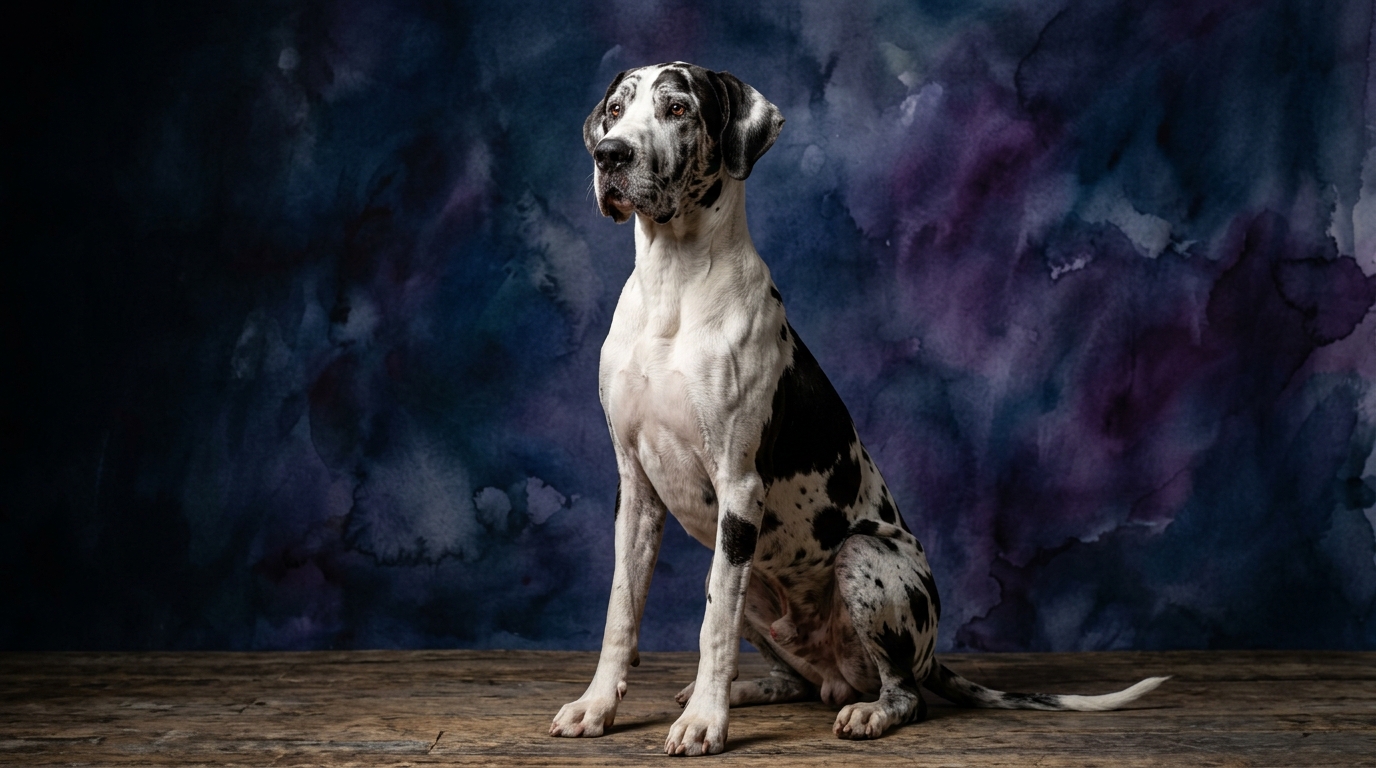
The Cosmic Pet Pet IQ Lab evaluates canine cognition across five crucial dimensions, offering a comprehensive look beyond simple obedience. For the Great Dane, a Working group dog with a Coren rank of #48, its profile reveals a balanced set of attributes: problem Solving at 3/5, training Speed at 3/5, social Intelligence at a notable 4/5, instinctive Drive at 3/5, and memory also at 3/5. This suggests a dog that is moderately capable across the board, with a particular aptitude for understanding human social cues.
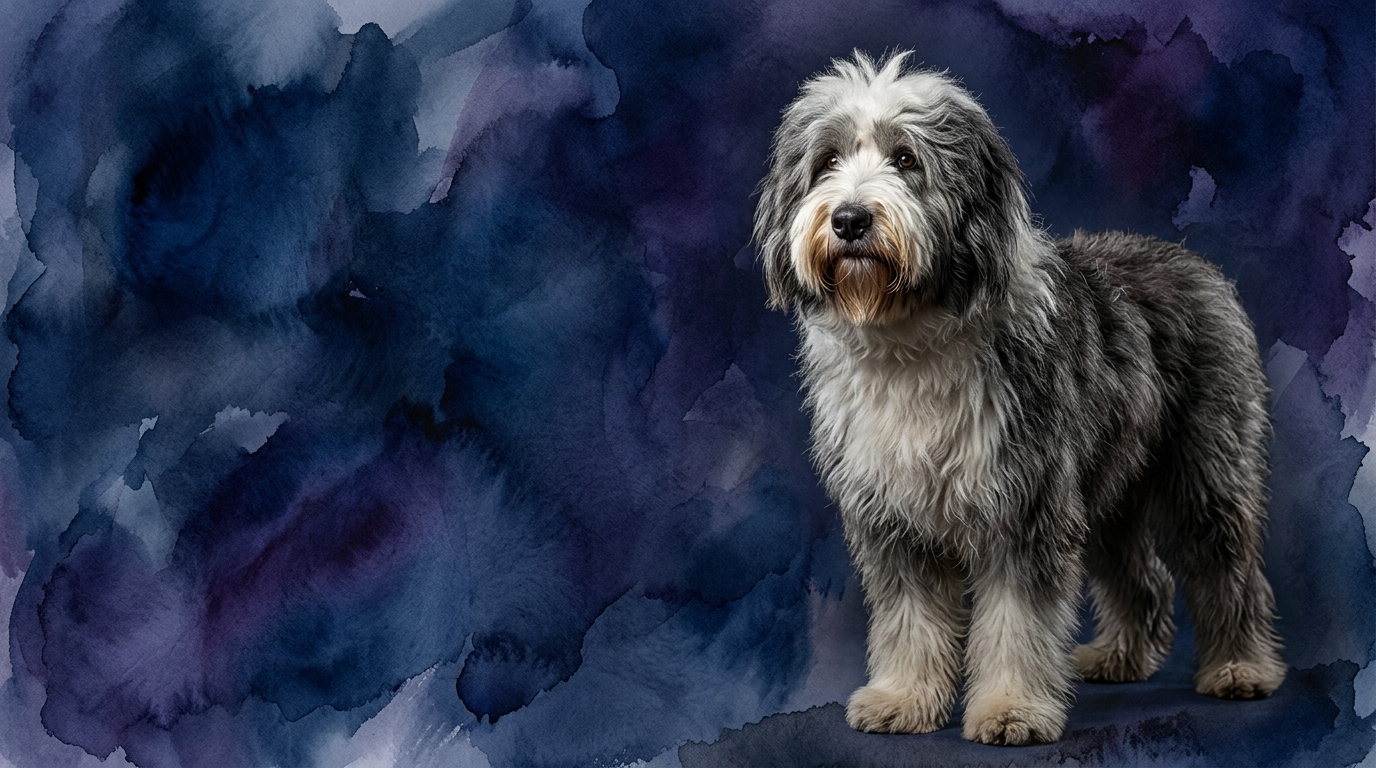
In contrast, the Old English Sheepdog, a Herding group dog holding a slightly higher Coren rank of #44, presents a distinct cognitive signature. Its problem Solving ability matches the Dane at 3/5, as does its training Speed at 3/5 and instinctive Drive at 3/5. However, where it truly diverges is in its social Intelligence, rated 3/5, and its impressive memory, scoring 4/5. This profile points to a dog that excels in retaining information and routines, while being generally attuned to its social environment.
Both breeds demonstrate moderate capacities for tackling novel challenges and learning new commands at a steady pace, indicating that neither is a lightning-fast study nor particularly slow. Their instinctive drives are also aligned, suggesting a moderate internal motivation for specific tasks rather than an overwhelming urge to work continuously. The key distinctions, therefore, lie in their social understanding and their capacity for recall, which we will explore further.
Where the Great Dane Shines Cognitively
The Great Dane's standout cognitive strength lies squarely in its social Intelligence, rated at an impressive 4 out of 5. This dimension reflects a dog's ability to interpret and respond to human emotions, intentions, and communication cues. A Great Dane often demonstrates a profound empathy, sensing when its human companions are distressed or joyful, and responding with appropriate comfort or shared enthusiasm. This makes them exceptional emotional companions, often anticipating needs before they are explicitly communicated.
This elevated social intelligence means Great Danes are particularly attuned to the subtleties of human interaction. They might learn routines simply by observing their family's daily habits, understanding implicit expectations rather than solely relying on explicit commands. For an owner seeking a deeply connected and responsive companion, the Great Dane's capacity to 'read the room' and offer comfort or companionship without prompting is a significant advantage, fostering a remarkably strong bond.
Their social acumen also contributes to their generally calm and patient demeanor within a family setting. While their problem-solving and training speed are moderate, their desire to engage positively with their human 'pack' means they are often willing participants in learning, driven by the reward of connection and approval rather than solely task completion. This makes them highly sensitive to praise and gentle correction, leveraging their social understanding to guide their behavior.
Where the Old English Sheepdog Excels Mentally
The Old English Sheepdog's cognitive advantage is most evident in its memory, scoring a solid 4 out of 5. This superior recall allows them to retain complex sequences of commands, intricate routines, and learned behaviors with impressive consistency. For a breed historically tasked with managing livestock, remembering precise movements, boundaries, and the nuances of their handler's instructions was paramount, a trait that continues to manifest in their modern cognitive profile.
This strong memory makes the Old English Sheepdog a formidable candidate for structured training disciplines such as advanced obedience, agility, or even complex trick training. Once a command or sequence is thoroughly learned, it is likely to be retained for extended periods, reducing the need for constant reteaching. This means that owners who invest time in consistent, clear training will find their efforts yield lasting results, with the OES reliably performing tasks it has mastered.
While their social intelligence is good at 3/5, it's their memory that truly sets them apart from the Great Dane. This robust memory means they can become highly proficient in tasks that require sequential learning and precise execution. They are less about reading subtle emotional shifts and more about remembering and executing the playbook, making them dependable partners in activities where consistency and retention are key.
Training Dynamics: Great Dane vs. Old English Sheepdog
When it comes to ease of training, both the Great Dane and the Old English Sheepdog share a training Speed rating of 3/5, suggesting neither is a rapid-fire learner, but both are certainly capable with consistent methods. However, the 'why' behind their training experiences differs significantly due to their other cognitive strengths. The Great Dane's superior social Intelligence (4/5) often translates into a keen desire to please and a high responsiveness to human feedback, including subtle cues and emotional tones. This can make them seem easier to train in a relational sense; they often pick up on what you want through your body language and intonation, making them willing participants in the learning process.
Conversely, the Old English Sheepdog's strong memory (4/5) makes it an excellent candidate for retaining learned behaviors once they are firmly established. While their social intelligence is slightly lower at 3/5, meaning they might not be as finely tuned to human emotional shifts, their ability to recall commands and routines is a significant asset. This means an OES might require more explicit, repetitive instruction initially, but once a lesson is ingrained, it tends to stick. Their moderate instinctive drive (3/5), which might include residual herding tendencies like nudging or 'rounding up' family members, means training needs to incorporate clear boundaries and appropriate outlets for this energy.
Ultimately, neither breed presents a significantly easier path to training in terms of sheer speed, but the *nature* of the training experience will differ. A Great Dane might respond better to positive reinforcement focused on connection and approval, while an Old English Sheepdog will thrive with structured, consistent lessons that leverage its impressive memory for long-term retention. Owners must adapt their approach to align with each breed's unique cognitive strengths.
Lifestyle Match: Active vs. Relaxed Owners
Considering their cognitive profiles and inherent breed traits, the Great Dane and Old English Sheepdog cater to different owner lifestyles. The Great Dane, despite its imposing size, often possesses a remarkably calm and relaxed demeanor indoors. Their elevated social intelligence (4/5) means they thrive on close companionship and often prefer to be near their human family, even if it's just napping at their feet. Their moderate instinctive drive (3/5) means they don't typically demand constant activity; a couple of moderate walks or play sessions a day usually suffice, making them a suitable match for owners who appreciate a laid-back yet deeply connected companion.
Relaxed owners who enjoy a large, affectionate, and emotionally intuitive presence in their home will find a Great Dane a rewarding fit. They are content with being a part of the family's daily rhythm, offering quiet companionship rather than demanding high-energy engagement. Their sensitivity and desire for connection mean they flourish in environments where they receive ample attention and are included in family activities, even if those activities are simply lounging on the couch.
The Old English Sheepdog, with its strong memory (4/5) and herding heritage, often possesses a more active and engaged disposition, despite also having a moderate instinctive drive (3/5). This breed benefits significantly from mental stimulation and structured activities that engage their cognitive abilities. Their capacity for retaining complex information makes them excellent candidates for dog sports, advanced obedience, or even farm work if available. Owners who enjoy consistent training, problem-solving games, and regular physical exercise will find the OES a highly rewarding partner.
Active owners who are prepared to provide consistent mental and physical outlets will find the Old English Sheepdog to be a joyful and spirited companion. They are not necessarily hyperactive, but they thrive on having a 'job' or a routine that challenges their intellect and allows them to utilize their impressive memory. This makes them ideal for individuals or families who embrace an active lifestyle and wish to involve their dog in various structured activities or outdoor adventures.
The Verdict
Choose the Great Dane if your priority is a deeply empathetic, socially intelligent companion who will tune into your emotions and offer quiet, devoted presence.
Opt for the Old English Sheepdog if you value a dog with exceptional memory for training, enjoy structured activities, and can provide consistent mental engagement.
🧠 Find Your Pet's IQ Score
Our Pet IQ Lab assessment covers 25+ tests across 5 cognitive dimensions — personalized to your breed.
Take the Full IQ Test →Frequently Asked Questions
Do Great Danes or Old English Sheepdogs need more exercise?
Great Danes generally have moderate exercise needs, content with a couple of walks daily and indoor relaxation. Old English Sheepdogs, while also having a moderate instinctive drive, often benefit more from structured activities and mental stimulation due to their herding background and strong memory, making them a better fit for owners who can provide consistent engagement.
Which breed is better for first-time dog owners?
Both breeds require consistent training and socialization. Great Danes' high social intelligence can make them quite responsive and eager to please, which can be helpful for new owners. Old English Sheepdogs' strong memory makes them excellent once trained, but their moderate social intelligence might require more explicit communication from a novice trainer. The 'better' choice depends on the owner's commitment to understanding the specific cognitive strengths of each breed.
Are Great Danes or Old English Sheepdogs more prone to separation anxiety?
Great Danes, with their elevated social intelligence and deep emotional connection to their families, can be more susceptible to separation distress if left alone for extended periods without proper conditioning. Old English Sheepdogs also thrive on companionship but may cope slightly better with alone time if they have been well-exercised and mentally stimulated, leveraging their memory for routines.