Side-by-Side Cognitive Profile: Great Dane vs. Puli
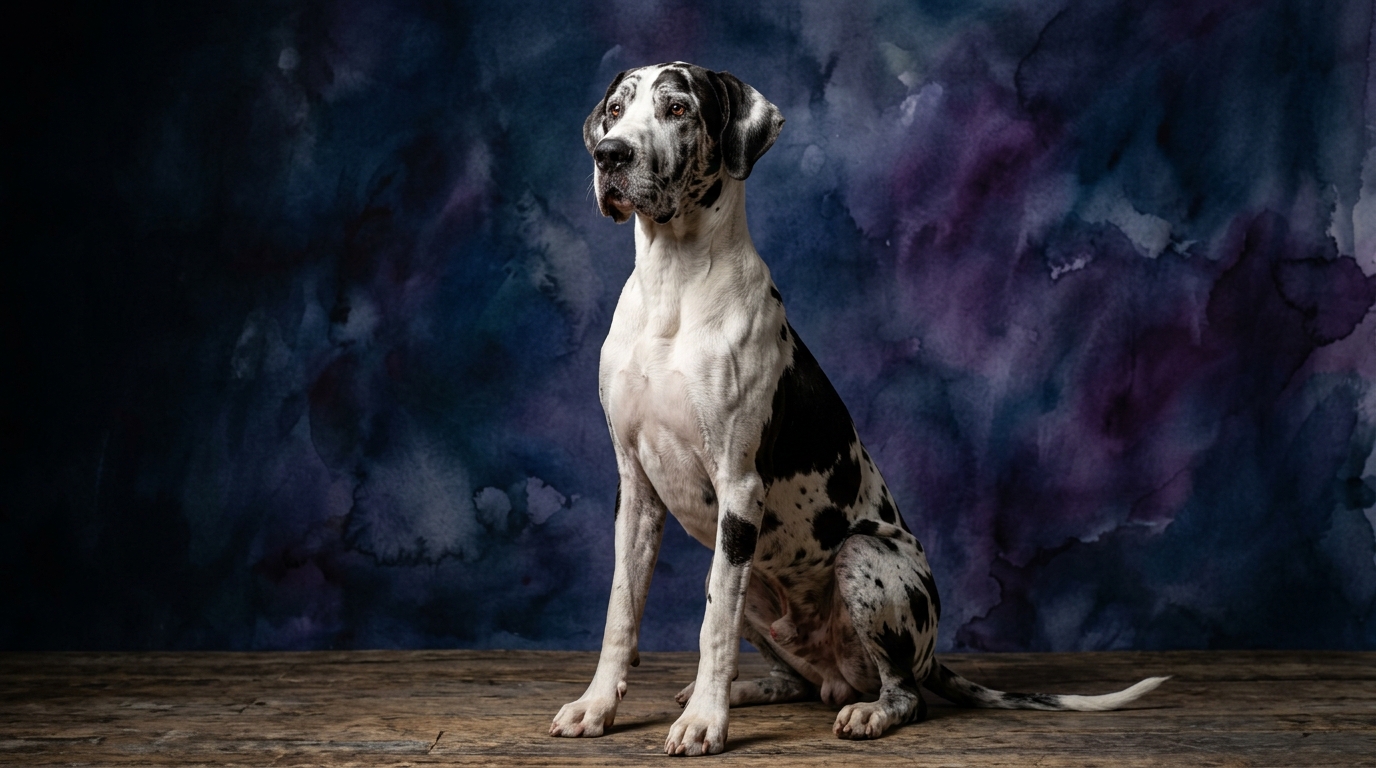
Our Pet IQ Lab analysis begins with a detailed look at each breed's cognitive dimensions. The Great Dane, a member of the Working group with a Coren rank of #48, exhibits a unique blend of intellectual traits. Its Problem Solving ability scores 3/5, indicating a capacity to understand tasks but often relying on human guidance rather than independent strategizing. Training Speed is also rated 3/5; while capable, Danes can be deliberate learners, requiring consistent, positive reinforcement to solidify commands. Where the Great Dane truly shines is in Social Intelligence, earning a 4/5, demonstrating a profound attunement to human emotions and intentions. Instinctive Drive is moderate at 3/5, reflecting a focus on companionship and guarding rather than intense prey or work drive. Finally, their Memory is solid at 3/5, sufficient for routines and familiar commands, though not exceptional for complex, multi-step sequences.
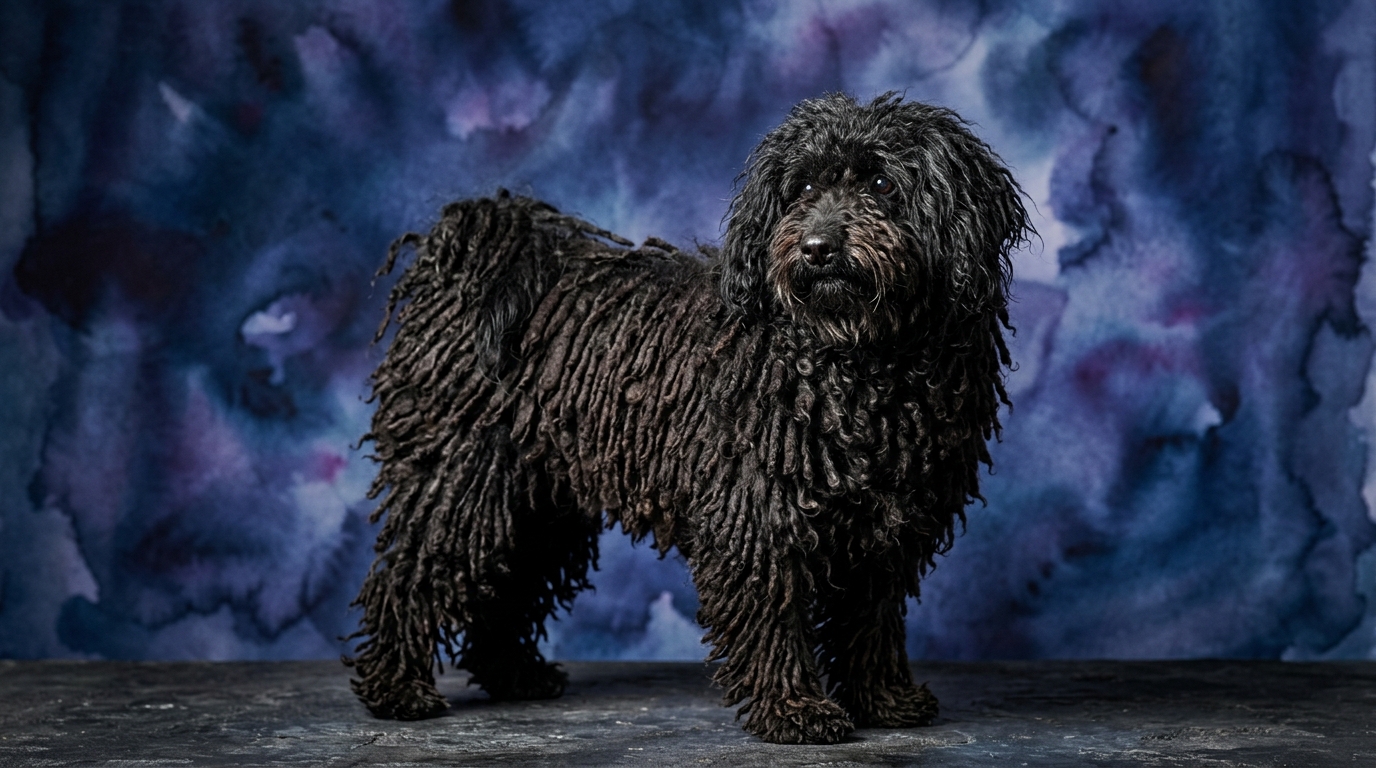
In contrast, the Puli, a Herding breed with a significantly higher Coren rank of #25, presents a distinct intellectual blueprint. Its Problem Solving scores an impressive 4/5, a direct reflection of its ancestral role requiring independent thought and quick decision-making in managing livestock. Training Speed is equally strong at 4/5, as Pulis are eager learners who process information rapidly and enjoy mental challenges. Social Intelligence for the Puli is a respectable 3/5; they form deep bonds with their families but can be more reserved or observant with strangers compared to the Great Dane. Instinctive Drive is rated 3/5, often manifesting as a strong urge to 'herd' family members or moving objects, requiring appropriate outlets. Their Memory is also a strong suit at 4/5, crucial for retaining complex command sequences and long-term routines vital for effective herding.
Where the Great Dane Excels Cognitively
The Great Dane's primary cognitive strength lies in its exceptional Social Intelligence, scoring a robust 4/5. This means they possess an advanced capacity to understand and respond to human emotions, body language, and subtle cues. They are deeply empathetic companions, often sensing an owner's distress or joy without explicit prompting, offering comfort or sharing in happiness intuitively. This attunement allows them to form incredibly profound and responsive bonds, making them superb at 'reading the room' and adjusting their demeanor to suit the emotional landscape of their family. Their cognitive wiring makes them masters of companionship, offering a quiet, understanding presence that goes beyond simple obedience.
While not scoring as high in other areas, this deep social understanding is a hallmark of the Great Dane's intellect. They are less about performing complex tasks independently and more about symbiotic emotional connection. This trait makes them uniquely suited to roles as therapy dogs or simply as steadfast family members who provide unwavering emotional support, demonstrating a sophisticated form of intelligence centered on interspecies communication and empathy.
Where the Puli Demonstrates Cognitive Superiority
The Puli's cognitive strengths are evident in its Problem Solving (4/5), Training Speed (4/5), and Memory (4/5). As a herding breed, Pulis were bred to independently assess and react to dynamic situations, constantly strategizing to control livestock. This translates into a remarkable innate ability to decipher complex puzzles, navigate intricate obstacles, and devise creative solutions to challenges presented in their environment. Their minds are constantly active, seeking engagement and opportunities to apply their keen intellect.
Their high Training Speed means Pulis are quick to grasp new commands and routines, thriving on mental engagement and the challenge of learning. This rapid information processing, combined with their strong Memory, allows them to retain intricate command sequences and long-term routines with ease, making them excellent candidates for advanced obedience, agility, and other dog sports where precision and recall are paramount. Unlike the Great Dane, whose cognitive focus leans towards social cues, the Puli's intellect is geared towards active engagement with its environment and the mastery of complex tasks, demonstrating a proactive and analytical approach to the world around them.
Training Aptitude: Great Dane vs. Puli
When considering ease of training, the Puli generally holds an advantage over the Great Dane. The Puli's Training Speed score of 4/5 signifies a dog eager to learn, quick to grasp concepts, and often self-motivated by the mental challenge of a task. Their herding background instilled a strong desire to work in partnership with a handler, responding to subtle cues and processing information rapidly. This makes them highly responsive to clear, consistent direction and excellent candidates for advanced training and competitive dog sports.
The Great Dane, with a Training Speed of 3/5, is certainly capable of learning but can be more deliberate. Their historical role focused more on presence and guarding than on rapid, complex task execution. Danes require consistent, positive reinforcement and can sometimes appear to weigh the value of compliance. While they learn, their learning curve might be slightly longer for intricate commands, and motivation often stems from comfort or companionship rather than an inherent drive for task mastery. Early and consistent training is crucial for managing their large size, but trainers may find themselves needing more patience and creative motivation techniques compared to working with a Puli.
Lifestyle Suitability: Active vs. Relaxed Owners
The distinct cognitive profiles of these breeds directly influence their suitability for different owner lifestyles. The Puli, with its high Problem Solving, Training Speed, and Instinctive Drive, is an ideal match for active owners. They demand regular mental and physical engagement, thriving in environments where they can 'work' – be it through agility, advanced obedience, herding trials, or complex puzzle games. Owners who enjoy structured activities, consistent interaction, and can provide outlets for a dog that likes to think and move will find a Puli a highly rewarding and engaging partner. Without sufficient mental stimulation, a Puli's active mind can easily lead to boredom and potentially destructive behaviors.
Conversely, the Great Dane, with its moderate instinctive drive and elevated social intelligence, is better suited for owners who appreciate a more relaxed, yet responsible, companionship-focused lifestyle. While they certainly need daily exercise to maintain their health, they don't require constant 'work' or intricate problem-solving tasks. Owners who value a calm, empathetic presence and are comfortable with a large, affectionate dog that enjoys lounging with its family as much as a good walk will find a Great Dane an excellent fit. Their cognitive strengths align with being a devoted, intuitive family member who offers comfort and stability rather than demanding constant high-octane activity.
The Verdict: When to Choose Each Breed
The Verdict
Choose a Great Dane if you seek a deeply empathetic, emotionally intelligent companion who offers comfort and a calm presence, and if you can appreciate a dog with a moderate drive for physical activity and a strong desire for companionship.
Opt for a Puli if you desire a highly trainable, problem-solving partner for dog sports, advanced obedience, or a 'working' lifestyle, and if you are committed to providing consistent mental and physical challenges for a quick-witted canine.
🧠 Find Your Pet's IQ Score
Our Pet IQ Lab assessment covers 25+ tests across 5 cognitive dimensions — personalized to your breed.
Take the Full IQ Test →Frequently Asked Questions
Is a Puli a good choice for first-time dog owners?
A Puli's quick intellect and need for consistent mental stimulation can be a handful for novice owners. They thrive with individuals who understand their herding drive and are committed to consistent training and engaging activities from an early age.
Do Great Danes require a lot of exercise despite their 'relaxed' description?
While not as intensely driven as some working breeds, Great Danes still need daily moderate exercise to maintain their health and prevent boredom. Short, regular walks and supervised playtime are usually sufficient, rather than demanding endurance activities.
How do their grooming needs relate to their cognitive profiles?
A Puli's corded coat requires specific, often time-consuming grooming that can be a bonding experience, but also a test of patience for both dog and owner. A Great Dane's minimal grooming allows more time for social interaction and close companionship, aligning with their strong social intelligence.