Side-by-Side Cognitive Profiles
To understand the cognitive landscape of these two impressive breeds, we turn to The Cosmic Pet Pet IQ Lab's five-dimensional framework. This system evaluates problem-solving, training speed, social intelligence, instinctive drive, and memory, offering a nuanced view beyond simplistic 'smart' labels.
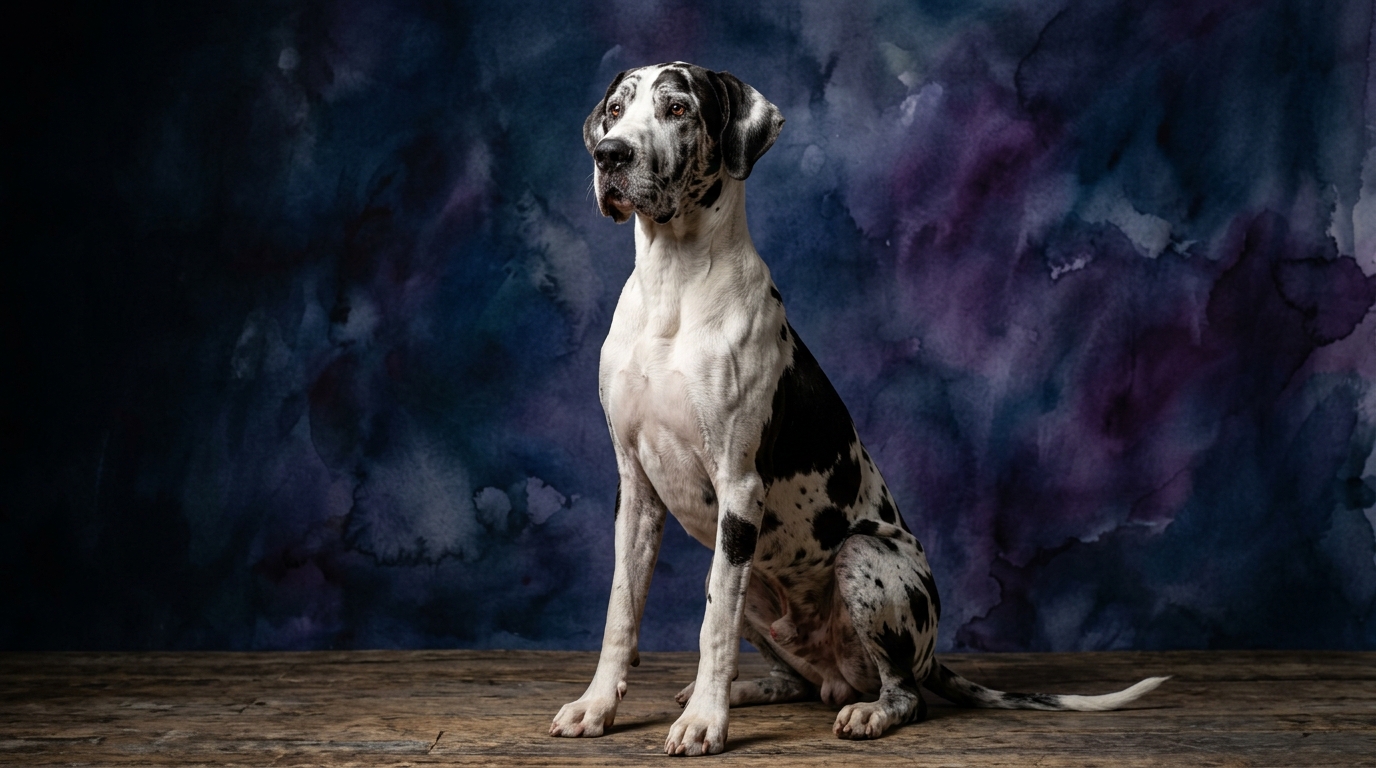
The Great Dane, classified within the Working group, presents a balanced cognitive profile. Their Problem Solving is rated at 3/5, indicating a capacity for moderate independent thought and resolution, often when prompted or motivated by human interaction. Training Speed also sits at 3/5, suggesting they absorb commands at a steady pace, benefiting from consistent, positive reinforcement. Where the Great Dane truly distinguishes itself is in Social Intelligence, scoring a notable 4/5; this reflects a profound attunement to human emotions, social cues, and family dynamics. Their Instinctive Drive is 3/5, meaning they possess inherent behaviors that can be channeled, but are not overwhelmingly dominant, and their Memory is 3/5, allowing them to retain learned behaviors and routines with regularity.
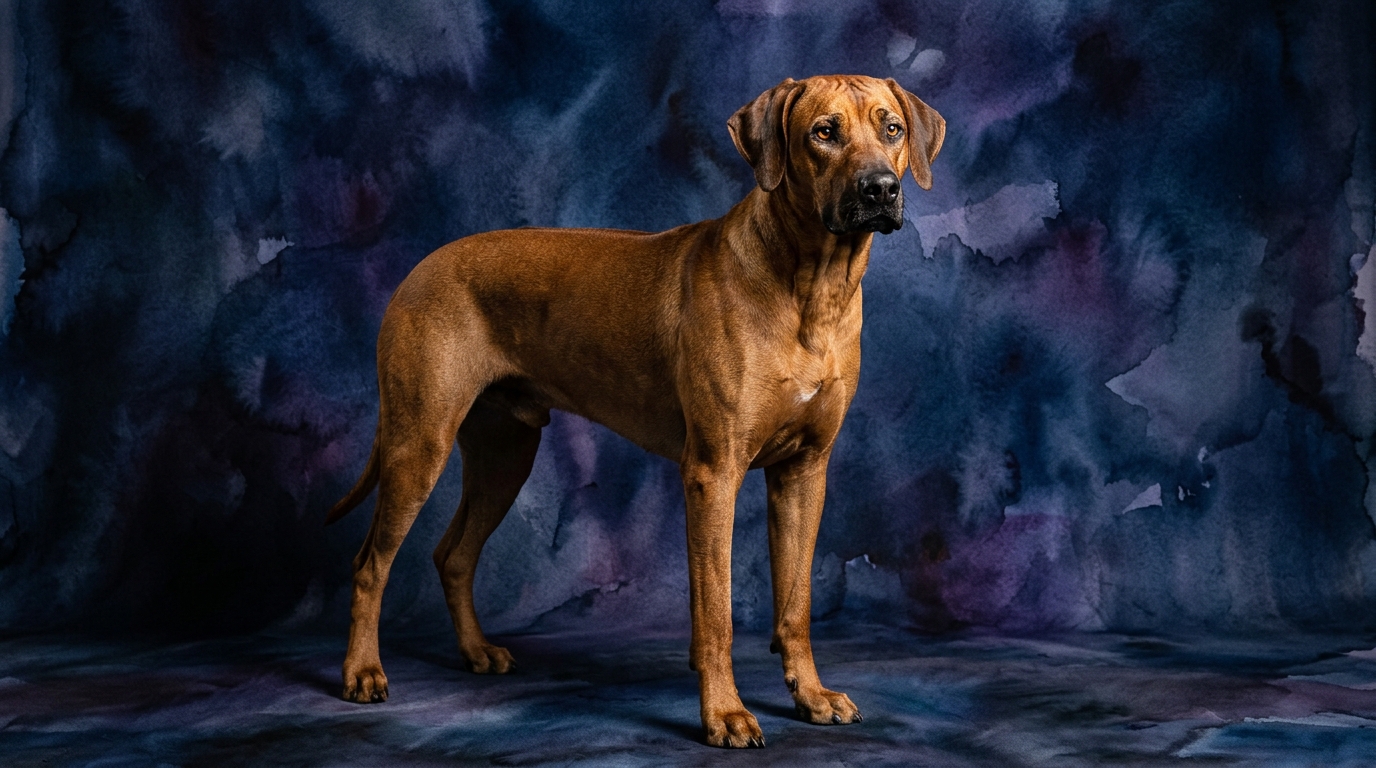
The Rhodesian Ridgeback, a member of the Hound group, shares several cognitive similarities with the Great Dane but with distinct leanings. Their Problem Solving is also 3/5, though often expressed through more independent, self-reliant methods, typical of a hound. Training Speed matches at 3/5, indicating a steady learning curve, yet often requiring more creative and engaging methods to maintain their focus. Their Social Intelligence is rated 3/5, suggesting they are capable of strong bonds with their immediate family but may exhibit a more reserved or selective nature with strangers. Instinctive Drive is 3/5, frequently manifesting as a strong prey drive or territorial instinct rooted in their hunting heritage. Finally, their Memory is 3/5, allowing them to learn and recall information effectively, particularly when it aligns with their intrinsic motivations.
Where the Great Dane Excels Cognitively
The Great Dane's standout cognitive strength lies in their superior Social Intelligence, scoring 4/5 compared to the Rhodesian Ridgeback's 3/5. This higher rating signifies a remarkable ability to read and respond to human emotions and social cues, making them exceptionally empathetic and attuned companions. A Great Dane often seems to anticipate their owner's moods, offering comfort or playful engagement precisely when needed. This deep understanding of human social structures translates into a more cooperative nature within the home environment.
This elevated social awareness means Great Danes typically integrate into family life with greater ease, often striving to be 'velcro dogs' who prefer to be in close proximity to their human family members. Their responsiveness to social feedback can make them more amenable to training that relies on praise and connection, as they genuinely desire to please and participate in the family unit. For an owner seeking a canine whose primary cognitive strength is deeply rooted in companionship and understanding the nuances of human interaction, the Great Dane's social acumen offers a distinctly enriching experience, fostering a profound, intuitive bond that goes beyond mere obedience.
Where the Rhodesian Ridgeback Shines Cognitively
While the Rhodesian Ridgeback’s raw scores for Problem Solving (3/5) and Instinctive Drive (3/5) mirror the Great Dane’s, the *nature* of these cognitive attributes differs significantly due to their breed lineage and historical purpose. Ridgebacks were bred for tracking and holding large game, a role demanding substantial independent thought and sustained focus in challenging environments. Their problem-solving often manifests not as a desire to please a human, but as an innate capacity to assess a situation and devise a solution based on their own sensory input and drives.
This independent problem-solving, coupled with their instinctive drive, allows them to excel in tasks requiring self-reliance and perseverance. For instance, a Ridgeback might meticulously follow a scent trail for miles, demonstrating an unwavering mental tenacity and a cognitive ability to filter distractions and maintain focus on a singular objective. This strength is less about human-centric cooperation and more about robust, self-directed mental work. Owners will observe this in their determination to achieve a goal, whether it’s figuring out how to open a gate or persistently pursuing a squirrel. This self-sufficiency, while sometimes a training challenge, is a powerful cognitive asset for specific roles and active lifestyles.
Training Aptitude: Which Breed is Easier?
When it comes to ease of training, the Great Dane generally holds a slight advantage, primarily due to their higher Social Intelligence (4/5). Their inherent desire to connect and please their human companions makes them more receptive to direction and praise. A Great Dane often finds immense satisfaction in cooperative activities with their owner, which translates into a more willing participant in training sessions. Their moderate Training Speed (3/5) means they learn consistently, and their strong social bond acts as a powerful motivator, encouraging them to listen and comply.
The Rhodesian Ridgeback, with a Social Intelligence of 3/5 and a strong independent streak characteristic of hounds, can present a more nuanced training experience. While their Training Speed is also 3/5, their independent problem-solving and instinctive drives mean they may question commands or prioritize their own interests if not thoroughly convinced of the value of compliance. Training a Ridgeback often requires more patience, consistency, and creative methods to keep them engaged, as they respond best to clear, fair leadership and training that appeals to their natural instincts rather than rote repetition. Owners need to build a strong foundation of trust and respect, demonstrating that following commands is a rewarding endeavor.
Matching Breeds to Lifestyles: Active vs. Relaxed Owners
Considering their cognitive profiles and inherent breed traits, the Great Dane and Rhodesian Ridgeback cater to different owner lifestyles. The Great Dane, despite its colossal size, often fits well with moderately active or even relaxed owners, provided their need for consistent daily exercise and human companionship is met. Their high social intelligence means they are often content to be near their family, transforming into impressive 'couch potatoes' once their exercise requirements are fulfilled. They thrive on human interaction and can become anxious if left alone for extended periods, making them ideal for owners who can offer significant time and attention within the home.
Conversely, the Rhodesian Ridgeback is a prime candidate for highly active and experienced owners. Their heritage as endurance hunters means they possess substantial physical stamina and a powerful mental drive that demands significant outlets. They are not dogs content with minimal activity; they require vigorous daily exercise, such as long runs, hikes, or participation in dog sports, to prevent boredom and destructive behaviors. Their independent nature and drive also mean they benefit immensely from mental challenges, like advanced obedience, tracking, or agility. An owner prepared for regular, structured activity and consistent leadership will find the Ridgeback a rewarding, adventurous companion, whereas a more relaxed lifestyle would likely result in an unfulfilled and potentially challenging dog.
The Verdict
Opt for a Great Dane if you seek a deeply social companion who thrives on close family interaction and offers a more amenable training experience rooted in cooperation.
Select a Rhodesian Ridgeback if you are an experienced, active owner prepared to channel their independent spirit and athletic prowess into consistent training and adventurous pursuits.
🧠 Find Your Pet's IQ Score
Our Pet IQ Lab assessment covers 25+ tests across 5 cognitive dimensions — personalized to your breed.
Take the Full IQ Test →Frequently Asked Questions
Are Great Danes good with children?
Their high social intelligence often makes them patient and gentle with children, though their sheer size necessitates supervision during interactions. Early socialization is crucial for them to understand appropriate boundaries and behaviors around younger family members.
Do Rhodesian Ridgebacks have a strong prey drive?
Yes, as a hound breed originally used for hunting, they possess a moderate instinctive drive that often includes a significant prey drive. This inherent trait requires consistent training, leash discipline, and secure containment to manage effectively and safely.
Which breed is more adaptable to apartment living?
While both are large, a Great Dane might adapt better to apartment living due to their more relaxed indoor demeanor and higher social intelligence, provided they receive sufficient daily exercise. Rhodesian Ridgebacks typically require more space and outdoor activity to satisfy their higher energy and independent drives.