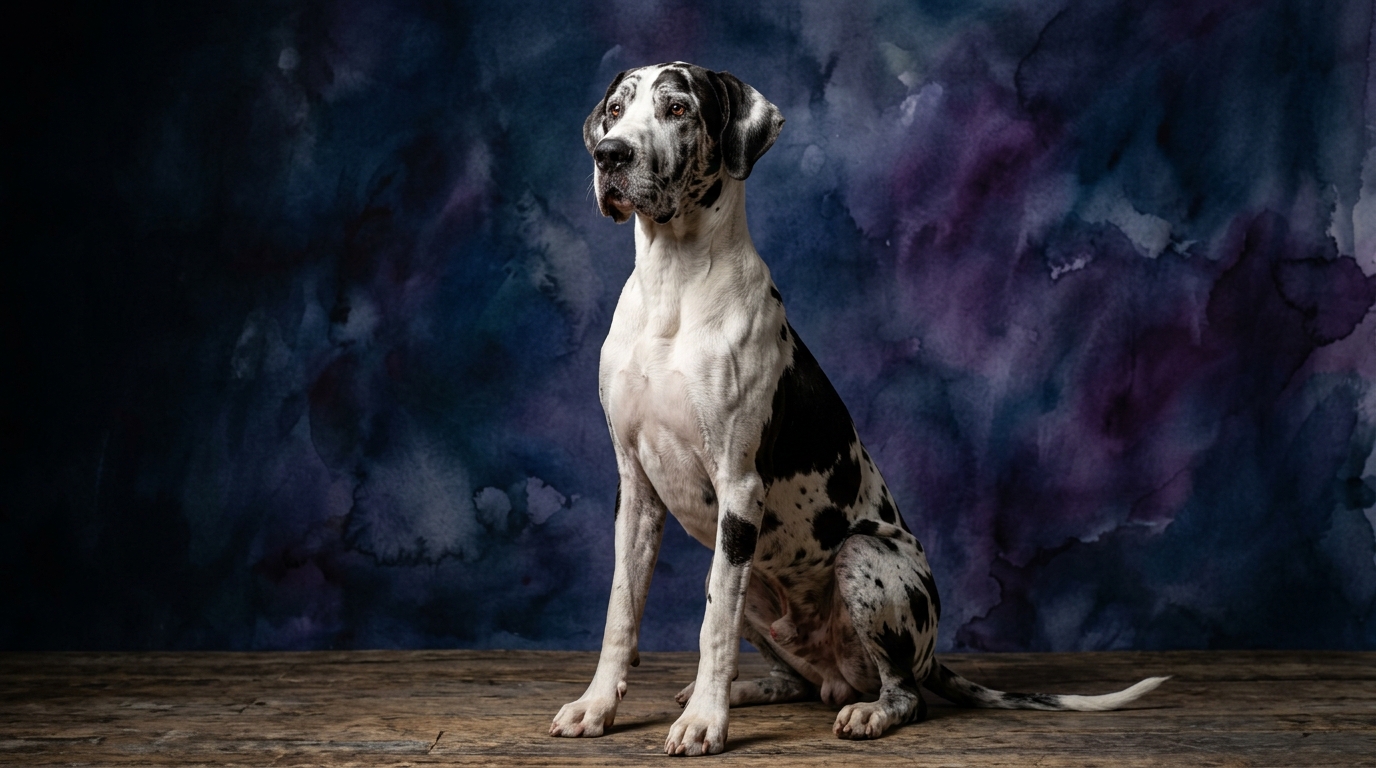
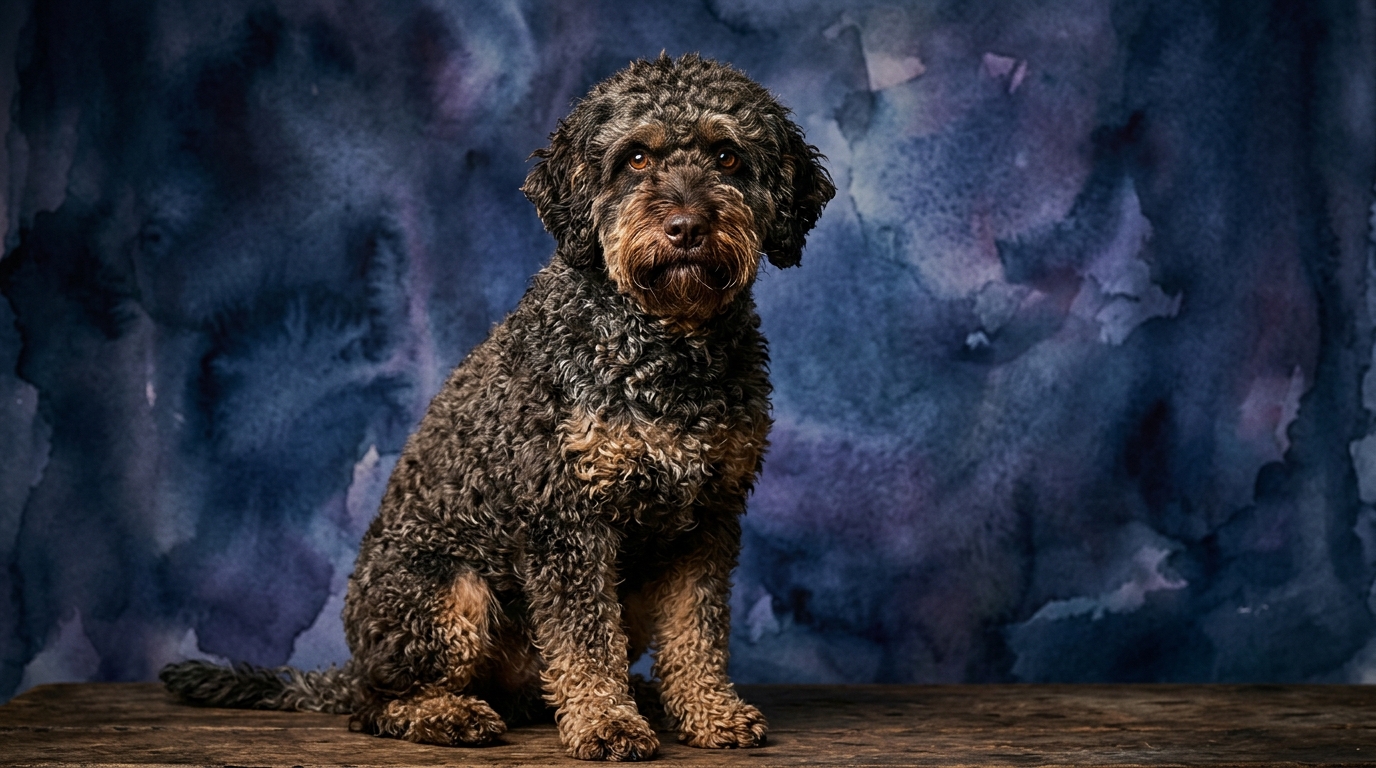
Side-by-Side IQ Profile: Great Dane vs. Spanish Water Dog
The Cosmic Pet Pet IQ Lab provides a structured framework for assessing canine intelligence across five key dimensions, offering a nuanced perspective beyond general impressions. For the Great Dane, a Working group dog, its Coren rank of #48 places it in a respectable position among breeds, indicating a solid foundation for trainability and understanding. Its Problem Solving is rated 3/5, suggesting it can learn and apply solutions to familiar challenges but isn't typically an innovator. Training Speed, also 3/5, means consistent effort and repetition are key for mastering new commands. Where the Great Dane truly shines is in Social Intelligence, scoring 4/5, reflecting its profound connection to human emotions and family dynamics. Instinctive Drive sits at 3/5, encompassing its historical role as a guardian, while Memory is a steady 3/5, allowing it to retain routines and learned behaviors effectively.
In contrast, the Spanish Water Dog, a Herding group dog, does not have a formal Coren ranking, which means its general trainability hasn't been widely categorized in that specific framework. However, the IQ Lab's granular assessment provides valuable insights. Its Problem Solving is rated 3/5, indicating an ability to navigate practical issues, often drawing on its working heritage to find solutions. Training Speed also registers at 3/5, implying a learner that thrives on clear instruction and consistent practice, rather than instantaneous comprehension. Its Social Intelligence is 3/5, suggesting it forms strong bonds with its family but might be more reserved or discerning with strangers compared to the Great Dane. Instinctive Drive is 3/5, reflecting its innate herding capabilities and drive to engage in tasks, and its Memory is also 3/5, allowing it to recall complex sequences and commands over time. This side-by-side view highlights differing strengths within similar numerical scores, emphasizing the importance of context for each breed.
Where the Great Dane Wins Cognitively
The Great Dane's most prominent cognitive advantage lies in its superior Social Intelligence, scoring 4/5 compared to the Spanish Water Dog's 3/5. This dimension reflects a dog's capacity to understand and respond to human emotions, body language, and social cues. A Great Dane's higher score translates into a profound empathy and sensitivity to its human companions' moods. They are exceptionally attuned to the emotional climate of their home, often acting as gentle comforters during times of distress or joining in with joyful exuberance. This strong social acumen makes them particularly adept at forming deep, intuitive bonds, often anticipating their owner's needs or reactions without explicit commands. Their ability to read subtle social signals contributes to their reputation as 'gentle giants,' making them naturally patient with children and other pets, and excellent therapy animals due to their comforting presence.
This elevated social intelligence also means Great Danes are often more motivated by human approval and connection. While their Training Speed is 3/5, their desire to please and maintain harmony within their social group can make them highly cooperative once they grasp what is expected. Their cognitive strength here isn't about raw processing speed, but rather about the depth of their emotional connection and their willingness to integrate into the human family unit as a truly understanding and responsive member. They are less likely to act independently based on instinct if it means disrupting the social equilibrium, preferring to align their actions with their human's expectations. This makes them exceptionally rewarding companions for owners who value a deeply connected and emotionally responsive canine partner.
Where the Spanish Water Dog Wins Cognitively
While the Spanish Water Dog shares a 3/5 score across all cognitive dimensions with the Great Dane, its unique 'win' emerges from the specific application and context of its Herding group background, particularly in its Problem Solving and Instinctive Drive. The Spanish Water Dog's problem-solving, though numerically equivalent, is geared towards practical, dynamic environmental challenges. Unlike the Great Dane’s often more passive guardian role, the SWD's heritage involves independent decision-making in complex, fluid situations like managing livestock. This means their 3/5 problem-solving isn't just about learning tricks, but about resourcefulness and adaptability in real-world scenarios, making quick judgments about movement, space, and pressure.
Their Instinctive Drive, also rated 3/5, is specifically channeled towards a working purpose. This drive manifests as a persistent focus and a desire to complete tasks, whether it’s herding, retrieving, or engaging in complex dog sports. This breed doesn't just 'have' instincts; they actively seek outlets for these drives, requiring mental engagement that challenges their capabilities. While the Great Dane's instinctive drive leans towards protection and companionship, the Spanish Water Dog's is rooted in active, goal-oriented engagement. This translates into a dog that thrives on having a 'job,' demonstrating a cognitive resilience and a capacity for sustained effort when presented with meaningful work. Their cognitive strengths are less about overt emotional connection and more about functional intelligence, independence, and a robust drive to perform within a structured context, making them exceptionally capable partners for active, task-oriented owners.
Which Is Easier to Train and Why
Both the Great Dane and the Spanish Water Dog share a Training Speed rating of 3/5, indicating that neither breed is a 'one-and-done' learner; consistent effort and repetition are essential for both. However, the ease of training often hinges on more than just raw learning speed, bringing their other cognitive dimensions into play. The Great Dane, with its higher Social Intelligence (4/5), tends to be more motivated by pleasing its human companion. This strong desire for social harmony and approval means that once a Great Dane understands what is expected, they are generally eager to comply to maintain that positive connection. Their training benefits from positive reinforcement and an emphasis on building a strong, trusting relationship, as their compliance stems deeply from their bond with their owner. Their generally calmer demeanor also means fewer distractions from high energy during training sessions, allowing for focused learning.
The Spanish Water Dog, while equally intelligent in terms of learning capacity, presents a different training dynamic. Their Instinctive Drive (3/5) and a slightly lower Social Intelligence (3/5) mean they can be more independent thinkers, sometimes prioritizing their inherent working drive over immediate human directives if not properly channeled. Their herding background instills a degree of self-reliance and a tendency to assess situations, which can sometimes be interpreted as stubbornness if the training isn't engaging or doesn't appeal to their intrinsic motivation for a 'job.' To train a Spanish Water Dog effectively, an owner must understand their working dog mindset, providing clear structure, consistent boundaries, and training methods that tap into their desire for purpose, such as agility, obedience, or scent work. While both require patience, the Great Dane often offers a more straightforward path to compliance due to its social eagerness, whereas the Spanish Water Dog demands a more nuanced approach that respects and leverages its independent, task-oriented cognitive style.
Which Suits Active Owners vs. Relaxed Owners
Understanding the cognitive profiles of the Great Dane and the Spanish Water Dog provides clear guidance on which breed might better suit different owner lifestyles, particularly regarding activity levels. The Great Dane, despite its imposing size, often matures into a relatively relaxed companion once out of its puppy phase. Their moderate Instinctive Drive (3/5) means they don't possess an overwhelming urge for constant activity, and their high Social Intelligence (4/5) means they are often content simply being near their human family. While they certainly need regular, moderate exercise to maintain health and prevent boredom, they are not typically high-energy dogs that demand hours of intense physical or mental stimulation daily. They thrive in a home environment that offers comfort, routine, and plenty of opportunities for affectionate interaction, making them a suitable choice for more relaxed owners who appreciate a calm, emotionally responsive companion.
Conversely, the Spanish Water Dog is unequivocally better suited for active owners. Their background as a herding breed, coupled with their consistent 3/5 scores across cognitive dimensions, points to a dog that requires significant mental and physical engagement. Their Instinctive Drive, even at 3/5, is geared towards purposeful work and activity, meaning they are not content to simply lounge around. They need outlets for their problem-solving abilities and their inherent drive to 'do' something. Owners who can provide regular, vigorous exercise, participate in dog sports like agility, obedience, dock diving, or offer consistent, challenging training sessions will find the Spanish Water Dog to be an incredibly rewarding and engaged partner. A sedentary lifestyle would likely lead to boredom and potential behavioral issues for this breed, highlighting their need for an owner who can match their zest for activity and mental stimulation.
The Verdict
Choose the Great Dane if you seek a deeply empathetic, emotionally attuned companion who thrives on social connection and a more relaxed home environment.
Opt for the Spanish Water Dog if you are an active owner looking for a resilient, task-oriented partner eager for consistent mental challenges and physical engagement.
🧠 Find Your Pet's IQ Score
Our Pet IQ Lab assessment covers 25+ tests across 5 cognitive dimensions — personalized to your breed.
Take the Full IQ Test →Frequently Asked Questions
Are Great Danes good with children and other pets?
Yes, their high social intelligence (4/5) generally makes Great Danes patient, gentle, and tolerant with children and other animals, provided they receive proper socialization from a young age. Their calm demeanor contributes to their reliability in a family setting.
Does the Spanish Water Dog's coat require extensive grooming?
The Spanish Water Dog's unique corded or curly coat does not require brushing but needs specific care to prevent matting and maintain its distinctive texture. Regular professional grooming or careful owner maintenance is crucial to manage their coat effectively.
What kind of mental stimulation is best for these breeds?
Great Danes benefit from social interaction, puzzle toys, and consistent, gentle training that reinforces their bond. Spanish Water Dogs thrive on task-oriented activities, complex obedience, agility, herding games, and anything that challenges their problem-solving skills and working drive.